What’s actually slowing this PC down?
Pick the symptom - the matching free tool is one click away.
Some links on this page are affiliate links: if you buy through them we may earn a commission, at no extra cost to you.
Hillrom announced on January 19, 2021, that it would acquire Seattle-based Bardy Diagnostics for $375 million in cash, plus potential commercial milestone payments. Bardy made the Carnation Ambulatory Monitor (CAM), a wearable cardiac-monitoring patch designed to help detect arrhythmias.
The transaction did not close on the timetable originally expected. A dispute over Medicare reimbursement rates led Hillrom to argue that it could terminate the agreement, but a Delaware Chancery Court ordered Hillrom to complete the acquisition on July 9, 2021. The deal closed on August 6, 2021. Hillrom disclosed that approximately $367 million was paid in cash at closing, while later purchase-accounting records reported approximately $434.2 million in total consideration, including estimated contingent consideration.
What Hillrom agreed to buy
Hill-Rom Holdings, Inc., through a wholly owned subsidiary, agreed on January 15, 2021, to acquire Bardy Diagnostics, Inc. The announcement followed on January 19. Hillrom expected the transaction to close in its fiscal second quarter, using cash on hand and borrowings under existing credit facilities.
The announced upfront consideration was $375 million in cash, subject to customary closing adjustments. The agreement also included possible commercial milestone payments tied to revenue generated by the acquired cardiac-monitoring business. Hillrom’s announcement and related SEC filing provide the transaction terms.
#1 Best Overall

- Simple to Use Without a Subscription: No Bluetooth, Wi-Fi, cords or PC needed. Place the device near your smartphone. Monitor your heart by placing your fingers or thumbs on the silver KardiaMobile EKG sensors. Know in 30 seconds whether your heart rhythm is normal.
What Bardy Diagnostics made
Bardy’s flagship product was the Carnation Ambulatory Monitor, or CAM patch. It was a wearable ambulatory cardiac-monitoring device intended to record cardiac activity for approximately one week in the original transaction coverage and help clinicians detect arrhythmias.
Bardy positioned CAM around patient comfort, ease of use, P-wave clarity, diagnostic yield, and clinical accuracy. Those product advantages were claims made by Bardy and Hillrom in the acquisition announcement, not independent findings established by the transaction documents.
Bardy was more than a hardware maker. Its business included cardiac-monitoring data management, remote monitoring, and independent diagnostic-testing facilities. Hillrom said Bardy had approximately $30 million in annualized revenue, more than $20 million in net operating losses, and about 230 employees. Staff were located in the Seattle region, Houston, and New Providence, Rhode Island. Hillrom’s SEC-filed announcement contains those figures.
Free tools Windows power users keep installed
One-click scans. No signup required.
Contemporary reporting by GeekWire described Bardy as founded in 2013 by cardiac electrophysiologist Gust Bardy and reported that the company had raised more than $71 million. Those details should be understood as attributed background rather than as terms of the merger.
Why Hillrom wanted Bardy
Hillrom said the acquisition would expand its digital-health business into ambulatory cardiac monitoring and add a recurring, high-growth revenue stream. The company already had cardiology products covering cardiac stress-exercise testing, Holter monitoring, resting ECG, and related diagnostics.
Bardy could therefore complement Hillrom’s existing portfolio in several ways:
Rank #2
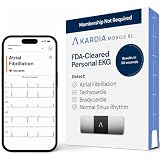
- ACCURATE AND DETAILED EKG RESULTS. KardiaMobile 6L records a medical-grade, six-lead EKG and provides FDA-cleared determinations of your heart rhythm in just 30 seconds.
- SIX LEADS, SIX TIMES THE DATA. Six-lead EKGs give you a more detailed view of your heart and more data to share with your doctor. With KardiaMobile 6L, you can detect AFib, Bradycardia, Tachycardia and Normal Sinus Rhythm right on your smartphone.
- TRUSTED BY PROFESSIONALS: Recommended by doctors, KardiaMobile 6L is the world’s first FDA-cleared six-lead personal EKG
- COMPATIBLE WITH SMARTPHONES. Works with most smartphones and tablets. KardiaMobile 6L is compatible with most popular phones and tablets. To use your Kardia device, you must download the Kardia app on a compatible device. Visit the Kardia store to check the list of compatible devices.
- NO SUBSCRIPTION REQUIRED. Takes a six-lead EKG and detects Atrial Fibrillation, Bradycardia, Tachycardia, and Normal Sinus Rhythm without a KardiaCare subscription.
- Broader cardiac diagnostics: CAM added wearable monitoring to Hillrom’s existing cardiology products.
- Recurring services revenue: The business combined a monitoring device with data management, clinical interpretation, and diagnostic-testing capabilities.
- Connected-care strategy: Hillrom described the transaction as supporting its “Advancing Connected Care” strategy.
- Clinical and commercial capabilities: Bardy brought expertise spanning cardiac electrophysiology, monitoring workflows, and independent diagnostic testing.
The strategic appeal was not simply that Hillrom was buying a Seattle startup. It was acquiring an integrated cardiac-diagnostics operation with a device, software and data workflows, clinical services, and a reimbursement-dependent revenue model.
How the consideration was structured
The $375 million figure was the announced upfront cash consideration, not necessarily the transaction’s final all-in economic value.
The merger agreement provided for:
- $375 million in initial cash consideration, subject to closing adjustments;
- additional commercial milestone payments; and
- revenue-based contingent consideration connected to the cardiac-monitoring product.
In one filing, Hillrom described maximum potential contingent consideration of approximately $24.7 million over the relevant measurement periods. Earlier contractual disclosures described revenue bands for 2021 and 2022, with payments varying according to whether specified revenue thresholds were reached. Those terms do not establish that the earnout was actually paid.
This distinction matters when comparing acquisition headlines. The negotiated headline price, cash delivered at closing, and accounting value can all differ.
The reimbursement dispute that sent the deal to court
The acquisition became contentious after a change in reimbursement rates for cardiac-monitoring services.
On April 10, 2021, Novitas published updated reimbursement rates for several cardiac-monitoring CPT codes. Hillrom disclosed that the decision affected its assessment of Bardy’s business and argued that it created a contractual Company Material Adverse Effect—a condition that could permit Hillrom to terminate the merger.
Rank #3

- Record and store ECG signals, and display heart rate for home health care use. There is no subscription or hidden cost required to use the device & app.
- The device can be connected with PC via USB, with mobile phone via Bluetooth.
- The function of software PC and mobile phone includes sample mode and time setting, upload case, case review, measurement etc.
- Powered by Built-in large capability rechargeable lithium battery.
- The device is intended for OTC (over-the-counter) Use. Implanted pacemaker are not recommended to use with this device. This device is not intended to substitute for a hospital diagnostic ECG device.
Bardy and its representatives disputed Hillrom’s position. The dispute was not merely about product performance; it concerned whether a reimbursement-policy change had sufficiently damaged the target’s expected economics to satisfy the agreement’s legal standard.
Hillrom’s first-quarter filing discussed the reimbursement issue, while its second-quarter filing covered the ensuing Delaware litigation. After a trial held May 5–7, 2021, the Delaware Chancery Court ordered Hillrom to proceed with the transaction on July 9. Hillrom’s Q1 filing and Q2 filing document the dispute and court order.
The ruling made the transaction a notable healthcare M&A case study: reimbursement policy can directly affect the value of a medical-device company, and disagreements over that effect can become central to a material-adverse-effect dispute.
Recommended Free Tools
When the acquisition closed
The merger closed on August 6, 2021, rather than in the second quarter as originally anticipated. Bardy survived the merger as a wholly owned indirect subsidiary of Hillrom.
Hillrom disclosed that approximately $367 million in cash was paid to equity holders at closing. The amount included roughly:
- $335 million related to the closing-date purchase price;
- $24 million associated with an indemnity-claim settlement; and
- $8 million in accrued interest.
The figures were subject to further adjustments. Accordingly, the most accurate summary is that Hillrom announced the deal at $375 million and paid approximately $367 million in cash at closing—not that $375 million was the final cash transfer.
Rank #4

- Accurate and detailed EKG results - Records a medical-grade, six-lead EKG and provides FDA-cleared determinations of your heart rhythm in just 30 seconds.
- Six Leads, Six Times more Information: Detects six of the most common arrhythmias including AFib, Bradycardia, Tachycardia, Sinus Rhythm with Premature Ventricular Contractions (PVCs), Sinus Rhythm with Supraventricular Ectopy (SVE), and Sinus Rhythm with Wide QRS.
- 6L Max includes one year of KardiaCare: Membership is required to use this 6-lead EKG. You will be prompted to enter payment details when you create your account, but you will not be charged during the first year. Your membership renews after one year unless canceled.
- Board-Certified Cardiologist EKG Reviews - KardiaCare includes four free EKG reviews per year, available to use anytime during the year. Using your detailed 6-lead EKG results, cardiologists can detect over 20 arrhythmias, with results delivered in just 24 hours. Additional reviews can be purchased for $39 each
- Automatically Email Your EKG to Doctors or Anyone - KardiaCare enables you to set up automatic emails so that results from your EKGs will be emailed to anyone you choose.
Hillrom’s August 6 closing disclosure provides the payment breakdown.
Why later accounting records show $434.2 million
Hillrom later recorded approximately $434.2 million in total consideration, including estimated contingent consideration, in purchase-accounting disclosures.
That number should not replace the $375 million headline price. Accounting consideration can include estimates of earnouts and other components recognized for financial-reporting purposes. It is not the same thing as the cash consideration announced in January or the approximately $367 million paid at closing.
For readers comparing M&A values, the three figures answer different questions:
| Figure | What it represents |
|---|---|
| $375 million | Announced upfront cash consideration, subject to adjustments and additional payments |
| Approximately $367 million | Cash paid to equity holders at the August 6, 2021 closing, including disclosed settlement and interest items |
| Approximately $434.2 million | Later accounting total consideration, including estimated contingent consideration |
The accounting figure appears in Hillrom’s audit disclosure.
Quick wins for a faster PC:
Repair Windows errors before they cause bigger problemsFix Now →Scan for outdated or missing drivers - takes under a minuteDriver Scan →Clear out junk files and repair common Windows errorsFree Scan →What happened to Hillrom and Bardy afterward?
Hillrom did not remain an independent public company for the long term. Baxter International agreed to acquire Hillrom in 2021, and Hillrom subsequently became part of Baxter. Later Baxter filings continued to describe Hillrom and its businesses within Baxter’s portfolio. Baxter’s 2025 Form 10-K provides the later corporate context.
Because current product branding, availability, reimbursement, and clinical performance are not established by the historical transaction records, it would be inaccurate to assume that CAM remained marketed under identical terms in 2026.
Why the deal still matters
The Bardy transaction illustrates several recurring issues in digital-health and medical-device acquisitions.
Quick Recap
- Reimbursement is a valuation risk. A change in payment rates can alter revenue expectations even when a product and its clinical use remain unchanged.
- Diagnostic businesses are integrated operations. Valuation may depend on hardware, software, data management, clinical interpretation, testing facilities, and workflow adoption together.
- Headline prices need context. Upfront consideration, closing cash, earnouts, and purchase-accounting values are not interchangeable.
- Material-adverse-effect provisions are consequential but difficult. Hillrom invoked the provision, Bardy challenged it, and the court ultimately ordered the buyer to close.
- Corporate identity can change after closing. Bardy became part of Hillrom, and Hillrom then became part of Baxter.
Product prices and availability are accurate as of the date/time indicated and are subject to change. Any price and availability information displayed on Amazon at the time of purchase will apply.



