The Tool Desk
Outbyte Driver Updater FREEFix the driver behind crashes, sound loss and screen glitchesFind Drivers →Outbyte PC Repair FREERepair Windows errors before they cause bigger problemsFix Now →Some links on this page are affiliate links: if you buy through them we may earn a commission, at no extra cost to you.
AI demand is worsening a real memory-supply squeeze, but it is not consuming every type of RAM equally. Manufacturers are directing scarce wafer, cleanroom, packaging, and testing capacity toward high-bandwidth memory (HBM) and high-capacity server DRAM. That leaves conventional PC memory, mobile memory, legacy products, and some storage components more exposed to higher costs and reduced availability.
For households, the practical result is not one universal global retail-price increase. It is a greater risk of higher RAM prices, fewer discounts, more expensive electronics, and uneven effects depending on whether a product uses DDR4, DDR5, LPDDR, HBM, or NAND flash.
| # | Preview | Product | Price | |
|---|---|---|---|---|
| 1 |

|
Corsair Vengeance RGB RS DDR5 16GB (2 x 8GB) Up to 6000MHz AMD Intel RAM | $284.96 | Buy on Amazon |
| 2 |
|
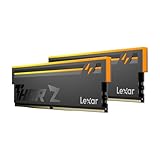
Lexar Thor Z RGB DDR5 RAM 32GB Kit (2x16GB) 6000MHz CL38 DRAM 288-Pin UDIMM | $499.99 | Buy on Amazon |
The short version
- AI servers need several kinds of memory: HBM beside accelerators, large pools of server DRAM, and enterprise SSDs for data and model infrastructure.
- Suppliers are prioritizing higher-value AI and server products. HBM and server memory use related manufacturing resources but require additional stacking, packaging, and testing.
- New capacity takes years. Fabs, cleanrooms, equipment, process qualification, and usable yields cannot be added quickly enough to eliminate near-term pressure.
- Consumers face price pressure, not a guaranteed uniform surge. Retail effects vary by country, generation, capacity, inventory, and seller.
What is actually in short supply?
“RAM” describes several related but different markets. Treating them as interchangeable makes the shortage sound simpler—and broader—than the evidence supports.
Do these 3 things before closing this tab:
1Scan for outdated or missing drivers - takes under a minute2Clear out junk files and repair common Windows errors3Fix the driver behind crashes, sound loss and screen glitches| Memory type | Where it is used | Why it is exposed |
|---|---|---|
| HBM | AI GPUs, custom accelerators, and advanced processors | Strongest direct demand from AI training and inference; requires advanced stacking and packaging. |
| Server DRAM | Cloud and enterprise servers, including AI hosts | AI systems need large amounts of conventional memory in addition to HBM. |
| Client DRAM | Desktop PCs and laptops | Can receive lower allocations when suppliers favor server products. |
| Mobile DRAM | Phones, tablets, and edge-AI devices | LPDDR demand is affected by device memory growth and supplier mix decisions. |
| Legacy and specialty DRAM | Older computers, vehicles, industrial equipment, and long-life systems | Mature products may become difficult or expensive as manufacturers migrate capacity to newer, higher-margin products. |
| NAND flash | SSDs, memory cards, and embedded storage | AI infrastructure increases enterprise SSD demand, but NAND is a separate market from DRAM. |
TrendForce has described pressure spreading from HBM into server modules and consumer segments as suppliers change their product mix. That does not mean every memory product is equally scarce or that a shortage of HBM directly translates into an identical shortage of desktop RAM. (TrendForce)
#1 Best Overall
- Disclaimer: Maximum Speed requires overclocking/PC BIOS adjustments. Maximum speed and performance depend on system components, including motherboard and CPU
- AMD EXPO & Intel XMP 3.0 Compatible Only: Dual memory profiles allow you to easily select optimized settings for your platform, whether you’re running an AMD or Intel processor
- Dynamic RGB Lighting: Individually addressable RGB lighting delivers vibrant effects through a sleek, understated panoramic diffuser
- Onboard Voltage Regulation: Onboard voltage regulation for reliable power at high frequencies
- Maximum Bandwidth and Tight Response Times: Optimized for peak performance on the latest AMD and Intel DDR5 motherboards
Why AI needs so much memory
AI workloads use memory at multiple layers. HBM supplies extremely high bandwidth close to an accelerator. Host servers use large DDR5 memory pools for model serving, preprocessing, orchestration, databases, and operating systems. Enterprise SSDs hold training data, model checkpoints, retrieval indexes, and other working data.
Demand is also spreading beyond hyperscale data centers. AI-capable PCs, smartphones, vehicles, and robots require more memory than many earlier products. SK hynix has argued that AI is expanding from model training into agentic and physical AI, increasing demand for both DRAM and NAND rather than creating only one temporary HBM cycle. (SK hynix)
How HBM squeezes ordinary DRAM
HBM and a consumer DIMM are different finished products, but they draw on a connected supply chain:
- DRAM dies are manufactured on related wafer-processing lines.
- HBM uses advanced DRAM dies that are stacked and connected vertically.
- The finished product requires additional packaging, testing, and qualification capacity.
- HBM can consume substantially more wafer and cleanroom resources per usable bit than conventional DRAM.
- Suppliers have a financial incentive to prioritize HBM and high-capacity server products because AI customers pay more and often make long-term commitments.
Micron has described an approximate 3:1 HBM-to-DDR5 trade ratio in an earlier 2026 outlook. In practical terms, the company was illustrating how shifting manufacturing resources toward HBM can produce far fewer equivalent bits of conventional DDR5. This is a company-provided comparison, not a universal engineering constant for every product or manufacturer. (Micron)
The consequence is capacity allocation rather than the literal disappearance of all consumer memory. Lower-priority products can receive smaller allocations, face longer lead times, or become less attractive for manufacturers to continue producing.
The price evidence is strongest at the contract level
TrendForce reported that conventional DRAM contract prices rose approximately 93% to 98% quarter over quarter in the first quarter of 2026. That is a dramatic wholesale and contract-market movement, but it is not the same thing as saying every retail RAM kit became 98% more expensive. (TrendForce)
TrendForce’s July reporting continued to describe extremely low supplier inventories, strong server demand, and further server-DRAM price pressure in the third quarter. Samsung also said higher industry memory prices contributed to a record memory quarter while warning that the market would remain undersupplied in the second half of 2026. (TrendForce; Samsung)
Free tools Windows power users keep installed
One-click scans. No signup required.
For personal-finance decisions, the distinction matters. A contract price is negotiated between manufacturers and large customers. A retail price depends on inventory bought earlier, distributor margins, promotions, exchange rates, country, product generation, capacity, and the seller’s willingness to absorb costs.
Which companies control supply?
Samsung Electronics, SK hynix, and Micron Technology are the central suppliers in the global DRAM market and major participants in HBM. Their public announcements show how aggressively the industry is moving toward AI memory:
- Samsung announced mass production and commercial shipments of HBM4 in February 2026 and later said capacity remained limited while demand for server and HBM products stayed strong. (Samsung)
- SK hynix announced 12-layer HBM4E samples in June 2026. Samples demonstrate product progress but are not the same as full mass production. (SK hynix)
- Micron expects HBM4E volume production in calendar 2027 and has said DRAM and NAND supply-demand conditions could remain tight beyond calendar 2027. (Micron; Micron prepared remarks)
These companies are increasing output, but higher industry shipments do not automatically mean excess supply. Micron expects 2026 industry DRAM bit shipments to grow in the low-to-mid-20% range; that is a shipment forecast, not proof that supply will exceed demand.
Who feels the pressure first?
- AI infrastructure operators: They compete for HBM, server DRAM, packaging capacity, and enterprise SSDs.
- Enterprise server buyers: Even non-AI workloads can face higher memory costs when server capacity is prioritized.
- PC and laptop manufacturers: Memory is a meaningful component cost and can affect configurations and margins.
- Phone and tablet makers: Higher LPDDR costs can encourage lower-memory configurations or higher device prices.
- Automotive and industrial buyers: Long product lifecycles make reliable supply especially important.
- Retail consumers: They may encounter higher prices, fewer promotions, or less choice, but usually later and unevenly.
What it means for household budgets
Consumers may see higher prices for desktop RAM kits, laptop components, memory cards, SSDs, game consoles, phones, and other electronics. Device manufacturers may pass through some component costs, reduce promotions, delay upgrades, or offer lower memory configurations.
Recommended Free Tools
That does not establish one global consumer-price percentage. A DDR4 kit, a premium DDR5 gaming kit, soldered LPDDR in a laptop, and an enterprise SSD can move in different directions. Mature products may be particularly volatile if production is being reduced, even when their underlying technology is older.
Higher prices can also destroy demand. Households may postpone PC purchases, choose smaller storage or memory configurations, or keep existing devices longer. TrendForce has linked memory-cost inflation with pressure on PC shipment expectations. (TrendForce)
Rank #2
- Unleash Next-Gen Dominance: Experience Lexar DDR5 RAM performance with the Lexar THOR Z Series RGB DDR5 RAM 32GB Kit (2x16GB). Clocking at a blistering 6000MHz with low CL38 latency, this DDR5 desktop memory delivers up to 6000 MT/s for a full-throttle advantage. Whether you're building a high-end gaming rig or a professional workstation, this Lexar 32GB RAM kit ensures your system keeps pace with next-gen titles
- Sleek & Robust Thermal Design: Engineered for both aesthetics and endurance, this Lexar DDR5 RAM 6000MHz features an all-new streamlined design. The solid, sandblasted aluminum heatsink fuses a minimalist, razor-sharp aesthetic with uncompromising thermal control. This Lexar THOR Z Series armor ensures your DDR5 memory stays cool under pressure, delivering sustained peak performance during intense gaming sessions
- Game in Style with Brighter RGB Lighting: Elevate your build's aesthetics with the enhanced customizable RGB lighting on this Lexar RGB DDR5 RAM. Brighter and more vibrant than previous generations, the Lexar THOR Z Series RGB DDR5 RAM allows you to synchronize lighting effects with your components, creating a truly immersive gaming atmosphere that stands out from the crowd
- On-die ECC & PMIC for Rock-Solid Stability: Go beyond speed with reliability. This Lexar DDR5 RAM kit integrates On-die Error Correction Code (ECC) to automatically correct data errors, vastly improving stability and reliability for your critical tasks. The onboard Power Management Integrated Circuit (PMIC) ensures efficient power delivery, boosting the overall power efficiency of your DDR5 desktop memory for a longer-lasting, more stable system
- Seamless Compatibility with Intel & AMD: Worry-free upgrade guaranteed. The Lexar THOR Z Series DDR5 RAM is built for broad compatibility with the latest platforms. It fully supports Intel XMP 3.0 and AMD EXPO one-click overclocking, making it effortless to achieve the rated speeds. Trust Lexar DDR5 RAM to deliver seamless performance with mainstream DDR5 motherboards
What should consumers do?
If you need a PC upgrade now
- Check whether the motherboard requires DDR4 or DDR5 before comparing prices. They are not interchangeable.
- Prioritize sufficient capacity and compatibility over premium frequency or decorative features.
- Compare several sellers and watch the price of a specific capacity and generation over time.
- Do not assume DDR4 is automatically the bargain option. Reduced production can make older memory unexpectedly expensive.
- For laptops, remember that soldered LPDDR generally cannot be upgraded. Buying enough factory memory is more important than waiting for a later upgrade.
If you can wait
Waiting could help if new capacity arrives, demand weakens, or AI orders are delayed. It could also backfire if tight conditions persist or retail inventories fall. The available outlook points to continued pressure through at least 2026 and potentially beyond 2027, but that is a forecast—not a guarantee.
If you are buying used memory
Verify the generation, capacity, voltage, ECC or non-ECC status, registered or unbuffered type, and motherboard compatibility. A consumer DIMM is not a substitute for ECC registered server memory, regardless of its capacity or advertised speed.
What’s actually slowing this PC down?
Pick the symptom - the matching free tool is one click away.
Why new fabs will not solve the problem immediately
Memory supply cannot be expanded simply by announcing an investment. New fabs require construction, specialized equipment, cleanroom qualification, process development, yield improvement, and customer validation. HBM adds packaging and testing constraints beyond wafer production.
Micron’s U.S. expansion illustrates the delay. Its Idaho fabs were expected to produce first wafers in mid-2027 and late 2028, while its broader U.S. investment plan extends through 2035. Those dates are company targets and do not represent immediate retail supply. (Micron)
Cars are affected through planning, not proven global shutdowns
Modern vehicles use more memory and storage as software, driver assistance, infotainment, and connectivity expand. Because vehicle programs last for years, automakers cannot easily substitute a component after launch.
Micron signed long-term strategic agreements with Ford and General Motors to strengthen memory supply for future vehicle programs. Those agreements show that automotive procurement is becoming more deliberate; they do not prove that a global vehicle-production shutdown or universal car-price increase has occurred. (Micron)
Could the shortage reverse?
Yes. Memory markets are cyclical and can move rapidly from shortage to oversupply.
- AI infrastructure spending could slow, be delayed, or be canceled.
- Quantization, compression, more efficient models, and better utilization could reduce memory per workload.
- High prices could weaken PC, smartphone, and consumer-electronics demand.
- New fabs, process migrations, and packaging capacity could arrive faster than expected.
- Suppliers could shift capacity back from HBM to conventional DRAM.
Micron’s regulatory filing explicitly warns that weaker HBM demand and a shift toward conventional DRAM could create oversupply and falling prices. That is why buying extra memory as an investment is risky. (Micron filing)
For businesses: treat memory as a procurement risk
IT departments and manufacturers should avoid relying entirely on spot purchases. Qualified alternative modules, multiple suppliers, longer planning horizons, and allocation agreements can reduce the risk of a sudden shortage. Compatibility testing is essential: server ECC registered memory, desktop DIMMs, mobile LPDDR, HBM, and NAND SSDs cannot simply replace one another.
The same principle applies to device makers. Long-term agreements can reserve supply, but they may reduce flexibility if demand changes. Procurement teams should balance supply security against the possibility that prices fall when the cycle turns.
The bottom line
The global DRAM shortage is deepening, but the accurate explanation is a capacity-allocation and supply-expansion problem, not the physical disappearance of all RAM. AI demand is pulling manufacturers toward HBM and high-capacity server memory, while new wafer, cleanroom, packaging, and testing capacity will take years to arrive.
Wholesale and contract prices are already under significant pressure. Consumers may pay more for RAM and electronics, but the size and timing of any retail increase will depend on the product, country, generation, channel inventory, and demand. The squeeze could last through 2026 and beyond 2027 according to supplier forecasts, yet a slowdown in AI spending or faster capacity growth could eventually produce the opposite problem: oversupply and falling prices.
Quick Recap
Product prices and availability are accurate as of the date/time indicated and are subject to change. Any price and availability information displayed on Amazon at the time of purchase will apply.



