Some links on this page are affiliate links: if you buy through them we may earn a commission, at no extra cost to you.
Germany, France and Italy agreed on a common position for the EU’s AI Act negotiations in November 2023. They did not create a separate three-country AI law. Their proposal favored regulating AI in the context of its applications and using mandatory, industry-developed codes for foundation-model providers. The binding framework is the EU AI Act, whose general application date is August 2, 2026, with some obligations on different timelines.
What Germany, France and Italy agreed to
The agreement was a political negotiating position intended to influence EU-wide rules—not a treaty or regulation enacted by the three national governments. It followed an October 30, 2023, ministerial meeting in Rome, where Italy’s Adolfo Urso, Germany’s Robert Habeck and France’s Bruno Le Maire discussed AI policy and broader industrial cooperation. The meeting covered infrastructure, data, skills, startups and the EU AI Act negotiations. Italy’s official account described cooperation that could inform future EU initiatives.
In November, Reuters reported details of a joint paper from the three governments. It proposed a framework for foundation models—general-purpose models that can support many downstream tools and services—built around mandatory compliance with industry-developed codes of conduct. The reported proposal also included model cards, documentation describing a model’s capabilities and limitations, and a possible governance body to develop guidance and monitor compliance. It contemplated no immediate sanctions, while leaving open the possibility of sanctions later if the framework failed. Reuters’ report is the source for these specific proposals; they should not be mistaken for the final EU rules.
What’s actually slowing this PC down?
Pick the symptom - the matching free tool is one click away.
The governments argued that regulation should focus on risks arising from how AI is used, rather than treating the underlying technology as inherently dangerous. This was not simply a choice between regulating AI and leaving it alone. It was a dispute about where in the AI supply chain legal duties should attach: to the model itself, to the system using it, or to the organization deploying that system.
#1 Best Overall
![Arduino® UNO™ Q 4GB [ABX00173]- Hybrid Board, Qualcomm Dragonwing QRB2210 microprocessor (MPU) & STM32U585 Microcontroller(MCU), AI Vision, Voice, IoT, Robotics, Linux Debian OS, Wi-Fi 5, USB-C](https://m.media-amazon.com/images/I/51cl4xygwGL._SL160_.jpg)
- Dual-Brain Hybrid Power: Combines the Qualcomm Dragonwing QRB2210 MPU (Quad-core Arm Cortex-A53 @ 2.0 GHz CPU, Adreno GPU, AI acceleration) and the real-time, low-power STM32U585 MCU for advanced applications like object recognition, voice commands, and motion detection.
- AI & Linux Capabilities: Unlocks AI-powered vision and sound solutions; runs Linux Debian OS for coding in Python and supports the Arduino ecosystem with libraries and Sketches; quick start with Arduino App Lab.
- Advanced Features: Equipped with 4 GB LPDDR4 RAM, 32 GB eMMC built-in storage, ideal for single-board computer (SBC) mode, running multiple simultaneous high-level processes, more complex AI or ML models, extensive logs. Dual-band Wi-Fi 5 (2.4/5 GHz), Bluetooth 5.1, and high-speed headers for vision, audio, and display peripherals.
- Seamless Expansion & Connectivity: Features the classic UNO form factor for shields compatibility, an 8x13 LED matrix, and a Qwiic connector for easy expansion with Modulino nodes; power and connect via the USB-C connector.
- Intended Use & Development: The perfect platform for prototyping robotics or IoT projects, empowering innovators with a unified development experience to mix Arduino Sketches, Python scripts, and containerized AI models in a single interface.
Why foundation models were contentious
A general-purpose model can be adapted for many purposes. A single model might underpin a writing assistant, a customer-service tool or a system used in a consequential setting. That creates a policy challenge: obligations placed on the model provider can set a baseline before the technology reaches many downstream products, but broad or rigid rules can also burden providers whose models have diverse uses and risk profiles.
An application-focused approach can be more sensitive to context: the same underlying model may pose different risks depending on its use. But relying mainly on downstream safeguards may leave gaps if risks originate in the model itself or if responsibility is difficult to assign across a chain of providers and deployers. Codes of conduct can draw on technical expertise and adapt faster than legislation; without clear oversight and enforcement, they may also leave uncertainty about consistent compliance. The three countries’ reported proposal sought a middle path, but it did not settle the EU’s legislative debate.
Rank #2
- Dual-Brain Hybrid Power: Combines the Qualcomm Dragonwing QRB2210 MPU (Quad-core Arm Cortex-A53 @ 2.0 GHz CPU, Adreno GPU, AI acceleration) and the real-time, low-power STM32U585 MCU for advanced applications like object recognition, voice commands, and motion detection.
- AI & Linux Capabilities: Unlocks AI-powered vision and sound solutions; runs Linux Debian OS for coding in Python and supports the Arduino ecosystem with libraries and Sketches; quick start with Arduino App Lab.
- Advanced Features: Equipped with 2 GB LPDDR4 RAM, 16 GB eMMC built-in storage, ideal to develop in PC-connected mode, running the OS, Python scripts, and basic network services (SSH) without a demanding GUI or heavy multitasking; great for lightweight AI and memory-optimized TinyML applications, needing local storage for basic OS and core libraries. Dual-band Wi-Fi 5 (2.4/5 GHz), Bluetooth 5.1, and high-speed headers for vision, audio, and display peripherals.
- Seamless Expansion & Connectivity: Features the classic UNO form factor for shields compatibility, an 8x13 LED matrix, and a Qwiic connector for easy expansion with Modulino nodes; power and connect via the USB-C connector.
- Intended Use & Development: The perfect platform for prototyping robotics or IoT projects, empowering innovators with a unified development experience to mix Arduino Sketches, Python scripts, and containerized AI models in a single interface.
The wider agenda: competitiveness and capacity
The Rome meeting was about more than compliance. The official ministerial account connected AI governance with European competitiveness and industrial capacity. The countries emphasized reducing unnecessary administrative burdens, supporting startups and small and medium-sized businesses, and improving access to computing power, data, advanced skills and testing facilities. They also discussed language technologies, European Digital Innovation Hubs and competence centres, data protection, secure data flows and cloud cybersecurity.
Free tools Windows power users keep installed
One-click scans. No signup required.
That industrial-policy theme continued after the 2023 negotiations. A 2025 Franco-German economic agenda called for coordination on AI Act implementation and cooperation on AI ecosystems and computing infrastructure. In January 2026, Germany and Italy committed to deepen bilateral AI cooperation, including links between Italy’s AI Factory and German high-performance computing. France and Germany also set out further work on European technology capacity and competitiveness in July 2026. These initiatives are separate from the AI Act: they concern cooperation and capability-building, not a replacement for EU law.
Rank #3
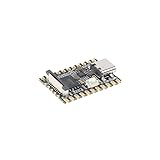
- Single core ARM Cortex-A7 32-bit core, integrated with NEON and FPU
- Built in Micro's self-developed 4th generation NPU, with high computational accuracy and support for mixed quantization of int4, int8, and int16. Among them, int8 has a computing power of 0.5 TOPS and int4 has a computing power of up to 1.0 TOPS
- Built in self-developed 3rd generation ISP3.2, supports 4 million pixels, and supports various image enhancement and correction algorithms such as HDR, WDR, and multi-level denoisin
- It has powerful encoding performance, supports intelligent encoding, adapts to save bit rates according to the scene, and saves more than 50% of the bit rate compared to conventional CBR mode, making the captured images high-definition, smaller in size, and doubling the storage space
- The design with built-in RISC-V MCU supports low-power fast startup, 250ms fast capture, and simultaneous loading of AI model library, enabling facial recognition to be completed within 1 second
What became law: the EU AI Act
The EU institutions reached a provisional political agreement on the AI Act in December 2023. The Council gave final approval on May 21, 2024, and Regulation (EU) 2024/1689 entered into force on August 1, 2024. The final law was produced through the EU legislative process; it did not simply adopt the three-country proposal.
The Act uses a risk-based structure. It prohibits certain AI practices, imposes requirements on some high-risk systems, sets transparency duties for specified systems, and establishes rules for general-purpose AI models. Providers and deployers can have different responsibilities. General-purpose models have documentation and transparency obligations, while models presenting systemic risks face additional duties that include model evaluation, adversarial testing, risk assessment and cybersecurity measures. The framework therefore goes further than relying solely on industry codes, and it provides for significant penalties for violations.
Rank #4

- 【POWERFUL ESP32‑S3 CONTROLLER】Built‑in Xtensa 32‑bit LX7 dual‑core processor, 512KB SRAM, 8MB PSRAM, 16MB Flash for stable AI voice computing and multitask processing.
- 【Preloaded Dual AI Platforms】Comespre-installed with complete Deepseek and OpenAI voice dialogue projects.Experience intelligent voice interaction instantly. (Note: OpenAI functionality requires your own API key.)
- 【STABLE WIRELESS & CLEAR AUDIO】Integrated 2.4GHz Wi‑Fi + Bluetooth 5 (LE); dedicated audio decoding module for natural, responsive voice interaction.
- 【USER‑FRIENDLY VISUAL & PLUG‑AND‑PLAY】2” TFT‑SPI color screen shows real‑time chat; modular design, no extra wiring, ready to use after setup.
- 【FULL LEARNING SUPPORT】45 programmable GPIOs, rich interfaces, online web tutorials, free technical support for beginners & developers.
“General-purpose AI” and “high-risk AI” are not interchangeable categories. A general-purpose model can be used in many kinds of systems; whether a downstream system is high-risk depends on the system’s intended use and the Act’s classifications. Nor does the Act apply only to European-headquartered firms: a provider outside the EU may be within its scope when it places an AI system or model on the EU market or the system’s output is used in the EU, subject to the Act’s scope and exceptions. Military and defence uses, as well as certain research activities, are treated differently.
AI Act timeline: what applies when
- August 1, 2024: The AI Act entered into force.
- February 2, 2025: Prohibitions on specified AI practices and AI-literacy obligations began to apply.
- August 2, 2025: Governance provisions and obligations for general-purpose AI models began to apply.
- August 2, 2026: The European Commission identifies this as the Act’s general full-application date. It does not mean every obligation starts on that day.
- August 2, 2027: The Commission’s current timeline gives this extended deadline for certain high-risk use cases.
- August 2, 2028: High-risk AI systems embedded in regulated products have an extended transition period until this date.
These dates reflect the Commission’s current timeline; businesses should check the applicable category and any updated legal requirements rather than assume one date covers every system. The Commission also says the Council and Parliament reached a provisional political agreement on an AI simplification package on May 7, 2026. That announcement is not, by itself, confirmation that every proposed change has become final law. The Commission’s AI Act page and its implementation FAQ set out the current timeline and details.
How to understand the 2023 agreement today
The three governments were influential participants in a high-stakes debate among major EU economies, but it would be inaccurate to say they dictated the outcome or won the negotiations. Their position pushed for risk-based, innovation-conscious rules and a less direct approach to foundation-model regulation. The final Act combines obligations at multiple levels, including statutory duties for general-purpose models and stronger requirements for models classified as presenting systemic risks.
The proposal for mandatory industry codes should also not be confused with the European Commission’s AI Pact. The AI Pact is a voluntary initiative intended to help organizations prepare for the Act; it is not the 2023 trilateral proposal or a substitute for binding obligations. For readers asking what governs AI use in the EU now, the answer is the AI Act and its applicable transition rules—not the November 2023 political paper.
Quick Recap
Product prices and availability are accurate as of the date/time indicated and are subject to change. Any price and availability information displayed on Amazon at the time of purchase will apply.



