Some links on this page are affiliate links: if you buy through them we may earn a commission, at no extra cost to you.
Found Energy’s aluminum-fuel experiment is no longer merely upcoming. The Boston startup says it completed a 100-kilowatt power-system pilot in 2025, and expects its first commercial-scale energy projects in 2027. The system reacts specially treated aluminum with water to produce heat, hydrogen and an oxidized aluminum byproduct.
That is an important engineering milestone—but not proof that aluminum is a commercially competitive or lifecycle-zero-carbon replacement for natural gas, propane, hydrogen or electricity. The unanswered questions are uptime, net efficiency, scrap economics, catalyst recovery, byproduct handling and the cost of restoring oxidized aluminum to usable metal.
What Found Energy built
Found Energy, now presented within Found Industries, was founded in 2022 by Peter Godart, an MIT-trained scientist and former NASA researcher. The company raised a reported $12 million seed round in 2024 and has described a progression from a 10-kilowatt prototype to a nominal 100-kilowatt aluminum-water system.
In 2025 reporting, Found Energy planned to install the 100-kilowatt reactor at an unnamed tool-manufacturing facility in the southeastern United States. The proposed demonstration was intended to use aluminum scrap from the facility—especially material considered difficult or uneconomic to recycle—and provide industrial heat and hydrogen.
#1 Best Overall

- Cordless Threading for Mobility & Safety: Operates without a cord for maximum freedom on job sites while reducing tripping hazards and setup time compared to corded threaders.
- High-Capacity Battery System: Includes (2) M18 REDLITHIUM HIGH OUTPUT XC8.0 batteries, delivering superior runtime and fade-free power for extended threading sessions.
- Threading Range & Compatibility: Supports pipe sizes from 1/2 inch to 1-1/4 inches with durable aluminum dies, making it ideal for mechanical, HVAC, and plumbing trades.
- One-Key Technology & App Integration: Enables remote tool tracking, theft protection, and customizable settings through the Milwaukee ONE-KEY app for enhanced jobsite control.
- Compact Design with Support Arm: Streamlined form factor allows for work in confined spaces; included support arm improves stability and reduces operator fatigue and kickback risk.
Found Industries now says the 100-kilowatt pilot was completed in 2025. Its website also says a $5 million Department of Energy grant was awarded in 2026 and that the first commercial-scale projects are expected in 2027. The available public material does not identify the customer or disclose operating hours, uptime, net efficiency, delivered energy cost or independently verified emissions.
The “100 kilowatts” figure should also be read carefully. The available sources do not clearly establish whether it refers to thermal output, electrical output or total usable cogeneration output. It should not be described as 100 kilowatts of electricity.
Found Energy has called the system the largest aluminum-water reactor it had built. The description of it as the “biggest real-world test” should be attributed to the company or 2025 coverage, rather than treated as an independently verified global ranking.
Do these 3 things before closing this tab:
1Repair Windows errors before they cause bigger problems2Scan for outdated or missing drivers - takes under a minute3Clear out junk files and repair common Windows errorsFound Industries’ current company information provides the latest status claim, while the original pilot description is detailed in 2025 reporting on the proposed demonstration.
How aluminum releases energy
Aluminum appears chemically stable in ordinary conditions because it quickly forms a thin oxide coating. That layer protects the underlying metal and prevents water from reacting rapidly with it.
Found Energy says its proprietary treatment, which it calls “fractal exfoliation,” disrupts that protective layer and exposes more reactive aluminum surfaces. Earlier reporting described a catalyst or catalytic material incorporated into the aluminum. It referred to a proprietary low-melting-point liquid metal and to Godart’s previous work with gallium-indium mixtures. The current catalyst composition is proprietary and has not been independently established in the supplied sources.
Rank #2

- 【17 GPM & 380W POWER】Compared to other Transfer Pumps with a power of only 160W, this diesel transfer pump uses a motor with a power of up to 380W, which allows it to quickly move fuel at a speed of 17 gallons per minute and lift its head up to 26 feet. This means that it only takes up to 5 minutes to complete the 55 Gallon Drum.
- 【AUTO-STOP & LOCK-ON NOZZLE】The pump handle is just like the auto-shut off nozzles at a fuel station, which helps prevent spills and overflows, making the transfer process cleaner and more efficient. The auto stop nozzle is made of aluminum alloy material to prevent corrosion by fuel. Lock-on nozzle for hands-free fueling.
- 【COMPATIBLE with DeWalt/Milwaukee/Makita BATTERIES】This smart cordless fuel transfer pump works compatible with DEWALT 20V and Milwaukee 18V batteries through the included battery adapter and can easily handle multiple 50 gallon transfers. It also compatible with Makita 18V batteries through its own battery compartment, making it easy to refuel large equipment such as tractors and generators, or transfer fuel in places without power such as farms, ranches, and construction sites. (TOOL ONLY, BATTERY NOT INCLUDED)
- 【LEAK-PROOF & PORTABLE】Unlike other Diesel Transfer Pumps that use Worm Gear Hose Clamps or Wing Nut Clamps, our transfer pump chooses to use the better Double Wire Hose Clamps. This dual safety design can effectively prevent fuel leakage during transportation and effectively prevent fuel waste. The cordless design is a big plus--NO need to deal with extension cords or vehicle power hookups.
- 【ALL ACCESSORIES ARE INCLUDED】No need to purchase anything extra, it already includes 1x pump, 2x 6.6ft hoses, 1x Auto-shut off Nozzle, 1x filter, 6x Double Wire Hose Clamps, 1x battery adapter, making it easy to transfer fuel from portable fuel tanks to tractors and other agricultural equipment.
The simplified reaction is:
Aluminum + water → hydrogen + heat + aluminum hydroxide or related oxidized aluminum products
In practice, the system must control an exothermic reaction, manage hot water or steam, separate and handle hydrogen, and collect the oxidized aluminum material. Found Energy describes the output as alumina trihydrate or an aluminum-hydroxide-related product.
This is not energy appearing from nowhere. Metallic aluminum stores energy that was used earlier to refine aluminum oxide into metal. When the metal reacts, some of that stored energy is released and the aluminum returns to an oxidized state.
Why industrial customers might care
Some industrial processes require high-temperature heat or steam and cannot easily be served by a standard heat pump. Electric boilers, resistance heating and induction systems can work in many applications, but they may require expensive grid upgrades or face high electricity costs.
An aluminum-water system could potentially offer:
- Solid, transportable energy storage without hydrogen compression or liquefaction.
- On-site production of both heat and hydrogen.
- Dispatchable energy for facilities with limited grid capacity.
- A use for contaminated, coated, mixed or otherwise difficult-to-recycle aluminum scrap.
- Integration with an existing industrial steam system.
Found Energy claims aluminum has roughly twice diesel’s volumetric energy density and substantially higher volumetric energy density than hydrogen gas. Such comparisons depend on the basis used—fuel energy versus usable system output, and whether storage equipment, water, processing and conversion losses are included. They should not be interpreted as a direct efficiency advantage over electricity.
What’s actually slowing this PC down?
Pick the symptom - the matching free tool is one click away.
Electricity is often the better option when a process can be directly electrified efficiently. Hydrogen may be preferable where the customer already has hydrogen infrastructure or needs hydrogen as a chemical input. Aluminum’s potential advantage is narrower: it may combine transportable stored energy, high-temperature heat and hydrogen in a form that is easier to handle than gaseous hydrogen.
Rank #3
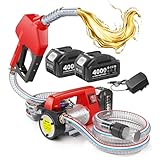
- Cordless for Easy Use Anywhere: This cordless fuel transfer pump eliminates tangled cables for ultimate convenience—lightweight and portable, it’s perfect for moving fuel from portable fuel tanks into tractors and other farm equipment. Enjoy unrestricted mobility to move freely between fuel storage, machinery, and work sites, no longer tethered to a power outlet, making every fueling job simpler and more flexible
- Convenient 2x4000mAh Rechargeable Battery: Simply install the battery, connect the hoses, and you're ready! With up to 60 minutes of continuous use on a single charge, you'll have plenty of time to transfer fuel without interruptions
- 12GPM Fast Transfer: Transfer fuel incredibly fast and effortlessly, cutting down up to an hour of your daily workflow when refueling equipment from main tanks. Powered by a robust copper motor, this fuel transfer pump delivers an impressive 12 gallons per minute (12GPM). It transforms tedious manual fueling into a quick, efficient task—saving you significant time and effort every time you use it
- Powerful Transfer Performance: The TaskStar diesel transfer pump can draw fuel from a maximum depth of 16.4 feet below the surface. It can also lift and push fuel to a height of up to 32.8 feet, making it versatile for various tank configurations and placement scenarios. This depth capability makes it suitable for transferring fuel from deep storage tanks, buried containers, or lower-positioned fuel sources
- Safe Auto Shut-Off Feature: The fuel nozzle switch pops out automatically when the tank is full, while the pressure switch cuts power to the diesel transfer pump for added safety. Critical when working with expensive diesel in outdoor conditions. Plus, a filter ensures your fuel stays clean by removing impurities
“Zero-carbon” needs a boundary
The aluminum-water reaction itself does not inherently involve carbon and therefore does not directly emit carbon dioxide in the way fossil-fuel combustion does. More precise descriptions would be “no direct CO₂ emissions at the reactor” or “potentially zero-emission heat and hydrogen at the point of use.”
That is not the same as zero lifecycle emissions. A complete assessment would need to account for:
- Mining and refining the aluminum.
- The electricity used to produce or recharge metallic aluminum.
- Scrap collection, sorting, cleaning and transport.
- Catalyst production, recovery and losses.
- Reactor construction and maintenance.
- Water treatment and pumping.
- Transport and treatment of the oxidized aluminum byproduct.
- Whether the scrap would otherwise have been profitably recycled.
Found Energy presents aluminum as a rechargeable fuel. That makes the system better understood as an energy-storage and energy-transport pathway than as a primary energy source. If low-carbon electricity is used to regenerate aluminum, the overall system could potentially have a lower carbon footprint. The amount of electricity required and the resulting round-trip efficiency remain decisive unanswered questions.
The Tool Desk
Outbyte Driver Updater FREEFix the driver behind crashes, sound loss and screen glitchesFind Drivers →Outbyte PC Repair FREERepair Windows errors before they cause bigger problemsFix Now →The recycling dilemma
Aluminum is valuable and technically recyclable, so using it as fuel is not automatically a better outcome than remelting it. Clean, separated scrap may generate more economic and environmental value through conventional recycling.
The more compelling case is material that is contaminated, heavily coated, mixed with other materials or too costly to sort and remelt. But the business model depends on proving that distinction. If the reactor requires extensive cleaning or special processing, the supposed waste advantage may disappear. If the scrap could have been recycled profitably, the system may be destroying a higher-value feedstock.
The aluminum also does not disappear after producing heat and hydrogen. The company must sell, reuse, store or recharge the oxidized product. That creates two possible models:
Rank #4

- 【High-Precision Lithium Battery Monitoring】 1% SOC accuracy with ModelGauge algorithm; 2.5V to 4.5V input range; 12.5mV voltage resolution; supports overvoltage protection and real-time power status display
- 【Low-Power Design for Extended Battery Life】 Less than 3µA standby current; 72-hour operation with 2000mAh battery; Suitable for portable and low-power applications
- 【I²C/SMBus Compatible for Easy Integration】 Standard I²C interface (100kHz or 400kHz); compatible with for Arduino, for Raspberry Pi, STM32; plug-and-play digital output without calibration learning
- 【Programmable Low-Battery Alert System】 ALERT pin triggers low-level interrupt when threshold is reached; reduces MCU polling overhead; configurable via register settings
- 【Robust Performance in Harsh Settings】 -40°C to 85°C operating range; built-in noise suppression and temperature compensation; stable performance in complex power supply conditions
- Waste-to-energy: use scrap that has limited conventional recycling value and manage the oxidized aluminum as a product or waste stream.
- Closed-loop storage: use electricity to convert the oxidized material back into metallic aluminum and cycle it through the reactor again.
The closed-loop model could make aluminum a rechargeable energy carrier, but it also brings back the large energy requirement of aluminum refining. It should not be called automatically circular or carbon-free without a full materials and lifecycle analysis.
Quick wins for a faster PC:
Repair Windows errors before they cause bigger problemsFix Now →Fix the driver behind crashes, sound loss and screen glitchesFind Drivers →Clear out junk files and repair common Windows errorsFree Scan →What the pilot must prove
A 100-kilowatt deployment is a systems-engineering test, not simply a chemistry demonstration. Investors, industrial customers and policymakers should look for the following evidence.
Performance
- Continuous operating hours and uptime.
- Startup, shutdown and load-following behavior.
- Thermal output and hydrogen output reported separately.
- Net energy after pumps, controls, water treatment, fuel preparation and gas handling.
- Aluminum conversion rate and water consumption.
- Hydrogen purity, pressure and usable volume.
- Steam temperature, pressure and usable industrial duty.
Materials and reliability
- Performance with painted, oily, coated, alloyed and contaminated scrap.
- Catalyst recovery rate and replacement cost.
- Corrosion, erosion and passivation behavior.
- Byproduct quantity, consistency and marketability.
- Maintenance intervals and component life.
Safety
- Hydrogen leak detection and ignition controls.
- Pressure-vessel performance.
- Aluminum dust and pellet-handling risks.
- Catalyst containment.
- Emergency shutdown behavior.
- Management of hot steam and reactive or caustic materials.
Economics
- Cost per usable megawatt-hour of heat.
- Cost per kilogram of hydrogen.
- Capital cost per kilowatt.
- Scrap preparation, transport and feedstock costs.
- Catalyst losses and recovery expenses.
- Revenue or disposal costs for the oxidized aluminum byproduct.
- Comparison with natural gas, propane, electric boilers, heat pumps, biomass and delivered hydrogen.
The supplied public sources do not provide these field-performance figures. Completion of the pilot is therefore evidence of progress, not evidence that the system has achieved cost parity or commercial reliability.
Independent reader supportYour contribution helps us test, update, and keep practical guides available for everyone.Why the proposed scale-up matters
2025 reporting described a possible 1-megawatt reactor as the next step—ten times the nominal pilot capacity. That would be meaningful for an industrial customer, but ten times the nameplate output does not automatically mean ten times the commercial readiness.
Larger systems can expose problems that are not obvious at laboratory or pilot scale: uneven feedstock flow, heat-transfer limits, catalyst distribution, hydrogen separation, corrosion, byproduct accumulation, maintenance access and safe emergency shutdown. A 100-kilowatt system can demonstrate that the reaction works continuously; a megawatt system must show that the entire plant remains controllable and economical.
Recommended Free Tools
Where aluminum fuel may fit—and where it may not
| Use case | Potential fit | Main question |
|---|---|---|
| High-temperature industrial heat | Potentially useful where direct electrification is difficult | Is delivered heat cheaper than electric or hydrogen alternatives? |
| Sites with difficult aluminum scrap | Possible waste-to-energy opportunity | Would the material otherwise be recycled or sold? |
| Hydrogen production | Hydrogen is generated on site | Can the customer use it safely and continuously? |
| Low-temperature heat | Often a weaker fit | Would a heat pump or electric boiler be more efficient? |
| Closed-loop energy storage | Potentially dispatchable and transportable | How much clean electricity is required to recharge the aluminum? |
For industrial buyers, the alternatives include direct electric heating, industrial heat pumps, electric boilers, green hydrogen, biomass, thermal batteries and conventional aluminum recycling paired with grid electricity. The best choice depends on process temperature, grid capacity, hydrogen demand, scrap quality, local electricity prices and permitting requirements.
Best Value

- 【Portable & Battery-Operated Design】 This fuel transfer pump runs on 2 D-cell or 6 AA batteries (not included), making it ideal for roadside emergencies, camping, or any location without AC power. Lightweight and compact, it eliminates the need for heavy lifting and pouring – simply siphon fuel, water, or diesel from cans or barrels directly into your vehicle, generator, or equipment.
- 【Powerful Suction & High-Efficiency Transfer】 Equipped with a high-torque impeller and a 47-inch discharge tube, this electric siphon pump delivers a steady 2.8 GPM flow rate and can transfer over 1,000 gallons on a single set of fresh batteries. Whether you're emptying a 5-gallon gas can or a large barrel, the pump handles the job quickly and effortlessly.
- 【Powerful Suction Performance & Efficiently Transfer】: Fluid transfer pump with a 1/2 inch discharge tube, 47 inches long, Impeller is used to increase suction power, making transferring liquids a breeze. Is capable of pumping 2.8 GPM and over 1000 gallons on a single set of batteries.
- 【Versatile Compatibility for Multiple Uses】 Suitable for transferring gasoline, diesel, water, and light oils (non‑corrosive liquids only). The 16‑inch suction tube fits standard 3‑ to 5‑gallon gas cans, Jerry cans, pails, and even 55‑gallon barrels – making it a must‑have for RV owners, farmers, DIY mechanics, and outdoor enthusiasts. Works equally well as a gas can pump, fluid extractor, or emergency water transfer pump.
- 【Durable Build & 100% Satisfaction Guarantee】 Crafted from high‑quality, corrosion‑resistant and food‑grade materials (non‑toxic, odorless), this pump is built to last. To ensure optimal performance, always use fresh batteries, clean the tube after each use, and avoid corrosive chemicals. We stand behind our product – contact us anytime for prompt support; your satisfaction is our priority.
What this means for personal-finance readers
Found Energy is not selling a publicly priced household generator or a consumer investment product. The company’s commercial pathway is B2B project development, with contact and partnership routes for industrial operators, recyclers, utilities and strategic investors. Its energy page includes a “Purchase industrial heat” pathway and waitlist, but no public reactor price, hydrogen price, installation quote or standard contract.
For anyone evaluating the company as an investment theme, the important distinction is between a technology milestone and a bankable business. A completed pilot may reduce technical uncertainty, but investors still need evidence of repeatable operation, customer economics, capital requirements, feedstock contracts, byproduct revenue and lifecycle emissions.
Industrial operators can review Found Energy’s energy information or use the company’s official contact page. Those are partnership and project-development channels, not transparent retail purchasing options.
Bottom line
Found Energy has advanced aluminum-water fuel from small prototypes toward a completed 100-kilowatt pilot, with larger projects and commercial deployments planned. The chemistry is plausible and the industrial niche is specific: facilities that need high-temperature heat, can use hydrogen, have constrained electrical infrastructure and generate low-value aluminum scrap.
But “zero-carbon fuel” is too broad without a lifecycle boundary. The decisive test is whether the system can operate reliably on real scrap, recover its catalyst, find a valuable use for its oxidized aluminum, and deliver heat at a competitive net cost after accounting for the energy used to make or recharge the metal. Until those results are public, aluminum fuel is a promising industrial energy carrier—not a demonstrated replacement for fossil fuels.
Quick Recap
Product prices and availability are accurate as of the date/time indicated and are subject to change. Any price and availability information displayed on Amazon at the time of purchase will apply.



