What’s actually slowing this PC down?
Pick the symptom - the matching free tool is one click away.
Some links on this page are affiliate links: if you buy through them we may earn a commission, at no extra cost to you.
Equinix and AWS are pursuing separate liquid-cooling initiatives for high-density AI infrastructure—not a single joint product or deployment. Equinix announced a planned Q3 2025 installation of Accelsius’ two-phase NeuCool IR80 at its Co-Innovation Facility in the DC15 IBX on the Ashburn Campus in Virginia. AWS, meanwhile, developed a custom In-Row Heat Exchanger (IRHX) architecture for servers built around NVIDIA Blackwell GPUs.
The announcements illustrate why cooling is becoming a design constraint for AI data centers. They do not establish that AWS is selling IRHX as a standalone product or that Equinix has standardized NeuCool across its global colocation portfolio.
What Equinix and AWS actually announced
The two initiatives were reported together on July 15, 2025, but they have different sponsors, architectures, and commercial statuses.
| Equinix | AWS | |
|---|---|---|
| System | Accelsius NeuCool IR80 | Custom In-Row Heat Exchanger (IRHX) |
| Location or use | Planned deployment at Equinix’s Co-Innovation Facility in the DC15 IBX, Ashburn, Virginia | AWS infrastructure for servers using NVIDIA Blackwell GPUs |
| Cooling approach | Two-phase, direct-to-chip cooling using dielectric fluid | Direct-to-chip cooling connected to modular in-row fan-coil heat exchangers |
| Purpose | Technology testing and customer demonstration | Custom infrastructure optimized for AWS’s AI servers |
| Commercial status | Deployment announced for Q3 2025; independent confirmation of completion is not established by the available evidence | Commercial standalone availability of the IRHX system has not been established |
Equinix’s announcement should therefore be read as a co-innovation and demonstration commitment, not as a promise to equip every Equinix data center with NeuCool. Likewise, the AWS design should not be presented as a generally available AWS hardware product without a separate confirmation from AWS.
#1 Best Overall

- CONTACT FRAME FOR INTEL LGA1851 | LGA1700: Optimized contact pressure distribution for longer CPU life and better heat dissipation
- ARCTIC's P12 PRO FAN: More power at any speed - more powerful and quieter than the P12, especially at low speeds. Higher maximum speed for optimal cooling performance under high load
- NATIVE OFFSET MOUNTING FOR INTEL AND AMD: Shifting the cold plate center towards the CPU hotspot ensures more efficient heat transfer
- INTEGRATED VRM FAN: PWM-controlled fan that lowers the temperature of the voltage converters and thus ensures reliable performance
- INTEGRATED CABLE MANAGEMENT: The PWM cables of the radiator fans are integrated in the sheathing of the hoses so that only a single visible cable is connected to the motherboard
Why AI is changing data-center cooling
AI training and inference systems concentrate large numbers of powerful accelerators in relatively small server and rack footprints. As more heat is generated in the same physical space, conventional air cooling must move larger volumes of air through servers and data halls. That can require more powerful fans, air handlers, chillers, and facility upgrades.
Direct-to-chip liquid cooling addresses the problem at its source. Cold plates are attached to GPUs, CPUs, or other high-heat components. A liquid loop absorbs heat at the plate and carries it to equipment outside the server or rack, where the heat is rejected.
Liquid cooling is not automatically a replacement for all airflow. Memory, networking equipment, storage, power supplies, and other components may still need air cooling. In practice, the likely transition is hybrid: liquid cooling for the hottest processors and accelerators, combined with fans, rear-door heat exchangers, or room-level air systems for the remaining load.
Recommended Free Tools
That distinction matters when evaluating efficiency claims. A cold plate may improve chip-level heat transfer while the total facility still depends on pumps, heat exchangers, fans, chillers, controls, and air handling.
Accelsius’ explanation of the architecture is available in its direct-to-chip cooling overview.
How Equinix’s Accelsius NeuCool IR80 works
The NeuCool IR80 is an in-rack, two-phase direct-to-chip system. Accelsius says it can provide up to 80 kW of liquid-cooling capacity, making it aimed at dense AI and high-performance-computing deployments rather than ordinary low-density server rooms.
Two-phase heat transfer
In a two-phase system, the dielectric coolant changes phase as it absorbs heat at the processor. The vapor then condenses and returns to the cooling loop. Phase change can transfer substantial heat without requiring the same fluid flow that a conventional single-phase loop might need.
Rank #2
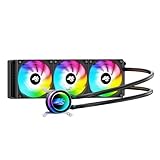
- High-Speed Ceramic Bearing Pump: Our 360mm AIO is equipped with a premium ceramic bearing water pump running at 3000 RPM, ensuring ultra-long lifespan and stable operation, offering higher lift and faster flow for maximum cooling efficiency. Our CPU cooler delivers reliable performance even under heavy workloads, keeping your system cool and stable.
- Industrial-Grade Motor for Elite Cooling: Our AIO cooler 360mm is powered by an advanced 3-phase, 4-pole motor that minimizes vibration and noise for ultra-smooth, silent operation. Our cpu water cooler accelerates heat transfer and boosts coolant flow to maximize thermal performance, ensuring greater efficiency and long-term reliability.
- Smart PWM Fan Control for Quiet Efficiency: Our water cooler CPU is equipped with PWM-controlled fans that automatically adjust their speed based on your system’s temperature, delivering optimal airflow only when needed. Running at up to 1600 RPM, these fans offer a perfect balance of high airflow and low noise, making our cpu liquid cooler ideal for gamers, creators, and power users alike.
- Exclusive 12-Channel Radiator for Superior Heat Dissipation: Our CPU liquid cooler features a 12-path water-cooled radiator with a low-resistance hydraulic design and optimized fin density, maximizing surface contact for faster heat transfer and enhanced cooling performance.
- Daisy-Chained Fans for Cleaner, Simpler Cable Management: Our 360mm aio cooler comes with pre-installed 120mm fans featuring a daisy-chain design, allowing all fans to connect through a single 4-pin PWM and 5V ARGB header—dramatically reducing cable clutter and simplifying installation.
The fluid is dielectric, meaning it is designed to be electrically non-conductive. Accelsius positions that characteristic as protection against electronics damage if coolant contacts components. It does not mean the system is risk-free: containment, leak detection, service procedures, fluid compatibility, and recovery planning remain necessary.
Warm-water operation
Accelsius says NeuCool can use facility water 6–8°C warmer than competing technologies. If that claim holds under a particular facility’s operating conditions, warmer water can increase the hours in which economizers or “free cooling” can reject heat without mechanical compressor operation.
That potential benefit depends on the climate, heat-rejection equipment, water temperatures, utilization, redundancy design, and the rest of the cooling plant. It should not be converted into a universal percentage reduction in data-center energy use.
Capacity and vendor claims
Accelsius’ 2025 product material cites capability above 4,500 W per socket, along with 250 kW rack-density claims. Those figures should be treated as vendor-reported specifications or test claims, not as independently validated performance for every server configuration or for the Equinix installation.
Do these 3 things before closing this tab:
1Clear out junk files and repair common Windows errors2Scan for outdated or missing drivers - takes under a minute3Repair Windows errors before they cause bigger problemsThe company’s NeuCool product material describes both the IR80 in-rack system and the MR250 multi-rack, in-row option. The IR80 specification sheet provides the company’s published technical claims.
What the Equinix facility is for
Equinix said the NeuCool IR80 would be deployed at its Co-Innovation Facility in the DC15 IBX on the Ashburn Campus. The stated purpose is to give technology providers and customers a place to test and demonstrate high-density cooling.
The announcement said deployment was expected in Q3 2025. Based on the available source material, that announcement alone does not independently confirm that the installation was completed or that it is operating as a generally available customer service. The defensible conclusion is that Equinix identified the facility as a demonstration and evaluation platform.
Rank #3
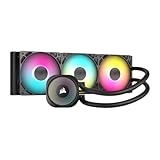
- Simple, High-Performance All-in-One CPU Cooling: Renowned CORSAIR engineering delivers strong, low-noise cooling that helps your CPU reach its full potential
- Efficient, Low-Noise Pump: Keeps your coolant circulating at a high flow rate while generating a whisper-quiet 20 dBA
- Convex Cold Plate with Pre-Applied Thermal Paste: The slightly convex shape ensures maximum contact with your CPU’s integrated heat spreader, with thermal paste applied in an optimised pattern to speed up installation
- RS120 ARGB Fans: RS ARGB fans create strong airflow and high static pressure, with easy ARGB control via a compatible motherboard. CORSAIR AirGuide technology and Magnetic Dome bearings ensure great cooling performance and low noise
- Easy Daisy-Chained Connections: Reduce the wiring in your system by daisy-chaining your RS ARGB fans and connecting them to just one 4-pin PWM fan header and one +5V ARGB header
How AWS’s IRHX design differs
AWS’s reported approach is an In-Row Heat Exchanger rather than an in-rack two-phase system. It combines three main elements:
- a water-distribution cabinet;
- an integrated pumping unit; and
- modular in-row fan-coil heat-exchanger modules.
Cold plates attached to the chips collect heat. The warmed coolant then travels through the distribution and pumping system to heat exchangers positioned in the server row. Fans move air across the coils, much like a radiator, transferring the heat from the coolant to the surrounding facility airflow and heat-rejection system.
A reported design feature is the separation of the pumping equipment from the fan-coil modules. One pumping system can serve multiple fan units, while modular fan-coil equipment can be added or removed as rack and row requirements change. That arrangement can make row-level scaling more flexible than assigning all cooling equipment to a single rack.
However, the available reporting describes this as custom AWS infrastructure for Blackwell-based servers. It does not establish that AWS sells IRHX as a commercial, standalone cooling product.
The architecture is described in Network World’s report on the Equinix and AWS initiatives.
The Tool Desk
Outbyte PC Repair FREEClear out junk files and repair common Windows errorsFree Scan →Outbyte Driver Updater FREEScan for outdated or missing drivers - takes under a minuteDriver Scan →Why Blackwell-class systems matter
The AWS system was reported in connection with NVIDIA Blackwell GPU servers. Blackwell is relevant because modern AI accelerators can produce substantially more heat than earlier general-purpose processors, particularly when many accelerators are installed in one server or rack.
There is no single universal “Blackwell rack wattage.” Thermal and electrical requirements depend on the specific GPU, server, board, interconnect, memory, rack configuration, workload, and operating limits.
Rank #4

- Includes: 1x iCUE LINK XC7 RGB ELITE CPU Block, 1x iCUE LINK XD6 RGB Pump Reservoir Combo, 3x iCUE LINK RX120 RGB fans, 1x XR5 360mm Radiator, 1x iCUE LINK System Hub, XT Hardline Tubing & Fittings
- Gorgeous Hardline Cooling, Made Simple – This complete Hydro X Series custom cooling kit delivers the stunning look that only hardline loops can achieve, with iCUE LINK making the build simpler than ever.
- Dynamic RGB Lighting - Individually addressable RGB LEDs integrated into the CPU water block, pump/reservoir, and cooling fans give your PC a striking look to make it stand out from the crowd.
- Low-Noise Custom Cooling - CORSAIR iCUE software lets you adjust fan and pump settings, monitor temperatures, customize RGB lighting, and synchronize it with all iCUE-compatible products in your setup.
Operators should separate four measurements:
- Chip thermal design power: heat generated by an individual processor or accelerator under a defined design envelope.
- Server power: the GPUs, CPUs, memory, networking, storage, fans, and power-conversion losses in one server.
- Rack power: the combined load of all equipment in the rack, including distribution losses and any rack-level cooling equipment.
- Facility cooling load: the heat that the broader mechanical and electrical infrastructure must reject.
Confusing these figures can lead to undersized pumps, heat exchangers, electrical feeds, or chilled-water systems. A high chip-level cooling capacity does not by itself prove that an entire data hall is ready for the corresponding rack density.
What COOLERCHIPS contributes to the story
Equinix and Accelsius’ collaboration was catalyzed by shared participation in the U.S. Department of Energy’s ARPA-E COOLERCHIPS program. The program’s stated objective is to reduce total cooling energy consumption to below 5% of data-center IT load while supporting high-density computing and reliability.
Quick wins for a faster PC:
Repair Windows errors before they cause bigger problemsFix Now →Fix the driver behind crashes, sound loss and screen glitchesFind Drivers →Clear out junk files and repair common Windows errorsFree Scan →That is a program goal, not evidence that the specific Equinix installation achieves the target. Accelsius also participated in a project involving hybrid cooling: direct-to-chip evaporative cooling combined with air-based approaches such as rear-door heat exchangers.
The context reinforces an important point: the industry is not choosing between isolated chip cooling and traditional facility systems. The practical engineering challenge is combining them efficiently and reliably.
See Accelsius’ COOLERCHIPS project announcement and its Equinix deployment announcement.
Liquid cooling versus air cooling
Where liquid cooling helps
- Higher rack density: liquid carries heat more effectively from high-power chips than air alone.
- Lower fan demand: removing more heat at the cold plate can reduce some server-fan requirements.
- Warmer operating water: some systems may support more economizer or free-cooling hours.
- Retrofit potential: a liquid-cooling overlay may extend the useful life of an existing facility, if pipework, heat rejection, floor loading, electrical capacity, and redundancy are adequate.
Where liquid cooling adds complexity
- Coolant distribution units, manifolds, pumps, controls, and leak detection are required.
- Cold plates, hoses, and connectors must be compatible with the exact server and accelerator platform.
- Water-based loops require attention to filtration, water chemistry, corrosion control, pressure, and flow monitoring.
- Two-phase dielectric systems require specialized containment, fluid management, condensers, controls, and service practices.
- Air cooling may still be needed for components that do not have cold plates.
- Maintenance teams need procedures for pump failures, leaks, isolation, draining, refilling, and component replacement.
Liquid cooling also does not eliminate the dominant electrical load of AI computation. It may reduce cooling overhead, but the GPUs and the rest of the IT system can continue to consume enormous amounts of power.
Two-phase versus single-phase direct-to-chip cooling
| Approach | How it works | Key trade-off |
|---|---|---|
| Two-phase | Dielectric fluid changes phase at the cold plate, then condenses and recirculates. | Potentially strong heat transfer and lower flow requirements, but more specialized fluid containment and service requirements. |
| Single-phase | Liquid remains liquid as it passes through the cold plate and heat-rejection loop. | More familiar pumping and distribution practices, but greater attention to water chemistry, leak management, and fluid compatibility. |
Commercial suppliers identified in the Network World coverage include CoolIT Systems, Vertiv, Motivair, and Delta Electronics. Their offerings generally cover parts of the broader liquid-cooling stack, such as cold plates, coolant-distribution units, rear-door heat exchangers, or facility thermal infrastructure. A buyer should compare the complete system rather than treating a cold plate or CDU as a complete data-center solution.
Best Value

- CONTACT FRAME FOR INTEL LGA1851 | LGA1700: Optimized contact pressure distribution for longer CPU life and better heat dissipation
- ARCTIC's P12 PRO FAN: More power at any speed - more powerful and quieter than the P12, especially at low speeds. Higher maximum speed for optimal cooling performance under high load
- NATIVE OFFSET MOUNTING FOR INTEL AND AMD: Shifting the cold plate center towards the CPU hotspot ensures more efficient heat transfer
- INTEGRATED VRM FAN: PWM-controlled fan that lowers the temperature of the voltage converters and thus ensures reliable performance
- INTEGRATED CABLE MANAGEMENT: The PWM cables of the radiator fans are integrated in the sheathing of the hoses so that only a single visible cable is connected to the motherboard
In-rack versus in-row cooling
In-rack systems concentrate cooling equipment close to one rack or a small rack group. This can support incremental deployment and localized upgrades, but operators must assess rack-level capacity, service access, floor loading, and redundancy.
In-row systems place heat-exchanger equipment among the racks and can serve multiple cabinets. They may offer more flexible row-level scaling, but require coordinated piping, controls, airflow, and maintenance planning.
Accelsius’ IR80 represents the more concentrated in-rack approach described in this story, while its MR250 product is designed for multi-rack, in-row deployment. AWS’s reported IRHX design emphasizes modular row-level heat exchangers supported by a separate pumping system.
What data-center operators should ask before buying
- Is the reference deployment complete and operational? Distinguish an announced installation from a commissioned production environment.
- What percentage of the rack is liquid cooled? Confirm whether memory, networking, storage, power supplies, and motherboard components still rely on air.
- What happens during a leak or pump failure? Ask about detection, automatic isolation, redundant pumps, bypass operation, workload continuity, and service intervals.
- What is the facility-water design? Obtain temperature, pressure, flow, filtration, corrosion-control, water-treatment, and separation requirements.
- Does the system need a chiller? Warmer-water operation may improve free cooling, but the answer depends on climate and heat-rejection equipment.
- What is the facility-level PUE impact? Require measured cooling and total-facility results rather than inferring savings from cold-plate efficiency.
- What is the retrofit burden? Check pipework, CDUs, heat exchangers, pumps, floor loading, electrical capacity, controls, fire protection, and redundancy.
- Who supports the hardware? Confirm GPU and server OEM approval, cold-plate compatibility, warranty terms, fluid compatibility, and service responsibility.
- Is the product commercially available? AWS’s reported IRHX should be treated as custom infrastructure unless AWS confirms a customer offering.
- Are efficiency claims independently measured? Claims about cooling-energy savings, operating expenditure, or total cost of ownership depend on climate, water temperature, utilization, chiller performance, and system boundaries.
Commercial alternatives and buying context
Most enterprise liquid-cooling systems are quote-based infrastructure projects, not products bought through ordinary online checkout. The buyer typically needs facility engineering, server compatibility reviews, commissioning, operations training, and a long-term service model.
| Option | Best suited to | Primary consideration |
|---|---|---|
| Accelsius NeuCool | High-density AI and HPC retrofits | Two-phase dielectric systems with in-rack and in-row options; published performance claims require validation for the buyer’s conditions. |
| Vertiv liquid cooling | Enterprise and hyperscale facilities | Broad thermal-management portfolio, but substantial facility integration remains necessary. |
| CoolIT Systems | Direct-to-chip specialist deployments | Specialist cold-plate and CDU expertise; other vendors may still be needed for the complete facility system. |
| Motivair | HPC and AI installations | CDU and high-density cooling focus; adequate facility water and heat rejection are prerequisites. |
| Delta Electronics | Large integrated infrastructure projects | Broad power and thermal portfolio, generally less suitable for small buyers seeking transparent online pricing. |
| AWS cloud AI services | Organizations that want AI compute without owning racks | Avoids physical cooling procurement but provides less control over hardware, facility operations, and workload placement. |
No public list pricing is established in the available source material. Serious buyers should request dated technical proposals, compatibility documentation, measured performance data, and service terms directly from the relevant vendor.
Is liquid cooling replacing air cooling?
Not across the board. Lower-density servers and some AI deployments can continue using air cooling, while the highest-density accelerator racks increasingly require direct-to-chip or other liquid-assisted designs. The more likely industry direction is a hybrid data center in which liquid removes heat from GPUs and CPUs and air handles the remaining components and room load.
The Equinix and AWS examples show two ways to implement that transition. Equinix’s announced NeuCool deployment emphasizes a two-phase, dielectric, in-rack system suitable for demonstration and evaluation. AWS’s reported IRHX design emphasizes modular pumping and in-row heat exchange for custom Blackwell infrastructure.
Outdated Drivers Are Slowing You Down
One free scan finds every outdated or missing driver and matches the right update for your exact hardware.Free scan · exact hardware matchWindows Errors? Fix Them Before They Spread
Repair common Windows errors and clear accumulated junk for a smoother, more stable PC - no reinstall needed.Free scan · no reinstallNeither example proves that one architecture is universally superior. The right choice depends on rack density, coolant type, facility-water temperatures, heat rejection, redundancy, retrofit constraints, OEM support, operating skills, and independently measured total-facility performance.
Quick Recap
Product prices and availability are accurate as of the date/time indicated and are subject to change. Any price and availability information displayed on Amazon at the time of purchase will apply.



