Do these 3 things before closing this tab:
1Repair Windows errors before they cause bigger problems2Scan for outdated or missing drivers - takes under a minute3Clear out junk files and repair common Windows errorsSome links on this page are affiliate links: if you buy through them we may earn a commission, at no extra cost to you.
Elon Musk’s long-term vision is best understood as a linked industrial system: artificial intelligence drives demand for computing; computing requires vast amounts of electricity; renewable generation and batteries expand that energy supply; and reusable rockets and satellites could eventually move some energy generation, manufacturing and computing into space.
That does not mean the entire plan exists today. Tesla’s solar, battery and energy-management products are operating businesses. Starlink and reusable launch are operating space capabilities. Starship, large-scale orbital AI computing, lunar industry and a self-sustaining Mars settlement remain development programs or long-term objectives. For investors and consumers, separating those categories matters more than the ambition of the overall story.

The core thesis: intelligence needs abundant energy
Musk’s argument begins with a physical constraint rather than a product. Modern AI requires chips, data centers, electricity, cooling, networks and manufacturing capacity. Training large models is energy-intensive, but serving models to millions of users, vehicles, robots and businesses can create an even broader infrastructure demand.
Quick wins for a faster PC:
Fix the driver behind crashes, sound loss and screen glitchesFind Drivers →Repair Windows errors before they cause bigger problemsFix Now →Scan for outdated or missing drivers - takes under a minuteDriver Scan →In this framework, AI has several roles:
- General-purpose AI: systems such as Grok for conversation, reasoning, coding and multimodal tasks.
- Physical AI: autonomy in vehicles, robots, spacecraft, satellites, factories and energy systems.
- Industrial AI: software that forecasts demand, manages batteries, controls fleets, improves manufacturing and coordinates infrastructure.
- Scientific AI: tools for engineering, simulation, materials discovery and space research.
- Civilizational AI: the belief that advanced AI could determine humanity’s future and therefore must be developed and governed with human survival in mind.
Tesla’s Master Plan Part IV places AI within a broader transition involving electric vehicles, energy products and humanoid robots. The important point is that AI is not treated merely as a software subscription. It is presented as an operating layer for machines and infrastructure.
#1 Best Overall
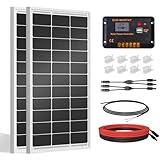
- [Wide Application]: Daily Output 800wh/day under 4 hours full sunshine condition. Perfect for RV, Caravan, Marine, Camper, Electric scooter, Golf Carts, Power wheels, Trolling motor, Tool trailer, Backup power supply for cabin shed home etc.
- [Excellent Performance]: ECO-WORTHY solar panels use high-performance monocrystalline solar cells, which can provide up to 21.5% higher efficiency sufficient light conditions.size:35.2*23.1.37in
- [Durable]: Corrosion-resistant aluminum alloy frame, so that the panel can be used for decades, and can withstand strong wind (2400Pa) and snow load (5400Pa), with a long service life. Ip65 rated junction box provides complete protection.:
- [Complete and Easy]: The back of the pre-drilled and plug-and-play cables allow quick installation, the kit can be connected in series (24V) or parallel (12V) if you need. What you will get: 2 pcs 100W mono solar panel + 2 set of Z mounting brackets + 30A solar controller + 1 pair of 16.4ft 10 awg solar cables + 1 pair of 2-in-1 connectors + 1 pair of 4.92ft tray cable.
- [Support]: 1 year with 24/7 tech support, if any problems or questions about the product,please do not hesitate to let us know through Amazon or call ECO-WORHTY hotline for solution.
Why renewable energy is central to the AI strategy
Every AI system ultimately depends on physical infrastructure. Data centers need electricity, cooling, land, grid connections and specialized processors. As demand grows, power availability can become a limiting factor even when the software is ready.
Renewable energy can expand supply without relying exclusively on fossil-fuel generation, but solar and wind are variable. That makes storage, transmission and software control essential. Batteries do not create energy; they move it through time. A battery can charge when renewable power is abundant and discharge when demand or prices rise, but it cannot by itself solve every multi-day or seasonal shortage.
Tesla positions Powerwall as residential storage and Megapack as utility-scale storage for renewable balancing, grid services, microgrids and data-center applications. Tesla’s software, including Autobidder and Powerhub, is intended to optimize storage dispatch and coordinate distributed energy resources.
What’s actually slowing this PC down?
Pick the symptom - the matching free tool is one click away.
Software can improve battery utilization and project economics, but it cannot eliminate transmission bottlenecks, permitting delays, poor solar resources, battery degradation or unfavorable electricity tariffs. The commercial value of a storage system depends heavily on local conditions.
Tesla’s role: the terrestrial energy platform
1. Energy generation
Tesla sells Solar Panels and Solar Roof products and integrates them with Powerwall. Its 2025 Form 10-K says Tesla began manufacturing a new residential retrofit solar panel in 2025 and began initial customer deliveries in January 2026. That is evidence of an active product business, not proof that solar will replace conventional generation everywhere.
Residential economics are site-specific. Roof orientation, shading, electricity use, utility rates, export compensation, permitting and installation work all affect the result. Tesla’s Solar Roof FAQ also makes clear that solar customers remain connected to the utility and may continue receiving electricity bills.
2. Home storage
Powerwall can provide backup power, increase solar self-consumption and shift household electricity use away from expensive periods. It can be especially useful for homeowners facing frequent outages or poor compensation for exporting solar power to the grid.
It is less compelling for renters, homes with low outage risk, customers with limited electrical capacity or households expecting a battery alone to eliminate utility costs. A purchase decision should compare usable capacity, continuous output, whole-home backup, warranty, installation requirements, incentives and local time-of-use rates—not just the battery’s headline size.
3. Grid-scale storage
Megapack is aimed at utilities, renewable developers, commercial facilities, microgrids and large electricity users. Tesla’s current design interface displays a configuration with 9.6 MW of power and 19.3 MWh of energy, although the exact configuration is selectable and project pricing is not a universal published product price. The ordering flow shows a reservation deposit, not a complete turnkey project cost. See the Megapack design tool for current configuration information.
Megapack-type systems are generally strongest where projects can combine several revenue sources: energy arbitrage, capacity payments, grid services, renewable integration and backup power. They are not automatically the best choice for seasonal storage or every data-center project.
Rank #2

- Portable Generator with 60W Solar Panel Included: with a big battery pack, ZeroKor 300W solar powered generator are powerful enough to charge smartphones,tablets,laptops,headphones or other outdoor small camping supplies(Tips:Using electrical appliances over 300W may damage the portable solar generator, especially some devices that are prone to heat or built-in air compressor such as coffee maker,Hair dryer, water pump etc )
- Multiple Charging outlets for camping gear with SOS Flashlight: with 2* 300W Max wall AC outlets, 1* DC port (9V-12.6V/10A max ), 3* 5V/3A Max USB ports, 1*quick charge USB port (5V/3A 9V/2A Max), Flashlight with reading mode and SOS mode for your outdoor Adventures, our portable solar power station offers a versatile charging solution,allowing you to charge your outdoor smart devices directly from a wall AC outlet
- Multiple Charging Optional, Solar Panel Charger 60W Included: ZeroKor portable power bank generator can be recharged by Home AC outlet, DC5521 13V-23V Solar Panel (Portable Power Station built-in MPPT), 12V Carport. Take the portable solar power bank generator with you on-the-go and never worry about power shortage,the portable AC outlet design makes it more suitable for Tent camping OFF-Grid
- Built in BMS(Battery Management System) : ZeroKor portable power station features short circuit protection, over-current protection, over-voltage protection, overload protection and overheating protection. The built-in cooling fan system will automatically start and stop according to the portable battery pack internal temperature during use. Acting as a portable solar power bank, it accommodates multiple devices simultaneously, making it perfect for indoor and outdoor use
- HIGH CONVERSION EFFICIENCY: ZeroKor solar panels 60W monocrystalline solar cell have a high conversion efficiency of 20.5%, and its performance is better than that of polycrystalline solar panels under the condition of insufficient light
4. Software and virtual power plants
Autobidder can help batteries participate in electricity markets, while Powerhub is intended to manage distributed energy resources and virtual power plants. This is where AI and energy meet most concretely: software can forecast demand, weather and prices, then decide when assets should charge, discharge or support the grid.
The Tool Desk
Outbyte PC Repair FREEClear out junk files and repair common Windows errorsFree Scan →Outbyte Driver Updater FREEScan for outdated or missing drivers - takes under a minuteDriver Scan →The distinction is important. Hardware determines how much power and energy a system can deliver. Software can improve when and how that capacity is used, but it cannot overcome physical limits.
AI as Tesla’s next operating layer
Tesla’s broader AI strategy includes vehicle autonomy, factory automation, neural-network training infrastructure and humanoid robotics. In principle, the same capabilities could allow vehicles, robots and energy assets to perceive their environments, make decisions and coordinate with one another.
However, announced capabilities should not be confused with completed products. Driver-assistance features, supervised autonomy, regulatory approval and genuinely driverless operation are different categories. The same caution applies to humanoid robots and future factory automation. The strategic thesis may be significant even when the commercial outcome and timeline remain uncertain.
SpaceX’s role: the infrastructure ladder
Reusable launch
SpaceX describes Starship and Super Heavy as a reusable transportation system intended for Earth orbit, the Moon, Mars and beyond. Reusability and high launch cadence could reduce the cost of deploying large satellite fleets and heavier infrastructure.
Free tools Windows power users keep installed
One-click scans. No signup required.
But cheaper launch does not automatically make orbital data centers economical. A space-computing system would also require processors, solar arrays, radiators, power electronics, communications equipment, radiation protection, propulsion, deployment, replacement capacity and eventual disposal.
Starlink
Starlink provides the communications layer: broadband connectivity, satellite-to-ground links and increasingly capable satellite networking. It can support remote operations, maritime and aviation connectivity, emergency response and other use cases where terrestrial infrastructure is weak.
Starlink is not already a space-based AI data-center network. It is a communications constellation with growing onboard processing and autonomy. Buying Starlink therefore does not mean buying access to orbital AI computing.
Moon and Mars
SpaceX’s public mission language describes a progression from Earth-orbit operations to lunar and Martian activity. The proposed long-term sequence is to build reusable launch, establish high-volume orbital operations, expand communications and cargo capacity, develop lunar logistics and energy systems, and eventually support Mars transport, power, habitats and industry.
A self-sustaining Mars settlement, lunar manufacturing, off-Earth resource extraction and large-scale human migration beyond Earth should be treated as long-term objectives—not scheduled outcomes. Musk’s forecasts are not the same thing as engineering schedules, regulatory approvals or independently demonstrated economics.
Rank #3
The orbital AI-computing proposal
SpaceX has proposed AI-compute satellites powered by solar energy in orbit. The company’s StarMind concept describes using solar exposure in space to power high-performance computing and connect the satellites through space-based networks.
SpaceX filings also discuss space-based AI workloads, dawn-dusk or Sun-synchronous orbit concepts, automated production, laser or satellite-network connectivity, and possible lunar and Martian energy infrastructure. The 2026 filings describe xAI, founded in 2023, as having been acquired by SpaceX in early 2026 and becoming part of a vertically integrated strategy. That corporate integration is a current disclosure; it does not demonstrate that a technically unified orbital AI system is already operating.
The proposal is strategically attractive because selected orbits can provide long periods of sunlight, avoid some terrestrial land-use conflicts and pair power generation directly with computation. It could also be useful for processing satellite imagery and other space-generated data before transmitting results to Earth.
It remains a proposed architecture, not an established commercial alternative to terrestrial data centers.
How the pieces fit together
The most useful way to understand the vision is as an analytical flywheel:
- AI creates demand for chips, computing capacity and electricity.
- That demand increases the value of solar generation, batteries, transmission and energy-management software.
- AI and automation improve vehicles, factories, batteries, satellites and launch operations.
- Reusable rockets and satellite networks make larger space systems more feasible.
- Space-based systems could eventually provide additional energy, computing and manufacturing capacity.
- Those capabilities could support more AI development and, in the longer term, lunar or Martian infrastructure.
This is a coherent directional thesis, but it is not necessarily a single formally published roadmap with fixed milestones. It is assembled from Tesla plans and filings, SpaceX mission statements and regulatory documents, xAI disclosures, Musk’s public comments and corporate transactions.
Independent reader supportYour contribution helps us test, update, and keep practical guides available for everyone.Why orbital computing may fail to beat Earth
Heat rejection
Solar energy is available in orbit, but computation still produces heat. In a vacuum, heat must be radiated rather than carried away by air or water. Large radiators add mass, surface area, pointing requirements and potential failure points.
Launch, deployment and replacement costs
An orbital data center must include far more than servers. Solar arrays, radiators, shielding, communications, attitude control, propulsion, structural systems and replacement units all have to be launched and maintained. Even a major reduction in launch prices would not remove those costs.
Radiation and hardware obsolescence
Radiation can damage electronics and cause computing errors. At the same time, AI accelerators can become commercially obsolete quickly. A satellite designed for a long orbital life may be carrying processors that are no longer competitive, creating a difficult trade-off between durability and upgrade speed.
Latency and bandwidth
Orbital computing could make sense for satellite imagery, remote sensing and some batch workloads. It is less obviously attractive for consumer applications that require frequent data transfers between Earth and orbit. The relevant measure is not theoretical computing capacity but useful computation delivered reliably to the customer.
Rank #4
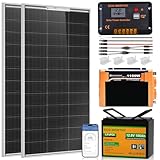
- One-Stop Solar Solution: This complete 200W solar complete system generates 800Wh of power daily and stores 1.28Kwh of power, making it the essential kit for your RV trip. This system comes with everything you need to build an off-grid solar system, no additional purchases required. It includes 2pcs 100W solar panel, 12.8V 100Ah lithium battery, 1100W inverter, a 30A PWM charge controller, and all necessary cables.
- Say Bye To DIY:To Save You The Trouble Of Diy, Our 200w Complete System Can Bring You Fully Compatible, Novice-Friendly 4-Step Quick Installation, Long-Term Benefits, Damaged Replacement, Technical Support, Empowering Your Rv Life Anytime, Anywhere
- 4 Step To Hassle-Free Solar:①Connecting Two solar panel②Connect Battery To Controller,Secure Them To Positive And Negative Screws and Connect Battery To Inverter ③Connect Solar Panel To Controller④Connecting the load
- 7/24 Service:We Provide 7/24 Customer Service And Give You The Most Professional Service. When You Receive It, If There Is Any Problem, You Can Tell Us And We Will Give You A Reasonable Reply
Maintenance and reliability
Terrestrial servers can be repaired, upgraded and cooled by conventional infrastructure. Orbital hardware needs redundancy, autonomous fault management and a credible replacement plan. A constellation can be technically functional while still being commercially uneconomic.
Debris, congestion and governance
More satellites increase collision risk, launch traffic, astronomical interference and regulatory pressure. SpaceX says its concept prioritizes orbital sustainability, but that is a design objective rather than proof that the environmental and governance issues are resolved. Independent reporting, including this Associated Press analysis, highlights the technical, economic and environmental obstacles.
Terrestrial alternatives deserve equal weight
Orbital AI should be compared with competing approaches, not judged in isolation:
- Renewable-powered data centers connected to expanded grids.
- Nuclear or geothermal generation for high-capacity, steady power.
- Battery-backed facilities and flexible computing workloads.
- More efficient AI chips, model compression and specialized inference hardware.
- Data centers located near existing generation and transmission.
- Demand response and edge computing.
The central question is not whether sunlight exists in space. It is whether delivering useful computation from orbit is cheaper, faster, more reliable and easier to govern than building generation and data centers on Earth.
What is real today?
| Layer | Evidence status |
|---|---|
| Solar panels, Solar Roof and Powerwall | Commercial Tesla products |
| Megapack and energy-management software | Commercial grid-scale products and services |
| Grok and xAI services | Commercial AI ecosystem; features, pricing and availability can change by product and geography |
| Reusable launch | Operating SpaceX capability |
| Starlink | Operating satellite communications service |
| Starship | Development and testing program |
| Orbital AI data centers | Proposed concept, not demonstrated commercial deployment |
| Lunar industrialization | Long-term objective |
| Self-sustaining Mars civilization | Long-term aspiration |
What this means for consumers and investors
The businesses are related through strategy, but consumers should evaluate each product on its own economics. Tesla solar and Powerwall decisions depend on roof conditions, outages, rates, incentives and utility rules. Megapack decisions depend on interconnection, project duration, degradation, safety, service and revenue stacking. Starlink depends on local broadband alternatives, weather, installation and service terms. Grok should be evaluated on accuracy, privacy, reliability, enterprise controls, cost and model portability.
Recommended Free Tools
Purchasing a Tesla energy product, Starlink subscription or AI service does not guarantee that the money directly funds Mars settlement or orbital computing. The connection is strategic and corporate, not a consumer promise. Product prices, plans, access and features can change, so buyers should check the relevant official page for their location and purchase date.
The fairest assessment
Musk’s vision is strongest as a capital-allocation and systems-integration thesis. It identifies real bottlenecks: electricity, chips, cooling, manufacturing, launch capacity and communications. It also places operating businesses alongside ambitious development programs so that each could, in theory, make the next more feasible.
Its weakness is that the hardest links remain unproven. Orbital computing must overcome thermal management, radiation, maintenance, bandwidth, replacement economics, debris and regulation. Mars settlement requires not only transportation but dependable power, life support, industrial capacity, governance and an economy capable of surviving without constant Earth support.
The accurate conclusion is neither that the vision is science fiction nor that it is inevitable. It is a portfolio of commercial products, operating infrastructure, engineering programs and speculative long-term bets connected by the belief that humanity must scale intelligence, energy and access to space together.
Crashes, No Sound, or Screen Glitches?
Random freezes, missing sound and display glitches usually trace back to one bad driver. Find and replace yours safely.Free scan · under a minuteWindows Errors? Fix Them Before They Spread
Repair common Windows errors and clear accumulated junk for a smoother, more stable PC - no reinstall needed.Free scan · no reinstallQuick Recap
Product prices and availability are accurate as of the date/time indicated and are subject to change. Any price and availability information displayed on Amazon at the time of purchase will apply.



