Recommended Free Tools
Some links on this page are affiliate links: if you buy through them we may earn a commission, at no extra cost to you.
A document management system (DMS) is worth buying when your business needs more than shared files: it needs documents that are findable, current, permission-controlled, and governed through approval, retention, and deletion. In the AI era, that foundation matters even more. A chatbot cannot make an outdated policy authoritative or repair an accidental oversharing problem; it can only retrieve and summarize the content it is allowed to see.
Choose a DMS by first defining how documents should be captured, classified, approved, secured, and retained. Then test whether a platform can enforce those rules in your real workflows—and whether its AI can answer from the right version without exposing restricted information. For some businesses, well-governed Microsoft 365 or Google Workspace is enough. Others need a dedicated DMS or broader enterprise content management platform.
What a DMS does—and what it does not
A document management system captures, organizes, secures, retrieves, and governs business documents and records. Its job may include scanning and importing documents, applying metadata, tracking versions, routing approvals, recording activity, enforcing retention, and connecting content to business processes. DocuWare’s overview of document management describes many of these capabilities.
What’s actually slowing this PC down?
Pick the symptom - the matching free tool is one click away.
That is different from simply storing files. File-sync and sharing tools prioritize access, synchronization, and collaboration. A DMS adds structure and lifecycle controls. Many modern platforms combine both, so the label matters less than whether the system meets your requirements.
#1 Best Overall

- PORTABLE SCANNER FOR USE ON-THE-GO — The fastest and lightest mobile single-sheet-fed compact document scanner in its class¹
- QUICK DOCUMENT SCANNING ― This Epson ultra-fast scanner scans a single page as quickly as 5.5 seconds²; Windows and Mac compatible
- VERSATILE PAPER HANDLING ― Portable scanner scans documents up to 8.5 x 72 in; Also easily digitizes receipts and ID cards to make accounting, bookkeeping, and organizing simpler
- INTUITIVE, HIGH-SPEED SOFTWARE — Epson ScanSmart Software³ is a smart tool allowing you to easily scan, review, and save; Stay organized easily with the help of this Epson scanner
- EASY SETUP — USB-powered connect to your computer for quick and simple scanning; No batteries or external power supply required to operate portable document scanner; Standard Connectivity: USB 2.0
| System type | Usually suited to | Possible limitation |
|---|---|---|
| File sync and sharing | Basic storage, sharing, and collaboration | May lack structured retention, approval, and records controls |
| Collaboration suite | Office work, team sites, and shared documents | Can fragment content across sites, chats, personal drives, and libraries |
| Dedicated DMS | Controlled documents, metadata, workflow, and lifecycle management | Requires implementation, governance, and user adoption |
| Enterprise content management (ECM) | Broad records, case, content, and process requirements | Can be more complex than a small business needs |
| Knowledge base or repository | Publishing and retrieving approved guidance | May not handle capture, formal records, or full document lifecycles |
| Digital asset management or contract lifecycle management | Specialized media or contract processes | Not necessarily a general-purpose DMS |
Storage security is necessary, but it is not document management by itself. Encryption and access controls do not automatically provide authoritative versions, document ownership, retention schedules, approval states, or defensible deletion.
Does your business need a DMS?
A dedicated or more tightly governed DMS becomes more compelling when several of these statements are true:
- Staff cannot reliably find the latest approved document, or teams keep conflicting copies.
- Documents need formal review, approval, or periodic renewal.
- You need evidence of who accessed, changed, approved, or deleted a document.
- Retention schedules, legal holds, or regulated records apply.
- Documents include sensitive customer, employee, financial, health, legal, or supplier information.
- Paper, scans, invoices, contracts, quality records, or case files are part of important workflows.
- Employees spend substantial time filing, searching, re-entering data, or chasing approvals.
- External sharing needs controls such as expiration, revocation, or restricted downloads.
- Content is spread across file servers, email, cloud drives, collaboration tools, and business applications.
- You plan to use AI search or assistants over business documents.
Basic cloud storage may be enough for a small team with straightforward collaboration, few users, simple version history, and no formal approval or records-management needs. More software is not automatically better: a poorly adopted DMS can become an expensive second filing system.
PC Slower Than It Used to Be?
A free scan shows the junk files, broken settings and background clutter dragging Windows down - then fixes them in one click.Free scan · Windows 10 & 11Crashes, No Sound, or Screen Glitches?
Random freezes, missing sound and display glitches usually trace back to one bad driver. Find and replace yours safely.Free scan · under a minuteStart with the problem, not the vendor
Before comparing products, create a short inventory. It gives vendors a concrete scope and gives your team a basis for evaluating cost and success.
Inventory content and processes
- Content: document types and formats, approximate volume and yearly growth, existing repositories, active users, external collaborators, scan quality, languages, and duplicates.
- Processes: where documents originate, who reviews and approves them, what triggers routing, which deadlines matter, where extracted data must go, what counts as the official copy, and what happens when a document expires.
- Risk: sensitive data, legal holds, data-residency needs, external access, accidental sharing, recovery requirements, and AI data-use concerns.
Set measurable outcomes before a pilot. Examples include time to find a known document, the share of files with required metadata and named owners, approval-cycle time, invoice-processing time, duplicate-record reduction, and the share of AI answers with traceable sources. Establish a baseline and a measurement method; broad promises of “productivity” are not useful targets.
The foundations of a trustworthy document environment
1. Authoritative content and ownership
For each important document type, identify the owner and the authoritative location. Users and AI tools need to distinguish an approved policy from a draft, an active contract from a superseded version, and a record from a working copy. A repository that connects more documents without identifying which ones govern a decision may make conflicting sources easier to find, not easier to resolve.
2. Metadata and context
Metadata can describe document type, owner, approval status, effective date, customer, project, supplier, or retention class. It lets people search and filter content by business meaning rather than relying only on folder paths or file names. A folder-first approach is familiar; a metadata-first approach can make one document discoverable in multiple contexts. A hybrid is common. Metadata-first systems demand thoughtful taxonomy design and training.
Rank #2

- FAST SPEEDS - Scans color and black and white documents a blazing speed up to 16ppm (1). Color scanning won’t slow you down as the color scan speed is the same as the black and white scan speed.
- ULTRA COMPACT – At less than 1 foot in length and only about 1. 5lbs in weight you can fit this device virtually anywhere (a bag, a purse, even a pocket).
- READY WHENEVER YOU ARE – The DS-640 mobile scanner is powered via an included micro USB 3. 0 cable allowing you to use it even where there is no outlet available. Plug it into you PC or laptop and you are ready to scan.
- WORKS YOUR WAY – Use the Brother free iPrint&Scan desktop app for scanning to multiple “Scan-to” destinations like PC, Network, cloud services, Email and OCR. (2) Supports Windows, Mac and Linux and TWAIN/WIA for PC/ICA for Mac/SANE drivers. (3)
- OPTIMIZE IMAGES AND TEXT – Automatic color detection/adjustment, image rotation (PC only), bleed through prevention/background removal, text enhancement, color drop to enhance scans. Software suite includes document management and OCR software. (4)
Require only the metadata that serves retrieval, workflow, security, or governance. Too many mandatory fields encourage workarounds. Check whether the system supports controlled vocabularies, validation, inheritance, automated suggestions, bulk correction, and relationships between documents and business entities.
3. Reliable versions and document control
Test major and minor versions, concurrent editing, check-in and check-out, comparison, restoration, draft and approved states, and handling of superseded files. Ask whether an approver could accidentally approve an older version, whether a user can retrieve the exact version cited in a prior decision, and how the system keeps obsolete instructions from appearing current.
4. Permissions that match business boundaries
Verify single sign-on, multifactor authentication, identity-provider integration, group and role permissions, external-user controls, link expiration, download restrictions, audit logs, and any needed data-loss-prevention or privileged-administrator controls. If users need access based on document metadata or business context, test those rules with real roles—not just an administrator account.
Broad or inherited access can become more consequential when AI makes content easier to discover. Review public links, organization-wide sharing, guest accounts, former employees, shared mailboxes, and inherited folder permissions before enabling enterprise AI search. Microsoft’s compliance documentation covers governance, audit, encryption, identity, privacy, and related resources for Microsoft online services; it does not remove the need to configure and operate controls correctly.
Free tools Windows power users keep installed
One-click scans. No signup required.
5. Retention, legal hold, and disposition
Check whether the platform supports retention schedules, record declaration, legal holds, disposition review, defensible deletion, immutable records where required, event-based retention, exceptions, and export of evidence. Distinguish these concepts:
- Backup is for recovery; it is not automatically a legally defensible record.
- Archive preserves information, but may not provide the search or controls your process requires.
- Retention keeps information for a defined period or until a defined event.
- Records management governs declared records through their lifecycle and disposition.
- Legal hold suspends ordinary deletion when information must be preserved.
A DMS can support compliance controls, but purchasing one does not by itself make an organization compliant with privacy, financial, health, or sector-specific obligations. Configuration, process, contracts, and actual use matter.
6. Search that works on your documents
Evaluate full-text, metadata, and OCR search; filters and facets; phrase and fuzzy matching; multilingual support; search across repositories; relevance; and performance at expected scale. If natural-language answers are included, check whether results stay within permissions and explain which sources they used. Ask vendors to run a prepared set of questions against your own representative corpus rather than relying on a polished demo with vendor-selected files.
Rank #3
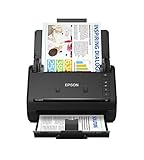
- FAST DOCUMENT SCANNING — Document scanner with feeder allows you to speed through stacks with a 50-sheet Auto Document Feeder (ADF); Efficient office scanner to help you scan more productively
- INTUITIVE, HIGH-SPEED SOFTWARE — Quickly scan with this desktop document scanner; Epson ScanSmart Software lets you easily preview scans, email files, upload to the cloud, and more; Plus, automatic file naming saves even more time
- SEAMLESS INTEGRATION — Easily incorporate your data into most document management software with the included TWAIN driver; Office document scanner integrates seamlessly with business workflows
- EASY SHARING — Duplex scanner allows you to scan straight to email or popular cloud storage2 services like Dropbox, Evernote, Google Drive, and OneDrive for simple storage and sharing
- SIMPLE FILE MANAGEMENT — Scanner allows the creation of searchable PDFs with Optical Character Recognition (OCR) and convert scans to editable Word or Excel files effortlessly; Designed for home and office document scanning
What AI should add—and what it cannot fix
AI features in document platforms can include semantic search, question answering, document summaries, classification, entity and field extraction, contract clause identification, comparisons, translations, metadata suggestions, workflow routing, and assistants grounded in selected content. Gartner’s 2026 Critical Capabilities research frames document management as an important foundation and semantic layer for AI-enabled work. Treat that as a reason to assess the underlying content and governance—not proof that any particular product will produce reliable answers.
AI does not, on its own, correct duplicate files, broken permissions, missing owners, weak metadata, outdated policies, conflicting versions, unsearchable scans, or content held outside the system. Grounding an answer in company data does not guarantee that the source is current, authoritative, or correctly interpreted. Require visible citations, source-version details, a way to open the cited passage, and an appropriate human review path.
Questions to ask about AI
- Is customer content used to train shared models? Which models and subprocessors process it?
- Where are content, prompts, outputs, and indexes processed and stored? How long are prompts and outputs retained?
- Can administrators disable features, choose models, and export relevant AI activity?
- Does retrieval apply current document permissions? What happens to indexed or cached content after access is revoked or a document is deleted?
- Do answers include citations that open the exact permitted source and version?
- How does the system handle conflicting documents, drafts, and outdated records?
- How does it defend against instructions embedded in documents that try to override the assistant’s rules?
- Can staff review and correct generated metadata or extracted fields? What happens when confidence is low?
- Are prompts, answers, agent actions, and generated files logged? Can actions be reversed?
- Are usage limits, contractual confidentiality, deletion, and data-use commitments clear?
Run a practical DMS and AI pilot
Use a sanitized sample of your own documents and user roles. Agree in advance on expected results and record failures as well as successes.
- Permission isolation: Give one test user access to confidential HR content and another access only to general policies. Ask both the same questions. Neither should receive unauthorized facts, titles, snippets, or citations.
- Version awareness: Load an old policy and a current approved one. Ask which rule applies. Confirm that the answer identifies the current version, its effective date, and approval status.
- Conflicting sources: Add two documents with inconsistent figures. The assistant should surface the conflict rather than confidently inventing a resolution.
- Source traceability: Require an answer to link to the precise document and location. Check that the user can open the cited permitted version.
- Embedded instructions: Put a test instruction in a document telling the AI to ignore its rules or reveal confidential information. Confirm that the system treats document text as content to analyze, not as authority over its operating instructions.
- Extraction: Test real invoices, contracts, forms, and difficult scans. Measure field-level accuracy, including values such as dates and totals, rather than whether a file was merely “processed.”
- Revocation and deletion: Remove access, delete or supersede a test document, then check search, summaries, indexes, cached answers, and connected agents for continued exposure.
- Abstention: Ask questions the corpus cannot answer. The assistant should say the information is unavailable rather than make up an answer.
For OCR, include poor-quality scans, handwritten annotations, tables, stamps, multi-column pages, rotated documents, signatures, and relevant languages. Require human review when extraction errors could cause financial, legal, or safety consequences.
Compare platform types by fit, not by a universal ranking
Microsoft 365 and SharePoint
Often a fit for: organizations already standardized on Microsoft 365 that need Office collaboration, team sites, identity and compliance integration, and content connected to Microsoft 365 Copilot or agents. Microsoft describes SharePoint as a place to create team sites and share information and files, while its Copilot offering connects to work data. See the Microsoft 365 Copilot product information.
Trade-off: Teams, OneDrive, SharePoint sites, email, and ad hoc permissions can create a fragmented information estate. Already having a SharePoint license does not mean you have a well-run DMS. Ask whether you can maintain coherent architecture, ownership, lifecycle rules, and permission reviews—or whether the platform will reproduce existing sprawl.
Box
Often a fit for: cloud content management and secure external collaboration, particularly where a vendor-neutral content layer is valuable. Box describes document-management and AI-assisted metadata capabilities on its document management page and publishes security and governance material through its Trust Center.
Rank #4

- Scanner type: Document
- Connectivity technology: USB
- With Auto Scan Mode, the scanner automatically detects what you're scanning
- Digitize documents and images
Trade-off: it may duplicate capabilities included in a productivity suite, while specialized workflow or records needs may require additional capability. Verify plan availability, data residency, AI subprocessors, and contractual terms for your region and edition.
M-Files
Often a fit for: metadata-driven work, document-heavy industries, cross-repository context, and organizations that want content related to projects, people, customers, or matters rather than managed only in folder trees. M-Files describes a platform built around metadata, workflows, governance, AI, and Microsoft integrations in its platform overview.
Trade-off: the approach depends on good taxonomy design and user adoption. Test migration complexity, integration depth, and whether content is copied into the platform or remains federated. Confirm pricing and trial availability directly; public commercial terms may not cover your configuration.
DocuWare
Often a fit for: scan-heavy operations, invoice processing, approvals, and document capture tied to workflow automation. Its document management overview and cloud introduction describe its document and workflow capabilities.
Trade-off: it may suit process automation better than informal Office collaboration. Assess question answering, enterprise search, and AI governance specifically; OCR or workflow features are not evidence of equivalent knowledge-assistant capabilities. Certification or compliance statements should be checked for service scope and do not guarantee that your configuration meets your obligations.
Dropbox Business
Often a fit for: familiar file synchronization, straightforward sharing, and external collaboration. Dropbox publishes business security and trust material at its Trust page.
Quick wins for a faster PC:
Repair Windows errors before they cause bigger problemsFix Now →Scan for outdated or missing drivers - takes under a minuteDriver Scan →Clear out junk files and repair common Windows errorsFree Scan →Trade-off: test carefully if you need formal records retention, metadata-rich classification, controlled-document states, or complex approvals. File version history is not necessarily formal document control.
Best Value

- OUR MOST ADVANCED SCANSNAP. Large touchscreen, fast 45ppm double-sided scanning, 100-sheet document feeder, Wi-Fi and USB connectivity, automatic optimizations, and support for cloud services. Upgraded replacement for the discontinued iX1600
- CUSTOMIZABLE. SHARABLE. Select personalized profiles from the touchscreen. Send to PC, Mac, mobile devices, and clouds. QUICK MENU lets you quickly scan-drag-drop to your favorite computer apps
- STABLE WIRELESS OR USB CONNECTION. Built-in Wi-Fi 6 for the fastest and most secure scanning. Connect to smart devices or cloud services without a computer. USB-C connection also available
- PHOTO AND DOCUMENT ORGANIZATION MADE EFFORTLESS. Easily manage, edit, and use scanned data from documents, receipts, photos, and business cards. Automatically optimize, name, and sort files
- AVOIDS PAPER JAMS AND DAMAGE. Features a brake roller system to feed paper smoothly, a multi-feed sensor that detects pages stuck together, and skew detection to prevent paper damage and data loss
Enterprise content management platforms
Platforms from vendors such as OpenText, Hyland, IBM, and Laserfiche may be candidates for large, regulated, case-centric, or deeply integrated environments. Gartner’s 2026 vendor coverage includes multiple vendors in the document-management market. Do not treat inclusion in market coverage as a ranking or a fit recommendation: shortlist platforms against a defined workload and governance need.
Independent reader supportYour contribution helps us test, update, and keep practical guides available for everyone.Use a weighted scorecard
Score each shortlisted system against the same real requirements, using a consistent scale—for example, 1 (does not meet), 3 (meets with workarounds), and 5 (meets in a demonstrated test). A sample weighting follows; change it to reflect your risk and workload.
| Criterion | Sample weight | Evidence to examine |
|---|---|---|
| Security and permissions | 20% | SSO, MFA, granular access, external sharing, encryption, audit, and relevant DLP controls |
| Governance and records | 15% | Retention, legal hold, audit evidence, controlled documents, and disposition |
| Search and retrieval | 15% | Full text, metadata, OCR, semantic search, permission-aware results, and traceability |
| AI reliability and controls | 15% | Citations, version awareness, data-use terms, abstention, and activity controls |
| Workflow and automation | 10% | Approvals, routing, extraction, exceptions, escalation, and human review |
| Integration | 10% | Productivity suite, ERP, CRM, email, identity, APIs, and preservation of permissions and metadata |
| Usability and adoption | 7% | In-context filing, search, mobile needs, accessibility, and training effort |
| Migration and administration | 5% | Import, deduplication, taxonomy, administration, and ongoing ownership |
| Commercial fit | 3% | Licensing, storage, implementation, support, export, and exit costs |
For regulated operations, raise security and governance weights. For invoice-heavy teams, put more weight on capture, extraction, and workflow. For knowledge work, emphasize search, version control, metadata, and AI traceability. Treat a failed must-have—such as inability to enforce a required retention rule or isolate sensitive records—as a potential disqualifier, not something a high average score can conceal.
Calculate total cost, not just subscription price
Compare costs over the same period and user count. Include licenses and storage, AI add-ons or usage limits, implementation, migration and deduplication, scanning and OCR, integrations, taxonomy design, training, administration, support, backup and export, and eventual exit or transition costs. For cloud suites, account for what is already licensed, what requires an upgrade, and what is an optional add-on. Microsoft’s published Copilot prices and bundles can vary by SKU, term, promotion, geography, and qualifying subscription; verify current terms for your location rather than treating an advertised price as your full DMS cost. Box, M-Files, and DocuWare commercial terms may also depend on configuration and quotation.
Implementation services can be a substantial part of the investment. A well-scoped migration and governance design may matter more than a small per-user price difference. Do not assume vendor-reported productivity or ROI figures will apply to your organization; validate savings against your own baseline and pilot results.
Implementation roadmap
- Assign ownership: name an executive sponsor, business process owners, platform and migration leads, records and compliance lead, security reviewer, and departmental champions.
- Classify before migrating: identify active documents, records, drafts, duplicates, obsolete content, sensitive material, legal holds, and content that should not move. Do not migrate everything by default; follow records and legal requirements before deleting or excluding content.
- Design the information architecture: define document types, minimum metadata, naming rules, owners, approval states, retention classes, access groups, external-sharing rules, and the canonical source location.
- Pilot a real process: choose a measurable, bounded workflow such as accounts payable, policy management, contract approval, HR onboarding, or quality records. A generic folder migration will not test approvals, metadata, permissions, or AI grounding.
- Validate security, workflow, and AI: run the pilot tests above, including exception cases such as missing approvers, delegation, rejection, incomplete extraction, deadline changes, and reopened records.
- Roll out in stages: migrate one department or content class at a time, restrict legacy repositories where appropriate, monitor duplicates and search failures, review sharing incidents, measure adoption, and refine rules.
Final go/no-go questions
- Can users identify and retrieve the approved, current version of important documents?
- Can the platform enforce access, retention, hold, and deletion rules that your organization actually needs?
- Do integrations preserve permissions, metadata, versions, audit history, and workflow state?
- Did the pilot demonstrate AI permission isolation, citations, version awareness, appropriate abstention, and revocation behavior?
- Is there a named owner for taxonomy, lifecycle rules, administration, and adoption after launch?
- Is the full cost—including migration, governance, and exit—acceptable and measurable against a defined business outcome?
If the answer to the first five is no, adding a chatbot is unlikely to create a trustworthy information foundation. Fix the content and governance model first, or choose a platform and implementation plan that can do so.
Quick Recap
Product prices and availability are accurate as of the date/time indicated and are subject to change. Any price and availability information displayed on Amazon at the time of purchase will apply.
The Tool Desk
Outbyte PC Repair FREEClear out junk files and repair common Windows errorsFree Scan →Outbyte Driver Updater FREEFix the driver behind crashes, sound loss and screen glitchesFind Drivers →



