The Tool Desk
Outbyte Driver Updater FREEFix the driver behind crashes, sound loss and screen glitchesFind Drivers →Outbyte PC Repair FREERepair Windows errors before they cause bigger problemsFix Now →Some links on this page are affiliate links: if you buy through them we may earn a commission, at no extra cost to you.
Not exactly. A recruiter connected to a project described as “DOGE orthogonal” proposed using AI agents in federal workflows and claimed the technology could automate work equivalent to at least 70,000 full-time employees. That was a recruiting pitch and stated objective—not verified evidence that 70,000 federal workers were fired, replaced, or even covered by an operational government program.
The proposal was reported by WIRED on May 2, 2025. Its formal authority, agency assignments, security arrangements, and implementation remained unclear.
What the DOGE-linked proposal said
On or around April 21, 2025, Anthony Jancso posted a recruiting message in a Slack group for roughly 2,000 Palantir alumni, according to WIRED. He said he was seeking technologists to design benchmarks and deploy AI agents into live workflows at federal agencies.
Jancso described more than 300 roles as having “almost full-process standardization.” He claimed that automating those roles could free the equivalent of at least 70,000 full-time employees for higher-impact work within a year. The proposed technologists would work onsite in Washington, D.C., and Jancso said security clearances would not be required.
#1 Best Overall
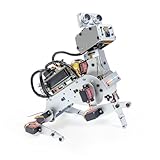
- AI-Powered Raspberry Pi Robot Dog — PiDog: Powered by Raspberry Pi (5/4B/3B+/3B/Zero 2W), OpenClaw, and multi-LLMs like ChatGPT, Gemini, Grok, DeepSeek, Qwen & Ollama. With 12 servos, camera, gyroscope, hearing & touch sensors, PiDog can see, listen, talk, move, and interact intelligently. Supports OpenCV, MediaPipe, TTS & STT, app control, FPV & Python. A great STEM robotics gift for students, makers & tech enthusiasts—perfect for birthdays and holidays. (Raspberry Pi not included)
- Realistic Dog-like Movements: PiDog's 12 powerful servos enable 32 dog-like actions, including walking, sitting, standing, shaking its head, wagging its tail, and performing playful tricks, closely mimicking a real dog and providing an engaging experience. This is an AI development robot product designed for engineers, suitable for ages 15 and above
- Rich Sensor Suite for Interactive Experiences: PiDog features ultrasonic, touch, gyroscope, sound, camera, speaker and microphone. These provide it with advanced hearing, vision, and touch, enabling it to see, detect obstacles, respond to touch, and recognize sounds, making interactions highly engaging
- AI-Powered Interactions with OpenClaw & Multi-LLMs. PiDog combines voice, vision, and gesture recognition for immersive AI experiences. Powered by OpenClaw and multi-LLMs like ChatGPT, Gemini, Grok, DeepSeek, Qwen, Doubao, and Ollama (local LLMs), it can understand questions, respond naturally through TTS & STT, recognize math problems, interpret hand gestures, and hold smart conversations. OpenClaw also enables customizable AI behaviors and personalized robotics development, helping users create their own intelligent robotic companion
- Comprehensive Learning Resources and Support: PiDog offers detailed online documentation, video tutorials, prompt technical support, and an active forum community, ensuring beginners can easily complete all projects and enjoy a great experience
The wording matters. The message described an anticipated labor impact, not a list of 70,000 employees targeted for dismissal. It also did not establish that the project had a public agency charter, procurement document, named contracting authority, or completed deployment plan.
Who was Anthony Jancso?
Jancso was a former Palantir employee and cofounder of AccelerateX, previously known as AccelerateSF. WIRED also reported that he had recruited for DOGE and said in December 2024 that he was helping Elon Musk’s team find technology talent for the incoming administration.
However, the reporting did not make his formal position within DOGE clear. It was also unclear who would employ the proposed technologists or control the project. Jancso’s description of the effort as “DOGE orthogonal” suggests a relationship with, adjacency to, or support for DOGE, but it does not by itself prove that the effort was an official DOGE program.
Quick wins for a faster PC:
Fix the driver behind crashes, sound loss and screen glitchesFind Drivers →Clear out junk files and repair common Windows errorsFree Scan →Scan for outdated or missing drivers - takes under a minuteDriver Scan →A careful description is therefore: Jancso proposed or recruited for an AI-agent project described as “DOGE orthogonal.” Calling it an officially approved DOGE initiative would go beyond the available evidence.
Does 70,000 FTEs mean 70,000 layoffs?
No. “FTE” means full-time equivalent. It measures a quantity of labor or staffing capacity and does not necessarily represent the number of individual employees.
Jancso’s phrase “freeing up” employees could theoretically refer to several outcomes:
Rank #2

- Optimized AI Arm Kit for LeRobot & Hugging Face Projects – The SO-ARM101 is an upgraded low-cost robotic arm servo motor kit designed for AI robotics enthusiasts and developers. Fully compatible with LeRobot and Hugging Face frameworks, it supports imitation learning and reinforcement learning, making it ideal for real-world robotics applications. (3D-printed parts not included.)
- Enhanced Wiring & Performance – Compared to the SO-ARM100, the SO-ARM101 features improved wiring to prevent disconnection at joint 3 and eliminates range-of-motion limitations. The leader arm uses optimized gear ratio motors for smoother performance—no external gearboxes required.
- Real-Time Leader-Follower Functionality – New real-time tracking allows the leader arm to follow the follower arm, enabling human intervention and correction during reinforcement learning (RL) training. Perfect for hands-on AI robotics development and research.
- Open-Source, DIY-Friendly & Nvidia-Compatible – Developed by TheRobotStudio, this open-source AI Arm kit integrates seamlessly with the LeRobot platform, offering PyTorch-based datasets, simulation, training, and deployment tools. Fully compatible with Nvidia Jetson edge devices, including reComputer Mini J4012 Orin NX 16 GB.
- Comprehensive Learning Resources – Includes detailed open-source assembly and calibration guides, testing tutorials, and deployment instructions. From wiring to AI training, get everything you need to start building, teaching, and optimizing your robotic arm for grasping and placing tasks.
- Automating repetitive portions of existing jobs.
- Reassigning employees to other work.
- Reducing future hiring or relying on attrition.
- Reducing contractors or staffing capacity.
- Conducting workforce cuts or reductions in force.
Only the final possibilities would directly mean job losses, and the recruiting message did not establish that any particular group of employees would be dismissed. Layoffs, reductions in force, and agency-specific staffing changes require separate evidence.
Free tools Windows power users keep installed
One-click scans. No signup required.
The defensible interpretation is that Jancso claimed AI could perform work equivalent to at least 70,000 FTEs. That is materially different from saying DOGE replaced 70,000 federal workers.
What are AI agents?
A conventional chatbot generally responds to a user’s prompt. An AI agent is intended to pursue a task through multiple steps, potentially retrieving information, using software tools, searching databases, making decisions, and taking actions with limited human intervention.
In a government setting, an agent might theoretically:
- Classify or route forms.
- Search large collections of regulations and documents.
- Draft routine correspondence.
- Reconcile records or identify missing information.
- Process standardized administrative requests.
That does not mean an agent can safely perform an entire government occupation. Processing a routine form is different from adjudicating benefits, handling taxpayer or health information, interpreting agency-specific regulations, making an immigration decision, or communicating a legally consequential determination.
Recommended Free Tools
Why the 70,000 figure was questioned
Experts quoted by WIRED questioned whether AI agents could reliably perform the work of 70,000 employees across the federal government. Federal agencies do not share one uniform operating environment. They use different statutes, procedures, legacy systems, data structures, security controls, and standards for review.
Rank #3
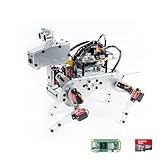
- Raspberry Pi AI Robot: powered by Raspberry Pi (5/4B/3B+/3B/Zero 2W), features 12 servos and sensors for vision, hearing, and touch. Integrated with ChatGPT-4o, it responds to complex queries. With app control and FPV, users can manage and see its view in real-time. It supports Python programming
- Realistic Movements: 12 powerful servos enable 32 actions, including walking, sitting, standing, shaking its head, wagging its tail, and performing playful tricks, closely mimicking a real and providing an engaging experience
- Rich Sensor Suite for Interactive Experiences: features ultrasonic, touch, gyroscope, sound, camera, speaker and microphone. These provide it with advanced hearing, vision, and touch, enabling it to see, detect obstacles, respond to touch, and recognize sounds, making interactions highly engaging
- Engaging Interactions with ChatGPT-4o: with ChatGPT-4o enables voice interactions and visual recognition, making it smarter and more responsive. Users can have natural conversations, solve math problems via the camera, and interpret gestures, creating diverse and fun interactions
- Comprehensive Learning Resources and Support: offers detailed online documentation, video tutorials, prompt technical support, and an active forum community, ensuring beginners can easily complete all projects and enjoy a great experience
Even a seemingly standardized task can contain exceptions that require judgment. AI systems can produce incorrect or inconsistent results while sounding confident. A human reviewer may still need to verify every important output, which can reduce or eliminate the claimed labor savings.
Oren Etzioni, an AI entrepreneur quoted by WIRED, said AI could improve specific tasks or make employees more productive, but treating the technology as a one-for-one replacement for 70,000 employees was not credible. The central distinction is between automating tasks and automating occupations.
How the proposal fit DOGE’s wider AI and workforce agenda
The recruiting message appeared during a broader DOGE campaign focused on reducing federal staffing and contracts while promoting AI tools inside government. Separate reporting described or examined AI activity involving several agencies and initiatives, including:
- GSAi, an AI chatbot and related workforce discussions at the General Services Administration.
- AI efforts at the Department of Veterans Affairs, including proposals involving code and agency systems.
- AI-assisted regulatory work at the Department of Housing and Urban Development.
- Reported use of Meta’s Llama 2 to classify some federal-worker email responses, as described by WIRED.
These reports show that AI was being discussed or used in workforce and agency operations. They do not prove that the specific 70,000-FTE proposal was approved, deployed, or completed at that scale. Separate initiatives should not be merged into one supposed government-wide replacement program.
Independent reader supportYour contribution helps us test, update, and keep practical guides available for everyone.The security and accountability questions
The claim that technologists would not need security clearances is not, by itself, proof that the proposal was improper. Access can also be limited through system permissions, data segmentation, monitoring, and other controls. But it is an important detail because the proposed work involved live federal workflows.
A serious deployment would need clear answers to questions such as:
Rank #4
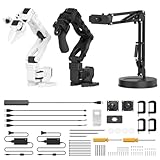
- 【End-to-End Imitation Learning】Hiwonder SO-ARM101 robot arm is an embodied intelligent hardware platform compatible with the Lerobot open-source framework. It provides developers with streamlined access to shared code, templates, and pre-trained models to explore the latest advancements in AI research.
- 【Dual-Camera Vision System】Equipped with both a gripper-mounted camera and an external camera, the system supports both precise manipulation and environmental awareness for accurate imitation learning.
- 【Hiwonder High-Performance Bus Servos】Featuring 12 high-torque bus servo motors with magnetic feedback, the Hiwonder SO-Arm101 robotic arm delivers smooth, stable motion, eliminating issues like power deficiency and jitter.
- 【Professional Control & Debugging】Integrated with the Hiwonder BusLinker V3.0 debugging board, the system supports servo scanning, real-time status monitoring, and trajectory control. The professional PC software simplifies device calibration and debugging, making it accessible for both researchers and hobbyists.
- 【Open-Source Compatibility】The SO-ARM101 robotic arm is designed to be fully compatible with the LeRobot open-source project. We acknowledge the contributions of the open-source community; all trademarks and copyrights belong to their respective owners.
- What data could the agents access?
- Would they run inside agency networks or through outside vendors?
- Who would approve and supervise deployment?
- Would prompts, outputs, tool calls, and decisions be logged?
- Who would be legally responsible for an incorrect or discriminatory result?
- How would agencies prevent prompt injection, data leakage, unauthorized actions, or model manipulation?
- What testing threshold would be required before an agent entered a live system?
Government automation also raises privacy, procurement, administrative-law, cybersecurity, and records-management issues. A system that works in a controlled pilot may fail when exposed to inconsistent forms, unusual cases, incompatible legacy systems, or changing rules.
How to judge whether this kind of plan is credible
The claimed benefits would depend on more than whether an AI model can complete a demonstration. Key tests include:
- Task specificity: Is the work repetitive and objectively verifiable?
- Error cost: What happens when the system is wrong?
- Human review: Is a qualified employee required to approve the result, and can that review be meaningful?
- Legal authority: Can the task legally be delegated to software or a contractor?
- Data sensitivity: Does the workflow involve tax, health, personnel, benefits, immigration, or law-enforcement information?
- Auditability: Can investigators reconstruct what the system saw, decided, and did?
- Security: Are permissions limited, monitored, and revocable?
- Interoperability: Can the system safely work across agency-specific software?
- Total cost: Do estimates include integration, testing, monitoring, cybersecurity, licensing, and remediation?
- Workforce effect: Does automation eliminate positions, change duties, reduce hiring, or shift work to contractors and technical staff?
These criteria also expose why projected FTE savings can be overstated. Agencies may save time on one step while retaining the underlying position, or they may need additional staff to validate outputs, manage vendors, investigate errors, and maintain the systems.
What evidence would show that the proposal became an operating program?
The recruiting message alone cannot answer that question. Stronger evidence would include agency contracts, statements of work, purchase orders, named pilot programs, deployment dates, privacy or system-authority documents, performance data, and workforce analyses.
It would also be important to find Inspector General or Government Accountability Office reviews, public statements from affected agencies, and records tying a specific reduction in force or staffing change directly to automation.
Without that documentation, the 70,000 figure remains a claim made in a recruiting message—not a government-validated forecast or a verified count of jobs eliminated.
Quick Recap
Claim versus evidence
| Claim | What the available evidence supports |
|---|---|
| A DOGE-linked recruiter proposed AI agents for federal workflows. | Supported by the reported Slack message and WIRED’s reporting. |
| The project targeted work equivalent to 70,000 FTEs. | Supported as Jancso’s stated claim. |
| DOGE officially approved the project. | Not established by the available reporting. |
| 70,000 federal employees were replaced. | Not established. |
| AI agents could safely perform the work at that scale. | Disputed and unproven. |
| DOGE-related AI activity existed elsewhere in government. | Supported by separate reporting, but those efforts should not be treated as proof that this proposal was completed. |
Product prices and availability are accurate as of the date/time indicated and are subject to change. Any price and availability information displayed on Amazon at the time of purchase will apply.



