What’s actually slowing this PC down?
Pick the symptom - the matching free tool is one click away.
Some links on this page are affiliate links: if you buy through them we may earn a commission, at no extra cost to you.
Dell’s plan to buy EMC was announced on October 12, 2015, at an approximate value of $67 billion. It was described at the time as the largest technology acquisition ever, but it was not a $67 billion all-cash purchase. EMC shareholders were offered $24.05 in cash per share plus Dell-issued tracking stock linked to part of Dell’s economic interest in VMware. The transaction closed on September 7, 2016, creating Dell Technologies.
The deal at a glance
| Item | Detail |
|---|---|
| Buyer | Dell, Michael Dell, MSD Partners, Silver Lake and associated investors |
| Target | EMC |
| Announcement | October 12, 2015 |
| Announced value | Approximately $67 billion |
| Cash consideration | $24.05 per EMC share |
| Stock consideration | Dell tracking stock linked to VMware economics |
| Closing date | September 7, 2016 |
| Result | Dell Technologies |
The original Dell announcement described a definitive acquisition agreement. The companies often used the word “merger” when discussing the combination, but the legal and economic structure was Dell’s acquisition of EMC.
Why Dell wanted EMC
Dell was already a major PC and server company, but the transaction was designed to move it further into enterprise technology. EMC brought a dominant storage business, a large enterprise customer base and a collection of businesses spanning virtualization, security, cloud and data analytics.
The combination was intended to give Dell a broader answer to corporate technology buyers looking for servers, storage, virtualization, networking, security and services from a connected provider. It also aimed to improve Dell’s ability to compete with Hewlett Packard Enterprise, Cisco, IBM, Oracle and other infrastructure vendors.
#1 Best Overall
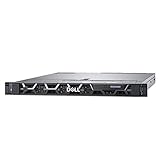
- This Certified Refurbished product is tested and certified to look and work like new. The refurbishing process includes functionality testing, basic cleaning, inspection, and repackaging. The product ships with all relevant accessories, a minimum 90-day warranty, and may arrive in a generic box. Only select sellers who maintain a high performance bar may offer Certified Refurbished products on Amazon.com
- 2x Intel Xeon Gold 6148 2.4GHz 20 Core Processors
- 64GB DDR4 RAM
- Dell PERC H740P RAID Controller w/ 8GB NV Cache
- Dell Broadcom 5720 Quad-Port 1Gb 1000BASE-T PCI-e R Series Daughtercard NIC
At the time, EMC operated what was known as the “Federation.” Alongside EMC’s core storage business, the group included VMware, Pivotal, RSA, SecureWorks and Virtustream. The acquisition therefore reached well beyond Dell’s traditional PC identity.
For Dell, the expected advantages included:
- Greater access to large enterprise accounts;
- A stronger storage and data-center portfolio;
- More opportunities to sell products across Dell and EMC’s customer bases;
- A larger position in hybrid cloud and software-defined data centers; and
- A broader platform for enterprise services and support.
Why the headline was $67 billion
The headline valuation combined cash and stock. EMC shareholders were offered $24.05 in cash for each EMC share plus approximately 0.111 shares of newly issued Dell tracking stock for each EMC share.
When Dell announced the transaction, it used an illustrative value of $81.78 per tracking-stock share. That figure was based on VMware’s October 7, 2015 intraday volume-weighted average price. Using that assumption, Dell calculated total consideration of approximately $33.15 per EMC share, producing an overall announced transaction value of about $67 billion.
A simple 100-share example
An EMC shareholder with 100 shares would have been entitled, using the stated terms, to:
- $2,405 in cash—100 shares multiplied by $24.05; and
- Approximately 11.146 tracking-stock shares at closing, based on the final ratio of approximately 0.11146 Class V shares per EMC share.
The tracking-stock portion was not ordinary VMware stock. Its value and market behavior could differ from VMware’s publicly traded common shares.
The VMware tracking-stock complication
VMware was central to both the strategy and the financial design of the transaction. It was EMC’s most valuable publicly traded asset and a major reason investors focused on the deal’s structure.
Rank #2
- 2x Intel Xeon Gold 6130 2.1GHz 16 Core Processors
- 64GB DDR4 RAM (2x 32GB RAM)
- 1x Dell PERC H740P RAID Controller w/ 8GB NV Cache
- 1x Dell Broadcom 5720 Quad-Port 1Gb 1000BASE-T PCI-e R Series Daughtercard NIC
- 1x Bezel and Rail Kit
VMware did not disappear into Dell as a wholly owned operating division when the transaction closed. VMware remained a separate publicly traded company. Dell instead issued Class V tracking stock intended to reflect part of Dell’s economic interest in VMware.
Do these 3 things before closing this tab:
1Scan for outdated or missing drivers - takes under a minute2Clear out junk files and repair common Windows errors3Fix the driver behind crashes, sound loss and screen glitchesThree points matter:
- VMware shares and Dell tracking stock were different securities. Owning the tracking stock was not the same as owning ordinary VMware shares.
- The tracking stock’s value could move. The $67 billion headline depended partly on an assumed value for that stock.
- The stock’s rights and characteristics could differ. As VMware explained in its SEC filing, the tracking stock had different features from VMware’s ordinary shares.
This is why the announced transaction valuation should be treated as an approximate value calculated at a particular time—not as a permanently fixed cash price.
How the transaction was financed
The financing plan combined several sources:
- New common equity from Michael Dell, MSD Partners, Silver Lake and Temasek;
- Dell-issued tracking stock;
- New debt financing; and
- Cash on hand.
Dell said the transaction had no financing conditions to closing. Contemporary Bloomberg reporting estimated that Dell would add roughly $50 billion in debt to approximately $11 billion it already carried. That was a reported financing estimate, not the same thing as a final audited capital structure.
For investors, the distinction between price and financing is important. The deal consideration describes what EMC shareholders received. The funding sources describe how Dell and its backers financed that consideration. Debt did not directly change the $24.05 cash offer, but it increased the financial pressure on the combined company after closing.
Risks investors and customers were watching
The transaction promised scale, but it also created substantial execution risks.
Recommended Free Tools
Leverage
Large new borrowings meant Dell Technologies would need to generate cash, reduce debt and manage interest costs while integrating two large businesses.
Rank #3
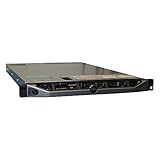
- 1x Intel Xeon E5-2620 v4 2.1GHz 8 Core Processor
- 16GB DDR4 RAm
- Dell PERC H730P Mini Mono RAID Controller w/ 2GB NV Cache
- Dell Broadcom 5720 Quad-Port 1Gb 1000BASE-T PCI-e R Series Daughtercard NIC
- Redundant 750W Power Supplies
Integration
Dell and EMC had different product lines, sales organizations, partner relationships and corporate cultures. Combining them required coordinating product road maps, support systems, sales incentives and channel programs.
Product overlap
The businesses had potential overlap in servers, storage, networking and enterprise infrastructure. That could create internal competition or require product rationalization.
Partner relationships
EMC worked with companies including Cisco and Microsoft, while VMware had its own ecosystem. Customers and channel partners had to assess whether the new ownership structure would alter pricing, support, incentives or strategic relationships.
Quick wins for a faster PC:
Clear out junk files and repair common Windows errorsFree Scan →Fix the driver behind crashes, sound loss and screen glitchesFind Drivers →Repair Windows errors before they cause bigger problemsFix Now →Dependence on VMware
Because the consideration included VMware-linked tracking stock, VMware’s performance and market valuation affected how investors viewed the economic value of the deal.
Customer uncertainty
Enterprise buyers typically make infrastructure decisions over several years. During a major acquisition, customers may worry about product discontinuations, support continuity, contract changes and whether a vendor will favor an integrated stack over best-of-breed products.
Approval and closing timeline
- October 12, 2015: Dell and EMC announced the definitive acquisition agreement.
- July 19, 2016: EMC shareholders approved the transaction.
- August 30, 2016: Dell and EMC announced that Chinese regulatory approval had cleared the final regulatory condition and said the deal was expected to close on September 7.
- September 7, 2016: The transaction closed and Dell Technologies was formed.
The approval process involved shareholder approval, regulatory clearances in multiple jurisdictions, an effective registration statement and other customary closing conditions. The closing date is documented in the SEC Form 8-K.
Rank #4
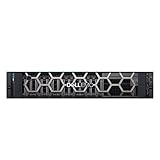
- This Certified Refurbished product is tested and certified to look and work like new. The refurbishing process includes functionality testing, basic cleaning, inspection, and repackaging. The product ships with all relevant accessories,and may arrive in a generic box. Only select sellers who maintain a high performance bar may offer Certified Refurbished products on Amazon.com
- 2x Intel Xeon Silver 4114 2.2GHz 10 Core Processors
- 32GB DDR4 RAM
- Dell PERC H730P Mini Mono RAID Controller w, 2GB NV Cache
What the combined company contained
At closing, the Dell Technologies family included:
- Dell;
- Dell EMC;
- VMware;
- Pivotal;
- RSA;
- SecureWorks; and
- Virtustream.
This describes the structure announced at closing. It should not be read as a statement that every business retained the same ownership or branding in 2026. Later corporate changes are separate from the historical question of what Dell acquired in 2015–2016.
What changed for enterprise customers and partners?
The deal was more important to enterprise technology buyers than to ordinary PC shoppers. Dell’s consumer and small-business reach was being joined with EMC’s large-enterprise relationships and infrastructure portfolio.
Customers and partners had to consider:
- Whether Dell EMC’s storage and server road maps would remain competitive;
- How VMware relationships would operate under Dell’s ownership structure;
- Whether reseller and distributor programs would be combined;
- How Cisco and Microsoft partnerships would be affected;
- Whether support and existing contracts would continue without disruption; and
- Whether the broader portfolio would create useful integration or unwanted vendor lock-in.
Potential winners included customers seeking a more complete private- or hybrid-cloud stack, partners able to sell across both portfolios and Dell’s enterprise sales organization. Pressure points included standalone storage competitors, resellers facing program changes and customers concerned about reduced vendor choice.
Was it really the biggest tech deal ever?
Contemporary coverage from CRN, PCWorld and Bloomberg described the transaction as the largest technology acquisition at the time.
That wording needs a date. It was accurate as a description of the 2015 announcement, but “biggest tech deal ever” is not a timeless ranking. Current deal rankings may use different definitions, including announced value, enterprise value, equity value, or transaction value after assumed debt. The safest description is the largest technology acquisition reported at the time of the announcement.
It is also important not to confuse the $67 billion announced transaction value with later descriptions of Dell Technologies’ value. Dell’s closing materials referred to the resulting company using a different market-value description. Those figures represent different measurements taken at different times.
What happened next?
The deal was completed rather than abandoned or merely proposed. On September 7, 2016, EMC became a wholly owned subsidiary of Dell Technologies, Michael Dell became chairman and chief executive of the combined company, and VMware remained publicly traded.
For historical and investment analysis, the clearest conclusion is that Dell’s EMC transaction was simultaneously:
Quick Recap
- A major expansion from PCs and servers into enterprise infrastructure;
- A roughly $67 billion announced acquisition whose value included stock, not just cash;
- A highly leveraged financing exercise; and
- A transaction whose most distinctive feature was the VMware-linked tracking stock.
Product prices and availability are accurate as of the date/time indicated and are subject to change. Any price and availability information displayed on Amazon at the time of purchase will apply.
The Tool Desk
Outbyte Driver Updater FREEFix the driver behind crashes, sound loss and screen glitchesFind Drivers →Outbyte PC Repair FREERepair Windows errors before they cause bigger problemsFix Now →



