Some links on this page are affiliate links: if you buy through them we may earn a commission, at no extra cost to you.
Most cryptocurrency is not anonymous. Bitcoin and other public-blockchain networks permanently record transactions, including addresses, amounts, timestamps, and transaction relationships. An address may not initially show a person’s name, but it can often be connected to one through an exchange, merchant, public post, IP address, device, or spending pattern.
You can reduce that exposure, but privacy is not a switch. It is a stack of protections covering identity, the ledger, your network connection, wallet software, counterparties, devices, and off-chain records. If one layer leaks, the rest may not save you.
Anonymous, pseudonymous, confidential, or private?
These terms describe different things:
- Anonymous: your identity is not known.
- Pseudonymous: an identifier is visible, but it is not initially tied to your name.
- Confidential: details such as transaction amounts may be hidden.
- Private: a broader goal that includes identity, ledger, network, metadata, custody, and device exposure.
Bitcoin is generally pseudonymous, not anonymous. Privacy also has several dimensions:
The Tool Desk
Outbyte Driver Updater FREEScan for outdated or missing drivers - takes under a minuteDriver Scan →Outbyte PC Repair FREEClear out junk files and repair common Windows errorsFree Scan →- Ledger privacy: whether addresses, balances, amounts, inputs, outputs, and transaction relationships are visible.
- Identity privacy: whether an address can be connected to a real person or organization.
- Network privacy: whether someone can associate a wallet request or transaction broadcast with your IP address.
- Metadata privacy: whether timing, invoices, transaction IDs, payment notes, counterparties, or viewing keys are exposed.
- Custodial privacy: what an exchange, wallet provider, payment processor, or remote node can see.
- Device privacy: whether malware, browser fingerprinting, cloud backups, screenshots, or app telemetry reveal activity.
- Forward privacy: whether future analysis could connect activity that looks unrelated today.
That distinction matters because a tool may improve one layer while doing nothing for another. A hardware wallet can protect your keys without hiding your public transaction history. A VPN can reduce what your internet provider sees without hiding an exchange’s KYC records.
#1 Best Overall

- Effortlessly build your crypto portfolio via the all in one Ledger Wallet app: buy, sell, send, receive, swap, stake and more across popular blockchains. 15,000+ coins & tokens in a single dashboard. Keep a close eye on the market. Compare service providers. Track performance. Get timely alerts. Build your portfolio with confidence.
- Effortlessly build your crypto portfolio via the all in one Ledger Wallet app: buy, sell, send, receive, swap, stake and more across popular blockchains. 15,000+ coins & tokens in a single dashboard. Keep a close eye on the market. Compare service providers. Track performance. Get timely alerts. Build your portfolio with confidence.
- Enjoy Bluetooth connectivity, iOS access, and hours of battery use with this mobile-first, secure backup signer. Freedom you can depend on.
- Genuine Check: confirm your signer is authentic during setup with the Ledger Wallet app.
- Protect your signer: keep it in mint condition at all times with a bespoke Pod or Case to avoid scratches and everyday wear and tear.
Why Bitcoin transactions can be traced
A Bitcoin transaction is recorded on a public ledger. Observers can inspect:
- sending and receiving addresses;
- transaction amounts;
- inputs and outputs;
- probable change outputs;
- block times and confirmation history; and
- historical activity and balances associated with addresses.
The difficult part is often not seeing the transaction. It is connecting the address to a person. That connection can come from a KYC exchange withdrawal, a merchant invoice, a public donation address, a social-media post, a blockchain-explorer search, network observations, address reuse, or distinctive spending behavior.
Once one address is identified, analysts may infer relationships with other addresses. Input selection, change behavior, consolidation, timing, and repeated payment patterns can all provide clues. The underlying blockchain record is permanent, so information that seems harmless today may become more revealing later.
Recommended Free Tools
Bitcoin.org explains that Bitcoin transactions are public and permanent, while its privacy guidance warns about publishing addresses and exposing their history.
The privacy stack: where exposure happens
1. Acquisition: self-custody does not erase exchange records
Buying cryptocurrency through a regulated exchange usually creates an identity link. The exchange may know your name, payment method, purchase, withdrawal address, time, and amount.
Moving coins to a self-custody wallet improves control over the private keys. It does not retroactively anonymize the purchase or remove the exchange’s records. Self-custody and privacy are related but different goals:
- Self-custody protects control and custody.
- It does not make an identity-linked transaction anonymous.
2. Wallet and address management
Good wallet hygiene reduces unnecessary links:
- Use a fresh receiving address when appropriate instead of reusing one indefinitely.
- Separate personal, business, savings, donation, and experimental funds.
- Use coin control where available so the wallet does not automatically combine unrelated inputs.
- Be cautious when consolidating funds from different contexts into one transaction.
- Do not post addresses, transaction IDs, amounts, or counterparties publicly.
- Understand what a third-party block explorer or wallet server can learn when you search an address.
A fresh address is useful, but it is not a complete privacy solution. The exchange that sent the funds may still know the address, and later consolidation or spending can reconnect it to other activity.
Outdated Drivers Are Slowing You Down
One free scan finds every outdated or missing driver and matches the right update for your exact hardware.Free scan · exact hardware matchPC Slower Than It Used to Be?
A free scan shows the junk files, broken settings and background clutter dragging Windows down - then fixes them in one click.Free scan · Windows 10 & 11Ledger’s Bitcoin wallet guidance discusses fresh addresses. Bitcoin Core’s privacy documentation explains how wallets that rely on third-party servers can disclose addresses, balances, and payment information.
Rank #2

- Proven security at scale: Over 9 years and millions of cards issued with no known remote hacks, while military‑grade EAL6+ security keeps your private keys locked inside the chip. Your cryptocurrencies stay strongly protected from online attackers.
- Tap once to manage your entire crypto wallet across 90 blockchains - no USB cables or Bluetooth, no batteries, no setup. Access 14,100+ coins & tokens, DeFi, NFTs, and staking instantly from your phone
- Smart backup: Use your second Tangem Wallet as your Backup keys with end‑to‑end encryption; no more papers, pictures. If one card is lost, the remaining can still restore full access, with an optional seed phrase available for advanced users.
- Engineered to last up to 25 years: Waterproof (IP69K), shockproof and tested for extreme temperatures from −25°C to 50°C. A durable cold wallet with long‑term protection and independently audited security.
- Trusted by 6 million users worldwide (4.9 App Store, 4.8 Google Play) - buy, sell, swap, stake, and spend cryptocurrency directly. The secure offline storage wallet designed for how people actually use crypto wallets
3. Network connections
Your wallet can reveal information before a transaction appears on the blockchain. A lightweight wallet may query a remote server about your addresses or balances. Your internet provider may see that you connected to a service, and an identifiable network connection may be associated with wallet activity.
Possible defenses include:
- Your own full node: reduces the need to disclose wallet queries to a random public server, but requires storage, bandwidth, electricity, and maintenance.
- Tor: can help dissociate wallet traffic from your ordinary IP address when the relevant application is correctly configured.
- A VPN: may hide activity from your ISP, but shifts trust toward the VPN provider. It does not hide public blockchain data, exchange records, device activity, or your identity from every observer.
Installing Tor is not enough if the wallet or another part of the workflow still connects directly. Confirm that the wallet’s relevant traffic is actually routed through Tor. Bitcoin Core documents running Bitcoin Core through Tor; Monero also documents Tor and I2P while warning that network privacy is imperfect.
4. Transaction construction and behavior
How a transaction is built can affect how easily observers link its inputs and outputs. But advanced transaction techniques are not magic erasers. Timing, amounts, counterparties, wallet fingerprints, exchange records, and later spending can still provide evidence.
Bitcoin privacy tools: what they help with—and what they do not
| Tool or practice | Potential benefit | Important limitation |
|---|---|---|
| Fresh addresses | Reduces direct address reuse | Does not erase acquisition records, IP data, or later links |
| Coin control | Helps avoid combining unrelated coins | Requires careful decisions and does not hide the public ledger |
| Own full node | Reduces wallet-server and query leakage | Does not make on-chain transactions private |
| Tor | Can reduce ordinary IP association | Does not protect against device compromise or off-chain records |
| PayJoin | Can undermine the assumption that all inputs belong to one payer | Requires compatible software and a participating recipient |
| CoinJoin | Can make common ownership heuristics less reliable | Results depend on implementation, participants, coin selection, and later spending |
| Silent Payments | Can reduce reuse of conventional receiving addresses | Support depends on wallet implementation; it is not universally available |
| Hardware wallet | Improves private-key security | Does not hide addresses, history, exchange links, or IP addresses |
PayJoin
PayJoin modifies a payment so that both the payer and recipient contribute inputs. That can undermine the common assumption that all inputs in a transaction belong to one user. It is not the same as mixing and generally requires compatible software on both sides.
Its usefulness depends on adoption. If a merchant or recipient cannot receive a PayJoin transaction, the option may not be available. See the PayJoin protocol overview and Wasabi’s PayJoin documentation.
CoinJoin
CoinJoin combines inputs from multiple users in a transaction. This can make simple ownership heuristics less reliable, but it does not make coins permanently untraceable.
Privacy can be weakened by:
- small or poorly matched participant sets;
- distinctive amounts and timing;
- linkable pre-mix transactions;
- careless post-mix spending;
- later consolidation with identity-linked coins; and
- exchange, merchant, network, or device records.
CoinJoin also introduces operational trade-offs. Wasabi’s documentation says its CoinJoin implementation requires keys to be hot on the computer. Its version 2.2.0.0 documentation says users pay mining fees rather than a coordinator fee, although small leftover amounts may be forfeited in some circumstances. The documentation lists defaults including a 0.005 BTC stop-CoinJoin threshold, 21 minimum inputs, and a 50 sat/vByte maximum fee rate; these are software settings, not universal standards.
Research has found that the effective privacy of CoinJoin implementations can be narrower than users expect when pre- and post-mix activity is analyzed. Treat CoinJoin as a specialized tool requiring careful handling, not a guarantee. See Wasabi’s current documentation and the published research on Bitcoin anonymity techniques.
Rank #3

- Proven security at scale: Over 9 years and millions of cards issued with no known remote hacks, while military‑grade EAL6+ security keeps your private keys locked inside the chip. Your cryptocurrencies stay strongly protected from online attackers.
- Tap once to manage your entire crypto wallet across 90 blockchains - no USB cables or Bluetooth, no batteries, no setup. Access 14,100+ coins & tokens, DeFi, NFTs, and staking instantly from your phone
- Smart backup: Use your second Tangem Wallet as your Backup keys with end‑to‑end encryption; no more papers, pictures. If one card is lost, the remaining can still restore full access, with an optional seed phrase available for advanced users.
- Engineered to last up to 25 years: Waterproof (IP69K), shockproof and tested for extreme temperatures from −25°C to 50°C. A durable cold wallet with long‑term protection and independently audited security.
- Trusted by 6 million users worldwide - buy, sell, swap, stake, and spend cryptocurrency directly. The secure offline storage wallet designed for how people actually use crypto wallets
Silent Payments
BIP352, Silent Payments, proposes reusable payment identifiers that allow senders to derive unique on-chain outputs without the recipient publishing a conventional reusable address. This may reduce address reuse and improve receiving privacy.
It is not a universal wallet feature. Check current wallet support and implementation details before relying on it.
Monero: privacy by protocol design
Monero differs from ordinary Bitcoin privacy workflows because major on-chain privacy protections are built into the protocol rather than being an optional mixing process.
At a high level:
- Stealth addresses help prevent public exposure of a recipient’s ordinary address.
- Ring-signature-based mechanisms obscure which input was actually spent.
- Confidential transaction mechanisms hide transaction amounts.
- Subaddresses help separate receiving contexts.
Monero documentation says separate seeds provide the strongest unlinkability between receiving identities. Subaddresses help organize funds, but careful management still matters. Combining or otherwise connecting funds can weaken separation.
Monero’s protocol privacy does not hide everything. An exchange or merchant can retain identity and payment records. A remote node may learn information about the connection making wallet requests. Malware, a compromised device, a careless counterparty, or public disclosure can defeat practical privacy. Exchange availability and legal treatment also vary by jurisdiction.
The Monero project repository reported a full blockchain size of approximately 280 GB in June 2026. That figure changes over time, so anyone planning to run a node should check the current requirement on the official project repository. Monero’s official FAQ and network-privacy documentation describe node, Tor, and I2P considerations.
Zcash: shielded privacy with an opt-in decision
Zcash has different address types. Transparent addresses expose information in a way broadly comparable to Bitcoin. Shielded addresses use zero-knowledge proof systems to conceal relevant transaction details.
Do these 3 things before closing this tab:
1Repair Windows errors before they cause bigger problems2Fix the driver behind crashes, sound loss and screen glitches3Clear out junk files and repair common Windows errorsThat means “using Zcash” does not automatically mean using shielded privacy. Users must choose shielded addresses and compatible wallet flows. A small or thin shielded pool may reduce the practical anonymity set, and metadata can still be disclosed voluntarily.
Rank #4

- EAL5+ CERTIFIED SECURE ELEMENT + FINGERPRINT PROTECTION — Your private keys stay encrypted offline on a certified EAL5+ chip, the same security tier used in EMV bank cards. Built by DCENT, securing crypto since 2018. Fingerprint authentication adds a second layer no PIN-only wallet can match.
- 10,000+ ASSETS NATIVE ON 100+ BLOCKCHAINS — Hold Bitcoin, Ethereum, XRP, Solana, Cardano, popular stablecoins (USDT, USDC), and NFTs in one wallet. No third-party apps, no fragmented setup — every supported asset works straight out of the box.
- TAP-TO-SIGN MOBILE EXPERIENCE — Pair your wallet with the DCENT mobile app over Bluetooth. Manage tokens, review transactions, and access in-app swap features directly from your phone — no cables, no desktop required.
- WEB3 & dAPP ACCESS VIA METAMASK — Connect to MetaMask and other browser extension wallets to manage NFTs, claim airdrops, and access dApps. A large screen and intuitive 4-button interface keep every transaction clearly visible before you sign.
- SEAMLESS FIRMWARE UPDATES & 30-DAY MONEY-BACK GUARANTEE — Apply security updates without resetting your wallet or migrating funds. Backed by Amazon's 30-day money-back guarantee — your purchase is risk-free.
Zcash users should also understand viewing keys. Sharing one can reveal transaction information, depending on the key and wallet design. Fees remain publicly visible even for shielded transactions.
Zcash’s official guidance recommends keeping funds in shielded addresses and avoiding unnecessary disclosure of transaction IDs, amounts, counterparties, and viewing keys.
| Question | Bitcoin | Monero | Zcash |
|---|---|---|---|
| Is privacy enabled by default? | No; it depends heavily on wallet practice and optional tools | Major on-chain protections are built in by default | Depends on using shielded rather than transparent addresses |
| Are transaction amounts publicly visible? | Generally yes | Designed to conceal them on-chain | Shielded amounts are concealed; transparent activity is not |
| Does the protocol hide network or exchange records? | No | No | No |
| Main practical trade-off | Broad liquidity but more privacy complexity | Protocol privacy but variable compatibility and availability | Cryptographic shielding with address-type and adoption complexity |
There is no universal winner. The relevant questions are whether privacy is default, what information is hidden, how large the participating anonymity set is, how usable the wallet is, and whether the asset is available to buy, spend, and convert in your jurisdiction.
Quick wins for a faster PC:
Clear out junk files and repair common Windows errorsFree Scan →Scan for outdated or missing drivers - takes under a minuteDriver Scan →Repair Windows errors before they cause bigger problemsFix Now →Hardware wallets and VPNs are not anonymity tools
Hardware wallets
A hardware wallet is primarily a key-security product. It can keep private keys on a separate signer, reduce exposure to malware, and require transaction confirmation on a trusted display.
It does not automatically hide:
- the public address;
- the blockchain history;
- exchange records;
- IP addresses;
- wallet-server queries; or
- the owner’s identity.
Use a hardware wallet when your priority is protecting keys and approving transactions safely—not because it makes public-chain activity private.
VPNs
A VPN changes which party sees your network traffic. It may prevent your ISP from seeing particular connections, but the VPN provider may see them instead. A VPN does not remove your exchange identity, hide a public transaction, prevent wallet telemetry, or protect a compromised device.
Independent reader supportYour contribution helps us test, update, and keep practical guides available for everyone.A practical privacy routine
This is risk reduction, not a recipe for invisibility:
Free tools Windows power users keep installed
One-click scans. No signup required.
- Understand whether your acquisition is identity-linked. Assume a KYC exchange can associate a withdrawal with your account.
- Move funds to a self-custody wallet if you need control over the keys.
- Create the wallet using software downloaded from the project’s official site. Verify signatures or hashes using the project’s current instructions.
- Write the recovery seed offline and protect it from theft, loss, cloud backup, and unauthorized photographs.
- Use fresh receiving addresses and separate wallets or accounts for genuinely separate purposes.
- Use a wallet connected to your own node where practical, or understand what a remote server can learn.
- Use Tor only when the wallet actually routes relevant traffic through it; installing Tor alone is insufficient.
- Use coin control to avoid accidentally combining unrelated funds.
- Use PayJoin when both parties and their wallets support it.
- Treat CoinJoin as an advanced workflow. Understand hot-wallet exposure, fees, change outputs, participant sets, and post-mix spending before using it.
- Do not publish addresses, amounts, transaction IDs, invoices, or counterparties unless there is a clear reason.
- Send a small test amount before a high-value transfer, and verify the receiving address on a trusted device.
- Keep backups and recovery procedures current before changing wallet software or moving funds.
Before spending, ask whether the wallet is selecting inputs from different privacy contexts. A transaction that combines privacy-enhanced funds with identity-linked funds can create a new relationship between them.
Best Value
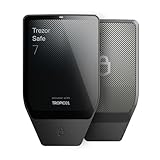
- Dual-chip architecture for maximum protection: The next-gen, fully auditable TROPIC01 chip works alongside a certified EAL6+ Secure Element—completely NDA-free—to deliver radically transparent, industry-leading defense against physical attacks.
- Quantum-ready security: Get protection against future threats with the first-ever hardware wallet designed with quantum-ready architecture.
- See every detail with confidence: Our largest high-resolution color touchscreen makes it easy to navigate your assets, review transactions and manage your coins with clarity.
- Wireless freedom with encrypted Bluetooth control: Manage, buy, swap and stake securely using Trezor Suite on desktop or mobile. Qi2-compatible wireless charging keeps your Trezor powered up. No cables required—security meets convenience.
- Works seamlessly with Android, iOS and desktop: Connect wirelessly or via USB-C to your phone or computer. Manage your crypto anywhere with our companion Trezor Suite app.
Choose a privacy posture based on your threat model
| Threat model | Useful defenses | Limits |
|---|---|---|
| Curious block-explorer user | Fresh addresses, wallet separation, coin control | The public ledger remains public |
| ISP observing wallet traffic | Tor, a trusted VPN, or an appropriately configured node | Trust shifts or is distributed; metadata may remain |
| Remote wallet server | Your own node or privacy-preserving wallet architecture | Full nodes require resources and maintenance |
| Exchange linking identity to funds | Separate contexts and careful records | The exchange still knows the original purchase or withdrawal |
| Chain-analysis company | Avoid address reuse, careless consolidation, and unnecessary disclosure | No technique guarantees immunity from inference |
| Malware or phishing | Hardware wallet, verified downloads, backups, transaction review | A hardware wallet cannot rescue a compromised recovery seed |
| Counterparty or merchant | Minimize voluntary disclosure and use supported privacy-preserving payments | The counterparty still knows the payment relationship |
| Legal process or subpoena | Understand what custodians and services retain | Privacy tools do not erase off-chain records |
Basic posture
Use self-custody where appropriate, fresh addresses, wallet separation, secure backups, and no public disclosure of transaction details. This is the best starting point for most people.
Intermediate posture
Add a privacy-conscious wallet, your own node or a carefully selected architecture, Tor where correctly supported, coin control, and PayJoin where available. Accept that setup and maintenance are more demanding.
Advanced posture
Use verified software, self-hosted infrastructure, strict separation of identities and transaction contexts, and protocol-native privacy where it fits your needs and jurisdiction. This requires more technical skill and more careful recovery planning.
What’s actually slowing this PC down?
Pick the symptom - the matching free tool is one click away.
Exchange, tax, and regulatory reality
Privacy tools exist inside a regulated financial system. A KYC exchange may retain identity, deposit, withdrawal, device, and transaction records. Depositing privacy-enhanced funds to a regulated service can trigger automated review, delays, account restrictions, or requests for source-of-funds documentation.
Privacy-coin support, withdrawals, listings, and conversion options vary by country, state, provider, and date. Do not assume that a coin or tool available in one jurisdiction is available in another.
Privacy is not permission to conceal taxable income, evade sanctions, launder money, or obstruct an investigation. Keep legitimate records and understand your tax, reporting, anti-money-laundering, and other legal obligations. If a regulated service asks for a transaction history or source-of-funds explanation, privacy software does not eliminate that obligation.
Common mistakes
- Calling Bitcoin anonymous.
- Assuming a new address solves every privacy problem.
- Using a hardware wallet as if it hid public-chain activity.
- Treating a VPN as an anonymity guarantee.
- Believing CoinJoin makes coins untraceable.
- Assuming Monero protects a compromised device or careless off-chain behavior.
- Using transparent Zcash addresses while expecting shielded privacy.
- Running Tor for one part of a workflow while another component connects directly.
- Searching a public explorer while logged in or using an identifiable network.
- Sharing a Zcash viewing key without understanding its disclosure consequences.
- Combining privacy-enhanced and identity-linked coins.
- Losing a seed or passphrase while pursuing privacy.
- Using outdated tutorials, fake wallet applications, discontinued services, or unsupported versions.
- Failing to maintain legitimate source-of-funds records.
Decision guide
- Want better key security? Consider a hardware wallet.
- Want less address reuse? Use a wallet with address rotation or supported Silent Payments functionality.
- Want less wallet-server leakage? Run your own full node or use a wallet with a privacy-preserving architecture.
- Want better Bitcoin transaction privacy? Consider PayJoin or CoinJoin only after understanding compatibility, fees, custody, and residual linkage risks.
- Want privacy protections enabled by protocol design? Research Monero or shielded Zcash, subject to availability, usability, and local legal constraints.
- Need maximum simplicity and exchange compatibility? Accept that privacy will be limited and focus on secure custody, accurate records, and avoiding unnecessary public disclosure.
For authoritative details, consult the current documentation for Bitcoin Core, Monero, Zcash, and any wallet or service you actually use. Wallet versions, fee defaults, blockchain sizes, exchange support, and legal treatment change over time.
Quick Recap
Product prices and availability are accurate as of the date/time indicated and are subject to change. Any price and availability information displayed on Amazon at the time of purchase will apply.



