Recommended Free Tools
Some links on this page are affiliate links: if you buy through them we may earn a commission, at no extra cost to you.
Not on the latest broad, same-year comparison. Cambridge estimated Bitcoin mining used about 138 terawatt-hours (TWh) of electricity annually in its 2025 industry report; the International Energy Agency (IEA) estimated the global electric-vehicle fleet used about 250 TWh in 2025. The IEA figure includes buses, two- and three-wheelers, vans and trucks as well as cars, so it is not a passenger-car-only comparison. Bitcoin could exceed a narrower EV category under some assumptions, but that is different from already using more electricity than the global EV fleet.
What the latest figures show
For a useful comparison, both figures need to cover roughly the same period and the vehicle category must be clear. Cambridge’s 2025 Digital Mining Industry Report put Bitcoin’s annual electricity consumption at an estimated 138 TWh. The IEA put electricity consumption for the global EV fleet at about 250 TWh in 2025. On those estimates, the EV fleet used substantially more electricity.
| Measure | Estimate | What it covers |
|---|---|---|
| Bitcoin mining electricity | About 138 TWh annually | Cambridge estimate based on a survey representing 48% of global mining activity |
| Global EV electricity | About 250 TWh in 2025 | Cars and other electric vehicles, including buses, two- and three-wheelers, vans and trucks |
Sources: Cambridge’s 2025 mining report summary and the IEA Global EV Outlook 2026.
Outdated Drivers Are Slowing You Down
One free scan finds every outdated or missing driver and matches the right update for your exact hardware.Free scan · exact hardware matchPC Slower Than It Used to Be?
A free scan shows the junk files, broken settings and background clutter dragging Windows down - then fixes them in one click.Free scan · Windows 10 & 11The title’s wording matters. “Could end up” describes a possibility, not a current fact or a forecast. And “electric cars” is narrower than the IEA’s global EV fleet measure. The available headline comparison is therefore informative about scale, but not a strict car-versus-Bitcoin tally.
#1 Best Overall

- SAFETY YOU CAN TRUST WITH UL CERTIFICATION: With Emporia Energy, your home energy monitoring is safe, reliable, and certified. The Emporia Vue is UL Listed, meaning it has met rigorous safety standards for electrical products in the U.S. and Canada. This certification ensures that every component has been thoroughly tested to prevent hazards, such as overheating, short-circuiting, or fire, offering you peace of mind as you manage your home’s energy consumption.
- INSTALLS IN CIRCUIT PANEL of most homes with clamp-on sensors. Supports Single phase, Single-split phase, and 2-wire systems. 3-wire systems; 3-phase, 4-wire Wye systems with earthed (TN or TT) neutral (no-Delta) are supported with an additional 200A sensor (sold separately).
- 24/7 ENERGY MANAGEMENT AND MONITORING: Automate, manage and control your home's real power anywhere, anytime to prevent costly repairs, conserve energy, and save costs. Monitor solar / net metering. PROTECTED BY A 1-YEAR WARRANTY.
- LOWER YOUR ELECTRIC BILL: Configure settings in the Emporia Energy App to automate energy management for time of use, peak demand, excess solar, and rewards programs. You can even see live reporting and invaluable savings opportunities instantly. Gauge real-time spending and get actionable notifications and automated energy management to help you reduce costs.
- REAL-TIME ENERGY DATA: REQUIRES 2.4 GHz WIFI WITH AN INTERNET CONNECTION to monitor energy use with iPhone / Android / Web app. Vue sensors collect energy data and are accurate from ±2%. The Vue is UL and CE Listed for your safety. 1 second data is only available in the app (when actively open) and retained 3 hours. Minute and hour data are retained in the cloud. 1 minute data is retained 7 days, 1 hour data is retained indefinitely. Export cloud data whenever you want in the app.
Power and electricity are not the same measure
News coverage often says a network “uses more power” when it is comparing annual electricity consumption. Electricity consumption is energy over time, usually reported in kilowatt-hours or terawatt-hours. Power is the rate of use at a moment, measured in watts, megawatts or gigawatts. One gigawatt running continuously for a year would consume about 8.76 TWh.
Cambridge’s Bitcoin Electricity Consumption Index (CBECI) models network power demand and annualizes it; the annual result assumes the estimated demand persists through a full year. A changing or interruptible load cannot be turned into an annual total without stating that assumption. For that reason, it is more precise to compare annual electricity consumption than to say one system simply “uses more power.”
Why Bitcoin’s number is an estimate
Bitcoin mining is distributed across many operators, so there is no single worldwide meter that records its electricity use. Cambridge’s CBECI estimates demand using the network’s computing power, assumptions about mining hardware and its efficiency, and the economics of operating that hardware. It publishes lower-bound, best-guess and upper-bound estimates rather than presenting the result as a directly metered total. Its upper bound assumes the least efficient hardware that remains profitable is in operation. See the CBECI methodology.
The Tool Desk
Outbyte Driver Updater FREEFix the driver behind crashes, sound loss and screen glitchesFind Drivers →Outbyte PC Repair FREEClear out junk files and repair common Windows errorsFree Scan →The 138 TWh figure above comes from a separate Cambridge industry report and survey; it is not interchangeable with a live CBECI reading. The report’s survey represented 48% of global mining activity. Both sources are useful, but their methods and reference periods should be identified rather than blended into one seemingly exact number.
Rank #2
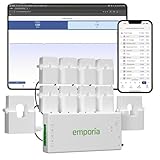
- SAFETY YOU CAN TRUST WITH UL CERTIFICATION: With Emporia Energy, your home energy monitoring is safe, reliable, and certified. The Emporia Vue is UL Listed, meaning it has met rigorous safety standards for electrical products in the U.S. and Canada. This certification ensures that every component has been thoroughly tested to prevent hazards, such as overheating, short-circuiting, or fire, offering you peace of mind as you manage your home’s energy consumption.
- INSTALLS IN CIRCUIT PANEL of most homes with clamp-on sensors. Supports Single phase, Single-split phase, and 2-wire systems. 3-wire systems; 3-phase, 4-wire Wye systems with earthed (TN or TT) neutral (no-Delta) are supported with an additional 200A sensor (sold separately).
- 24/7 ENERGY MANAGEMENT AND MONITORING: Automate, manage and control your home's real power anywhere, anytime to prevent costly repairs, conserve energy, and save costs. Monitor solar / net metering. PROTECTED BY A 1-YEAR WARRANTY.
- LOWER YOUR ELECTRIC BILL: Configure settings in the Emporia Energy App to automate energy management for time of use, peak demand, excess solar, and rewards programs. You can even see live reporting and invaluable savings opportunities instantly. Gauge real-time spending and get actionable notifications and automated energy management to help you reduce costs.
- REAL-TIME ENERGY DATA: REQUIRES 2.4 GHz WIFI WITH AN INTERNET CONNECTION to monitor energy use with iPhone / Android / Web app. Vue sensors collect energy data and are accurate from ±2%. The Vue is UL and CE Listed for your safety. 1 second data is only available in the app (when actively open) and retained 3 hours. Minute and hour data are retained in the cloud. 1 minute data is retained 7 days, 1 hour data is retained indefinitely. Export cloud data whenever you want in the app.
EV consumption is also an estimate, but it is built from a different kind of activity: electricity used by vehicles as they operate. The IEA’s figures for the global EV fleet rose from about 130 TWh in 2023 to 180 TWh in 2024 and about 250 TWh in 2025. These are fleet-wide figures, not just electricity used by newly sold cars. The rapid increase reflects a growing fleet and more electric vehicle travel.
What could make Bitcoin overtake a category of EVs?
Bitcoin’s electricity demand is shaped by mining economics. When mining revenue rises relative to costs—because of Bitcoin’s price, transaction fees or other conditions—operators may add machines or keep more hardware running. Network competition and the protocol’s difficulty adjustment affect how that capacity is used. More efficient equipment can reduce electricity needed per unit of computing, but it can also make additional mining capacity profitable.
That is why Bitcoin use does not simply rise or fall with the number of transactions. Mining performs proof-of-work calculations that secure the network as a whole; the electricity cost is not allocated in a straightforward way to each transaction. “Energy per transaction” comparisons can obscure that design and are not a complete measure of the network’s energy use.
Quick wins for a faster PC:
Fix the driver behind crashes, sound loss and screen glitchesFind Drivers →Clear out junk files and repair common Windows errorsFree Scan →Scan for outdated or missing drivers - takes under a minuteDriver Scan →Bitcoin could surpass a narrower EV comparison if mining capacity and revenue grew substantially, if EV demand in the chosen category grew more slowly, or if a high Bitcoin estimate were compared with passenger cars alone rather than all electric vehicles. Different years or methods can also reverse the apparent ranking. Those possibilities do not show that Bitcoin is currently ahead of the global EV fleet.
Rank #3

- ⚡ EASY INSTALLATION: Installs in circuit panel of most homes with clamp-on sensors. Supports single-phase up to 240VAC line-neutral; single, split-phase 120/240VAC; and three-phase up to 415Y/240VAC (no Delta). The branch lines can automatically match different phases and have no restrictions in terms of quantity and voltage.Panels with access only to busbars will need flexible sensors available from SEM-Meter.
- ⚡ ENERGY MONITORING ANYTIME, ANYWHERE: Monitor your home's real power anywhere, anytime to prevent costly repairs, conserve energy, and save costs. Monitor solar / net metering. Light commercial 3 phase option available as a separate bundle. Protected by a 1-year warranty.
- ⚡ VARIOUS ELECTRICAL APPLIANCE MONITORING: Comes with 16 50A sensors to accurately monitor your air conditioner, furnace, water heater, washer, dryer, range, etc.
- ⚡ LOWER YOUR ELECTRIC BILL: SEM-Meter measures real-time spending and gets actionable notifications to understand where savings can be made, both to lower your electric bill and to conserve energy and protect the planet’s resources. Be an environmentalist.
- ⚡ REAL-TIME ENERGY DATA: Connect SEM-Meter device via 2.4GHz WiFi to monitor energy usage, with an accuracy range of 1%. View usage in real time through Android/Apple software. Statistics of power usage in now/day/week/month/year format: the validity period of hourly exported data is 90 days, and the exported data of day/month/year data is permanent, available at any time Export from application.
The IEA expects EV electricity demand to grow substantially: its 2026 outlook puts it above 1,500 TWh by 2035 in the Current Policies Scenario and around 1,700 TWh in the Stated Policies Scenario. Those are scenarios, not certainties, but they show the scale of growth Bitcoin would need to outrun to exceed the broad global fleet on a same-year basis. IEA outlook details.
Independent reader supportYour contribution helps us test, update, and keep practical guides available for everyone.Electricity consumption is not the same as climate impact
Two systems can consume the same number of TWh and produce different emissions. Results depend on the electricity generation mix, where and when it is used, and whether the added demand changes generation that would otherwise have been curtailed or used by someone else. Hardware production, cooling, facilities and equipment disposal also matter to a full environmental assessment.
Cambridge’s 2025 report estimated Bitcoin mining emissions at 39.8 million tonnes of CO₂-equivalent and said 52.4% of the surveyed mining electricity came from “sustainable” sources—42.6% renewables and 9.8% nuclear. That estimate is based on surveyed operations, not a claim that all Bitcoin mining is low-carbon. “Sustainable” in this figure includes nuclear; it does not mean renewable alone, emissions-free, or without environmental trade-offs. Nor does a renewable share establish that the electricity would otherwise have gone unused.
Accordingly, an electricity comparison alone cannot establish that Bitcoin is worse for the climate than EVs, or the reverse. That claim would require comparable emissions estimates and clearly matched system boundaries.
Rank #4
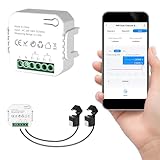
- 【Dual-Channel Energy Monitoring】This smart home energy monitor features two independent 80A sensing channels, allowing you to track real-time electricity usage of major household circuits and high-power appliances such as air conditioners, furnaces, water heaters, washers, and dryers.
- 【Real-Time Monitoring & Usage Insights】This smart home energy monitor works with the Tuya or Smart Life app, providing real-time visibility into household electricity usage. Monitor key electrical data such as power, voltage, current, and power factor, and review historical energy records by hour, day, month, or year to better understand usage patterns, manage consumption, and reduce energy costs.
- 【Bi-Directional Energy Tracking】This smart home energy monitor supports bi-directional power monitoring, allowing you to view electricity flow based on direction. It helps track energy usage in homes with solar panels, backup power systems, or mixed load scenarios, providing clearer insight into both power consumption and energy flow.
- 【Simplified Setup】Designed for streamlined installation, this smart home energy monitor uses clamp-style sensors that attach externally to monitored circuits without cutting or modifying wires. Follow the in-app guidance to connect to a 2.4GHz Wi-Fi network and complete setup through the Tuya or Smart Life app.
- 【Broad Home Compatibility】This WiFi smart home energy monitor is designed for common residential electrical setups. Suitable for standard household circuits as well as homes with solar panels or backup power systems, it helps monitor electricity usage across different home energy configurations.
Grid effects depend on location
Bitcoin mines can sometimes reduce their electricity use quickly, making them potential flexible loads. Depending on the market and site, mining may absorb surplus generation, provide a buyer for remote energy, or curtail during periods of high demand. But these benefits are not automatic. A mine can also add demand in a constrained area, affect prices or supply for other customers, or support generation that would otherwise be retired. The U.S. Energy Information Administration has discussed how mining’s unusual operating patterns matter to electricity-demand and resource planning (EIA analysis).
EV charging creates its own grid-management challenge if many vehicles charge at once, particularly during peak hours. Charging can often be shifted, and managed charging can help reduce peaks; vehicle-to-grid systems may allow some parked vehicles to return electricity, though availability and rules vary. EVs also use electricity to provide transportation, replacing some gasoline or diesel use rather than providing the same service as proof-of-work mining. The fact that either load can be flexible does not mean their local grid impacts are identical.
What the comparison can—and cannot—settle
The TWh figures help answer a narrow question: how much electricity is estimated to be consumed over a year? They do not decide whether Bitcoin’s network-security and settlement service justifies its energy use. Critics regard proof of work as an energy-intensive design for a financial network; supporters argue that electricity is part of the physical cost of an open system that does not rely on a central validator. That disagreement is about value and design as well as energy.
What’s actually slowing this PC down?
Pick the symptom - the matching free tool is one click away.
Nor is there a clean, universally accepted single number for the electricity use of “traditional banking.” A comparison could include branches, data centres, ATMs, card networks, cash production and transport, or only payment processing. Bitcoin comparisons often count mining, not every exchange, wallet provider, custody service or related operation. Without matching boundaries, a banking-versus-Bitcoin figure is not a settled apples-to-apples result.
For a responsible headline comparison, match the year, say whether the vehicle figure covers passenger cars or the whole EV fleet, name the Bitcoin estimate and its method, and keep electricity separate from emissions. On the latest broad figures supplied here, Bitcoin mining is a substantial electricity user, but the global EV fleet uses more.
Quick Recap
Product prices and availability are accurate as of the date/time indicated and are subject to change. Any price and availability information displayed on Amazon at the time of purchase will apply.



