Do these 3 things before closing this tab:
1Scan for outdated or missing drivers - takes under a minute2Repair Windows errors before they cause bigger problems3Fix the driver behind crashes, sound loss and screen glitchesSome links on this page are affiliate links: if you buy through them we may earn a commission, at no extra cost to you.
Yes, the Corsair RAM lawsuit was real—but Corsair was not found liable after a trial. The case, McKinney v. Corsair Gaming, Inc., ended in a court-approved $5.5 million class-action settlement. Plaintiffs alleged that certain Corsair DDR4 and DDR5 desktop-memory products were advertised using higher performance speeds while operating at lower JEDEC defaults unless buyers enabled an XMP, EXPO, or similar BIOS/UEFI profile.
Corsair denied wrongdoing and did not admit liability. As of August 18, 2026, the claims period had closed and the settlement was in administration and distribution—not accepting ordinary new claims.
What the Corsair RAM settlement actually decided
The settlement resolved allegations about how certain Corsair desktop-memory speeds were advertised and disclosed. It did not establish that all Corsair RAM was defective, that every advertised speed was unattainable, or that Corsair had legally committed false advertising.
The court’s final-approval order states that the agreement was approved without deciding the merits of the allegations. Corsair denied wrongdoing, and the settlement was reached to avoid the cost and risk of continued litigation.
#1 Best Overall
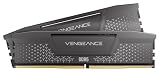
- Disclaimer: Maximum Speed requires overclocking/PC BIOS adjustments. Maximum speed and performance depend on system components, including motherboard and CPU
- AMD EXPO & Intel XMP 3.0 Compatible Only: Dual memory profiles allow you to easily select optimized settings for your platform, whether you’re running an AMD or Intel processor
- Onboard Voltage Regulation: Enables easier, more finely-tuned, and more stable overclocking through CORSAIR iCUE software than previous generation motherboard control
- Maximum Bandwidth and Tight Response Times: Optimized for peak performance on the latest AMD and Intel DDR5 motherboards
- Hand-Sorted, Tightly-Screened Memory Chips: Ensure consistent high-frequency performance with aggressive timing options
The practical result was a monetary fund, clearer disclosures for covered products, and a defined settlement class of qualifying U.S. purchasers.
Why RAM speed became the legal issue
Enthusiast memory commonly has at least two relevant operating profiles:
| Profile | What it means |
|---|---|
| JEDEC/SPD default | A conservative, standardized setting intended to provide broad automatic compatibility. |
| XMP, EXPO, or similar performance profile | A higher-speed profile stored on the memory module that generally must be selected in BIOS/UEFI. |
A kit might be sold as “DDR4-3200” or “DDR4-3600,” for example, while initially starting at a lower JEDEC setting. The plaintiffs’ complaint cited examples involving Vengeance RGB Pro memory advertised at 3200 MHz and Dominator Platinum RGB memory advertised at 3600 MHz, while alleging a 2133 MHz default.
Recommended Free Tools
The plaintiffs’ theory was that consumers could reasonably focus on the prominent advertised number without realizing that reaching it might require a BIOS adjustment described in the lawsuit as overclocking.
Is enabling XMP or EXPO really overclocking?
In everyday PC-building terms, enabling XMP or EXPO is usually much closer to selecting a preconfigured performance profile than manually experimenting with voltage, timings, and frequency. It is often a one-setting BIOS/UEFI change.
Rank #2

- Disclaimer: Maximum Speed requires overclocking/PC BIOS adjustments. Maximum speed and performance depend on system components, including motherboard and CPU
- AMD EXPO & Intel XMP 3.0 Compatible Only: Dual memory profiles allow you to easily select optimized settings for your platform, whether you’re running an AMD or Intel processor
- Dynamic RGB Lighting: Individually addressable RGB lighting delivers vibrant effects through a sleek, understated panoramic diffuser
- Onboard Voltage Regulation: Onboard voltage regulation for reliable power at high frequencies
- Maximum Bandwidth and Tight Response Times: Optimized for peak performance on the latest AMD and Intel DDR5 motherboards
However, it still changes the system from its conservative default configuration. The memory profile can alter frequency, timings, and voltage, and successful operation depends on the complete platform. That includes the CPU’s memory controller, motherboard design, BIOS version, number of installed DIMMs, and the particular memory kit.
So both descriptions can be misleading if used without context:
PC Slower Than It Used to Be?
A free scan shows the junk files, broken settings and background clutter dragging Windows down - then fixes them in one click.Free scan · Windows 10 & 11Outdated Drivers Are Slowing You Down
One free scan finds every outdated or missing driver and matches the right update for your exact hardware.Free scan · exact hardware match- It is not necessarily dangerous or advanced manual overclocking.
- It is not the same as the system automatically running at its default JEDEC speed.
The settlement required clearer language reflecting that distinction. The agreement called for covered rated speeds to be presented as “up to” speeds alongside a disclosure that the product requires overclocking or PC BIOS adjustments and that maximum speed and performance depend on components including the motherboard and CPU. See the settlement agreement.
Settlement timeline
- January 14, 2018: Beginning of the covered purchase period.
- 2022: The lawsuit was filed in the U.S. District Court for the Northern District of California as Case No. 4:22-cv-00312-JST.
- December 16, 2022: The court dismissed some claims and allowed portions of the DDR4-related case to continue. The order also addressed claims involving products the named plaintiffs had not purchased and warranty theories.
- July 12, 2024: The settlement agreement was filed.
- July 2, 2025: End of the covered purchase period.
- October 28, 2025: Reported deadline for submitting claims.
- January 8, 2026: The court granted final approval and entered final judgment.
- July 28, 2026: A further case-management date addressed settlement administration.
Who was covered?
The settlement class was limited. It covered qualifying purchasers in the United States who bought eligible Corsair desktop memory during the period from January 14, 2018, through July 2, 2025.
The covered products were:
- Corsair DDR4 desktop memory rated above 2133 MHz; or
- Corsair DDR5 desktop memory rated above 4800 MHz.
The definition excluded SODIMMs and laptop memory. It also did not cover every Corsair product, every memory generation, or purchases made worldwide.
Rank #3

- Disclaimer: Maximum Speed requires overclocking/PC BIOS adjustments. Maximum speed and performance depend on system components, including motherboard and CPU
- AMD EXPO & Intel XMP 3.0 Compatible Only: Dual memory profiles allow you to easily select optimized settings for your platform, whether you’re running an AMD or Intel processor
- Dynamic RGB Lighting: Individually addressable RGB lighting delivers vibrant effects through a sleek, understated panoramic diffuser
- Onboard Voltage Regulation: Onboard voltage regulation for reliable power at high frequencies
- Maximum Bandwidth and Tight Response Times: Optimized for peak performance on the latest AMD and Intel DDR5 motherboards
These speed thresholds were part of the settlement’s class definition. They were not a court finding that every product above those numbers was defective or unable to reach its rated profile.
How much money could claimants receive?
The settlement created a $5.5 million non-reversionary common fund. Payments were to be distributed pro rata among valid claims rather than paid as a guaranteed fixed amount per product.
The gross fund also covered approved administrative costs, attorneys’ fees and expenses, class-representative incentive awards, and payments to eligible claimants. Therefore, “$5.5 million settlement” does not mean every claimant received a fixed share of $5.5 million.
Without proof of purchase, a household could claim up to five qualifying purchases under the settlement terms. Additional purchases could potentially qualify when supported by proof of purchase. Payment could be made by physical check or digital method, depending on the claim process.
The final-approval order reported approximately 62,958 claim forms covering at least 266,550 products. The order also said the settlement class included approximately 12 million products. It did not establish a universal payout amount for each claimant; the final amount depended on valid claims, qualifying purchases, and expenses paid from the fund.
Rank #4
- Disclaimer: Maximum Speed requires overclocking/PC BIOS adjustments. Maximum speed and performance depend on system components, including motherboard and CPU
- AMD EXPO & Intel XMP 3.0 Compatible Only: Dual memory profiles allow you to easily select optimized settings for your platform, whether you’re running an AMD or Intel processor
- Dynamic RGB Lighting: Individually addressable RGB lighting delivers vibrant effects through a sleek, understated panoramic diffuser
- Onboard Voltage Regulation: Onboard voltage regulation for reliable power at high frequencies
- Maximum Bandwidth and Tight Response Times: Optimized for peak performance on the latest AMD and Intel DDR5 motherboards
Because the reported claim deadline was October 28, 2025, readers should not assume that a new claim can ordinarily be filed in 2026. For any notice already received, use the official settlement website and rely on the administrator’s current instructions.
What the settlement does—and does not—mean
It does mean
- The case was resolved through a court-approved class-action settlement.
- The settlement provided monetary relief to qualifying U.S. purchasers who submitted valid claims.
- Corsair agreed to commercially reasonable efforts to make clearer speed and system-dependence disclosures for covered products on packaging, product pages, and specifications supplied to resellers.
It does not mean
- Corsair was found guilty or liable after a contested trial.
- Corsair admitted that its RAM was defective or that its advertising violated the law.
- Every Corsair memory kit failed to reach its advertised speed.
- Enabling XMP or EXPO is inherently unsafe.
- Every Corsair RAM product or every Corsair buyer was included.
Why a computer may show a lower speed than the box
Many high-speed kits store both a standard profile and a higher-performance profile. A motherboard may select the standard setting automatically to maximize compatibility. The advertised figure may become active only after the buyer enables XMP, EXPO, or a manufacturer-specific equivalent in firmware.
Menu names differ among ASUS, MSI, Gigabyte, ASRock, and other manufacturers, so there is no universal BIOS path. Look for a memory profile, overclocking, tuning, or performance setting in the motherboard manual or firmware interface.
There is also a measurement issue. DDR memory transfers data twice per clock cycle. Some utilities display the underlying memory clock, while product packaging generally uses the effective transfer rate. A reading near half the advertised DDR number is not automatically a fault. For example, a utility may show a clock around 1600 MHz for memory marketed as DDR4-3200.
The Tool Desk
Outbyte Driver Updater FREEScan for outdated or missing drivers - takes under a minuteDriver Scan →Outbyte PC Repair FREEClear out junk files and repair common Windows errorsFree Scan →How to check and configure your RAM
- Check the current setting. In Windows, open Task Manager → Performance → Memory and view Speed. You can also check BIOS/UEFI or use a utility such as CPU-Z.
- Confirm compatibility. Check the motherboard’s memory-support list, the CPU’s specifications, the BIOS version, and whether the kit is intended for the platform.
- Enter BIOS/UEFI. Restart the computer and use the motherboard’s documented setup key.
- Enable the correct profile. Select XMP, EXPO, or the board maker’s equivalent performance-profile option.
- Save and reboot. Verify the resulting effective speed in the operating system.
- Test stability. Run a reputable memory diagnostic or stability test rather than assuming a successful boot proves long-term reliability.
If the computer will not boot, use the board’s recovery procedure or clear CMOS according to its manual. Then return to JEDEC defaults, update the BIOS if appropriate, install only the matched kit, or try a lower profile.
Best Value

- Disclaimer: Maximum Speed requires overclocking/PC BIOS adjustments. Maximum speed and performance depend on system components, including motherboard and CPU
- Dynamic Ten-Zone RGB Lighting: Illuminate your system with ten individually addressable, ultra-bright RGB LEDs per module, encased in a panoramic light bar for vivid RGB lighting from any viewing angle.
- Onboard Voltage Regulation: Enables easier, more finely-tuned, and more stable overclocking through CORSAIR iCUE software than previous generation motherboard control.
- AMD EXPO Compatibility: Compatible with AMD EXPO for higher frequencies and exceptional overclocking performance.
- Maximum Bandwidth and Tight Response Times: Optimized for peak performance on the latest Intel DDR5 motherboards.
What to do if XMP or EXPO causes crashes
A failed performance profile does not by itself prove that the RAM was defective. Potential causes include an outdated BIOS, CPU memory-controller limits, four-DIMM configurations, mixed kits, marginal modules, incorrect voltage or timing behavior, or a profile that is too aggressive for the platform.
A sensible troubleshooting sequence is:
- Restore default settings or clear CMOS.
- Update the motherboard BIOS using the manufacturer’s instructions.
- Use the matched kit by itself; avoid combining separate kits, even when their labels appear identical.
- Try a lower supported memory profile.
- Test modules individually and run a dedicated memory test.
- Check the motherboard and memory manufacturer’s support and warranty terms before changing manual voltages or timings.
- Contact the manufacturer if failures continue at default settings or at the kit’s supported profile.
What buyers should consider when purchasing high-speed RAM
The headline number is only one part of the purchase. Before paying a premium for a fast kit, check:
- Whether the advertised speed is a JEDEC default or an XMP/EXPO performance-profile speed.
- CPU and motherboard support for the capacity and frequency.
- Current BIOS readiness for the memory generation.
- Whether the kit uses two, four, or more DIMMs.
- Whether the modules are sold as a matched kit.
- Timings and capacity, not just frequency.
- Return and warranty policies for the exact product and platform.
- Whether a slightly slower profile would provide better stability and value.
Current products from Corsair and alternative brands such as G.Skill, Kingston FURY, and Crucial can differ substantially by capacity, timings, generation, region, and platform. The historic settlement should not be used to assume that a current product is covered or that changing brands removes compatibility considerations.
Free tools Windows power users keep installed
One-click scans. No signup required.
The bottom line on the Corsair RAM lawsuit
The most accurate summary is that Corsair settled a lawsuit alleging inadequate disclosure of the settings needed to achieve certain advertised DDR4 and DDR5 desktop-memory speeds. The court approved a $5.5 million settlement on January 8, 2026, without finding Corsair liable, and Corsair denied wrongdoing. The settlement class was limited to qualifying U.S. purchases, excluded laptop/SODIMM memory, and had a reported claim deadline of October 28, 2025.
For PC owners, the technical lesson is equally important: a RAM kit’s advertised speed may refer to an XMP or EXPO profile rather than its automatic JEDEC default, and actual stability depends on the motherboard, CPU, firmware, and installation. That is a disclosure and compatibility issue—not proof that every kit was defective.
Quick Recap
Product prices and availability are accurate as of the date/time indicated and are subject to change. Any price and availability information displayed on Amazon at the time of purchase will apply.



