What’s actually slowing this PC down?
Pick the symptom - the matching free tool is one click away.
Some links on this page are affiliate links: if you buy through them we may earn a commission, at no extra cost to you.
Boston-based AI startup Code Metal announced on July 23, 2024, that it had raised a $13 million seed round led by Shield Capital. The financing followed a $3.45 million pre-seed round led by J2 Ventures, bringing the company’s disclosed funding to $16.45 million—rounded to $16.5 million in the company’s headline.
Code Metal says it is building software-development workflows that combine compiler technology, formal code analysis and large language models to help developers optimize applications for diverse, resource-constrained edge devices.
What Code Metal raised
The most important detail is the distinction between the company’s two financing rounds:
Do these 3 things before closing this tab:
1Repair Windows errors before they cause bigger problems2Fix the driver behind crashes, sound loss and screen glitches3Clear out junk files and repair common Windows errors| Round | Amount | Lead investor |
|---|---|---|
| Pre-seed | $3.45 million | J2 Ventures |
| Seed | $13 million | Shield Capital |
| Total | $16.45 million | Rounded to $16.5 million |
That means $16.5 million was the cumulative pre-seed-plus-seed total, not the size of the seed round alone. Fulcrum Venture Group, Underdog Labs and other unnamed investors also participated, according to the funding announcement.
#1 Best Overall
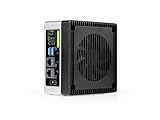
- Supercharged AI Performance: Powered by NVIDIA Jetson Orin NX 16GB, delivers up to 157 TOPS in MAXN Super Mode — ideal for vision AI, robotics, autonomous machines, and generative AI workloads.
- Advanced Thermal Engineering for Full-Power Operation: Equipped with a vacuum copper heat pipe system, ultra-low thermal resistance medium, and high-emissivity black-coated surface combined with high-performance active cooling — ensuring stable full compute power even at 60°C ambient temperature.
- Energy-Efficient & Flexible Power Modes: Adjustable power profile from 10W to 40W, enabling a perfect balance between performance and efficiency for edge AI computing in diverse environments.
- Industrial-Grade Reliability & Design: Ruggedized for operation from -20°C to 60°C at 40W (up to 65°C at 25W), providing dependable performance in industrial automation and outdoor AI deployments.
- Rich Connectivity & AI-Ready Platform: Features 2×RJ45, SIM slot, 4×USB 3.2, HDMI 2.1, CAN, M.2 Key E/M, Mini-PCIe, and 4×CSI camera ports — supporting multi-camera vision, IoT, and robotics projects. Pre-installed with JetPack 6.2 and 128GB NVMe SSD, fully compatible with NVIDIA Isaac, ROS 1/2, and Hugging Face frameworks.
The announcement represented Code Metal’s broader emergence from stealth. It was an early-stage seed financing, not a Series A. The company named Peter Morales as CEO and described itself as Boston-based.
What Code Metal is building
Code Metal’s stated product is a software-development and optimization platform for AI workloads deployed at the edge. It is not primarily an edge-device manufacturer or a cloud infrastructure provider.
In practical terms, the platform is intended to help translate and optimize software for different processors, accelerators and runtimes. The company says its approach combines:
Quick wins for a faster PC:
Fix the driver behind crashes, sound loss and screen glitchesFind Drivers →Clear out junk files and repair common Windows errorsFree Scan →Scan for outdated or missing drivers - takes under a minuteDriver Scan →- Formal-methods-based code analysis
- Traditional compiler design and code transformation
- Large language models adapted to coding tasks
- Modular, “verifiable” agentic workflows
- Hardware-specific optimization for heterogeneous edge targets
The company’s language should be interpreted carefully. “Verifiable agentic workflows” does not establish that every AI-generated output is formally proven safe or correct. It indicates a goal of making parts of the workflow more checkable and reliable than an unconstrained code-generation process.
Why edge development is difficult
Cloud software generally runs on relatively standardized infrastructure with abundant compute, memory and connectivity. Edge software runs on or near the device producing the data. Examples include robots, vehicles, cameras, industrial equipment, aircraft, logistics systems, medical devices and defense platforms.
Local processing can reduce network round trips, improve response time and allow a system to continue operating when connectivity is limited. The trade-off is a much more difficult engineering environment:
- Hardware varies widely. Teams may need to support different CPUs, GPUs, ASICs, instruction sets, memory layouts and vendor-specific accelerators.
- Resources are constrained. Power, memory, storage, thermal capacity and latency may all be limited.
- Optimization is target-dependent. A performance improvement on one chipset may not carry over to another.
- Correctness matters. AI-generated or transformed code can introduce bugs, security vulnerabilities or unexpected performance behavior.
- Testing is harder. The relevant benchmark is the actual target device and workload—not a cloud machine used during development.
- Operations are more complex. Offline devices need reliable versioning, secure updates, monitoring and rollback procedures.
Compilers already translate source code into machine code and apply optimizations. Code Metal’s opportunity is to combine that established discipline with language-model assistance and formal analysis, potentially reducing the manual work required to adapt software across hardware platforms. The available announcement does not provide independent benchmarks proving how much faster or more efficient its platform is.
Windows Errors? Fix Them Before They Spread
Repair common Windows errors and clear accumulated junk for a smoother, more stable PC - no reinstall needed.Free scan · no reinstallOutdated Drivers Are Slowing You Down
One free scan finds every outdated or missing driver and matches the right update for your exact hardware.Free scan · exact hardware matchHow the funding will be used
Code Metal said it would use the financing to continue developing modular and verifiable agentic workflows, expand commercial activity and support additional edge deployments. It also plans to hire specialists in:
Rank #2

- AI-POWERED PRODUCTIVITY & MOBILITY - Experience next-generation computing with the Samsung Galaxy Book4 Edge, featuring a Qualcomm Hexagon NPU with up to 45 TOPS of AI performance to accelerate on-device AI experiences and unlock powerful Copilot+ PC capabilities. Designed to simplify everyday tasks and enhance productivity, it combines intelligent performance with up to 28 hours of battery life in a slim, lightweight design, making it an ideal companion for work, study, travel, and everyday use.
- POWERFUL PERFORMANCE - Powered by the Qualcomm Snapdragon X processor and integrated Qualcomm Adreno graphics, the Samsung Galaxy Book4 Edge handles everyday productivity, streaming, and entertainment with ease. Equipped with 16GB LPDDR5X 8448MHz RAM and 512GB UFS storage, it keeps apps and browser tabs running smoothly while providing ample space for files, apps, and everyday essentials.
- EXCELLENT VISUAL - Enjoy stunning visuals on the 15.6" FHD (1920 x 1080) IPS Anti-glare LED display with 300-nit brightness. USB4 and HDMI support two external 4K monitors @60Hz (without docking station). The enhanced 1080p FHD camera delivers clear, detailed video, while Windows Studio Effects, including background blur and automatic framing, help you look professional during video calls and virtual meetings.
- VERSATILE CONNECTIVITY - Equipped with two USB-C (USB4) ports, USB-A, HDMI, and a 3.5mm audio combo jack for seamless compatibility with monitors, docks, and essential peripherals. Wi-Fi 7 and Bluetooth 5.4 deliver fast, reliable wireless connectivity to keep you productive wherever you work. A full-size keyboard with a dedicated numeric keypad boosts productivity.
- OPERATING SYSTEM - Windows 11 Home provides built-in Copilot AI to help simplify everyday tasks, organize information, and enhance productivity. Built-in security features help protect your device and data, while an intuitive, user-friendly experience makes it easy to work, study, create, and stay connected throughout the day.
- Hardware
- Artificial intelligence
- Traditional compiler design
The announcement does not disclose the company’s valuation, ownership sold, runway, detailed budget, revenue amount or financing terms.
Investors and commercial relationships
Shield Capital led the seed round. The firm invests in areas including artificial intelligence, autonomy, cybersecurity and space, according to the release. J2 Ventures led the earlier pre-seed round and focuses on deep technology areas such as advanced computing, cybersecurity, telecommunications, infrastructure and healthcare.
Those investor profiles are relevant because Code Metal’s target customers may include industrial, logistics, defense and other dual-use organizations where hardware expertise and security considerations are important.
Code Metal also said it was already generating revenue and had strategic relationships involving X-Press Feeders, a container-feeder shipping company, and L3Harris, a defense contractor and technology-services company. A statement from HICO Investment Group referred to Code Metal’s work involving intelligence and logistics-network development.
These claims come from company or investor statements. The announcement does not identify revenue, contract values, customer counts, deployment scale or specific systems built for either organization. A named relationship should therefore not be treated as proof of a large production deployment or independently audited commercial traction.
Market opportunity
The funding release cited IDC projections for worldwide edge-computing spending of approximately $232 billion in 2024 and nearly $350 billion by 2027. Those figures describe the broad edge-computing market, including hardware, software, connectivity, services and infrastructure. They are not a Code Metal-specific addressable-market estimate.
Code Metal’s narrower opportunity is the engineering bottleneck inside that market: adapting, validating and maintaining software across heterogeneous edge hardware. That can be valuable if the platform materially reduces engineering time or improves performance without adding unacceptable verification and security risks.
Free tools Windows power users keep installed
One-click scans. No signup required.
How Code Metal compares with alternatives
Code Metal’s announced positioning overlaps only partially with mainstream edge platforms:
Rank #3
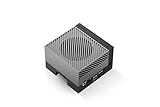
- The NVIDIA Jetson AGX Orin 64GB Developer Kit makes it easy to get started with Jetson Orin. Compact size, lots of connectors, and up to 275 TOPS of AI performance make this developer kit perfect for prototyping advanced AI-powered robots and other autonomous machines.
- The developer kit includes a Jetson AGX Orin 64GB module, and can emulate all the Jetson Orin modules. It supports multiple concurrent AI application pipelines with the NVIDIA Ampere GPU architecture, next-generation deep learning and vision accelerators, high-speed IO and fast memory bandwidth. Now you can develop solutions using your largest and most complex AI models to solve problems such as natural language understanding, 3D perception, and multi-sensor fusion.
- Jetson runs the NVIDIA AI software stack, and use-case specific application frameworks are available, including Isaac for robotics, DeepStream for vision AI, and Riva for conversational AI. You can save significant time with NVIDIA Omniverse Replicator for synthetic data generation (SDG), and by using NVIDIA TAO toolkit to fine-tune pretrained AI models from the NGC catalog.
- Jetson ecosystem partners offer additional AI and system software, developer tools, and custom software development. They can also help with cameras and other sensors, as well as carrier boards and design services for your product.
- With the computing capability of more than 8 Jetson AGX Xavier systems in a developer kit that integrates the latest NVIDIA GPU technology with the world’s most advanced deep learning software stack, you’ll have the flexibility to create tomorrow’s AI solution as well as today’s.
| Option | Primary role | Where it differs |
|---|---|---|
| AWS IoT Greengrass | Edge runtime, local processing, messaging, machine-learning inference and device coordination | More focused on running and managing workloads in an AWS-centered environment than on compiler-driven source-to-target optimization |
| Microsoft Azure IoT Edge | Deployment of containerized edge modules and centralized management | Addresses runtime and fleet management; Code Metal’s stated focus is development-time optimization and verifiability |
| Hardware-vendor toolchains | Optimization for a particular chip, accelerator or runtime | May provide deeper platform-specific performance but can increase dependence on one vendor |
| In-house compiler and deployment teams | Custom control over code transformation, testing and operations | Can fit specialized systems but requires scarce engineering talent and ongoing maintenance |
| Open-source compiler and model-optimization stacks | Flexible building blocks for compilation, inference and deployment | Lower licensing barriers, but teams may need to integrate and support the workflow themselves |
For reference, AWS lists Greengrass pricing examples starting at $0.16 per active core device per month, with separate charges possible for AWS IoT Core and other services; its pricing page also describes free-tier conditions. Azure IoT Edge’s runtime is free and open source, but Azure IoT Hub is required for secure management and is billed separately. Microsoft identifies Azure IoT Edge 1.5 LTS as supported, while the 1.4 LTS release reached end of life on November 12, 2024.
These products are not direct substitutes in every situation. A buyer whose main problem is deploying and managing an existing fleet may prefer AWS or Azure. A buyer struggling to create, translate and optimize custom software for many hardware targets may be evaluating a platform closer to Code Metal’s stated focus. Code Metal’s website does not provide public list pricing, a self-serve trial, a complete supported-device matrix or a public benchmark suite in the supplied evidence.
Independent reader supportYour contribution helps us test, update, and keep practical guides available for everyone.What would validate the company’s claims?
The financing gives Code Metal resources to expand, but the decisive evidence will be technical and commercial. Investors and prospective customers should look for:
- Target-device benchmarks: latency, throughput, memory use, power consumption, binary size and cost per inference.
- Hardware breadth: support for multiple CPUs, GPUs, ASICs, embedded accelerators and vendor runtimes.
- Correctness evidence: which transformations are analyzed formally, how generated code is tested and how behavior is preserved.
- Developer workflow details: supported source languages and frameworks, debugging, rollback, reproducibility and CI/CD integration.
- Production controls: secure updates, offline operation, fleet monitoring, version control and safety documentation.
- Commercial traction: paid production deployments, customer expansion, renewal rates, deployment scale and measurable time-to-value.
Claims such as reducing work from “months to days” or being faster than peers are meaningful only when accompanied by the workload, baseline process, target hardware and measurement method. Likewise, formal methods can strengthen validation, but they are not automatically equivalent to a universal safety proof for an entire mission-critical system.
What is known about Code Metal’s status
The verified announcement is dated July 23, 2024. A first-party Code Metal page displays an October 18, 2024 date in its news navigation, but the underlying financing announcement should be attributed to July 23 unless the company clarifies that the later date reflects republication or a page update.
The supplied evidence confirms the 2024 financing but does not independently establish a later funding round, acquisition, product launch, revenue figure, customer count or operating status as of 2026. The funding should therefore be understood as a 2024 early-stage financing milestone, not as a complete current company update.
Assessment
Code Metal’s $13 million seed round is strategically notable because it targets a real and growing engineering problem: deploying increasingly complex software across constrained and incompatible edge hardware. The combination of compiler expertise, formal analysis and LLM-assisted workflows is plausible as a development approach, but it is not automatically a performance or safety breakthrough.
The $16.45 million cumulative financing gives the company capital to hire specialized engineers and pursue industrial and defense-related deployments. Whether it becomes a durable commercial platform will depend on evidence that it can deliver reproducible improvements in development time, edge performance, reliability and deployment economics—while meeting the security and validation requirements of demanding customers.
Read Code Metal’s announcement and the full press release for the company’s original financing details.
Quick Recap
Product prices and availability are accurate as of the date/time indicated and are subject to change. Any price and availability information displayed on Amazon at the time of purchase will apply.



