Some links on this page are affiliate links: if you buy through them we may earn a commission, at no extra cost to you.
Cisco announced plans to acquire Australian networking specialist Exablaze on December 16, 2019, aiming to strengthen its offerings for financial services and high-frequency trading (HFT). The deal was completed on February 3, 2020. Cisco did not buy a trading firm or a trading algorithm: it acquired technology for moving, processing, and timestamping network traffic with very low delay. That technology later became part of Cisco’s Nexus 3550 and Nexus SmartNIC portfolios.
What Cisco acquired—and when
Exablaze operated as Zomojo doing business as Exablaze, a privately held Australian company specializing in FPGA-based networking devices. Cisco announced its intent to acquire the company in December 2019 and completed the acquisition in February 2020. Cisco’s fiscal third-quarter 2020 results also confirm the deal closed during that quarter. Cisco’s announcement named financial services and HFT as key markets; its acquisition overview describes the technology and its later product integration.
The acquired capabilities included ultra-low-latency switches, network interface cards and SmartNICs, Layer 1 switching and multiplexing, packet-broker and tapping products, and precision timing and timestamping. Exablaze’s products used field-programmable gate arrays (FPGAs), reprogrammable chips that can perform selected packet-processing or application tasks directly in hardware.
Do these 3 things before closing this tab:
1Clear out junk files and repair common Windows errors2Fix the driver behind crashes, sound loss and screen glitches3Repair Windows errors before they cause bigger problemsThe strategic value was broader than a set of devices. Cisco gained specialist FPGA networking expertise and an established low-latency product line, then brought the engineering team into its data-center organization. Cisco said the technology could serve trading, high-performance computing, AI and machine learning, cloud services, 5G infrastructure, and defense applications. Cisco’s integration announcement outlines those intended uses.
#1 Best Overall

- 2.5 Gbps PCIe Network Card: With the 2.5G Base-T Technology, TX201 delivers high-speeds of up to 2.5 Gbps, which is 2.5x faster than typical Gigabit adapters. Performance varies by conditions, distance to devices, and obstacles such as walls
- Versatile Compatibility – The Ethernet Network Adapter is backwards compatible with multiple data rates(2.5 Gbps, 1 Gbps, 100 Mbps Base-T connectivity). The 2.5G Ethernet port automatically negotiates between higher and lower speed connection.
- QoS: Quality of Service technology delivers prioritized performance for gamers and ensures to avoid network congestion for PC gaming
- Wake on LAN – Remotely power on or off your computer with WOL, helps to manage your devices more easily
- Low-Profile and Full-Height Brackets: In addition to the standard bracket, a low-profile bracket is provided for mini tower computer cases
Why trading firms care about network delay
HFT systems consume market-data feeds, make decisions, and send orders under tight timing constraints. A network device can affect how quickly packets travel between components, but network delay is only one part of the full path. Host processing, software, feed decoding, risk checks, cables and optics, exchange connectivity, and physical distance all contribute. A low-latency switch cannot by itself make a trading strategy faster in every relevant way, much less ensure that it is profitable.
Firms should distinguish several related measurements:
- Network latency: Time taken for traffic to pass between network endpoints or through a device. A vendor’s port-to-port figure describes that device path under its stated conditions, not the complete market-data-to-order journey.
- Jitter and tail latency: Variation in delay, especially during bursts or congestion. A stable result may matter more than a headline minimum; buyers should request percentile distributions and test conditions.
- Timestamp resolution and accuracy: Resolution describes the granularity of recorded time. It is not the same as how accurately a timestamp reflects the actual event time.
- Physical distance: A firm’s location relative to an exchange can dominate local device improvements. Colocation or better connectivity may matter more than a faster NIC if the path is otherwise long.
That is why the value of specialist hardware depends on the whole system. If software, venue access, or feed handling is the bottleneck, changing a switch may have little effect on the outcome that matters.
Rank #2
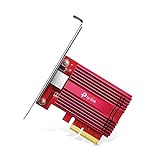
- 10 Gbps PCIe Network Card: With the latest 10GBase-T Technology, TX401 delivers extreme speeds of up to 10 Gbps, which is 10× faster than typical Gigabit adapters, guaranteeing smooth data transmissions for both internet access and local data transmissions[1]
- Versatile Compatibility: With extreme speed and ultra-low latency, 10GBase-T is backwards compatible with multiple data rates (10 Gbps, 5 Gbps, 2.5 Gbps, 1 Gbps, 100 Mbps), automatically negotiating between higher and lower speed connections
- QoS: Quality of Service technology delivers prioritized performance for gamers and ensures to avoid network congestion for PC gaming
- Free CAT6A Ethernet Cable: To maximize TX401's performance, a 1.5 m CAT6A Ethernet Cable is included—rated for up to 10 Gbps while a regular cable is only rated for 1 Gbps
- Low-Profile and Full-Height Brackets: In addition to the standard bracket, a low-profile bracket is provided for mini tower computer cases
What FPGA networking changes
An FPGA can be configured to handle selected functions—such as filtering, timestamping, packet processing, or parts of market-data handling—closer to the network interface. That can reduce reliance on a general-purpose CPU for the most latency-sensitive work. Compared with a fixed-function application-specific integrated circuit, an FPGA offers flexibility to change or customize hardware logic.
That flexibility has a cost. FPGA development, verification, firmware upgrades, rollback planning, and operational support require specialized skills. Custom logic may also create maintenance burdens or dependence on a particular hardware and software environment. A firm without FPGA engineering and validation capacity may be better served by standard networking equipment or vendor-provided functions.
From Exablaze products to Cisco Nexus
Cisco folded Exablaze technology into its Nexus 3550 and Nexus SmartNIC lines. Cisco’s acquisition page provides the following product-name mapping:
Rank #3

- ⚡2x 10Gbps RJ45 Copper Port - Utilizing the Intel X540-T2 chipset controller, this Dual Lan 10Gb NIC network card delivers up to 10Gbps of network connection speed and offers reliable performance and stability, ideal for high-speed data transmission requirements in servers and high-end devices.
- ⚡Wide Compatibility with Operating Systems - The vimin 10Gbps ethernet adapter network card is compatible with multiple operating systems, including Windows/Windows server, Linux, and VMware, meeting the network needs in various environments.
- ⚡Flexible PCIe x8 and x16 Compatibility - This 10G ethernet RJ45 card os compatible with PCI Express x8 and x16, allowing flexible adaptation to different specifications of PCIe slots, which provides more deployment options.
- ⚡Choice of Standard and Slim Brackets - Available with standard and slim brackets, suitable for different heights of servers and devices, meeting diverse installation requirements.
- ⚡Excellent Heat Dissipation and Stable Connection - Features a heat sink to maintain optimal temperature levels during heavy usage, ensuring device stability. With a well-designed gold finger interface, reducing the risk of interruptions and ensuring consistent network performance.
| Former Exablaze product | Cisco product name |
|---|---|
| ExaLINK Fusion L1 | Nexus 3550-F Fusion L1 |
| ExaLINK Fusion L2 | Nexus 3550-F Fusion L2 |
| ExaLINK Fusion HPT | Nexus 3550-F Fusion HPT |
| ExaLINK Fusion Mux | Nexus 3550-F Fusion Mux |
| ExaLINK Hydra 144 | Nexus 3550-H Hydra L1-144 |
| ExaLINK Hydra 160 | Nexus 3550-H Hydra L1-160 |
| ExaNIC x10 | Nexus X10 SmartNIC K35-S |
| ExaNIC x40 | Nexus X40 SmartNIC K35-Q |
| ExaNIC x25 | Nexus X25 SmartNIC K3P-S |
| ExaNIC x100 | Nexus X100 SmartNIC K3P-Q |
| ExaNIC v5P | Nexus SmartNIC+ V5P |
| ExaNIC v9P | Nexus SmartNIC+ V9P |
| ExaNIC HPT | Nexus NIC HPT |
| ExaNIC GM | Nexus NIC GM |
The Nexus 3550 portfolio spans programmable platforms, Layer 1 switching and multiplexing, precision timestamping, and FPGA-based SmartNIC adapters. Cisco also offers a Nexus Firmware Development Kit for custom functionality. The product names, supported firmware, availability, and lifecycle status can vary, so former Exablaze customers should verify the exact model and current support terms with Cisco rather than assume that an old name and a current product are interchangeable.
Published performance figures are model-specific. Cisco lists a minimum port-to-port latency of 39 nanoseconds for the Nexus 3550-F multiplexing platform and 70-picosecond timestamps for its high-precision timestamping model. Neither figure represents end-to-end trading latency, and timestamp resolution is not a claim of equivalent absolute accuracy. Cisco’s SmartNIC page also advertises “up to 10x latency performance”; without a clearly applicable baseline and workload, packet size, software stack, and test conditions, that vendor claim should not be treated as a general comparison.
Cisco’s SmartNIC documentation notes that the cards use little buffering to keep latency low. That design can reduce delay, but it also makes congestion, burst handling, and packet loss behavior important to evaluate. A buyer should test the traffic patterns it actually expects, not assume a quiet or single-flow benchmark will represent busy multicast feeds.
Rank #4
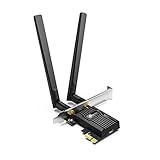
- 𝐍𝐞𝐱𝐭 𝐆𝐞𝐧 𝐖𝐢𝐅𝐈 𝟔 - Reach incredible speeds up to 2.4 Gbps (2402 Mbps in 5 GHz or 574 Mbps on 2.4 GHz) with ultra-low latency and uninterrupted connectivity using Wi-Fi 6 technologies¹
- 𝐌𝐢𝐧𝐢𝐦𝐢𝐳𝐞𝐝 𝐋𝐚𝐠 𝐟𝐨𝐫 𝐘𝐨𝐮𝐫 𝐏𝐂 - The networking card is equipped with OFDMA and MU-MIMO technology to reduce lag so you can enjoy ultra-responsive real-time gaming, or an immersive VR experience on even the busiest networks
- 𝐁𝐫𝐨𝐚𝐝𝐞𝐫 𝐑𝐚𝐧𝐠𝐞 - 2 powerful signal-boost, high-gain antennas greatly inrease range for a smoother online gaming experience in further away distances
- 𝐁𝐥𝐮𝐞𝐭𝐨𝐨𝐭𝐡 𝟓.𝟐 𝐟𝐨𝐫 𝐆𝐫𝐞𝐚𝐭𝐞𝐫 𝐒𝐩𝐞𝐞𝐝 𝐚𝐧𝐝 𝐑𝐚𝐧𝐠𝐞 - Equipped with the latest Bluetooth technology, Archer TX55E achieves 2x faster speeds and 4x broader coverage compared to Bluetooth 4.2 so you can connect your favorite devices such as game controllers, headphones, and keyboards for the ultimate setup.²
- 𝐂𝐮𝐭𝐭𝐢𝐧𝐠 𝐄𝐝𝐠𝐞 𝐖𝐏𝐀𝟑 - Protector your network with the latest WPA3 security protocol so your information transmitted via the wireless adapter is secure from hackers³
What the deal says about Cisco’s strategy
The acquisition extended Cisco’s data-center and networking business into programmable, performance-critical infrastructure. Cisco could combine specialist products and engineering with its broader sales, support, and customer relationships. HFT offered a clear use case because even small differences in the network path can matter to a system built around speed and timing. But Cisco also identified HPC, cloud and edge computing, AI and machine learning, 5G, and defense as potential markets.
The deal demonstrates strategic interest and subsequent product integration; it does not establish that Cisco became a dominant HFT supplier. Cisco’s public acquisition materials do not disclose a purchase price, customer wins, revenue contribution, market share, or measured performance improvements at particular firms. Nor did Cisco acquire trading strategies or guarantee that a customer would trade more profitably.
Free tools Windows power users keep installed
One-click scans. No signup required.
How a buyer should evaluate low-latency hardware
For a trading firm, exchange, market-data provider, or other latency-sensitive operator, the useful question is not simply whether a device advertises a low number. Evaluate the system and the operational fit:
Best Value

- Flexible Installation with Dual Brackets – Designed for various PC setups, this PCIe 2.5Gb network card includes both standard and low-profile brackets, making it compatible with full-size desktops, mini PCs, workstations, and small form-factor computers. Works with PCIe x1, x4, x8, and x16 slots for seamless integration.
- Ultra-Fast 2.5G Network Speeds – Upgrade your desktop PC with this 2.5G network card, delivering 2.5Gbps high-speed connectivity, 2.5x faster than traditional Gigabit Ethernet. Ideal for gaming, 4K streaming, large file transfers, and cloud computing, ensuring ultra-low latency and seamless performance.
- Universal Compatibility & Easy Setup – This 2.5Gb PCIe network card supports Windows 11/10/8.1/8/7, Linux, and Mac OS. Plug-and-play on Windows 10, with an easy driver download for other systems. Perfect for workstations, gaming rigs, servers, and home networking.Support DSM,PVE,ikuai,unraid6.9.2, OpenWrt ESXI6.7 (Doesn’t support ESXI 7.0)
- Stable & Reliable Performance – Built with an advanced Realtek RTL8125B chip, this 2.5G PCIe Ethernet card ensures efficient data transfer, reduced latency, and a stable network connection. The integrated heat sink improves heat dissipation, ensuring long-lasting durability and uninterrupted performance. Supports Wake on LAN, PXE Boot, and VLAN tagging for advanced networking.
- 180-Day Worry-Free Warranty & Reliable Support:Backed by a 180-day worry-free warranty and friendly customer service. If you encounter any issues, we’ll assist you promptly. If the problem can’t be resolved, enjoy a no-questions-asked refund with no return required—shop with confidence!
- Measure the complete path. Include feed ingress, packet handling, host and application processing, risk checks, and order egress, as well as links, optics, and exchange connectivity.
- Ask about distributions, not just minima. Request latency and jitter data at relevant percentiles, including under representative load and burst conditions, and ask how the tests were run.
- Confirm protocol and feed fit. Check market-data formats, multicast behavior, packet sizes, order-entry needs, and the timestamping requirements of the actual venues and applications.
- Assess timing requirements. Review PTP/PPS support, clock behavior, timestamp resolution and accuracy, drift, and any audit or event-reconstruction needs.
- Match ports to the topology. Select required speeds and density based on actual feeds and connections. More bandwidth or ports are not useful if the design cannot use them.
- Budget for FPGA expertise. Determine whether built-in functions are sufficient or custom logic is necessary, and account for development, test, upgrade, and rollback work.
- Check operations and support. Evaluate telemetry, packet capture, diagnostics, firmware management, optics monitoring, replacement procedures, regional coverage, support SLAs, and product lifecycle commitments.
- Test failure and congestion behavior. Understand buffering, backpressure, drops, and recovery under bursts. Low buffering can be a performance advantage and an operational risk.
Specialist FPGA hardware is most compelling when network processing is a material bottleneck and the organization can support the added engineering complexity. If the problem is inefficient application code, slow feed handling, or distance from the venue, optimizing those areas may be more effective. Precision timing may also be valuable for measurement and reconstruction even when shaving network delay is not the primary objective.
How Cisco fits among alternatives
Cisco is not the only supplier targeting this market. Arista’s 7130 family offers Layer 1 switching, FPGA-enabled platforms, packet processing, timestamping, and custom FPGA applications. Arista advertises latency as low as 4 ns for certain Layer 1+ devices; that is likewise a model- and function-specific vendor figure, not a universal comparison with Cisco or an end-to-end trading measurement. See Arista’s hardware overview and its electronic-trading solution page.
ExegyNexus takes a more trading-workflow-oriented approach, combining traditional NIC and FPGA-powered SmartNIC options with market-data and execution infrastructure (product information). These are different categories of offering, so a buyer should compare the functions needed rather than rank products from headline latency numbers alone. Public list prices are not available on the cited vendor pages; these are typically enterprise, sales-led purchases.
Recommended Free Tools
For legacy Exablaze customers, Cisco maintains an Exablaze support and renewals page. Confirm current support, firmware, replacement, and lifecycle terms for the precise product in use.
Quick Recap
Product prices and availability are accurate as of the date/time indicated and are subject to change. Any price and availability information displayed on Amazon at the time of purchase will apply.



