Do these 3 things before closing this tab:
1Repair Windows errors before they cause bigger problems2Fix the driver behind crashes, sound loss and screen glitches3Clear out junk files and repair common Windows errorsSome links on this page are affiliate links: if you buy through them we may earn a commission, at no extra cost to you.
Cisco Data Fabric is not a standalone AI model or a replacement for every data lake. Announced at Splunk .conf25 in Boston on September 8, 2025, it is an architecture and product strategy built around Splunk Enterprise, Splunk Cloud Platform, federated analytics, Splunk Machine Data Lake, AI tools, and Cisco integrations. Its goal is to make distributed machine data—such as logs, metrics, traces, network telemetry, and sensor readings—usable for analytics, custom AI, and agentic operations without requiring every dataset to be copied into one central repository.
Cisco continued expanding that strategy through 2026, but availability depends on the specific Splunk edition, cloud deployment, geography, customer entitlement, and release status. It also has no simple, publicly listed “Cisco Data Fabric” price.


What problem is Cisco Data Fabric trying to solve?
Enterprise machine data is scattered across applications, networks, cloud services, security systems, data lakes, warehouses, and operational technology. Security, IT operations, observability, and network teams may each have useful telemetry, but that information is often stored in separate systems with different schemas, permissions, retention policies, and query tools.
What’s actually slowing this PC down?
Pick the symptom - the matching free tool is one click away.
Moving everything into one repository can be expensive and impractical. Organizations may face storage and ingestion charges, network constraints, data-sovereignty rules, regulatory restrictions, or existing investments in platforms such as Amazon S3, Snowflake, Apache Iceberg, Delta Lake, Spark, and Microsoft Azure.
#1 Best Overall
Cisco’s argument is that machine data remains an underused input for AI. The company describes Data Fabric as a way to prepare, search, correlate, govern, and activate that information for real-time investigation, analytics, model training, and AI-agent workflows. Cisco’s explanation of the machine-data opportunity is available in its machine-data and AI overview.
That does not mean the platform automatically creates a superior foundation model or turns unstructured telemetry into reliable AI without additional work. Data normalization, identity resolution, feature engineering, evaluation, governance, and monitoring remain necessary.
What Cisco Data Fabric is—and is not
Cisco announced a named architecture, not one universally defined product with a single public SKU. The initial foundation uses existing Splunk products, while additional federation, data-management, machine-learning, and Cisco AI Canvas capabilities were introduced or scheduled progressively.
Quick wins for a faster PC:
Repair Windows errors before they cause bigger problemsFix Now →Fix the driver behind crashes, sound loss and screen glitchesFind Drivers →The architecture is best understood as five connected layers:
- Data sources: Networks, applications, infrastructure, cloud services, sensors, transactions, and business systems generate machine data.
- Data layer: Splunk, Machine Data Lake, Amazon S3, Snowflake, Iceberg, Delta Lake with Spark, Azure, and other stores hold or expose that information.
- Federation layer: Splunk can search and analyze selected data where it resides instead of requiring universal centralization.
- AI layer: Splunk AI Toolkit, hosted models, the Splunk Model Context Protocol Server, and planned time-series capabilities support machine-learning and AI workflows.
- Operations layer: Cisco AI Canvas and related security, IT, observability, and network workflows provide investigation and response experiences.
Cisco’s announcement describes the architecture and its intended capabilities. The key distinction is that the data foundation, AI interaction tools, and operational products are related but not interchangeable.
How federation works
The central promise is federated analytics: query and analyze data across distributed systems without necessarily moving all of it into Splunk. Cisco says Data Fabric is designed to work with sources including Amazon S3, Apache Iceberg, Delta Lake with Spark, Snowflake, Microsoft Azure, and Splunk-managed or Splunk-indexed data.
In practical terms, a query might combine recent operational events in Splunk with historical information in object storage or a warehouse. Cisco also describes intelligent routing to the storage or analytics engine best suited to a workload.
Rank #2
“Federated” does not mean “zero-copy” in every deployment. Data may still be moved for indexing, normalization, enrichment, fast investigation, retention, correlation, resilience, or model-training datasets. Even a remote query depends on connectors, permissions, compatible schemas, query translation, network performance, source availability, and the underlying engine’s capacity.
Federation can reduce mandatory duplication, but it can also introduce remote-query latency, source-system contention, cloud egress charges, connector costs, and more complicated troubleshooting. Buyers should benchmark representative searches rather than assume that federation is always cheaper or faster.
Machine Data Lake and Splunk AI Toolkit
Splunk Machine Data Lake is the persistent-storage side of the architecture. Cisco positions it as an AI-ready foundation for storing, preparing, reusing, and analyzing machine data. That is different from federated search:
- Federated search analyzes selected data in its existing system.
- Machine Data Lake stores data an organization chooses to retain and prepare for repeated analytics, correlation, or AI use.
The Splunk AI Toolkit, formerly called the Machine Learning Toolkit, was available when Cisco announced Data Fabric. It supplies tools for applying machine learning and AI to Splunk data; it does not mean every deployment includes an autonomous AI system. Cisco said newly hosted models were planned for 2026.
Recommended Free Tools
Cisco also listed the Splunk Model Context Protocol Server, which can help expose Splunk data or functionality to advanced AI workflows. MCP can provide an interface between an AI system and tools, but it does not by itself guarantee secure authorization, accurate answers, reliable agents, or safe automated actions.
What is Cisco AI Canvas?
Cisco announced an integration between Cisco AI Canvas, Splunk, and Splunk Machine Data Lake, with availability planned during 2026. Cisco describes AI Canvas as an AI-agent and collaborative workspace for investigation, visualization, and coordinated response.
This is the interaction and operations layer—not the same thing as the underlying data fabric. Cisco’s later 2026 agentic-operations material positions Splunk as an intelligence layer connecting security, IT, observability, and network workflows.
Rank #3
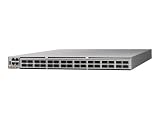
- Cisco 8101-32FH-O 8000 Series 32x 400G QSFP-DD Ports High-Performance Data Center Router Switch w/ Dual PSU (Renewed)
- Cisco 8101-32FH-O 8000 Series 32x 400G QSFP-DD Ports High-Performance Data Center Router Switch w/ Dual PSU (Renewed)
- Cisco 8101-32FH-O 8000 Series 32x 400G QSFP-DD Ports High-Performance Data Center Router Switch w/ Dual PSU (Renewed)
- Cisco 8101-32FH-O 8000 Series 32x 400G QSFP-DD Ports High-Performance Data Center Router Switch w/ Dual PSU (Renewed)
- Cisco 8101-32FH-O 8000 Series 32x 400G QSFP-DD Ports High-Performance Data Center Router Switch w/ Dual PSU (Renewed)
Organizations considering agentic operations should separately evaluate identity controls, tool permissions, prompt and model logging, audit trails, human approval, query-cost limits, prompt-injection defenses, and protections against data exfiltration. The Data Fabric announcement does not establish that every one of these controls is available in every configuration.
Free tools Windows power users keep installed
One-click scans. No signup required.
Availability timeline
The original announcement was made on September 8, 2025—not in August 2026. The dates below are milestones Cisco stated at or around launch; current availability should be confirmed for the relevant deployment.
| Capability | Stated timing | Important qualification |
|---|---|---|
| Data Fabric foundation using Splunk Enterprise and Splunk Cloud Platform | Available at the September 2025 announcement | Not every related feature was necessarily generally available. |
| Splunk AI Toolkit | Available at announcement | Newly hosted models were planned for 2026. |
| Replay S3 for Federated Analytics | Planned for October 2025 | Dates and regions could change. |
| Time Series Foundation Model | Planned for a November 2025 Hugging Face listing | A planned listing is not the same as universal production support. |
| Cisco AI Canvas integration | Planned for 2026 | Confirm edition, region, and availability. |
| Splunk Federated Search for Snowflake | Cisco stated global general availability for Splunk Cloud AWS commercial customers in July 2026 | This scope does not automatically include every cloud, region, or customer type. |
Relevant details are in Cisco’s Data Fabric announcement and its Snowflake federation announcement.
Why it matters for enterprise AI
The strongest case for Data Fabric is not that it provides a generic chatbot. Its value proposition is access to proprietary operational context: what services are failing, which network paths are degraded, how infrastructure behaved before an incident, and whether security, application, and business signals point to the same cause.
That context could support custom models, predictive insights, security investigations, observability, network operations, and agentic workflows. But “AI-ready” is a preparation claim, not a guarantee of useful AI. Organizations still need representative training data, accurate timestamps, consistent schemas, stable entity identities, meaningful metadata, evaluation datasets, and controls for inaccurate or unsafe outputs.
Who is most likely to benefit?
- Existing Splunk customers with large machine-data estates and established dashboards or data models.
- Enterprises already using Cisco networking, security, observability, or operations products.
- Organizations operating several clouds, warehouses, or data lakes.
- Security, IT, DevOps, and NetOps teams that need cross-domain investigation.
- Regulated or multinational organizations that cannot freely move data across regions or systems.
- Enterprises seeking to use operational telemetry in custom AI and agentic workflows.
The fit is weaker for a small team seeking simple log management, transparent self-service pricing, or a lightweight observability service. It may also be a poor choice for a company already standardized on a cloud-native lakehouse and lacking a need for Splunk-centered operational workflows.
Buyer checklist
1. Confirm the existing Splunk footprint
Determine whether the organization already uses Splunk Cloud Platform or Splunk Enterprise, whether existing entitlements cover the proposed workload, and how deeply Splunk dashboards, data models, security controls, and operational processes are embedded.
Rank #4

- Amazon Renewed is your trusted destination for a huge selection of smartphones, computers, video games, power tools and even more products that work and look like new and are backed by the Amazon Renewed Guarantee.
2. Test data locality and federation
List the systems that must remain in S3, Snowflake, Iceberg, Delta Lake, Azure, or regional stores. Then verify connector support, supported schemas, permissions, search latency, query pushdown, source throttling, and failure behavior.
3. Model the complete workload
Cost and architecture can differ substantially between high-volume ingestion, frequent interactive searches, historical analysis, security analytics, observability, model preparation, and large-scale federation.
The Tool Desk
Outbyte PC Repair FREEClear out junk files and repair common Windows errorsFree Scan →Outbyte Driver Updater FREEScan for outdated or missing drivers - takes under a minuteDriver Scan →4. Establish AI governance before enabling agents
- Role-based access and identity controls
- Sensitive-field masking
- Prompt, model, and tool-call logging
- Human approval for high-impact actions
- Audit trails and investigation replay
- Tool-level permissions and query-cost limits
- Prompt-injection and data-exfiltration defenses
- Separation between investigation and automated remediation
5. Validate data quality
More accessible data is not automatically better data. Check timestamps, asset and service identities, field consistency, enrichment, retention, service maps, and whether training data is clean and representative.
Independent reader supportYour contribution helps us test, update, and keep practical guides available for everyone.Pricing and commercial reality
Cisco does not publish a standalone list price for Cisco Data Fabric in the cited material. Splunk pricing is generally quote-based and can vary by product, deployment, and pricing model. Splunk describes workload, ingest, and entity-based pricing:
- Workload pricing: Primarily based on compute capacity used for search and analytics.
- Ingest pricing: Based on data volume ingested.
- Entity pricing: Based on monitored hosts, containers, or protected devices for eligible products.
A realistic budget should include retention, storage tiers, search frequency and complexity, monitored entities, security or observability products, external data-source charges, cloud infrastructure, possible egress, connectors, and professional services. Cisco and Splunk services may also be relevant for data readiness, deployment, integration, security, and observability implementation; the official Splunk Professional Services catalog outlines service categories.
Alternatives and adjacent choices
Snowflake
Snowflake is a stronger fit when the primary requirement is cloud data warehousing, lakehouse analytics, business-data integration, or AI workloads already centered in Snowflake. Data Fabric is more specifically positioned around Splunk search, machine data, security, observability, and operational response. Snowflake’s Cortex pricing documentation notes that AI Credits are separate from Platform Credits, while warehouses, storage, and data transfer continue to incur platform-related costs.
Dynatrace
Dynatrace may be preferable when application and infrastructure observability, topology, performance monitoring, and automated causal analysis are the main priorities. Data Fabric is broader in its stated emphasis on machine-data federation and Splunk-centered security, IT, network, and operations workflows. See Dynatrace pricing and its rate card.
Best Value

- Used Book in Good Condition
An existing cloud lakehouse stack
Companies with mature data-engineering teams may extend S3, Iceberg, Delta Lake, Spark, Snowflake, or Azure rather than add a Splunk-centered architecture. That can minimize duplication when batch analytics and model training dominate. It may require additional engineering to deliver real-time operational search, security analytics, alerting, and incident workflows.
A narrower Splunk deployment
Some buyers may need only Splunk Cloud Platform, Splunk Enterprise, Splunk Enterprise Security, Splunk IT Service Intelligence, or Splunk Observability Cloud. A focused deployment can be more appropriate than adopting the broader Cisco Data Fabric direction.
The strategic trade-off
Cisco completed its acquisition of Splunk on March 18, 2024, and Data Fabric is part of the post-acquisition effort to combine Cisco infrastructure and security telemetry with Splunk’s search, analytics, and observability capabilities. Cisco’s acquisition page provides the corporate context.
The integration may create real benefits for Cisco-heavy organizations: fewer disconnected investigations, more shared context, and a clearer route from telemetry to action. It may also increase dependence on Cisco products, Splunk licensing, proprietary data models, and Cisco-specific workflows.
Before committing, buyers should review data export options, open APIs, retention portability, connector coverage, contractual terms, and how easily individual components could be replaced. A fabric that spans many systems can simplify the user experience while making the underlying architecture more difficult to unwind.
Bottom line
Cisco Data Fabric is strategically significant, but the accurate description is an integrated Splunk-powered architecture—not a single new AI product, automatic model-training service, or guaranteed low-cost alternative to a data lake. It is most compelling for large Splunk and Cisco customers that need to correlate distributed machine data across security, IT, observability, and network operations.
Prospective buyers should treat it as a product-by-product evaluation. Confirm entitlements and regional availability, test federated-query performance, measure data and cloud costs, validate AI governance, and budget for implementation. The central promise is reduced mandatory centralization; it is not the elimination of data movement, operational complexity, or vendor lock-in.
PC Slower Than It Used to Be?
A free scan shows the junk files, broken settings and background clutter dragging Windows down - then fixes them in one click.Free scan · Windows 10 & 11Outdated Drivers Are Slowing You Down
One free scan finds every outdated or missing driver and matches the right update for your exact hardware.Free scan · exact hardware matchQuick Recap
Product prices and availability are accurate as of the date/time indicated and are subject to change. Any price and availability information displayed on Amazon at the time of purchase will apply.



