Some links on this page are affiliate links: if you buy through them we may earn a commission, at no extra cost to you.
China is not technologically cut off from the semiconductor industry. U.S. restrictions have slowed and raised the cost of Chinese chip development, but they have also strengthened the commercial and political case for domestic alternatives. Huawei is building an AI-computing stack around its Ascend accelerators, while Xiaomi’s 2025 XRING O1 showed that Chinese consumer-electronics companies can design flagship mobile silicon.
That is meaningful progress—not proof that China has achieved semiconductor parity with Nvidia, TSMC, ASML, or the wider U.S.-aligned supply chain. The more accurate description is rapid ecosystem formation under pressure.
The short verdict
China’s semiconductor industry is becoming more self-reliant, particularly in chip design, domestic AI infrastructure, and premium mobile processors. Huawei is the central company in the AI effort. Xiaomi’s XRING O1 broadens the story by showing that proprietary high-end chip design is spreading beyond Huawei.
Recommended Free Tools
But “China’s chip empire” remains an analytical shorthand, not an established technological fact. China still faces major constraints in advanced lithography, semiconductor equipment, electronic-design automation, high-bandwidth memory, packaging, yield, software, and production economics.
#1 Best Overall

- A RASPBERRY PI KIT FROM AN APPROVED RESELLER: Basic Starter Kit for Pi 4 Includes Raspberry Pi 4 Model B Board (4GB) with basic accessories to get started.
- INCLUDES BASIC VITAL ACCESSORIES TO GET STARTED: Eight parts Includes: 1. Raspberry Pi 4 Model B (4GB RAM) 2. ABS 2 Part Snap Assembly Case 3. Raspberry Pi 4 compatible 3A Power Supply with on/off switch 4. Cooling Fan (Preinstalled In case) 5. Standard.HDMI (Female) to Micro HDMI Male Adapter 6. Heatsinks (set of 4) 7.Neoprene Storage bag 8. Vilros Quickstart Guide for Raspberry Pi 4
- RASPBERRY PI 4 MODEL B SPECS: Dim: 85.6mm × 56.5mm–Processor: Broadcom BCM2711, quad-core Cortex-A72 (ARM v8) 64-bit SoC @ 1.5GHz--Memory: 4GB LPDDR4--Connectivity: 2.4 GHz and wireless LAN, Bluetooth, Gigabit Ethernet 2×USB 3.0 ports 2×USB 2.0 ports---GPIO: 40-pin GPIO header---Video & Sound: 2 × micro HDMI ports---Multimedia: H.265 H.264 OpenGL ES, 3.0 graphics SD card support: Micro SD card slot for OS & data---Input power: 5V DC via USB-C connector, 5V DC via GPIO header, POE(requires HAT)
- PASSIVE & ACTIVE COOLING: The kit includes a heatsink with thermal stickers for easy application and if that this not enough you can also connect the pre-installed fan to keep the board cool in any use
- CONVENIENT ACCESSORIES: The power supply features an inline on/off switch neoprene bag that holds and protects all the parts when not in use and the quick start guide is updated and written for Raspberry Pi 4
For investors and technology readers, the key distinction is this: China can increasingly design and deploy advanced chips without having complete control of every stage needed to manufacture them cheaply and at scale.
Two developments, one broader trend
The story involves two separate developments, not a joint Huawei-Xiaomi announcement.
- May 22, 2025: Xiaomi unveiled the XRING O1, its first flagship mobile processor, for initial use in China.
- May 2026: Huawei presented its LogicFolding design direction and associated “Tau Scaling Law,” proposing a way to improve transistor density and performance without depending entirely on conventional process-node shrinkage.
Together, they show China’s chip strategy expanding on two fronts: Huawei is pursuing AI accelerators, servers, networking, and software, while Xiaomi is increasing vertical integration in smartphones and tablets.
What’s actually slowing this PC down?
Pick the symptom - the matching free tool is one click away.
What Huawei’s LogicFolding proposal actually means
For decades, semiconductor progress has relied heavily on making transistors smaller. Smaller transistors can increase density, improve performance, and reduce energy use—but the most advanced manufacturing tools are difficult to obtain. China remains restricted from accessing some of the leading equipment used by the world’s most advanced foundries, including extreme ultraviolet lithography systems.
Huawei’s proposed alternative is to extract more performance from design and physical organization. Reuters describes LogicFolding as an approach involving folded architectures, signal transmission, transistor arrangement, electronic-design automation, and thermal management. In simple terms, Huawei is trying to get more useful computing from the available physical silicon rather than relying only on a smaller manufacturing label.
Huawei has said the approach could produce transistor density equivalent to a 1.4-nanometer process by 2031. That is a forward-looking company target, not evidence that Huawei or China has already manufactured a conventional 1.4-nanometer chip. A “1.4-nanometer-equivalent” density claim should not be treated as proof of access to the process technology used by leading foundries.
The approach could reduce dependence on node shrinkage, but it introduces difficult trade-offs:
Rank #2

- BUILD A COMPUTER: Includes all the components needed to build a fully-functioning computer! A Raspberry Pi, 7" screen, DIY speaker, rechargeable battery. Teaching kids to be STEAM-capable; coding their own games, interactive projects and more!
- HANDS-ON STEAM PROJECTS: Building the computer is only the beginning! Using Piper’s StoryMode, kids are guided through a secret mission, attaching wires and connecting electronic components to move around an immersive world and controlling the outcome.
- LEARN TO CODE: With a Piper Computer Kit, kids learn the basics of coding with 11 progressively challenging projects using an easy, drag-and-drop visual coding language. Using PiperCode, kids progress through tangible tasks that increase their level of confidence.
- CREATED FOR KIDS: Designed by educators to foster self-paced learning, kids advance from foundational tasks through more challenging projects at their own pace. They can progress to pre-loaded Python programming language, deepening their engagement and competence.
- THE BUILD IS JUST THE BEGINNING: Piper Computer Kit features an integrated, build-it-yourself speaker and 7" HDMI screen. The kit is engineered for multi-rebuilds, with a sturdy carrying case. Beyond the build, Piper Computer Kit launches kids into an expansive, adventurous world of learning disguised as fun, with dozens of playable projects from Day One.
- More complicated chip design and verification.
- Greater heat concentration and tougher cooling requirements.
- Higher demands on domestic EDA tools.
- Potentially lower yields and higher manufacturing costs.
- More difficult packaging and interconnect engineering.
Architecture can compensate for missing manufacturing capability in some applications. It cannot erase the physical, economic, and production limits of an older or constrained process.
Reuters’ report on Huawei’s proposed 2031 target and its analysis of LogicFolding’s design and thermal challenges provide the relevant qualifications.
Huawei’s real advantage is the system around the chip
Huawei’s strategic importance does not rest only on whether an individual Ascend accelerator matches Nvidia’s best product. Its ambition is to supply a complete domestic AI-computing platform:
- Ascend accelerator silicon.
- Atlas server cards and systems.
- High-speed interconnects and networking.
- Compilers, libraries, and software tools.
- Cloud deployment and technical support.
- Large systems such as SuperPOD-style clusters.
Huawei describes the Atlas 350 as powered by the Ascend 950PR and says more than 300 Atlas 900 A3 SuperPOD units shipped in 2025 to customers in internet services, finance, telecommunications, electricity, and manufacturing. Those are Huawei’s own figures, so they should be read as company-reported deployments rather than independently audited market share. Its announcement is available on Huawei’s website.
A domestic accelerator does not need to beat Nvidia on every benchmark to gain customers in China. Buyers may be unable to obtain certain Nvidia products, may prefer a domestic supplier for policy or security reasons, or may value guaranteed local support more than peak theoretical performance. Software optimization and larger clusters can also narrow the gap in particular workloads.
That does not mean Huawei has overtaken Nvidia globally. The evidence supports a stronger position in selected Chinese-market segments, not worldwide technological dominance. The Associated Press has reported that Nvidia’s China position weakened as domestic suppliers gained ground, but that is a regional market shift—not proof of a global Nvidia defeat. See the AP report.
What Xiaomi’s XRING O1 proves
Xiaomi unveiled the XRING O1 on May 22, 2025. Xiaomi describes it as a second-generation 3-nanometer flagship SoC with 19 billion transistors, a 10-core CPU, a 16-core GPU, and a 44-TOPS neural processing unit. It launched first in China in the Xiaomi 15S Pro and Xiaomi Pad 7 Ultra.
Rank #3

- 5 x 5 inches, 0.67 ounces, 0.03 inches thick. Some wafers are marked with alignment marks.
- The pattern is produced by light diffraction, and its reflective appearance changes with the viewing angle.
- Silicon wafers are fragile—please handle with care.
- Circuit details can be examined under a microscope.
These specifications are manufacturer claims and should not be confused with independent benchmark validation. Nevertheless, the strategic significance is substantial: Xiaomi has joined the premium mobile-SoC design race alongside companies such as Apple, Samsung, and Huawei.
Outdated Drivers Are Slowing You Down
One free scan finds every outdated or missing driver and matches the right update for your exact hardware.Free scan · exact hardware matchPC Slower Than It Used to Be?
A free scan shows the junk files, broken settings and background clutter dragging Windows down - then fixes them in one click.Free scan · Windows 10 & 11The chip combines major smartphone functions—including general processing, graphics, AI, imaging, and power management—more closely with Xiaomi’s hardware and software. That can improve product differentiation and reduce dependence on outside chip suppliers in selected devices.
Xiaomi says it had invested RMB 13.5 billion in research and development, planned RMB 50 billion in chip investment over the following decade, and had a chip team of more than 2,500 engineers. These are Xiaomi’s own disclosures, detailed in its XRING O1 announcement.
What XRING O1 does not prove
- It does not prove that Xiaomi controls the full manufacturing process.
- It does not prove that China can make all advanced chips without foreign equipment, materials, or intellectual property.
- It does not make Xiaomi a competitor to Nvidia in data-center AI accelerators.
- It does not mean Xiaomi will stop using Qualcomm or MediaTek across its global product range.
- It does not establish global availability; the initial XRING O1 launch was in China.
The “3-nanometer” label is particularly easy to misread. It identifies the stated process generation of the product, not necessarily the nationality of every tool, material, design system, or manufacturing input behind it.
Design is not the same as manufacturing
China has demonstrated serious semiconductor design capability, especially through Huawei and HiSilicon. Chinese foundries have also produced advanced chips using constrained domestic workflows, including 7-nanometer-class production associated with Huawei devices.
The Tool Desk
Outbyte PC Repair FREEClear out junk files and repair common Windows errorsFree Scan →Outbyte Driver Updater FREEFix the driver behind crashes, sound loss and screen glitchesFind Drivers →But a chip that can be manufactured is not automatically a chip that can be produced economically at global scale. The decisive questions include:
- Yield: How many usable chips come from each wafer?
- Volume: Can the process supply millions or billions of units?
- Power: Does the chip deliver acceptable performance per watt?
- Cost: Can it compete without indefinite policy support?
- Reliability: Can it meet the requirements of phones, servers, and industrial systems?
These details are often less visible than a product launch or transistor count. They are also more important for judging whether China has achieved durable technological independence.
Rank #4
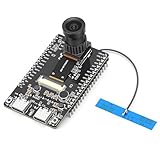
- 【Main Functions】BW21-CBV-Kit is a local AI vision recognition development board capable of independently running object recognition models
- 【Camera Specifications】Equipped with a 1920 x 1080 resolution, 2MP, 30fps wide-angle camera, a condenser microphone, and support for 2TB memory card storage
- 【Strong Communication Capabilities】Based on the RTL8735B chip, it supports dual-band 2.4GHz/5GHz WiFi and Bluetooth 5.1, providing high-performance wireless transmission capabilities for smoother image transmission
- 【Development Method】Utilizes the Arduino development approach, allowing you to easily implement your ideas, such as face recognition, gesture recognition, object recognition, component defect detection, people counting, pet recognition, etc
- 【Rich Interfaces】Two sets of 18-pin headers provide 30 programmable I/Os, facilitating project expansion. Combined with AI recognition, it unlocks limitless possibilities
The bottlenecks that still matter
Advanced lithography and manufacturing equipment
A complete semiconductor ecosystem needs more than chip designers. It also needs domestic or reliably accessible substitutes for lithography, etching, deposition, metrology, inspection, cleaning, ion implantation, process-control software, and specialty materials.
Restrictions on the most advanced lithography systems make leading-edge production harder and potentially more expensive. China may produce impressive chips through workarounds, but the central test is whether it can do so with competitive yield and cost.
EDA software
Huawei’s architecture-heavy strategy increases the importance of sophisticated EDA tools. Complex layouts require software capable of designing, simulating, verifying, and optimizing chips reliably. If domestic tools lag in capability or ecosystem support, architectural innovation may be difficult to scale.
High-bandwidth memory
AI accelerators require fast memory and advanced packaging. Progress on the logic die alone does not solve the problem if reliable high-bandwidth memory is unavailable or too expensive. Memory supply, packaging capacity, interconnects, cooling, and networking all affect the performance of a complete AI system.
Software
Nvidia’s advantage is not just silicon. CUDA, libraries, developer familiarity, cloud availability, and a large installed base make Nvidia hardware easier to deploy. Huawei must compete at that system-software level, where customers measure usable results rather than theoretical throughput.
Independent reader supportYour contribution helps us test, update, and keep practical guides available for everyone.Why restrictions can both slow China and strengthen it
It would be wrong to say that U.S. controls simply “failed.” They have constrained access, raised costs, limited supply, and made advanced production more difficult. But restrictions can also create a powerful incentive for Chinese companies and government buyers to substitute foreign technology wherever possible.
Free tools Windows power users keep installed
One-click scans. No signup required.
The resulting feedback loop is strategically important:
Best Value

- Compatibility: Exclusively designed for MacBook Air Retina 13.3-inch with M1 chip, 2020 Model (Model Number: A2337 / EMC 3598) Resolution: 2560 × 1600
- Fixes All Kinds of Screen:FaultsWhether it’s cracked or broken glass, blurred display, pixel abnormalities, LCD malfunction, color deviation or any other screen-related issues, this replacement screen offers an effective solution, making your device look and perform as good as new.
- Hassle-Free Installation:Our replacement screen is incredibly easy to install — it comes with a detailed illustrated manual and step-by-step video guide for clear, straightforward operation. If you have any questions along the way, our professional support team is always available to assist you.
- Upgraded Protective Packaging:Our packaging is made of custom thick foam material that provides all-around cushioning. It effectively guards against compression, vibration and impact during delivery, offering comprehensive protection to ensure the screen reaches you in pristine condition.
- Package Includes:1 x LCD replacement screen, 1 x installation guide, 1 x tool kit (including screwdrivers, pry tool, spudger, suction cup, tweezers, cleaning brush and anti-static gloves). Professional tools are provided to help you complete the replacement easily.
- Chinese companies design more of their own chips.
- Domestic foundries and equipment makers receive stronger demand.
- Government and state-linked buyers provide early customers.
- Cloud providers and software developers optimize for domestic hardware.
- Revenue and deployment experience fund further research and scaling.
This is why domestic demand matters even when the domestic product is initially more expensive or less powerful. A buyer may accept lower short-term efficiency in exchange for supply security and freedom from future export restrictions.
U.S. government and congressional reports have described Huawei, Chinese foundries, and related semiconductor companies as parts of an emerging domestic supply chain. The U.S.-China Economic and Security Review Commission report, the House Select Committee’s supply-chain report, and congressional testimony on Chinese AI chips discuss these dynamics.
How to judge whether China is truly catching up
There is no single “chip race” score. China may be competitive in one dimension and far behind in another. A serious assessment should examine at least five measures:
Quick wins for a faster PC:
Repair Windows errors before they cause bigger problemsFix Now →Scan for outdated or missing drivers - takes under a minuteDriver Scan →Clear out junk files and repair common Windows errorsFree Scan →| Measure | What to ask |
|---|---|
| Peak performance | What do the chip’s benchmarks and theoretical specifications show? |
| Real-world performance | How does it perform in training, inference, recommendation, language models, and scientific workloads? |
| Production scale | Can it be manufactured in large volumes with acceptable yield, packaging, and memory supply? |
| Economics | What is the cost per usable chip, server, or unit of AI inference? |
| Ecosystem independence | Can customers obtain the required EDA tools, compilers, libraries, cloud support, and maintenance domestically? |
What would constitute a genuine breakthrough?
The strongest evidence would not be another ambitious product announcement. It would be sustained, independently corroborated execution:
- High-volume production over multiple product cycles.
- Competitive yield, cost, energy efficiency, and reliability.
- Reliable domestic access to advanced packaging and high-bandwidth memory.
- Domestic EDA and manufacturing equipment operating at meaningful scale.
- A software ecosystem that developers choose for performance, not only policy reasons.
- Large deployments outside politically aligned or state-supported customers.
- Export sales that demonstrate competitiveness in open markets.
Until those milestones appear, it is premature to equate design sophistication or limited production with complete semiconductor independence.
What this means for technology and investment readers
The opportunity and risk are distributed across the supply chain. Chinese chip designers, foundries, equipment makers, packaging companies, memory suppliers, cloud operators, and software developers may all benefit from the push toward domestic substitution. At the same time, policy support can obscure the true commercial economics of a product.
Investors should therefore avoid treating a new Chinese processor as a simple winner-or-loser signal for Nvidia, TSMC, ASML, or U.S. semiconductor companies. The relevant questions are narrower and more measurable: which market is affected, whether customers can obtain the product at scale, how much it costs to operate, and whether the surrounding software and memory infrastructure is ready.
Do these 3 things before closing this tab:
1Repair Windows errors before they cause bigger problems2Scan for outdated or missing drivers - takes under a minute3Clear out junk files and repair common Windows errorsConclusion: a credible ecosystem, not yet an empire
Huawei’s LogicFolding proposal shows how Chinese chip designers are trying to work around restricted access to the most advanced manufacturing tools. Huawei’s Ascend and Atlas products show that the competition is moving from isolated chips to complete AI-computing systems. Xiaomi’s XRING O1 demonstrates that high-end domestic chip design is spreading into consumer electronics.
Those developments make China’s semiconductor push real. They do not prove that China has solved fabrication, equipment, memory, packaging, software, yield, or cost at the level of the leading global supply chain.
The most defensible conclusion is therefore domestic substitution and ecosystem formation. China’s chip empire is no longer a fantasy—but it is not yet a self-sufficient or globally dominant empire either.
Quick Recap
Product prices and availability are accurate as of the date/time indicated and are subject to change. Any price and availability information displayed on Amazon at the time of purchase will apply.



