Do these 3 things before closing this tab:
1Clear out junk files and repair common Windows errors2Fix the driver behind crashes, sound loss and screen glitches3Repair Windows errors before they cause bigger problemsSome links on this page are affiliate links: if you buy through them we may earn a commission, at no extra cost to you.
China did not impose a verified blanket ban on every Nvidia AI chip. The clearest reported restriction came in January 2026, when Chinese customs officials were reportedly told not to admit Nvidia’s H200 chips and Chinese technology companies were reportedly discouraged from buying them unless necessary. By July, however, small numbers of H200 chips had reportedly begun shipping to China.
The story involves two separate approval gates: U.S. export licensing and Chinese import or purchasing policy. Nvidia’s H20 chip has followed a different path, facing U.S. licensing requirements and later Chinese security scrutiny.

What China reportedly restricted
The January 2026 episode concerned Nvidia’s H200, a high-performance data-center accelerator used for artificial-intelligence training and inference. Reuters reported that Chinese customs agents had been told the chips were not permitted to enter China. The same report said domestic technology companies were told not to purchase H200 chips unless they had a specific need.
Recommended Free Tools
Those reports described a practical or de facto restriction based on instructions and meetings reported by people familiar with the measures. They did not establish that China had published a nationwide law banning all Nvidia AI processors.
#1 Best Overall

- Standard Memory: 40 GB
- Host Interface: PCI Express 4.0
- Cooler Type: Passive Cooler
- Product Type: Graphics Card
That distinction matters. “China blocked Nvidia chips” is too broad unless the product, date and type of restriction are specified. A more accurate description is that China reportedly restricted H200 imports and discouraged some purchases in January 2026.
Reuters reported the customs and purchasing instructions.
H20 and H200 are different stories
| Chip | Role in the dispute | Restriction reported |
|---|---|---|
| H20 | A China-focused, lower-performance data-center AI product designed around earlier U.S. export limits | U.S. export licensing from April 2025; Chinese security scrutiny and reported purchase discouragement |
| H200 | A more powerful data-center AI processor | Reported Chinese customs restriction in January 2026, followed by limited licensed shipments |
The H20 dispute
On April 9, 2025, the U.S. government told Nvidia that H20 exports to China required a license. Nvidia said the change led to a $4.5 billion charge related to excess inventory and purchase obligations. This was a U.S. export-control decision, not a Chinese ban.
The Tool Desk
Outbyte PC Repair FREERepair Windows errors before they cause bigger problemsFix Now →Outbyte Driver Updater FREEScan for outdated or missing drivers - takes under a minuteDriver Scan →Rank #2

- GPU processor: NVIDIA RTX A5500
- CUDA cores: 10240
- 24GB GDDR6 ECC Graphics Memory
- System Interface: PCI-Express 4.0 x16
- 1 x DisplayPort to HDMI adapter
China later opened its own inquiry. On July 31, 2025, China’s Cyberspace Administration said it had summoned Nvidia over alleged security risks involving H20 chips, including claims concerning tracking or remote shutdown capabilities. The statement reported Chinese regulatory concerns; it did not independently establish that Nvidia chips contained those capabilities. In August, reports said Beijing urged some Chinese companies, particularly government-related users, to avoid H20 chips.
See Nvidia’s disclosure of the H20 licensing requirement and charge and the Chinese regulator’s statement.
The two-gate system behind Nvidia sales to China
A chip can reach a Chinese customer only if it clears two separate questions:
- Can Nvidia legally export it from the United States? U.S. rules can require a license based on factors such as computing performance, memory bandwidth, interconnect bandwidth, performance density and destination.
- Will Chinese authorities permit it to enter and be purchased? Customs treatment, procurement guidance and security reviews can delay or prevent a transaction even when the United States authorizes the export.
A U.S. license therefore does not prove that a chip entered China. Conversely, a chip’s physical presence in China does not prove that it was lawfully imported; unauthorized resale or rerouting through third countries can create a separate enforcement issue.
Windows Errors? Fix Them Before They Spread
Repair common Windows errors and clear accumulated junk for a smoother, more stable PC - no reinstall needed.Free scan · no reinstallOutdated Drivers Are Slowing You Down
One free scan finds every outdated or missing driver and matches the right update for your exact hardware.Free scan · exact hardware matchNvidia identifies products potentially affected by controlled-data-center-compute rules, depending on the applicable thresholds and destination, including A100, H100, H200, H800, B100, B200, GB200, GB300, L4, L40S and RTX 6000 Ada. That list does not mean every product was subject to the same restriction or that every Nvidia consumer GPU was banned.
Nvidia’s SEC filing describes the relevant product and control context.
Rank #4
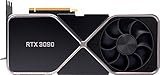
- Chipset: NVIDIA GeForce RTX 3090
- Video Memory: 24GB GDDR6X
- Memory Interface: 384-bit
- Output: DisplayPort x 3 (v1.4a) / HDMI 2.1 x 1
- Nvidia India 3 Year *
Timeline: how the position changed
- April 9, 2025: The United States required a license for H20 exports to China. Nvidia later disclosed a $4.5 billion H20-related charge.
- July 31, 2025: China’s cyberspace regulator said it had questioned Nvidia about alleged H20 security risks.
- August 2025: Reports said Beijing advised some Chinese firms not to use H20 chips.
- January 14, 2026: Reuters reported that Chinese customs agents had been told H200 chips were not permitted to enter China and that companies were discouraged from buying them unless necessary.
- February 2026: Nvidia said the U.S. government had granted licenses allowing small amounts of H200 products to ship to specified China-based customers.
- May 2026: Reports said about 10 Chinese companies had received U.S. clearance to buy H200 chips, although deliveries had not yet occurred at that point.
- July 2026: A U.S. official said very few H200 chips had shipped to China or Hong Kong. Separate reporting said China was considering or permitting limited purchases by leading AI companies.
Nvidia’s filings show how uncertain the market remained: its fiscal 2027 first-quarter outlook assumed no data-center compute revenue from China, even as limited H200 access was being reported.
Sources include Nvidia’s SEC filing, Reuters reporting carried by Investing.com, and Nvidia’s fiscal 2026 earnings release.
Quick wins for a faster PC:
Clear out junk files and repair common Windows errorsFree Scan →Fix the driver behind crashes, sound loss and screen glitchesFind Drivers →Repair Windows errors before they cause bigger problemsFix Now →Why would China restrict Nvidia chips?
No single official explanation has been established for the H200 customs measures. Several factors may be relevant:
Best Value

- Graphics Card Interface: Pci E
- Domestic industrial policy: Restricting foreign accelerators can create demand for Chinese suppliers such as Huawei and Cambricon.
- National-security concerns: Chinese regulators publicly raised security concerns about H20 chips, although the underlying allegations should remain attributed rather than treated as proven technical facts.
- Control of strategic computing capacity: Advanced AI accelerators are commercial products but also important infrastructure for training powerful models.
- Negotiating leverage: The timing may have given Beijing leverage in wider U.S.-China technology negotiations. That is an analytical possibility, not a confirmed official motive.
For Nvidia, the issue is not simply whether one shipment is delayed. Uncertain access can reduce long-term orders, complicate product planning and encourage Chinese customers to develop alternatives rather than depend on a supplier whose availability can change with government policy.
What is known—and what is not
What is known
- The January reports specifically concerned H200 chips, not every Nvidia product.
- The reported Chinese measures involved customs treatment and purchasing guidance rather than a clearly documented blanket statute.
- H20 exports faced a separate U.S. licensing requirement beginning in April 2025.
- China publicly questioned Nvidia over alleged H20 security risks.
- Small H200 shipments to China were reportedly authorized and began by July 2026, but volumes remained very limited.
What remains unclear
- Whether China issued a formal written H200 import prohibition.
- Which customers ultimately received H200 chips and how many units entered China.
- Whether the reported guidance applied equally to private companies, state-linked firms and military-related buyers.
- Whether the restrictions were temporary, bargaining leverage or part of a permanent shift toward Chinese-made accelerators.
- How rules applied to complete servers, which may raise different customs and export-control questions from standalone chips.
Current status as of August 18, 2026
There is no verified basis in the cited sources for saying that China currently blocks every Nvidia AI chip. The more defensible conclusion is narrower: H200 access was restricted and delayed, then reportedly reopened only on a limited basis; H20 faced a separate combination of U.S. licensing controls and Chinese security-related pressure.
That means “sale” can be misleading. The relevant barrier may be U.S. export licensing, Chinese customs clearance, procurement guidance, or all of these at different stages. The product, destination—including whether Hong Kong is involved—and customer type must be specified before drawing a broader conclusion.
Quick Recap
Product prices and availability are accurate as of the date/time indicated and are subject to change. Any price and availability information displayed on Amazon at the time of purchase will apply.



