Some links on this page are affiliate links: if you buy through them we may earn a commission, at no extra cost to you.
Short answer: Canada’s 2025 federal budget proposed $925.6 million over five years for sovereign public artificial-intelligence (AI) compute capacity. That is the AI-specific commitment—not a $1-billion cheque available to Canadian startups. The broader technology package also includes $334.3 million for quantum computing, $1 billion for a wider venture-capital initiative and $750 million for an early-growth strategy.
Those figures matter to founders, investors, researchers and taxpayers because they represent different kinds of spending: infrastructure, investment vehicles, research support and tax or commercialization measures. They should not be added together and described as one AI grant program.
The numbers at a glance
| Measure | Amount and timing | What it is |
|---|---|---|
| Sovereign AI compute | $925.6 million over five years | Large-scale public AI infrastructure and compute access for public and private research |
| Quantum ecosystem | $334.3 million over five years | Separate quantum investment through the Defence Industrial Strategy |
| Venture and Growth Capital Catalyst Initiative | $1 billion over three years | Broad fund-of-funds intended to mobilize private and institutional capital |
| Early-growth-company strategy | $750 million over three years | Planned support for companies moving beyond the earliest stages; implementation details were still pending |
| TechStat | $25 million over six years | Statistics Canada program to measure AI and technology effects on the economy and workforce |
The figures and program descriptions are summarized in Miller Thomson’s analysis of Budget 2025. The AI and quantum allocations together total about $1.26 billion, but only $925.6 million is identified here as AI compute funding.
Quick wins for a faster PC:
Fix the driver behind crashes, sound loss and screen glitchesFind Drivers →Clear out junk files and repair common Windows errorsFree Scan →Scan for outdated or missing drivers - takes under a minuteDriver Scan →What “sovereign AI compute” means
Compute is the specialized processing capacity used to train and run AI models. It includes accelerator chips such as GPUs, data-centre space, electricity, cooling, high-speed networking, storage and secure systems for handling data.
#1 Best Overall
![Arduino® UNO™ Q 4GB [ABX00173]- Hybrid Board, Qualcomm Dragonwing QRB2210 microprocessor (MPU) & STM32U585 Microcontroller(MCU), AI Vision, Voice, IoT, Robotics, Linux Debian OS, Wi-Fi 5, USB-C](https://m.media-amazon.com/images/I/51cl4xygwGL._SL160_.jpg)
- Dual-Brain Hybrid Power: Combines the Qualcomm Dragonwing QRB2210 MPU (Quad-core Arm Cortex-A53 @ 2.0 GHz CPU, Adreno GPU, AI acceleration) and the real-time, low-power STM32U585 MCU for advanced applications like object recognition, voice commands, and motion detection.
- AI & Linux Capabilities: Unlocks AI-powered vision and sound solutions; runs Linux Debian OS for coding in Python and supports the Arduino ecosystem with libraries and Sketches; quick start with Arduino App Lab.
- Advanced Features: Equipped with 4 GB LPDDR4 RAM, 32 GB eMMC built-in storage, ideal for single-board computer (SBC) mode, running multiple simultaneous high-level processes, more complex AI or ML models, extensive logs. Dual-band Wi-Fi 5 (2.4/5 GHz), Bluetooth 5.1, and high-speed headers for vision, audio, and display peripherals.
- Seamless Expansion & Connectivity: Features the classic UNO form factor for shields compatibility, an 8x13 LED matrix, and a Qwiic connector for easy expansion with Modulino nodes; power and connect via the USB-C connector.
- Intended Use & Development: The perfect platform for prototyping robotics or IoT projects, empowering innovators with a unified development experience to mix Arduino Sketches, Python scripts, and containerized AI models in a single interface.
“Sovereign” does not necessarily mean every server, chip, model or supplier will be Canadian-owned. In this context, it generally signals an effort to give Canada secure, domestically accessible strategic capacity and more control over an infrastructure layer that is currently concentrated among foreign cloud and hardware providers.
The proposed infrastructure is intended to serve public and private research. It could help universities train models, let companies test systems without relying entirely on overseas capacity, and support sensitive work in areas such as health, defence, cybersecurity, finance and industrial technology. It does not, by itself, fund a company’s product development, customer acquisition or hiring.
Is the $925.6 million new money?
Not necessarily in its entirety. MobileSyrup reported that $800 million of the AI-related proposal was being reallocated from the $2-billion AI-compute and public-supercomputer commitment announced in Budget 2024.
That means readers should avoid two forms of double counting:
Rank #2
- Dual-Brain Hybrid Power: Combines the Qualcomm Dragonwing QRB2210 MPU (Quad-core Arm Cortex-A53 @ 2.0 GHz CPU, Adreno GPU, AI acceleration) and the real-time, low-power STM32U585 MCU for advanced applications like object recognition, voice commands, and motion detection.
- AI & Linux Capabilities: Unlocks AI-powered vision and sound solutions; runs Linux Debian OS for coding in Python and supports the Arduino ecosystem with libraries and Sketches; quick start with Arduino App Lab.
- Advanced Features: Equipped with 2 GB LPDDR4 RAM, 16 GB eMMC built-in storage, ideal to develop in PC-connected mode, running the OS, Python scripts, and basic network services (SSH) without a demanding GUI or heavy multitasking; great for lightweight AI and memory-optimized TinyML applications, needing local storage for basic OS and core libraries. Dual-band Wi-Fi 5 (2.4/5 GHz), Bluetooth 5.1, and high-speed headers for vision, audio, and display peripherals.
- Seamless Expansion & Connectivity: Features the classic UNO form factor for shields compatibility, an 8x13 LED matrix, and a Qwiic connector for easy expansion with Modulino nodes; power and connect via the USB-C connector.
- Intended Use & Development: The perfect platform for prototyping robotics or IoT projects, empowering innovators with a unified development experience to mix Arduino Sketches, Python scripts, and containerized AI models in a single interface.
- Adding the full 2024 commitment to the 2025 amount as though all of it were separate spending.
- Calling the entire $925.6 million newly created funding without confirming the government’s final accounting.
The careful description is: Budget 2025 proposed $925.6 million for sovereign AI compute, including a substantial reported reallocation of funds previously set aside in Budget 2024. It remains a budget proposal requiring program design, appropriations and implementation decisions.
Who could benefit?
Potential beneficiaries include:
- Universities and research institutes seeking large-scale training and experimentation capacity.
- AI startups and scale-ups that cannot economically purchase or reserve enough advanced compute on commercial terms.
- Public-sector projects involving service delivery, scientific research or secure data.
- Foundation-model and specialized-AI developers in fields such as medicine, logistics, manufacturing and financial services.
- Infrastructure suppliers providing data centres, networking, power, cooling and software.
- Investors and venture funds participating in the broader capital initiatives.
- Companies seeking IP assistance through programs such as Elevate IP, the Innovation Asset Collective’s Patent Collective and the National Research Council’s IP Assist program.
However, the available reporting does not establish that every Canadian company will receive a direct grant or subsidized GPU time. Delivery could involve government-supported facilities, competitive access, university partnerships, industry agreements, existing funding agencies or investments by the Canada Infrastructure Bank. The responsible minister may identify strategic projects and sign memoranda of understanding with industry, while the bank may invest in AI-infrastructure projects, according to the Miller Thomson analysis.
The separate $1-billion venture-capital measure
The $1 billion over three years for the Venture and Growth Capital Catalyst Initiative is related to the AI story but is not the same pot of money. It is described as a Business Development Bank of Canada-managed fund-of-funds intended to attract private, pension-fund and institutional investment into high-growth technology and innovation companies.
An AI company could benefit if a participating fund invests in it, but the initiative is not AI-only and does not guarantee funding to a particular startup. The separate $750-million early-growth strategy is also broader than AI, and its operating rules were still to be detailed.
Rank #3
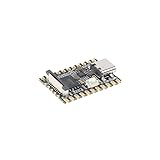
- Single core ARM Cortex-A7 32-bit core, integrated with NEON and FPU
- Built in Micro's self-developed 4th generation NPU, with high computational accuracy and support for mixed quantization of int4, int8, and int16. Among them, int8 has a computing power of 0.5 TOPS and int4 has a computing power of up to 1.0 TOPS
- Built in self-developed 3rd generation ISP3.2, supports 4 million pixels, and supports various image enhancement and correction algorithms such as HDR, WDR, and multi-level denoisin
- It has powerful encoding performance, supports intelligent encoding, adapts to save bit rates according to the scene, and saves more than 50% of the bit rate compared to conventional CBR mode, making the captured images high-definition, smaller in size, and doubling the storage space
- The design with built-in RISC-V MCU supports low-power fast startup, 250ms fast capture, and simultaneous loading of AI model library, enabling facial recognition to be completed within 1 second
Other AI-related measures
Infrastructure is only one part of the proposed policy package:
- TechStat: Statistics Canada would receive $25 million over six years to measure AI’s effects on the economy and workforce. Better data can inform productivity, employment and policy decisions.
- Intellectual property: Continued or renewed support for IP programs could help companies protect inventions and negotiate commercialization.
- SR&ED changes: Proposed reforms could affect R&D tax-credit eligibility, expenditure limits, capital expenditures, public corporations and claim administration. Companies should review the enacted rules with a qualified adviser rather than assume a budget proposal changes a current claim.
- AI in government: The budget discusses embedding AI in federal operations to improve productivity and services, subject to procurement, privacy, security and responsible-use requirements.
What the proposal does not answer
Founders and investors still need details on:
- Which department or agency will operate the compute capacity.
- Who qualifies, how applications will work and whether access is paid, subsidized or allocated competitively.
- Whether capacity will support model training, inference, or both.
- Which procurement and construction partners will be involved.
- How quickly hardware, power, cooling and data-centre space can be brought online.
- Whether recipients must keep intellectual property, data or jobs in Canada.
- What metrics will determine success, such as research output, private investment, exports, productivity or Canadian ownership.
The policy trade-offs
Infrastructure versus applications
More compute can remove a genuine bottleneck, but it does not create customers, skilled workers or commercially successful products. Canada’s research strength will translate into economic value only if companies can scale and sell.
Sovereignty versus cost
Domestic access may improve resilience, security and bargaining power, yet building and operating Canadian capacity can cost more than using a global hyperscaler. Facilities may still depend on foreign-designed chips, cloud software and equipment.
Recommended Free Tools
Public access versus scarcity
If rules favour only large institutions, startups may see little benefit. If access is unrestricted, scarce GPUs and electricity could be consumed by low-value experiments. Transparent allocation and usage metrics will matter.
Rank #4

- 【POWERFUL ESP32‑S3 CONTROLLER】Built‑in Xtensa 32‑bit LX7 dual‑core processor, 512KB SRAM, 8MB PSRAM, 16MB Flash for stable AI voice computing and multitask processing.
- 【Preloaded Dual AI Platforms】Comespre-installed with complete Deepseek and OpenAI voice dialogue projects.Experience intelligent voice interaction instantly. (Note: OpenAI functionality requires your own API key.)
- 【STABLE WIRELESS & CLEAR AUDIO】Integrated 2.4GHz Wi‑Fi + Bluetooth 5 (LE); dedicated audio decoding module for natural, responsive voice interaction.
- 【USER‑FRIENDLY VISUAL & PLUG‑AND‑PLAY】2” TFT‑SPI color screen shows real‑time chat; modular design, no extra wiring, ready to use after setup.
- 【FULL LEARNING SUPPORT】45 programmable GPIOs, rich interfaces, online web tutorials, free technical support for beginners & developers.
Speed versus oversight
Fast deployment can improve public services and productivity, while privacy reviews, cybersecurity controls, model testing and procurement safeguards can slow projects for legitimate reasons.
What this means for taxpayers, investors and companies
The announcement is not an immediate consumer rebate or a guaranteed investment opportunity. It may increase demand for Canadian-region cloud capacity, data-centre construction, enterprise AI services, R&D tax support, IP advice and model-evaluation work. Anyone comparing providers should check GPU type, regional availability, data residency, security terms, storage and egress charges; public-cloud availability does not automatically mean Canadian ownership or residency.
Investors should distinguish grants, tax expenditures, loans, government investments and private capital mobilized by a fund-of-funds. Companies should also avoid assuming that buying a cloud service makes them eligible for federal support.
What’s actually slowing this PC down?
Pick the symptom - the matching free tool is one click away.
Bottom line
Canada’s 2025 budget proposed nearly $926 million for sovereign AI compute, not a single $1-billion grant for Canadian AI companies. Quantum funding and a broad venture-capital initiative push the wider technology package above $1 billion, but those are separate measures. The proposal could ease Canada’s access and infrastructure constraints; its economic payoff will depend on whether startups and researchers can obtain compute, whether projects are delivered quickly, and whether public support leads to Canadian-owned intellectual property, investment and scalable businesses.
Quick Recap
Product prices and availability are accurate as of the date/time indicated and are subject to change. Any price and availability information displayed on Amazon at the time of purchase will apply.



