Crashes, No Sound, or Screen Glitches?
Random freezes, missing sound and display glitches usually trace back to one bad driver. Find and replace yours safely.Free scan · under a minuteWindows Errors? Fix Them Before They Spread
Repair common Windows errors and clear accumulated junk for a smoother, more stable PC - no reinstall needed.Free scan · no reinstallSome links on this page are affiliate links: if you buy through them we may earn a commission, at no extra cost to you.
No—not in the unrestricted, science-fiction sense. Some workplace systems can record brain-related signals and use algorithms to estimate states such as fatigue. That is different from producing a transcript of a worker’s private thoughts. The practical concern is that employers could use uncertain inferences about attention, stress or workload to make consequential decisions in a relationship where workers may not feel free to say no.
What Farahany said at Davos
The headline “Duke Professor Welcomes the ‘Promising’ Future of Employers Reading Your Brain” refers to a Futurism article published February 3, 2023, about Duke law and philosophy professor Nita A. Farahany’s appearance at the World Economic Forum’s January 2023 Annual Meeting in Davos. Her session was titled “Ready for Brain Transparency?”
Farahany’s argument was not that employers can already extract a person’s complete thoughts. She described wearable neurotechnology as developing quickly enough to warrant safeguards before its use spreads. Such tools might help identify fatigue or support accessibility, but they also raise concerns about mental privacy, autonomy and freedom of thought. The Futurism headline’s “welcomes” framing compresses that mixed argument into a more provocative claim.
Free tools Windows power users keep installed
One-click scans. No signup required.
In later discussion, Farahany emphasized that potential benefits do not justify giving employers unrestricted access to raw or inferred neural data. Her workplace analysis calls for limits on collection and use, rather than treating access as an automatic employer entitlement. See her Harvard Business Review discussion of neurotechnology at work and her TED talk transcript on mental privacy.
#1 Best Overall
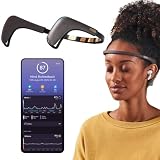
- Works great on its own — access core EEG-powered feedback and session tracking right out of the box; optional Premium subscription adds AI Coach, deeper brain insights, and access to 500+ meditations.
- Personal Meditation Coach — Meet MUSE 2, a smart headband that helps you understand your brain and live a more relaxed, present life. Begin improving your overall brain health and mental wellbeing by harnessing the calming power of meditation.
- Wearable Neurofeedback — To begin, put on the headband and position it so the sensors are in contact with your skin. Next, connect to Bluetooth through the MUSE app, select your meditation experience, take a deep breath, and begin to relax.
- Tune Into Your Body — After each session, you are provided with a calm score. Track your progress to improve your meditation practice overtime and develop an understanding of your internal cues to learn how to relax, build energy and optimize performance.
- Safe, Trusted and Certified — MUSE is backed by research from prestigious institutions and is used by neuroscience researchers around the world. Our SmartSense EEG sensors are award winning and our company is built on credibility and trust.
What “reading your brain” can mean
The phrase can describe several distinct technologies and claims. They should not be treated as interchangeable:
- Signal detection: Electroencephalography (EEG) records electrical activity using electrodes on or near the scalp. The signal is indirect and noisy, not a direct feed of thoughts.
- Classification: Software looks for patterns associated with a defined condition or task, such as possible fatigue. The output is a model’s classification, not proof of a person’s mental state.
- Command interfaces: A brain-computer interface can translate deliberately generated signals into commands for a computer or prosthetic. This is a constrained interaction, not passive access to every thought.
- Inference: A model may estimate a state such as workload or attention from signal patterns. These are inferred constructs, and their reliability depends on the person, task, equipment and setting.
- Thought decoding: Reconstructing specific words, images, memories or intentions is a much stronger claim. Research systems may decode limited information under controlled conditions, but that does not make arbitrary private thoughts available to a consumer headset or employer.
Farahany’s technical and legal discussion in Judicature and her TED talk describe the gap between sensing neural activity and interpreting it. Wearable EEG devices typically have fewer electrodes and lower signal quality than laboratory systems; movement, individual variation, calibration and context all matter. A model trained for one task may not work for another person or environment. Even an unreliable attention or fatigue score can still affect a worker if a manager treats it as objective evidence.
Where workplace use is most plausible
The clearest workplace example in the cited coverage is fatigue monitoring in safety-sensitive settings, including commercial driving and mining. EEG-based systems can be integrated with headwear, estimate alertness and issue warnings to workers or supervisors. Farahany has discussed SmartCap as one example; the company describes its offering at SmartCap’s official site. A public product description does not, by itself, establish how accurate a system is for every workforce or how an employer uses its output.
Quick wins for a faster PC:
Repair Windows errors before they cause bigger problemsFix Now →Scan for outdated or missing drivers - takes under a minuteDriver Scan →Clear out junk files and repair common Windows errorsFree Scan →Safety alerts and employee ranking are not the same use. Preventing a fatigued driver from operating a vehicle may present a specific safety rationale. Using an “attention” score to rank office staff, judge commitment or determine pay would raise different questions about validity, coercion and fairness.
Rank #2

- Real-Time EEG Neurofeedback Headband for Brainwave Monitoring: Monitor your brain activity in real time using advanced EEG sensors. Track key brainwave patterns such as alpha, beta and theta waves to understand how your brain responds during meditation, focus sessions, relaxation and sleep preparation.
- Smart App with Guided Meditation & Brain Training – No Subscription Fees: The companion app offers guided meditation and neurofeedback exercises with real-time brainwave feedback. As your mind calms and focus sharpens, visuals and sound become clearer, helping you practice mindfulness, enhance focus, improve sleep, and train mental control.
- Track Your Brain Training Progress: The app records your sessions and brainwave data, letting you monitor meditation duration, focus levels, and training history. Download your data freely to track progress and understand your brain performance.
- Train Focus and Calmness with Real-Time Neurofeedback: Turn brain activity into meaningful feedback that guides your mind toward deeper calm and concentration. Neurofeedback training helps make meditation more effective while strengthening awareness, focus and relaxation.
- Soft Hydrogel Sensors for Better Comfort & Signal Stability: Flexible hydrogel skin-contact sensors adapt naturally to your forehead, improving comfort and maintaining stable signal transmission. The low-impedance hydrogel interface enhances EEG signal quality for more reliable brainwave analysis.
| Potential use | Claimed benefit | Key risk |
|---|---|---|
| Fatigue alerts for drivers or miners | Earlier warning of possible fatigue and accident prevention | Data retention, discipline, or pressure to keep working despite fatigue |
| Attention or focus scoring | Monitoring engagement or work patterns | Pseudoprecision, coercion and damage to morale |
| Mental-workload estimation | Informing task allocation or safety decisions | Inferences about stress, competence or health from uncertain signals |
| Brain-computer interfaces | Hands-free control or accessibility support | Intimate data collection, consent and security concerns |
| Emotional-state inference | Possible input to training or safety research | Unreliable psychological profiling and discriminatory decisions |
California legislative materials have identified workplace monitoring of attention, focus, boredom, engagement and conditions around dangerous tasks as policy concerns; those materials document debate, not a guarantee that every proposed safeguard became law. See the California Senate Judiciary Committee material.
What a “responsive workplace” could mean
Farahany has described a possible workplace in which people, robots and AI systems respond dynamically to workers’ states. The Futurism article discusses a research example associated with Penn State in which brain-related and stress signals, alongside other information, could inform how work is allocated. This is a proposal or research example, not evidence that ordinary employers routinely operate such systems.
The key question is who the system is responding to. It might adjust a task to reduce risk or accommodate a worker. It might instead use a worker’s inferred state to optimize output for the employer. The same technical capability can lead to very different outcomes depending on the purpose, who controls the data and whether the worker can refuse.
The Tool Desk
Outbyte PC Repair FREERepair Windows errors before they cause bigger problemsFix Now →Outbyte Driver Updater FREEScan for outdated or missing drivers - takes under a minuteDriver Scan →Why consent is difficult at work
Workplaces have an unequal power relationship. An employee may be told that monitoring is voluntary yet fear that refusing will affect hiring, scheduling, promotion or job security. Workers may also have little visibility into which raw signals are collected, what inferences a vendor produces, who can see them or whether information gathered for safety will later be used for discipline.
Rank #3
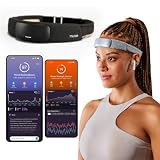
- Deep Sleep Boost – Newest feature designed to detect slow-wave sleep and sustain it longer for a more continuous deep sleep, supporting better physical and mental recovery. It complements the Sleep Assist feature that helps you fall asleep faster.
- Longer Focus, Less Stress, More Calm – Muse S Athena is a smart brain-sensing headband designed to help you better understand your brain so you can improve focus, calm your busy mind, and develop a stronger mental fitness foundation.
- Ready to use immediately — get advanced EEG + fNIRS tracking for sleep, focus, and recovery; optional Premium subscription adds AI Coach, deeper brain insights, and access to 500+ meditations.
- Wearable EEG and fNIRS Biofeedback — Put on the soft, adjustable headband and position the sensors to make skin contact. Connect to the Muse app via Bluetooth, select a meditation, sleep or brain training experience, and begin to focus, relax or unwind.
- Safe & Trusted — Built on years of scientific validation, Muse is trusted by neuroscientists, researchers and wellness professionals. Our award-winning SmartSense EEG sensors combined with new fNIRS technology brings the most advanced Muse experience yet.
That creates risks beyond an inaccurate reading. A false positive could label an alert worker fatigued; a false negative could miss fatigue and create unjustified confidence. A signal associated with mind-wandering could be mistaken for poor performance, and workers might adapt their behavior to the metric rather than the work. Models can also lose accuracy when tasks, equipment, demographics or environments change. If neural data or derived inferences are retained, they could be exposed in a breach or used for a purpose the worker never expected.
Farahany’s broader framework, also developed in her book The Battle for Your Brain, connects these concerns to cognitive liberty: protecting people’s ability to think freely without unjustified intrusion or pressure.
Independent reader supportYour contribution helps us test, update, and keep practical guides available for everyone.What legal protections exist
There is no single comprehensive U.S. federal “neurorights” framework established by the sources cited here. Depending on jurisdiction and circumstances, relevant protections may come from state privacy laws, biometric-data statutes, disability-discrimination law, employment and workplace-surveillance rules, consumer-protection law, contracts or confidentiality obligations. Which rules apply can depend on what data is collected, how it is used, who collects it and whether the system is used to make an employment decision.
Colorado is an important example in debate over privacy protections for neural data, but the exact statutory language and scope matter. Farahany has criticized limiting protection to neural data used for identification when systems may also infer mental states; see her discussion of Colorado’s approach. California materials likewise show policy concern about workplace brain-computer interfaces and mental privacy, but legislative materials alone do not establish the law currently in force. Consult the applicable jurisdiction’s current law or a qualified employment/privacy lawyer before relying on a general description.
Rank #4

- Deep Sleep Boost – Newest feature designed to detect slow-wave sleep and sustain it longer for a more continuous deep sleep, supporting better physical and mental recovery. It complements the Sleep Assist feature that helps you fall asleep faster.
- Longer Focus, Less Stress, More Calm – Muse S Athena is a smart brain-sensing headband designed to help you better understand your brain so you can improve focus, calm your busy mind, and develop a stronger mental fitness foundation.
- Ready to use immediately — get advanced EEG + fNIRS tracking for sleep, focus, and recovery; optional Premium subscription adds AI Coach, deeper brain insights, and access to 500+ meditations.
- Wearable EEG and fNIRS Biofeedback — Put on the soft, adjustable headband and position the sensors to make skin contact. Connect to the Muse app via Bluetooth, select a meditation, sleep or brain training experience, and begin to focus, relax or unwind.
- Safe & Trusted — Built on years of scientific validation, Muse is trusted by neuroscientists, researchers and wellness professionals. Our award-winning SmartSense EEG sensors combined with new fNIRS technology brings the most advanced Muse experience yet.
Questions to ask before wearing a workplace device
Workers and representatives can request clear, written answers before a system is introduced:
- What signals are collected, and what specific inferences or scores are generated?
- Is the device intended for a narrowly defined safety or accessibility purpose, or will its output inform productivity assessments?
- Who can see the raw signal, score and associated records? Does the vendor receive or use the data?
- Is raw neural data retained? If so, for how long, why, and how can it be deleted?
- Can the information be used for discipline, hiring, compensation, scheduling or promotion?
- Is participation genuinely optional, with no penalty for declining or stopping?
- How can a worker inspect or challenge a result believed to be wrong, and who reviews an adverse decision?
- What happens to the data after employment ends, and what security measures protect it?
What responsible deployment would require
For a specific use to be defensible, an employer should show that it addresses a real safety or accessibility need and that less intrusive measures are inadequate. A device’s availability is not enough. The employer should establish that the system is validated for the actual task and workforce, disclose its limits, and check for errors or disparate effects involving disability, age, medication, neurological conditions or other relevant differences.
Safeguards should include a narrowly defined purpose, collection of only what that purpose requires, minimal retention, strong security and a genuine nonparticipation route where feasible. Safety information should not quietly become a generalized productivity score. Workers should have representation in deployment decisions, access to meaningful explanations and a way to challenge adverse outcomes; managers should not impose consequential penalties based solely on a probabilistic score.
The appropriate decision may be not to deploy a system at all when its safety or accessibility benefit is unclear, less invasive alternatives exist, or the employer cannot prevent repurposing. A benefit to the organization does not automatically outweigh the costs to worker privacy and autonomy.
Quick Recap
Product prices and availability are accurate as of the date/time indicated and are subject to change. Any price and availability information displayed on Amazon at the time of purchase will apply.



