Free tools Windows power users keep installed
One-click scans. No signup required.
Some links on this page are affiliate links: if you buy through them we may earn a commission, at no extra cost to you.
Buying a server in 2026 can mean higher component costs, less predictable quotes and tighter availability—but the pressure is much greater for GPU and AI systems than for ordinary CPU servers. The safest approach is not to buy everything immediately. Define the workload, purchase the minimum configuration that meets a real need, confirm delivery and price terms in writing, and keep a fallback such as cloud capacity, refurbished equipment or a staged rollout.
Why server buying is harder in 2026
AI infrastructure demand is competing for more than accelerators. GPU systems also need high-bandwidth memory, DDR5, enterprise flash, fast networking, high-capacity power supplies and specialized cooling. Large cloud and data-center buyers can also draw supply toward large deployments. IDC reported that worldwide server spending rose 30.7% year over year in the first quarter of 2026, primarily because of GPU-server deployment, while also describing memory and NAND constraints affecting non-accelerated servers. IDC’s server market update is a useful snapshot, not a guarantee that every model or region is equally constrained.
Even a conventional CPU server can be delayed or repriced if its memory or SSD configuration is hard to source. AMD described higher prices and supply constraints affecting server memory from late 2025, linking them to manufacturers prioritizing DDR5 and HBM production for AI data centers. AMD’s discussion of the server memory market is relevant context, though individual quotes still depend on configuration, location and date. Dell has also described AI-driven pressure on enterprise flash availability and pricing. Dell’s storage commentary does not establish a universal price increase for every drive.
Outdated Drivers Are Slowing You Down
One free scan finds every outdated or missing driver and matches the right update for your exact hardware.Free scan · exact hardware matchPC Slower Than It Used to Be?
A free scan shows the junk files, broken settings and background clutter dragging Windows down - then fixes them in one click.Free scan · Windows 10 & 11Quotes and ship dates deserve extra scrutiny. ServeTheHome reports that prices and lead times have become less favorable and that obtaining quotes valid for 30 days can be difficult. Its 2026 buyer’s guide is a market observation, not a promise that any particular supplier will quote or deliver on a given schedule.
#1 Best Overall

- HP ProLiant DL360 G7 Business Server, the perfect enterprise server or small business server!
- Processors: Dual (2) Xeon X5675 6-Core 3.06 GHz 12MB CPUs Max Turbo 3.46 GHz
- Memory: 72GB (4 x 16GB) DDR3 PC3-10600R Memory; Storage: 3.6TB (4 x 900GB) 10K 12Gb/s SAS 2.5" HDDs
- Power: Redundant Power Supplies; RAID: HP Smart Array P410i-a 12Gb/s with 4×GigaBit NIC
- Hard drives and memory upgrades included separately NOT installed, installation required.
Different server categories, different risks
- General-purpose CPU servers: Often more straightforward to source than GPU platforms, but memory, storage, support and delivery can still affect cost and timing.
- High-memory servers: May depend on particular DIMM capacities and population rules; changing memory configurations can affect performance as well as availability.
- Storage servers: Need drive capacity, endurance, controller compatibility and usable-capacity planning—not just a large raw-terabyte number.
- GPU/AI systems: Require validated accelerators, chassis, interconnects, power, cooling, firmware and software compatibility. A GPU server is not simply a standard server with a card added.
- Rack and networking infrastructure: Rails, optics, cabling, power distribution and cooling can hold up deployment even when the server itself arrives.
Buy, wait, rent or stage?
There is no sound blanket rule to buy now or wait for prices to fall. Use urgency, workload certainty and facility readiness to make the decision.
| Choice | It makes sense when… | Watch out for… |
|---|---|---|
| Buy now | The current system is failing or out of warranty, capacity is already constrained, the workload and specification are known, or on-premises control is necessary. Favor a supplier that can confirm a credible date and price terms. | Buying excess capacity or unvalidated GPUs simply because a quote is available. |
| Wait | The workload has not been measured, the AI use case is speculative, or the proposed configuration depends on an unverified substitution. | Missing a project deadline, extending risk on aging hardware or paying for temporary capacity longer than expected. |
| Rent temporarily | You need a short-term bridge, a burst of capacity or time to validate an uncertain workload. Cloud or hosted capacity may avoid a rushed purchase. | Compute is only part of the bill: include storage, networking, data egress, support, licensing and commitment terms. |
| Stage the purchase | Core CPU, storage or network capacity is urgent but expansion is optional, or the application can scale horizontally. | Confirm that the first phase works on its own and that later nodes will be compatible; do not assume future pricing is locked. |
A practical middle ground is to buy the validated minimum needed for the next planning horizon, with an expansion path. For example, deploy the required compute and storage now, then add optional GPU capacity after measuring utilization. Set a decision deadline and an acceptable fallback configuration rather than waiting indefinitely.
Write the specification before asking for quotes
Suppliers cannot produce useful like-for-like quotes if the request is just “a virtualization server” or “an AI box.” Document the workload, site and service expectations first.
Recommended Free Tools
Workload and capacity
- Application, operating system, hypervisor and any required software certifications.
- Virtual-machine count, CPU utilization, peak concurrency and expected growth.
- Memory working set, database cache needs and spare capacity after a host failure.
- Storage usable capacity, read/write mix, latency target and I/O requirements.
- Network throughput, number and speed of ports, and required transceivers.
- Availability target, maintenance windows, backup, replication and disaster-recovery requirements.
- For AI: exact accelerator, VRAM/HBM, model size, batch size, context length, training or inference workload, framework and software stack.
Site, power and support
- Rack or tower form factor, rack units, depth, rail compatibility, equipment weight and floor-loading limits.
- Available voltage, phase, breaker capacity, plug type and power-distribution connections.
- Cooling capacity, airflow or liquid-cooling needs, and noise limits.
- Remote-management features, secure boot, TPM, firmware and driver support.
- Warranty term, on-site response time, parts replacement SLA, support escalation and end-of-support date.
- Drive retention or data-destruction services, software subscriptions and management-tool charges.
Major OEM portfolios span ordinary compute through specialized AI platforms, so compare the actual configuration rather than a product-family label. HPE’s compute portfolio illustrates the range of platforms and capabilities; it is not a substitute for checking a specific system’s supported configuration.
Rank #2
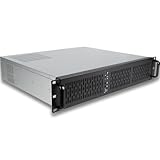
- [CPU] AMD Ryzen 7 5700G Processor (8 Cores, 16 Threads, 3.8 GHz Base Clock Speed up to 4.6 GHz Max Boost Clock Speed) for Gaming and Content Creation with 7nm Leading Edge Technology | [STORAGE] 2TB PCIe NVMe M.2 SSD - Experience Hyper-Fast Bootup and Data Transfer thats up to 30x Faster Performance than a Traditional Hard Drive.
- Graphics: Integrated AMD Radeon Graphics | [RAM] 32GB DDR4 RAM 3200 Gaming Memory for Seamless Multitasking from Multiple Web Pages to Playing Games Online Simultaneously | [OS] Windows 11 Pro x64
- 2x 3.5" Drive Bays | 4x Expansion Slots | mATX Motherboard | ATX PSU
- [BUY WITH CONFIDENCE] Empowered PCs are Assembled in the USA, Rigorously Stress-Tested Before Shipping, and Supported with Lifetime Technical and Diagnostic Support and 3-Year Limited Hardware Warranty.
Size the components for the workload
CPU: compare platforms, not logos
AMD EPYC and Intel Xeon platforms can both be appropriate. Compare core count and per-core performance, memory channels and capacity, PCIe lanes, NIC and storage compatibility, virtualization features, power and cooling, software certification, vendor support and workload benchmarks. Dell’s current AI server listings include both Intel Xeon 6 and AMD EPYC 9005 options, illustrating why brand alone does not settle the choice. Check the current Dell configurations and ask vendors to benchmark your application or a representative workload. Do not assume one processor brand is always faster or cheaper.
Memory: avoid both shortfalls and reflexive overbuying
For a general-purpose server, estimate working-set memory, hypervisor and guest overhead, application cache, three-year growth and the headroom needed during maintenance or failure. In a virtualization cluster, model N+1 or N+2 capacity: can the remaining hosts run critical workloads if a node is down? Account for management appliances and the chosen platform’s memory-population rules. Do not size only for normal operation if workloads must survive a host failure.
For AI, system RAM and accelerator VRAM/HBM are separate constraints. More host memory does not make a model fit in insufficient GPU memory. Specify the model, batch size, context length, quantization, training or inference needs and CPU-to-GPU data movement before selecting an accelerator. Buy memory to a measured need and a defined growth plan, especially in a market where DDR5 supply and pricing are under pressure.
The Tool Desk
Outbyte Driver Updater FREEScan for outdated or missing drivers - takes under a minuteDriver Scan →Outbyte PC Repair FREEClear out junk files and repair common Windows errorsFree Scan →Storage: specify performance and endurance, not just terabytes
Compare usable versus raw capacity; NVMe, SAS or SATA; random and sequential I/O; latency; read/write ratio; endurance (such as DWPD or TBW where applicable); RAID or erasure coding; controller cache protection; hot-swap requirements; replication; backup; encryption and secure erase. Ask whether drives are vendor-branded, firmware-locked or supported only under a particular warranty.
Rank #3

- Dell PowerEdge R730xd 24B SFF 2U Server
- 2x Intel Xeon E5-2690 v4 2.6Ghz 14-Core (28-cores Total)
- 128GB DDR4 RAM – 4x 1.2TB 10K SAS 2.5” 12Gb/s
- Dell H730P mini 2GB 12Gb/s RAID
- 2x 750W PSU - 2x 10Gb SFP+ 2x 1Gb (RJ45) NIC
- Do not fill every bay on day one unless the capacity is needed. Ensure the controller, backplane and network can support a planned expansion.
- Use lower-cost high-capacity HDDs for archival or backup tiers when latency permits.
- Avoid consumer SSDs in write-heavy mission-critical systems unless the server vendor explicitly supports the drive and the workload.
- Require exact drive models or written minimums for interface, capacity, endurance, performance class, firmware and support.
GPU servers: validate the whole system
Before buying, confirm the exact accelerator model and memory, number of GPUs, GPU-to-GPU interconnect, host PCIe topology, supported drivers and CUDA or ROCm versions, sustained power draw, cooling method, rack power and thermal requirements, replacement availability and vendor validation for your framework. Check that the workload keeps the GPU busy and that the model fits in its memory. Dell lists systems with different GPU choices and workloads, while HPE’s compute portfolio spans conventional systems and specialized accelerator platforms; neither broad catalog proves live inventory in your region.
Run a pilot before making an expensive, long-lived commitment. Depending on the workload, that could mean renting a cloud GPU, testing a workstation-class accelerator, using hosted inference or evaluating a smaller local system. Measure throughput, latency, utilization and memory use. Compare on-premises and cloud costs using your own utilization assumptions; Lenovo’s 2026 TCO analysis offers a configuration-specific starting point, not a universal break-even result. Do not buy a GPU server just because one can be quoted.
Choose a supplier model that fits your operations
| Option | Often suits | Trade-offs to price in |
|---|---|---|
| Dell, HPE or Lenovo | Organizations needing formal support, validated firmware, lifecycle tools, on-site service or established enterprise procurement. | Compare support, management subscriptions, renewal costs and vendor-specific parts as well as hardware price. Configurations and actual quotes vary. |
| Supermicro, ASUS, ASRock Rack or other channel systems | Specialized, GPU-dense or cost-sensitive deployments with in-house hardware expertise or a capable reseller. | Check chassis, rails, firmware, component compatibility, warranty responsibility and escalation path. A lower purchase price can shift integration and troubleshooting work to your team. |
| Used or refurbished | Homelabs, development, test, backup targets and other non-critical or temporary uses. | Verify support status, drive wear, firmware, power use, noise, missing parts, return terms and replacement availability. |
| Cloud or hosted infrastructure | Bursty or short-lived work, AI validation, geographic reach, temporary capacity, or teams without suitable data-center space. | Costs vary with region, instance, utilization, storage, egress, support and commitments; GPU availability can also vary. Data residency or compliance may rule out some options. |
For a refurbished system, request the exact configuration, serial-number verification, drive-health report, memory-test results, burn-in evidence, warranty and return period. Confirm that management-controller credentials can be reset and that rails, caddies, power cables and other needed parts are included. Compare electricity, cooling, rack space and administrator time over the expected life: an older system’s low sticker price can be misleading.
Do these 3 things before closing this tab:
1Scan for outdated or missing drivers - takes under a minute2Clear out junk files and repair common Windows errors3Fix the driver behind crashes, sound loss and screen glitchesIf renting, use the providers’ current pricing tools rather than a generic hourly estimate: AWS EC2 pricing, Azure Virtual Machines pricing and Google Cloud Compute Engine pricing. A fair comparison must include the chosen region and configuration, utilization, storage, network and egress, licensing, support, electricity, staffing and the purchase’s financing and useful life. There is no defensible universal claim that cloud or on-premises is always cheaper.
Rank #4
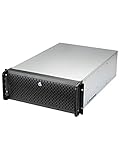
- Spacious Chassis: This huge 4U server case comes with 15 internal 3.5" HDD bays.
- Expandable & E-ATX Compatible: 7 PCI expansion slots and E-ATX compatibility gives you growth options for all of your needs.
- Exceptional Cooling: 8 pre-installed cooling fans provide excellent airflow and heat protection. 3 front 120mm PWM fans, 3 middle 120mm fans and 2 rear 80mm fans ensure your drives and chassis avoid overheating.
- Desired Features: Front panel LED indicators for power, HDD, and LAN status monitoring allow quick, easy visual assessment. Additional utility with 2 USB 3.0 port and built-in front panel lock.
Make quotes comparable—and protect against changes
Send the same bill of materials and requirements to at least two major OEMs and one or two authorized resellers. For non-critical capacity, you can also seek a reputable refurbished quote. Include a cloud or colocation alternative when renting might meet the requirement. Ask each supplier to answer these points in writing:
- Quote expiration date and how long the price is locked after acceptance.
- Estimated ship and delivery dates, and whether they are factory-confirmed or provisional.
- Which line items are backordered or subject to allocation.
- Permitted substitutions, with exact make and model and your approval required before shipment.
- Partial-shipment, cancellation and refund terms.
- Warranty start date, support response terms and support-renewal pricing.
- Delivery, installation, rack-integration, tax, import, software and licensing charges.
- Whether memory or SSD prices can change after acceptance and what happens if one component slips.
Quote validity is not administrative fine print when market pricing is volatile. If a standard configuration is delayed, ask for an alternative using available, validated memory or drives; a quote for both immediate and scheduled delivery; and a written price for later expansion. Ask whether fewer drives or a smaller validated memory configuration can ship sooner, and whether missing parts can be reserved or added later. Get price protection for future nodes if available, but do not assume it. Never accept an “equivalent” component without a model number, compatibility confirmation and written warranty coverage.
Calculate the cost of ownership, not just the chassis price
Before approving a purchase, total the costs over a three- to five-year period appropriate to your organization:
Quick wins for a faster PC:
Fix the driver behind crashes, sound loss and screen glitchesFind Drivers →Clear out junk files and repair common Windows errorsFree Scan →Scan for outdated or missing drivers - takes under a minuteDriver Scan →- Server, memory, drives, accelerators and support or warranty.
- Software, operating system, virtualization, management and licensing—especially any charges tied to core count.
- Rack, rails, installation, power distribution, electricity and cooling upgrades.
- Networking, optics, cabling, backup, replication and spare parts.
- Financing, administrator time, migration, decommissioning and disposal.
For GPU systems, add expected accelerator utilization, sustained power and cooling, interconnects, serving software and failure coverage. Compare performance per watt, per rack unit and per licensed core, as well as raw performance per dollar. A “future-proof” purchase can strand capacity: excess cores may raise licensing costs, oversized memory may be hard to reuse, and a GPU chassis may exceed site power or cooling limits.
Plan for the common failure points
- Memory is missing: Ask whether the base system can ship first, whether a smaller validated DIMM population preserves performance requirements, whether the missing memory can be reserved and priced, and whether expansion preserves warranty coverage. Check memory-channel balance before approving a reduced configuration.
- Drives are substituted: Require the exact model or written specifications for interface, capacity, endurance, performance, firmware and support. “Enterprise NVMe” alone is not enough.
- The server arrives but cannot be installed: Confirm rail fit and rack depth, weight, power connectors and breaker capacity, cooling, transceivers, GPU cables, chassis clearance and firmware before shipping. Site readiness belongs on the purchase checklist.
- A GPU system sits idle: Revisit the pilot data. If the workload does not use the accelerator efficiently, a CPU server, smaller accelerator, cloud rental or hosted service may be a better fit.
- You wait for normalization: Waiting can be costly if support expires, a deadline is fixed, existing equipment is unreliable or migration takes longer than expected. Set a decision deadline and trigger for the fallback plan.
2026 server buyer’s checklist
- Document the workload, usable capacity, performance target, growth and failure headroom.
- Confirm rack, power, cooling, networking and installation readiness.
- Separate required capacity from optional expansion, especially GPUs and excess memory.
- Choose acceptable CPU, memory and storage alternatives before seeking quotes.
- Send the same bill of materials to multiple suppliers and compare full support and delivery terms.
- Get price validity, delivery confidence, substitutions and partial-shipment terms in writing.
- Compare the three- to five-year cost against cloud, colocation, staged or refurbished alternatives where appropriate.
- Set a latest acceptable delivery date, maximum budget and temporary-capacity fallback.
- Before shipment, verify every substituted part and complete the site-readiness check.
Server buying is not equally difficult in every category: GPU platforms face the most specialized constraints, while conventional systems may be affected through memory, flash and quote volatility. The disciplined response is to buy for a measured workload, secure clear commercial terms and keep a workable fallback—not to overbuy on a forecast.
Quick Recap
Product prices and availability are accurate as of the date/time indicated and are subject to change. Any price and availability information displayed on Amazon at the time of purchase will apply.



