Free tools Windows power users keep installed
One-click scans. No signup required.
Some links on this page are affiliate links: if you buy through them we may earn a commission, at no extra cost to you.
Bridgetown Research announced a $19 million Series A on February 26, 2025. The Seattle startup says its AI-agent platform can gather web and proprietary data, interview experts and customers by voice, analyze the results, and produce research for investment, M&A, consulting, and corporate strategy teams.
The funding round was co-led by Accel and Lightspeed, with participation from an unnamed leading research university. It was announced in 2025—not as a newly verified 2026 financing event.
| # | Preview | Product | Price | |
|---|---|---|---|---|
| 1 |
|
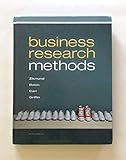
Business Research Methods (with Qualtrics Printed Access Card) | $149.00 | Buy on Amazon |
| 2 |
|
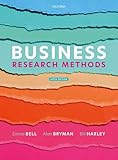
Business Research Methods | $75.78 | Buy on Amazon |
| 3 |

|
Business Research Methods ISE | $67.00 | Buy on Amazon |
| 4 |

|
Management and Business Research | $79.38 | Buy on Amazon |
| 5 |

|
Research Methods For Business Students | $73.32 | Buy on Amazon |
What Bridgetown Research does
Bridgetown is positioning itself as an AI decision-research platform rather than a general-purpose chatbot or simple web-search tool. Its customers can use the platform for commercial due diligence, investment research, market intelligence, customer and employee interviews, transformation projects, and strategic analysis.
The company says its agents can conduct expert calls, collect secondary information, perform more than 300 common analyses, and turn the results into interactive reports or polished narratives. The intended buyer is an organization making high-value decisions—not an individual looking for a quick answer to a public-web question.
#1 Best Overall
Bridgetown’s website identifies private-equity and venture-capital firms, professional-services organizations, and corporate teams as its main customer groups.
How the AI-agent workflow works
The platform’s pitch combines several research functions that are often handled separately:
- Information gathering: Agents crawl the web and collect secondary research, work with expert networks, recruit or contact participants, and conduct voice interviews. The company also describes customer, employee, and other proprietary-data collection.
- Analysis: Analysis agents organize responses and combine multiple data sources. TechCrunch reported that the system uses large language models alongside tools such as clustering and regression.
- Outputs: Output agents summarize findings and generate presentations, interactive reports, and other decision materials. Bridgetown says users can trace conclusions back to source information.
That workflow matters because many conventional research projects require desk research, expert-network recruitment, interviews, data cleaning, modeling, synthesis, and presentation work. Bridgetown’s argument is that recurring combinations of those tasks can be automated without removing human judgment from the final decision.
The Tool Desk
Outbyte PC Repair FREEClear out junk files and repair common Windows errorsFree Scan →Outbyte Driver Updater FREEFix the driver behind crashes, sound loss and screen glitchesFind Drivers →Why investors and strategy teams may care
Private equity and venture capital
Potential applications include deal sourcing, initial market studies, commercial due diligence, investment-thesis research, value-creation planning, and identifying possible acquisition targets.
Consulting and professional services
Consulting firms can use the platform for project ramp-up, large-scale customer or expert interviews, automated analysis, interactive reports, white-label client environments, and reusable research repositories.
Rank #2
Corporate strategy and business development
Corporate teams may use it for market intelligence, product and vendor research, customer research, M&A analysis, transformation initiatives, process diagnostics, recurring reports, and strategic narratives.
How fast is it?
Bridgetown said initial private-equity deal-screening analysis could be completed in 24 hours instead of weeks. The company also said voice-of-customer projects could reach hundreds of respondents in parallel and finish within days.
Those figures are company-reported claims, not independently audited benchmarks. They describe the potential speed of an initial research workflow, not a guarantee that every diligence project will be completed in 24 hours or that the resulting conclusions will be investment-ready without review.
Customers, revenue, and pricing
At the time of the funding announcement, TechCrunch reported that Bridgetown had two U.K. customers and roughly a dozen U.S. customers, including funds, consulting firms, and large corporations. Those figures are time-bound to the February 2025 coverage.
GeekWire reported that the company had reached a few million dollars in revenue within four months of launching its product. It described a model combining annual platform fees, variable usage fees, and pay-per-report options. Bridgetown’s public website does not list self-serve pricing and directs prospective customers toward a demo or consultation.
Rank #3
- Business Research Methods, 14e
- Business Research Methods 14th Edition by Pamela S. Schindler
The company also said it enabled more than $10 of advisory and information-services revenue for every $1 of Bridgetown revenue. That is a company-reported economic claim, not independently verified evidence of customer return on investment.
Funding details and company background
The $19 million Series A was announced on February 26, 2025, and co-led by Accel and Lightspeed. An unnamed leading research university also participated, according to the official announcement.
Bridgetown said it planned to use the capital to broaden its range of analyses, strengthen research and development, and deepen industry partnerships.
Harsh Sahai is the co-founder and chief executive. The official announcement describes him as a former Amazon machine-learning leader who later worked in strategy at McKinsey. Coverage differs on the exact founding year: TechCrunch described the company as co-founded in December 2023, while other reporting places its formation in 2023 or 2024. The safest description is that Bridgetown was formed around 2023–24.
GeekWire also identified Sequoia Capital as a backer. The official Series A announcement does not list Sequoia as a participant in that round, so its role should not be treated as confirmed Series A participation.
Rank #4
What makes Bridgetown different from ordinary AI research tools?
The central distinction is the company’s emphasis on primary-data collection. Many AI research products mainly retrieve and summarize existing documents. Bridgetown says its agents can additionally recruit or contact experts, conduct voice interviews, run customer or employee interviews at scale, combine those responses with secondary research, and apply structured analysis to the resulting dataset.
That does not mean Bridgetown is proven to be the only platform with this capability. Mako AI and DiligentIQ were identified by TechCrunch as companies in the broader AI-supported diligence market. Bridgetown’s claimed differentiation is the combination of collection, interviewing, analysis, and reporting in one workflow.
The trust and verification problem
Research for an investment or strategic decision requires more than a fluent report. Bridgetown says its approach emphasizes steerability, recorded expert conversations, multiple data sources, reviewable source material, and traceability from conclusions back to evidence. The company’s current website also describes the platform as SOC 2 compliant and says users can control data-gathering and analysis workflows.
Those safeguards address important concerns, but they do not prove that a conclusion is correct. A serious buyer should ask:
Do these 3 things before closing this tab:
1Clear out junk files and repair common Windows errors2Fix the driver behind crashes, sound loss and screen glitches3Repair Windows errors before they cause bigger problems- How are experts and respondents verified?
- How are duplicate, coordinated, synthetic, or low-quality responses detected?
- Are participants compensated, and who pays them?
- How are conflicts of interest disclosed?
- Can users inspect raw transcripts, recordings, and source documents?
- Does the system distinguish facts, opinions, inferences, and model-generated interpretations?
- How are confidential materials isolated, retained, deleted, and exported?
- How are privacy and recording-consent rules handled in different jurisdictions?
- What human review is required before a report informs an investment decision?
- How does the company measure hallucinations, sampling bias, and false confidence?
TechCrunch specifically raised the risk of hallucinations and reported Bridgetown’s response that customers can trace the agents’ steps and review recorded conversations. That improves auditability, but an audit trail shows what the system used; it does not by itself establish that the sampling, statistical interpretation, or recommendation is sound.
Best Value
- Chapters cover the entire research process from choosing your topic, through critically reviewing the literature, understanding philosophies, research design, access and ethics, secondary data, data collection and analysis to writing about and presenting your research
- Within chapter boxes focus on…. research in the news, student research and management research; providing topical, up to date examples of research methods in use
- Within chapter checklists offer further focussed guidance
- End of chapter cases explore issues associated with undertaking research
- End of chapter progressing your research boxes, support your reflection and enable you to generate the material you will need for your research project
When the platform may be a good fit
- A PE or VC team needs rapid initial screening across many companies.
- A consulting firm needs dozens or hundreds of expert or customer interviews.
- A corporate strategy team needs recurring market intelligence.
- A professional-services firm wants a white-label research workflow.
- The buyer values primary research and structured analysis rather than web summaries.
- The project has enough economic value to justify enterprise software and research costs.
When it may be a poor fit
- The work requires legally privileged advice or regulated investment advice.
- The evidence base is too sensitive to expose to an automated interviewing system.
- The decision depends on a small number of irreplaceable experts rather than broader sampling.
- The organization cannot permit third-party processing of confidential information.
- A simple public-web question can be answered adequately with ordinary search or general-purpose AI.
- The buyer expects an autonomous, error-free investment recommendation.
The trade-offs buyers should understand
Speed versus validation: Faster collection can expand the research funnel, but it does not replace verification or judgment.
Scale versus signal quality: Hundreds of interviews may reveal patterns, but they can also amplify poor questions, selection bias, repeated answers, incentives, or dominant narratives.
Auditability versus explainability: Source documents and transcripts make a workflow more reviewable, but they do not guarantee that the analytical method is appropriate.
Software savings versus implementation cost: Buyers still need to budget for workflow design, respondent or expert costs, security review, human quality control, integrations, training, and change management.
What the $19 million bet means
Accel and Lightspeed are backing the idea that high-value business research can become a repeatable software workflow rather than a mostly manual consulting process. Bridgetown is not simply asking an AI model to write a report. Its model depends on an operating system of agents, expert and respondent access, source data, analytical frameworks, and client review.
The commercial opportunity will depend on whether customers trust that system for consequential decisions. The key test is not just whether Bridgetown can produce a report quickly, but whether its primary data is representative, its conclusions are reproducible, its sources are auditable, and its controls are strong enough for confidential investment and strategy work.
For buyers evaluating Bridgetown or similar platforms, the most useful questions concern data security, respondent quality, transcript and raw-data access, audit trails, human-review controls, integrations, export rights, and the economics of annual contracts versus per-project usage.
Recommended Free Tools
Quick Recap
Product prices and availability are accurate as of the date/time indicated and are subject to change. Any price and availability information displayed on Amazon at the time of purchase will apply.



