Some links on this page are affiliate links: if you buy through them we may earn a commission, at no extra cost to you.
For most biotechnology students, the best laptop is a portable Windows or Mac computer with 16GB RAM and a 512GB SSD; 24GB or 32GB RAM and 1TB storage are better if you expect to analyze data locally. You usually do not need a gaming laptop or a powerful graphics card: large sequencing, simulation, and machine-learning jobs are often better run on a university cluster or remote workstation. Before buying, check your department’s exam software and required applications—compatibility can matter more than a brand or processor tier.
Quick recommendations
| Student profile | Good starting point | Why | Main caveat |
|---|---|---|---|
| Most biotechnology undergraduates | MacBook Air M5 with 24GB memory and 512GB or 1TB storage, or a comparable Windows ultrabook with 16GB RAM and a 512GB SSD | Portable for classes; capable of coursework, coding, and remote computing | Check exam and course-software compatibility first |
| Windows/Linux flexibility | ThinkPad T14-class system with 32GB RAM and a 1TB NVMe SSD | Good fit for Windows applications, WSL2, Linux workflows, and HPC access | Memory layout and upgradeability vary by exact configuration |
| Tight budget, heavy work remote | Modern Ryzen 5/Core 5-class Windows laptop with 16GB RAM and 512GB SSD | Enough for coursework and remote cluster sessions without paying for unused GPU power | Prefer upgradeable RAM; prices and configurations vary |
| Local computational biology | Windows/Linux laptop with 32–64GB RAM and 1TB or more storage | More room for containers, notebooks, and larger datasets | A discrete GPU is not automatically needed |
| Local deep learning or GPU simulation | NVIDIA-equipped performance laptop with 32–64GB RAM and at least 16GB GPU VRAM for demanding workloads | CUDA and VRAM can matter for particular local models and simulations | Cost, weight, heat, and short battery life; confirm the workload before buying |
These are workload-based recommendations, not universal course requirements. A product family can be sold with different processors, screens, memory, and storage; compare the exact configuration, not just the model name.

What a biotechnology student’s laptop actually has to do
Most students use a laptop for documents, spreadsheets, presentations, PDFs, video calls, literature searches, reference management, learning platforms, and online exams. Depending on the program, they may also use MATLAB, R, Python, Jupyter notebooks, statistical software such as GraphPad Prism, plotting tools, image analysis, and molecular visualization programs such as PyMOL or ChimeraX.
The Tool Desk
Outbyte PC Repair FREERepair Windows errors before they cause bigger problemsFix Now →Outbyte Driver Updater FREEScan for outdated or missing drivers - takes under a minuteDriver Scan →Bioinformatics coursework can add command-line tools and environments: BLAST, sequence-analysis utilities, R/Bioconductor, Python scientific libraries, Snakemake or Nextflow, Conda/Mamba, Docker, SSH, and remote Linux servers. These tasks can be modest or demanding depending on dataset size and the number of tools running at once.
#1 Best Overall

- 【Intel Celeron Processor】Powered by the Intel Celeron processor (Beat i3), this HP laptop delivers reliable performance for your everyday needs. Smoothly handle web browsing, document editing, and video streaming, making it a perfect home office laptop and a good laptop for college students.
- 【14 inch Display】Enjoy a maximized view on the 14 inch HD display. The innovative Micro-edge design minimizes the bezel for an ultra-wide viewing experience, ideal for online learning, reviewing documents, or watching movies.
- 【RAM & Storage upgradable】Upgraded to 8GB high-bandwidth DDR4 Memory, Adequate high-bandwidth RAM to smoothly run multiple applications and browser tabs all at once. 【Ports】1 x USB 3.1 Type-C ports, 2 x USB 3.1 Type-A ports, 1 x HDMI, 1 x Headphone/Microphone Combo Jack, and there's a microSD slot. Ghost Manta SD card.
- 【Immersive & Portable】Designed to be ultra-thin and lightweight, this HP laptop is your go-to portable laptop for work and school. It easily slips into a backpack, so you can study at the library or work from your favorite coffee shop without any hassle.
- 【Ultimate Student&Daily Notebook 】 This is the cheap laptop for everyday use you've been looking for. A trusted student laptop for classes and a reliable home office laptop for remote work, it combines essential features, HP quality, and exceptional value into one versatile machine.
That distinction is important. Learning to analyze a small dataset locally is not the same as assembling many genomes, processing a large single-cell cohort, running a long molecular-dynamics simulation, or training a model. Those larger jobs often belong on institutional high-performance computing (HPC), a cloud service, or a remote workstation. Queen Mary University of London’s bioinformatics guidance, for example, describes laptop limits for some Linux-only work and the use of remote HPC resources (QMUL bioinformatics laptop guidance).
Specifications: minimum, recommended, and heavy use
| Part | Minimum sensible new purchase | Recommended for most | Heavy local work |
|---|---|---|---|
| Processor | Recent Intel Core 5, AMD Ryzen 5, or Apple M-series | Recent Core Ultra 5/7, Ryzen 5/7, or Apple M-series; prioritize a balanced configuration | Higher-performance processor with adequate cooling for sustained workloads |
| Memory | 16GB | 24GB on a non-upgradeable system, or 32GB for local data work | 64GB or more only for large in-memory data, multiple VMs/containers, or specialized research |
| Storage | 512GB SSD | 1TB SSD | 2TB or more if substantial active datasets must be local |
| Graphics | Integrated graphics | Integrated graphics for most coursework and remote HPC | NVIDIA GPU for confirmed CUDA, local deep-learning, or GPU-accelerated workloads |
| Display | Full HD or better | 14–16 inches, based on portability versus workspace | External monitor may be more comfortable than carrying a larger laptop |
| Connectivity | Reliable Wi-Fi and USB ports | Wi-Fi 6 or better, USB-C, and a hub if needed | Check ports for lab peripherals and external storage |
Memory: 16GB is a floor, not a promise of future-proofing
For Office, browsing, introductory R and Python, basic notebooks, MATLAB coursework, and SSH access to a cluster, 16GB is a sensible baseline. Several biomedical-program recommendations use 16GB as a target, including TTUHSC’s 2026–2027 guidance and Drexel’s recommendations.
Choose 24GB or 32GB if you can afford it and plan to keep the machine for years, especially if memory is soldered. More RAM helps when a browser, RStudio, Jupyter, Docker, and data-heavy applications are open together. Consider 64GB or more only when a known workflow needs it—such as large assemblies, large single-cell objects, several virtual machines, or local machine learning. More memory does not make every analysis faster, and it cannot fix an incompatible operating system or a storage bottleneck.
Do these 3 things before closing this tab:
1Clear out junk files and repair common Windows errors2Scan for outdated or missing drivers - takes under a minute3Repair Windows errors before they cause bigger problemsMATLAB’s published requirements illustrate why minimums should not be mistaken for buying advice: MATLAB R2026a lists 8GB RAM minimum and 16GB recommended for Windows. The same page recommends a four-logical-core processor with AVX2 and an SSD. A software minimum means the program may run under stated conditions; it does not describe comfortable multitasking for a degree.
Storage: 512GB works; 1TB is more comfortable
A 512GB SSD is a reasonable minimum for the operating system, applications, course files, and some local data. One terabyte is a better target if the budget allows. FASTQ reads, BAM/CRAM alignment files, reference indexes, virtual machines, and container images can use storage quickly. A 2TB drive can make sense when you regularly keep large active datasets on the laptop, but it is not a substitute for backups or approved research storage.
Use university or institutional storage and HPC file systems for project archives when available. Keep only the working data you need locally, and maintain a separate backup. A laptop should not be the only copy of important research files.
Processor and graphics: buy for the workload, not the label
A recent mainstream processor is enough for most student work. A midrange CPU paired with 16GB or 32GB RAM and a decent SSD is often a better buy than a premium processor paired with 8GB. Core count helps some parallel pipelines, but many tasks are limited by single-core speed, memory, disk activity, or software design.
What’s actually slowing this PC down?
Pick the symptom - the matching free tool is one click away.
Rank #2
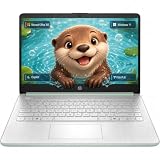
- Efficient Intel Processor N150 delivers reliable performance for everyday computing tasks including web browsing, document editing, video streaming, and multitasking. 4GB DDR4 RAM ensures smooth operation when running multiple applications simultaneously. Perfect for students, home users, and professionals who need dependable performance for productivity work, online learning, video conferencing, and entertainment without lag or slowdowns.
- 128GB UFS storage provides fast boot times and quick application loading while offering ample space for documents, photos, videos, and essential software. Includes one-year subscription to Microsoft Office 365 Personal with Word, Excel, PowerPoint, Outlook, and 1TB OneDrive cloud storage—everything you need to create professional documents, spreadsheets, presentations, and manage email right out of the box.
- 14" HD (1366 x 768) anti-glare display delivers clear, comfortable viewing for extended work sessions with reduced eye strain. Narrow bezels maximize screen real estate for immersive content consumption. Integrated Intel UHD Graphics handles everyday visual tasks, HD video playback, and light photo editing. Ideal screen size balances portability with productivity—large enough for comfortable multitasking yet compact enough to carry anywhere.
- Comprehensive connectivity includes Wi-Fi 6 (802.11ax) for faster wireless speeds and improved network efficiency, Bluetooth 5.0 for wireless peripherals, USB-C port for modern accessories and fast data transfer, USB 3.2 ports, HDMI output for external displays or projectors, and 3.5mm audio jack. HD webcam with integrated microphone enables crystal-clear video calls for remote work, online classes, and staying connected with family and friends.
- Windows 11 Home operating system provides intuitive interface with enhanced productivity features, improved security, and seamless integration with Microsoft services. Full-size keyboard with numeric keypad for efficient data entry. Lightweight and portable design makes it easy to work from anywhere—home, office, classroom, or coffee shop. Long battery life supports all-day productivity. Backed by HP’s quality and reliability with customer support available.
Integrated graphics are normally sufficient for documents, R/Python, MATLAB coursework, plotting, basic molecular visualization, and remote HPC. A discrete GPU is justified when you know you will run local deep learning, CUDA-dependent work, GPU-enabled molecular dynamics, or demanding 3D visualization. For these jobs, the GPU’s video memory (VRAM) matters: 8GB can be restrictive for some serious structural-biology models, while 16GB is a more defensible starting target and 24GB offers more headroom. These are workload-oriented guidance points, not universal software requirements. If your university cluster provides GPUs, a portable laptop plus remote access may be more practical than carrying a GPU workstation.
Which operating system should you choose?
Windows: the safest default when course requirements are unclear
Windows is a strong choice when a program relies on Windows-only applications, lab-instrument drivers, or proctoring software. It also supports Windows Subsystem for Linux (WSL2), which can provide a Linux command-line environment for many development tasks. WSL2 and containers use memory, so 16GB can feel constrained during heavier multitasking; 32GB is more comfortable for regular local development.
Do not assume every Windows laptop has the same compatibility. Windows on ARM systems can run some software through emulation, but compatibility varies. MathWorks notes that Windows on ARM runs MATLAB through Prism emulation and that some capabilities are unsupported (MATLAB system requirements). If you are considering a Snapdragon machine, ask your department about MATLAB, testing software, containers, and any required scientific applications before buying.
macOS: excellent for portability and remote research, with specific caveats
A MacBook Air is a compelling option for students who value battery life, a light laptop, and a Unix-like terminal for Python, R, Git, SSH, and remote-cluster work. Apple’s current MacBook Air uses the M5 chip and advertises up to 18 hours of battery life; that figure is a manufacturer claim, not a guaranteed result for every student’s workload.
Recommended Free Tools
Apple Silicon is ARM-based. Support for many tools is broad, but not universal: some x86 container images may need emulation; Apptainer/Singularity may require a Linux virtual machine; and CUDA workflows require an NVIDIA platform. MacBook memory is generally not upgradeable, so select enough at purchase. A Mac is not inherently unsuitable for bioinformatics; confirm the specific course software, pipeline, and container requirements.
Linux: a good fit for experienced users, but check institutional support
Linux can match the environment used on many research clusters and offers native command-line tooling. It is a reasonable choice if you are comfortable maintaining your own system and your department supports it. But some universities do not officially support Linux, and exam or commercial software may be unavailable. For example, TTUHSC says Respondus LockDown Browser works with Windows and Mac but not Linux or Chromebook (TTUHSC requirements). A technically capable Linux laptop can still be the wrong academic purchase if it cannot run required exams.
Chromebooks and tablets: useful companions, poor sole computers for many programs
They can be useful for reading, notes, and web-based work, but do not choose one as your only machine unless your department confirms that all required applications and tests work. Drexel notes that Chromebooks are unsupported for its biomedical program because some required applications, including MATLAB, are unavailable (Rank #3



