Recommended Free Tools
Some links on this page are affiliate links: if you buy through them we may earn a commission, at no extra cost to you.
There is no single best internet provider for every US household in 2026. The best choice is the strongest service available at your exact address, at a sustainable total price. In most locations, compare fiber first, cable second, and 5G home internet where its signal and capacity are strong. For rural homes without usable terrestrial broadband, local fixed wireless and satellite may be the practical alternatives.
Availability, upload speed, latency, data policies, equipment fees, promotional pricing, and the regular rate matter more than a national ranking or the biggest advertised download number.
Quick comparison
| Provider or option | Technology | Best for | Important qualification |
|---|---|---|---|
| AT&T Fiber | Fiber | Uploads, remote work, large households | Available only in selected areas; confirm the exact address |
| Verizon Fios | Fiber | Symmetrical speeds and low latency | Fios availability is regional; Verizon also sells separate 5G service |
| GFiber, Frontier Fiber, Quantum Fiber, Brightspeed Fiber, Ziply Fiber, Metronet, Sonic, Ting and local networks | Fiber | Regional fiber value | Coverage and plan terms vary substantially by location |
| Spectrum, Xfinity, Cox, Optimum and regional cable providers | Cable | Broad availability and high download speeds | Compare upload speeds, equipment, data terms and post-promotion pricing |
| Verizon 5G Home | 5G fixed wireless | Simple setup and no annual contract | Performance depends on address, signal and tower capacity |
| T-Mobile Home Internet | 5G fixed wireless | Flexible wireless service | Eligibility is capacity-controlled and speeds can vary |
| Starlink | Low-Earth-orbit satellite | Remote homes without better options | Latency, obstructions, weather, equipment cost and variable capacity matter |
Use the provider links as purchasing starting points, not as proof that a service is available at every address: AT&T, Verizon, T-Mobile, Spectrum, GFiber, Frontier, Quantum Fiber and Starlink.
Best internet by household need
Best overall: the best available fiber plan
Fiber is usually the best starting point because it commonly provides symmetrical or near-symmetrical speeds, low latency and consistent capacity. It is particularly strong for households with simultaneous video calls, cloud backups, large uploads, livestreaming, gaming or many active users.
#1 Best Overall

- DUAL-BAND WIFI 6 ROUTER: Wi-Fi 6(802.11ax) technology achieves faster speeds, greater capacity and reduced network congestion compared to the previous gen. All WiFi routers require a separate modem. Dual-Band WiFi routers do not support the 6 GHz band.
- AX1800: Enjoy smoother and more stable streaming, gaming, downloading with 1.8 Gbps total bandwidth (up to 1200 Mbps on 5 GHz and up to 574 Mbps on 2.4 GHz). Performance varies by conditions, distance to devices, and obstacles such as walls.
- CONNECT MORE DEVICES: Wi-Fi 6 technology communicates more data to more devices simultaneously using revolutionary OFDMA technology
- EXTENSIVE COVERAGE: Achieve the strong, reliable WiFi coverage with Archer AX1800 as it focuses signal strength to your devices far away using Beamforming technology, 4 high-gain antennas and an advanced front-end module (FEM) chipset
- OUR CYBERSECURITY COMMITMENT: TP-Link is a signatory of the U.S. Cybersecurity and Infrastructure Security Agency’s (CISA) Secure-by-Design pledge. This device is designed, built, and maintained, with advanced security as a core requirement.
AT&T says its fiber network offers tiers up to 5 GIG in select areas, equal upload and download speeds, unlimited data and no annual contract. Those are provider-reported features, and actual availability and performance require an address check. See AT&T’s plan details and coverage information.
Do not overlook local electric cooperatives, municipal networks and regional fiber companies. A smaller provider may offer better upload speeds, fewer fees or better local support than a national brand.
Best for uploads and working from home: symmetric fiber
For ordinary video calls, many connections work. The advantage of fiber becomes clearer when work involves large files, VPNs, cloud applications, hosted services or frequent backups. A 500 Mbps fiber plan with 500 Mbps upload capacity can be more useful than a 1,000 Mbps cable plan with a much lower upload speed.
Best cable option: the strongest local cable plan
Cable remains a sensible choice where fiber is unavailable, materially more expensive or locally less reliable. Major options include Spectrum, Xfinity, Cox, Optimum, Astound Broadband, Mediacom, Sparklight, WOW! and Breezeline.
Cable generally offers strong download speeds and broad coverage, but neighborhood capacity can affect peak-hour performance and upload speeds may trail fiber. Spectrum’s referenced service page advertises plans including up to 100 Mbps and 500 Mbps tiers, no data caps and no contracts. Exact speeds, rates and terms vary by address; a no-contract plan can still become more expensive after a promotion. Check Spectrum’s current service page and the checkout disclosures.
Best no-contract or simple-install option: address-qualified 5G home internet
Verizon 5G Home, T-Mobile Home Internet and AT&T Internet Air can be attractive when a household wants a gateway, simpler installation and no annual contract. They can also be cheaper than wired service in some locations.
Rank #2

- OneMesh Compatible Router - Form a seamless WiFi when work with TP-Link OneMesh WiFi Extenders
- Next-Gen Wi-Fi 6 Technology – The Archer AX10 leverages advanced Wi-Fi 6 features like OFDMA and 1024-QAM to deliver improved efficiency across your entire network. Perfect for high-bandwidth activities like streaming, gaming, and smart home connectivity.
- Next-gen Dual Band router - 300 Mbps on 2. 4 GHz (802. 11n) plus 1201 Mbps on 5 GHz (802. 11ax)
- Connect more devices than ever before - Wi-Fi 6 technology simultaneously communicates more data to more devices using OFDMA and MU-MIMO while reducing lag dramatically
- Powerful Dual-Core 900MHz Processor – Handles multiple data streams simultaneously for reliable performance across your devices. Ensures smooth streaming, online gaming, and video conferencing without buffering or lag.
Verizon’s displayed 2026 plans showed $60 per month for 5G Home and $70 per month for 5G Home Plus before applicable discounts, with a router included, unlimited data on the displayed plans, no annual contract and price-lock terms that vary by plan. Discounts may require Auto Pay or an eligible Verizon mobile plan. These prices were seen on August 16, 2026 and should be rechecked at checkout.
Windows Errors? Fix Them Before They Spread
Repair common Windows errors and clear accumulated junk for a smoother, more stable PC - no reinstall needed.Free scan · no reinstallCrashes, No Sound, or Screen Glitches?
Random freezes, missing sound and display glitches usually trace back to one bad driver. Find and replace yours safely.Free scan · under a minuteT-Mobile highlights unlimited data, no annual contract, simple setup, a 15-day test drive and a five-year price guarantee on its displayed lineup. Verify the price, speed range and eligibility after entering the address at T-Mobile’s plan page.
5G home internet is not interchangeable with fiber. Gateway placement, signal strength, tower congestion, terrain, foliage and network changes can affect speed, upload performance and latency. Test it at different times of day during any trial period.
Best for gaming: fiber, then cable
Competitive gaming depends more on stable latency, low jitter and low packet loss than on the highest advertised Mbps. Fiber is generally the first option to investigate, followed by a well-performing cable connection. Use Ethernet or strong 5 GHz or 6 GHz Wi-Fi, and consider a router with bufferbloat controls. Satellite is usually a poor fit for latency-sensitive gaming.
Best for rural homes: local fiber or fixed wireless before satellite
Check a local cooperative or regional fiber network first. Then investigate regional fixed wireless, Verizon or T-Mobile home internet, and other local wireless operators. Legacy DSL or copper may be a last-resort wired option. Starlink is a major fallback where terrestrial service is unavailable, while HughesNet and Viasat may be alternatives where Starlink is unsuitable or unavailable.
Do these 3 things before closing this tab:
1Scan for outdated or missing drivers - takes under a minute2Clear out junk files and repair common Windows errors3Fix the driver behind crashes, sound loss and screen glitchesHow to find the providers that actually serve your home
- Enter the complete address in the FCC National Broadband Map.
- Record every listed provider and technology, including small cooperatives and fixed-wireless operators.
- Enter the same address, apartment or unit number into each provider’s own checker.
- Confirm the technology being offered. A brand may sell fiber at one address, cable or DSL at another, and fixed wireless somewhere else.
- Call provisioning or sales if the FCC map and provider checker disagree.
The FCC says fixed providers submit location-level availability data twice each year, but maps and provider systems can use different assumptions. The provider’s address-level checkout is the final purchasing check. Availability can differ between neighboring homes, apartments may have exclusive building arrangements, and planned fiber construction may appear before orders are accepted. Rural wireless eligibility also depends on capacity, terrain and signal—not just geographic coverage.
Rank #3

- NIGHTHAWK WIFI 6 ROUTER FOR YOUR WHOLE HOME: Delivers fast, reliable WiFi across every room of your apartment or small home for streaming, gaming, video calls, and smart home devices, all running at the same time without slowing each other down.
- WORKS WITH YOUR EXISTING INTERNET SERVICE: Pairs with your existing modem or gateway via ethernet. Compatible with most cable, fiber, DSL, and satellite providers. Some gateways and modem router combos may require bridge mode. No coax needed.
- SET UP AND MANAGE YOUR NETWORK WITH THE NIGHTHAWK APP: Download the free Nighthawk app on iOS or Android for guided setup. Manage WiFi, run speed tests, pause devices, and set up guest networks from anywhere. Active internet required.
- READY FOR THE DEVICES YOU ALREADY OWN: Your phones, laptops, and TVs work right out of the box. WiFi 6 delivers speeds up to 1.8 Gbps across 2.4 GHz and 5 GHz bands. Backward compatible with WiFi 5 and earlier.
- COVERAGE IN EVERY ROOM: Covers up to 1,500 sq. ft. for up to 20 connected devices. Walls, floors, and interference can reduce range. Larger or multi-story homes may benefit from a NETGEAR Orbi mesh WiFi system.
What “best” should mean
Judge plans on the following criteria:
- Technology: fiber, cable, fixed wireless, DSL or satellite.
- Download and upload speed: especially upload capacity for remote work and creators.
- Latency and jitter: critical for gaming, calls and interactive applications.
- Reliability: local outage experience and congestion matter more than national branding.
- Total cost: promotional and regular rates, equipment, installation, taxes and required bundles.
- Data policy: determine whether unlimited means no hard cap, a particular tier, or a plan subject to congestion management.
- Contract and price lock: no contract does not mean the price cannot rise.
- Equipment and Wi-Fi: a fast internet plan cannot overcome a weak router, poor placement or inadequate in-home wiring.
- Support and cancellation: check service terms, trial periods and equipment-return requirements.
How much speed does your household need?
| Household workload | Practical starting point |
|---|---|
| One or two light users | 50–100 Mbps |
| Two or three users streaming and making video calls | 100–300 Mbps |
| Family with simultaneous streaming, work and school use | 300–500 Mbps |
| Large household with frequent uploads, backups or livestreaming | 500 Mbps–1 Gbps |
| Power users, media files or a home lab | 1 Gbps or more, if the network and devices support it |
These are starting points, not guarantees. Simultaneous demand matters more than the device count. Video calls, 4K streams, security cameras, game downloads and cloud backups can overlap. Paying for more than 1 Gbps may not improve normal Wi-Fi use unless the router, wiring and client devices can use it.
Fiber, cable, 5G and satellite compared
Fiber
Advantages: high and usually symmetrical speeds, low latency, strong upload performance and good capacity for large households.
Trade-offs: limited geographic availability, possible installation delays and the need for a capable in-home network.
Cable
Advantages: broad availability, high downloads and competitive introductory pricing.
Trade-offs: lower uploads in many markets, shared neighborhood capacity, possible equipment or data-policy costs and post-promotion price increases.
5G fixed wireless
Advantages: quick setup, included gateways on some plans, no annual contract on displayed offerings and easier relocation than a wired installation.
Rank #4

- Next-Gen Gigabit Wi-Fi 6 Speeds: 2402 Mbps on 5 GHz and 574 Mbps on 2.4 GHz bands ensure smoother streaming and faster downloads; support VPN server and VPN client¹
- A More Responsive Experience: Enjoy smooth gaming, video streaming, and live feeds simultaneously. OFDMA makes your Wi-Fi stronger by allowing multiple clients to share one band at the same time, cutting latency and jitter.²
- Expanded Wi-Fi Coverage: 4 high-gain external antennas and Beamforming technology combine to extend strong, reliable, Wi-Fi throughout your home.
- Improved Battery Life: Target Wake Time helps your devices to communicate efficiently while consuming less power.
- Improved Cooling Design: No heat ups, no throttles. A larger heat sink and redefined case design cools the WiFi 6 system and enables your network to stay at top speeds in more versatile environments.
Trade-offs: variable speeds, congestion, signal-sensitive gateway placement and less predictable uploads and latency.
Quick wins for a faster PC:
Clear out junk files and repair common Windows errorsFree Scan →Fix the driver behind crashes, sound loss and screen glitchesFind Drivers →Repair Windows errors before they cause bigger problemsFix Now →Satellite
Starlink is most useful for remote homes without usable fiber, cable or fixed wireless. It requires a sufficiently clear view of the sky; obstructions may cause interruptions. Its latency and capacity characteristics differ fundamentally from terrestrial services, so it is not automatically equivalent to fiber or cable. HughesNet and Viasat should be compared on data allowances, priority policies, latency, equipment, installation and promotional terms. Satellite is not universally unusable, but it is usually the wrong first choice when a comparable terrestrial connection is available.
The real cost: compare the second-year bill, not the headline
Before ordering, record:
- Promotional monthly price and how long it lasts
- Standard monthly price afterward
- Auto Pay or paperless-billing requirements
- Mobile-bundle requirements and the price without the bundle
- Modem, router, whole-home Wi-Fi and extender fees
- Installation, activation and construction charges
- Taxes and government fees
- Data-cap, unlimited-data or premium-tier charges
- Contract, early-termination and cancellation terms
- Price-lock duration, exclusions and what happens afterward
Inspect the provider’s Broadband Consumer Label before purchasing. FCC broadband labels are intended to standardize disclosures for monthly prices, introductory rates, equipment fees, data allowances and performance information. Address entry can produce different availability and pricing from a general marketing page, as documented by the FCC in its pricing and plan disclosure materials.
Independent reader supportYour contribution helps us test, update, and keep practical guides available for everyone.Customer satisfaction: useful evidence, not a local reliability guarantee
ACSI’s May 2026 results reported an overall ISP satisfaction score of 73, with fiber at 76 versus 71 for non-fiber providers. The study also reported AT&T Fiber and Verizon 5G Home at 79 in their respective categories and Brightspeed Fiber at 78. These categories should not be merged into one universal provider ranking because fiber, wired regional, non-fiber and wireless services are different products. See the ACSI release and its fiber benchmarks.
A satisfaction survey does not establish uptime at your address, and it may combine different technologies under one brand. J.D. Power’s final 2026 residential internet study was scheduled for October 6, 2026, with a press release scheduled for October 8, so no final J.D. Power 2026 national ranking should be presented before those dates. Check its study page for the current status.
Special cases and troubleshooting
Apartment or condo
Ask whether the building has a preferred provider, bulk billing, an exclusive agreement or landlord approval requirement. Fiber may terminate in a telecom room rather than inside the unit. In dense buildings, Wi-Fi interference can be the problem even when the ISP connection is healthy.
Best Value
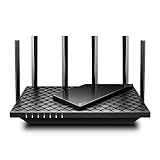
- 𝐆𝐢𝐠𝐚𝐛𝐢𝐭 𝐖𝐢𝐅𝐢 𝐟𝐨𝐫 𝟖𝐊 𝐒𝐭𝐫𝐞𝐚𝐦𝐢𝐧𝐠 – Up to 5400 Mbps WiFi for faster browsing, streaming, gaming and downloading, all at the same time. Performance varies by conditions, distance to devices, & obstacles such as walls.
- 𝐅𝐮𝐥𝐥 𝐅𝐞𝐚𝐭𝐮𝐫𝐞𝐝 𝐖𝐢𝐅𝐢 𝟔 𝐑𝐨𝐮𝐭𝐞𝐫 – Equipped with 4T4R and HE160 technologies on the 5 GHz band to enable max 4.8 Gbps ultra-fast connections.Power:12 V 2.5 A
- 𝐂𝐨𝐧𝐧𝐞𝐜𝐭 𝐌𝐨𝐫𝐞 𝐃𝐞𝐯𝐢𝐜𝐞𝐬 – Supports MU-MIMO and OFDMA to reduce congestion and 4X the average throughput
- 𝐄𝐱𝐭𝐞𝐧𝐬𝐢𝐯𝐞 𝐂𝐨𝐯𝐞𝐫𝐚𝐠𝐞 - Covers up to 2,000 sq. ft. High-Power FEM, 6× Antennas, Beamforming, and 4T4R structures combine to adapt WiFi coverage to perfectly fit your home and concentrate signal strength towards your devices.
- 𝐌𝐨𝐫𝐞 𝐕𝐞𝐧𝐭𝐬, 𝐋𝐞𝐬𝐬 𝐇𝐞𝐚𝐭 – Improved vented areas help unleash the full power of the router
The map says service is available, but the provider says no
Recheck the street address, unit number and ZIP code. Try the checker without the unit number, call sales or provisioning, and ask whether the listing refers to planned service, a nearby location or another technology. Do not order solely because the FCC map shows availability.
The checkout price is higher than the advertisement
Check Auto Pay, mobile bundles, optional Wi-Fi or security services, installation, taxes, the post-promotion rate and unlimited-data requirements. Save the broadband label and order summary.
The plan is fast but Wi-Fi is slow
Run an Ethernet test, then test near the gateway and in the problem room. Check device compatibility with Wi-Fi 6 or Wi-Fi 7, improve gateway placement, and consider a wired access point or mesh system. Do not upgrade the ISP plan until the local network has been tested.
5G works at first and then slows down
Test at different times, move the gateway near a window or exterior wall, compare wired gateway performance with Wi-Fi, and use any trial or money-back period. Congestion, signal changes, foliage and network reconfiguration can all affect results. Keep a backup connection during the initial test if work depends on reliable access.
Fiber installation is delayed
Ask about temporary wireless service, check another fiber or cooperative provider, compare the cable option’s first-year total cost, and confirm whether construction or a premise appointment is required.
Satellite has obstructions
Use the provider’s obstruction tool before ordering. A roof, pole or tower mount may help, but calculate the installation cost first. A stronger router cannot solve a blocked view of the sky; compare local fixed wireless or cellular gateways instead.
Low-cost and assistance options
Do not assume the Affordable Connectivity Program is available: it ended in June 2024 unless a later replacement has been established. Check current federal Lifeline rules, provider low-income plans, state and local affordability programs, and connectivity offered through schools, libraries or housing programs. Eligibility may depend on income or participation in programs such as Medicaid, SNAP, SSI or veterans benefits, and these rules can change.
What’s actually slowing this PC down?
Pick the symptom - the matching free tool is one click away.
Quick Recap
A practical decision rule
- If fiber is available: compare its regular price, upload speed, equipment terms, installation timing and local support against cable.
- If only cable is available: prioritize upload speed, congestion experience, the post-promotion rate, data terms and equipment costs.
- If considering 5G: verify eligibility, place the gateway carefully, test at busy times and compare the service’s upload and latency stability with cable.
- If rural: check cooperative fiber and regional fixed wireless before satellite.
- If two plans are close: choose the one with stronger upload performance, clearer billing, better price-lock terms, lower equipment cost and a credible local support record.
Product prices and availability are accurate as of the date/time indicated and are subject to change. Any price and availability information displayed on Amazon at the time of purchase will apply.



