Quick wins for a faster PC:
Fix the driver behind crashes, sound loss and screen glitchesFind Drivers →Clear out junk files and repair common Windows errorsFree Scan →Some links on this page are affiliate links: if you buy through them we may earn a commission, at no extra cost to you.
Beeks Group, a UK-based cloud provider, moved most of its more than 20,000 virtual machines from VMware to the open-source OpenNebula platform after saying a new VMware software bill was about 10 times higher than its previous cost. The claim is significant, but the headline figure needs correcting: a bill that rises from 100 to 1,000 is technically a 900% increase, although the new bill equals 1,000% of the original.
The migration was not a simple license swap. Beeks had to rebuild software connected to VMware APIs and develop additional monitoring capabilities. Its experience shows both why some large infrastructure providers are reconsidering VMware under Broadcom and why other organizations should calculate total migration costs before assuming an open-source platform will be cheaper.
Which company left VMware?
Beeks Group is a UK-headquartered cloud operator that provides virtual private servers, bare-metal infrastructure and low-latency services for financial-services customers. Its workloads are more specialized than those of a typical enterprise data center: predictable performance, detailed resource visibility and low network latency can be important to trading and financial-technology customers.
The Tool Desk
Outbyte Driver Updater FREEFix the driver behind crashes, sound loss and screen glitchesFind Drivers →Outbyte PC Repair FREEClear out junk files and repair common Windows errorsFree Scan →According to reporting by Ars Technica, Beeks operated approximately 3,000 bare-metal servers and more than 20,000 virtual machines. In a December 2024 report, the company said most of those VMs had moved from VMware to OpenNebula. That describes the migration’s reported status at the time; it does not establish that every workload had been moved.
#1 Best Overall

- HP Proliant DL360 G9 4-Bay LFF Server | 2x E5-2695v4 2.10GHz 18-Core CPU (36-Cores Total)
- 256GB DDR4 RAM | 4x 4TB 7.2K SATA 3.5" HDD
- Smart Array P440ar w/ 2GB FBWC | 4x1Gbe NIC
- 2x 500W PSU | Windows Server 2019 Standard Evaluation
What happened to Beeks’ VMware bill?
Beeks said its new VMware software-license bill was approximately 10 times its previous bill. The available reporting does not independently verify the invoice or establish whether the two quotes covered exactly the same products and services.
The percentage language matters:
| Old bill | New bill | Correct interpretation |
|---|---|---|
| 100 units | 1,000 units | The new bill is 1,000% of the old bill |
| 100 units | 1,000 units | The increase is 900% |
So “1,000% price hike” is an imprecise description of a 10× bill. It is more accurate to say that Beeks reported a bill equal to about 1,000% of its previous software-license cost, or an approximately 900% increase.
There is also no public evidence in the cited reporting showing whether the comparison was like-for-like. Important questions include whether the quotes covered the same host count, products, support level and contract term, and whether the new proposal included bundled products, minimum commitments or different licensing metrics. The figure should therefore be attributed to Beeks rather than presented as a published VMware-wide price schedule.
Do these 3 things before closing this tab:
1Fix the driver behind crashes, sound loss and screen glitches2Repair Windows errors before they cause bigger problems3Scan for outdated or missing drivers - takes under a minuteWhy were VMware customers reassessing Broadcom?
Broadcom completed its acquisition of VMware in 2023 and subsequently changed VMware’s commercial strategy. Broadcom discontinued sales of new perpetual VMware licenses, emphasized subscription offerings and consolidated VMware’s former collection of products and editions into fewer bundles.
Those changes led some customers and service providers to report higher costs or uncertainty over licensing, support and product direction. Beeks said pricing was one factor in its decision, alongside reduced confidence in VMware’s direction, declining support services and a perceived lack of innovation.
Other reported disputes should not be confused with Beeks’ account. AT&T was separately reported as saying proposed VMware pricing could have increased its costs by approximately 1,050%; the companies later settled. In March 2026, the Cloud Infrastructure Services Providers in Europe said Broadcom’s changes—including price increases, bundling, upfront payments and minimum commitments—had cumulatively increased costs for affected providers by more than 1,000%. That is an industry-group allegation in a competition complaint, not proof that every VMware customer experienced the same increase. See CISPE’s complaint announcement.
Rank #2
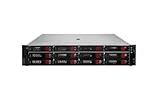
- HPE Proliant DL380 G11 12-Bay LFF Server | 2x Gold 6430 2.1GHz 32-Core CPU (64-Cores Total)
- 32GB DDR5 RAM | 4x 8TB 7.2K SAS 3.5" HDD
- MR408i-o Raid Controller | 12Gb/s SAS Expander | 4x1GbE NIC
- 2x 800W PSU | Windows Server 2019 Standard Evaluation
Why did Beeks choose OpenNebula?
OpenNebula is more than a replacement hypervisor. It is a cloud-management and orchestration platform that manages KVM-based virtualization and associated infrastructure. It supports private, hybrid, edge and distributed-cloud deployments, with capabilities including scheduling, high availability, live migration, federation and resource management.
OpenNebula’s appeal to a large cloud operator includes an open-source foundation and the ability to modify or extend the platform when existing tooling does not meet operational requirements. The company also explicitly markets OpenNebula as a VMware alternative and documents migration workflows for VMware virtual machines.
The documented process includes working with OVAs and VMDKs and using OneSwap to migrate VMs from VMware environments to KVM-based OpenNebula infrastructure. The relevant VMware migration documentation is a useful starting point, but documented conversion is not the same as production validation.
What benefits did Beeks report?
Beeks said OpenNebula required less management overhead and allowed more VMs to run on each server. It described the result as a 200% improvement in VM efficiency.
That number should not be treated as an independently audited benchmark. The available account does not define whether “efficiency” meant VM density, CPU overhead, memory overhead, management-plane consumption, infrastructure cost or revenue-generating capacity. Nor does it provide before-and-after VM-per-host figures. A reader should not convert the statement into a specific claim about how many additional VMs every OpenNebula host can run.
PC Slower Than It Used to Be?
A free scan shows the junk files, broken settings and background clutter dragging Windows down - then fixes them in one click.Free scan · Windows 10 & 11Crashes, No Sound, or Screen Glitches?
Random freezes, missing sound and display glitches usually trace back to one bad driver. Find and replace yours safely.Free scan · under a minuteBeeks’ result may reflect its scale, workload mix, utilization levels and internal engineering capabilities. Those conditions are not automatically present in a small business, a highly customized enterprise or a company with low infrastructure utilization.
Rank #3

- HP Apollo 4200 G10 24-Bay LFF Server | 2x Gold 6130 2.1GHz 16-Core CPU (32-Cores Total)
- 256GB DDR4 RAM | 24x 4TB 7.2K SAS 3.5" HDD
- Smart Array P816i-a SR | 2x10GbE NIC
- 2x 800W PSU | Windows Server 2019 Standard Evaluation
The hidden work behind the migration
The most important lesson in the Beeks case is that changing the virtualization platform required engineering work.
Beeks had proprietary software tied to VMware APIs. That software had to be rebuilt to interface with OpenNebula. The company also found that OpenNebula’s initial monitoring and metrics capabilities did not fully meet its requirements. Because its financial-services customers depend on predictable CPU, disk, memory and network performance, Beeks used the platform’s openness to develop the monitoring functions it needed.
That experience points to several migration tasks that can materially affect the economics:
- Converting VM images and validating virtual hardware and guest drivers.
- Rebuilding automation, provisioning and billing systems that call VMware APIs.
- Replacing or adapting monitoring, alerting and capacity-planning tools.
- Testing shared storage, multipathing, snapshots, replication and backup workflows.
- Recreating network controls, distributed-switch functions, firewalls and load-balancer integrations.
- Testing Windows and Linux guests, application licensing, time synchronization and clustered applications.
- Planning maintenance windows, rollback procedures, disaster recovery and customer communications.
- Training administrators in Linux, KVM, OpenNebula, storage and networking.
The public reporting does not establish Beeks’ conversion method, downtime, migration duration, staffing cost, backup changes or whether particular VMware-dependent workloads remained on VMware. Those details should not be assumed.
Is OpenNebula free?
Not necessarily. OpenNebula’s core platform is open source, but production users can choose paid enterprise subscriptions that include tested and hardened releases, maintenance and long-term-support versions, support, enterprise tools, integrations and security updates. OpenNebula also sells deployment, upgrade, training, consulting, engineering and technical-management services.
OpenNebula’s documentation says subscription pricing is based on the number of hypervisor hosts, with no stated limits on cores, VMs or memory in the cited comparison. Its subscription page does not publish a standard dollar price and directs customers to request a quote. The official edition comparison distinguishes community and enterprise capabilities.
Rank #4
- HP Proliant DL360 G9 4-Bay LFF Server | 2x E5-2695v4 2.10GHz 18-Core CPU (36-Cores Total)
- 768GB DDR4 RAM | 4x 4TB 7.2K SATA 3.5" HDD
- Smart Array P440ar w/ 2GB FBWC | 4x1Gbe NIC
- 2x 500W PSU | Windows Server 2019 Standard Evaluation
Open source can reduce dependence on a proprietary vendor and provide greater control over the software. It does not eliminate costs for hardware, storage, networking, security, monitoring, migration, staffing, training or support. Organizations that require enterprise integrations or vendor-backed support may need a subscription.
OpenNebula announced a commercial VMware migration service in June 2024. Its announcement described a promotion with eligibility and subscription-commitment conditions. That promotion should be treated as historical unless OpenNebula confirms that it remains available in 2026.
Independent reader supportYour contribution helps us test, update, and keep practical guides available for everyone.How should a company evaluate a VMware exit?
1. Normalize the licensing comparison
Request like-for-like quotes and compare host count, cores, VMs, storage, support hours, contract term, bundled products, minimum commitments and payment timing. Then calculate recurring software cost separately from one-time migration and engineering costs.
2. Inventory VMware dependencies
List every dependency on vCenter, ESXi, vSAN, NSX, distributed switches, VMware APIs, automation systems, backup products, third-party drivers and operational procedures. A VM image may be portable while its storage, networking, backup and security design is not.
3. Test representative workloads
Use a pilot that includes ordinary server VMs, Windows and Linux guests, stateful applications, clustered systems, latency-sensitive workloads and workloads with unusual storage or networking needs. Verify performance, failover, snapshots, backups, restores and monitoring—not just whether a VM boots.
What’s actually slowing this PC down?
Pick the symptom - the matching free tool is one click away.
4. Price the operating model
Estimate additional Linux/KVM expertise, platform engineering, support, incident response, security updates, observability and upgrade work. Compare the destination platform’s support escalation and service-level commitments with the VMware agreement being replaced.
Best Value

- HP Proliant DL380 G10 8-Bay SFF Server | 2x Platinum 8164 2.0GHz 26-Core CPU (52-Cores Total)
- 768GB DDR4 RAM | 2x 1.92TB SATA III 2.5" SSD
- Smart Array S100i SR | 2x10GbE NIC
- 2x 500W PSU | Windows Server 2019 Standard Evaluation
5. Plan for partial migration
“Most VMs” is not the same as “all VMs.” The workloads that remain may be the most difficult, regulated or strategically important. Decide whether a temporary hybrid environment is acceptable and budget for operating two platforms during the transition.
6. Protect future portability
Review image formats, infrastructure-as-code, automation interfaces, data export, backup portability and proprietary integrations. A VMware exit that creates a new form of lock-in may solve an immediate licensing problem without improving long-term flexibility.
Who is most likely to benefit?
OpenNebula is more likely to make economic and operational sense for organizations with substantial host fleets, high utilization, internal platform-engineering expertise, compatible storage and networking, and a willingness to manage a KVM-based environment. Cloud providers may also benefit from controlling their infrastructure and spreading engineering investment across many customers or VMs.
Recommended Free Tools
It may be a poor fit for an organization that wants a completely unmanaged, zero-cost platform; lacks Linux and virtualization expertise; depends heavily on VMware-specific products; has limited testing capacity; or cannot tolerate changes to support and disaster-recovery processes.
Other candidates may also deserve evaluation, depending on the environment: Proxmox VE, Red Hat OpenShift Virtualization, Nutanix, SUSE Harvester, and XCP-ng with Vates’ Xen Orchestra. These are comparison candidates, not universal recommendations, and current pricing was not established here.
What the Beeks case really shows
Beeks’ migration is evidence that a large cloud operator can move a substantial VMware estate to OpenNebula when pricing pressure, platform control and engineering capability justify the effort. It is not evidence that Broadcom raised VMware prices by exactly 1,000% for every customer, that OpenNebula is free, or that every VMware workload will achieve the same efficiency result.
The practical question is not whether an alternative has a lower license price. It is whether the alternative’s recurring cost, migration labor, operational risk and support model work for the organization’s specific workloads.
Quick Recap
Product prices and availability are accurate as of the date/time indicated and are subject to change. Any price and availability information displayed on Amazon at the time of purchase will apply.



