Some links on this page are affiliate links: if you buy through them we may earn a commission, at no extra cost to you.
AWS launched Amazon Lookout for Vision to help manufacturers identify visual anomalies such as dents, cracks, scratches, missing components, and poor welds. It entered preview on December 1, 2020, became generally available on February 24, 2021, and was discontinued on October 31, 2025. As of August 18, 2026, it is no longer available for new deployments.
That timeline matters for companies evaluating factory automation: Lookout for Vision was an important example of managed industrial AI, but it is now an archival product rather than something businesses can purchase from AWS.
What Amazon Lookout for Vision did
Amazon Lookout for Vision was an AWS-managed computer-vision service designed for industrial and manufacturing inspection. It compared images of acceptable products with images containing anomalies, then flagged items that differed visually from the expected standard.
The Tool Desk
Outbyte PC Repair FREERepair Windows errors before they cause bigger problemsFix Now →Outbyte Driver Updater FREEFix the driver behind crashes, sound loss and screen glitchesFind Drivers →AWS described possible uses including detecting dents, cracks, scratches, surface damage, incorrect colors, irregular shapes, missing parts, poor welding, and repeated visual irregularities that could indicate a production-process or equipment problem. Potentially relevant products included machine parts, circuit boards, vehicles, industrial components, and silicon wafers.
#1 Best Overall

- 1) Camera transfer speed is fast.
- 2) Provide SDK, easy to use and convenient.
- 3) Support external trigger and flash.
- 4) SDK supports Windows and Linux systems.
- 5) SDK supports VC/C++, VB6, VB.NET, Delphi, C#, JAVA, Python, OpenCV.
The service was not the same as Amazon Rekognition. Rekognition is a general-purpose image and video analysis service, while Lookout for Vision was aimed specifically at visual anomaly detection in manufactured products.
Results could be reviewed in the AWS Management Console or obtained through the DetectAnomalies real-time API. Manufacturers could then connect those results to other AWS services or industrial systems.
A crucial qualification is that the system detected visual anomalies. It could not establish every engineering meaning of the word “defect.” A camera cannot directly verify internal cracks, electrical performance, torque, chemical composition, material strength, or dimensional tolerances below the imaging system’s resolution.
Free tools Windows power users keep installed
One-click scans. No signup required.
AWS’s general-availability announcement described the service and its intended manufacturing applications.
How the historical workflow worked
Lookout for Vision was designed to reduce the amount of machine-learning infrastructure a manufacturer had to build itself. A typical deployment involved:
- Collecting images: Cameras or other image sources captured products in a repeatable inspection position.
- Preparing data: Teams uploaded normal and anomalous images, commonly using Amazon S3, manifests, and annotation workflows.
- Training a project: The customer created a Lookout for Vision project and trained a model on the examples.
- Validating predictions: The model was checked against representative production images rather than trusted solely because training completed successfully.
- Running inspection: Images were analyzed in the console or through the API.
- Responding to results: A factory could route alerts to human reviewers, rework stations, line controls, or other operational software.
- Providing feedback: Operator feedback could be used to improve or retrain the model.
AWS promoted the service’s few-shot-learning approach and said customers could begin with as few as 30 baseline images. Amazon Science also described an example using 20 normal images and 10 anomalous images. Those figures were starting-point claims, not a guarantee that 30 images would produce reliable inspection across every factory.
Production data still needed to represent normal variation, different lots, lighting conditions, camera angles, subtle and severe anomalies, and borderline cases. Rare defects are especially difficult to model when few examples exist.
Do these 3 things before closing this tab:
1Fix the driver behind crashes, sound loss and screen glitches2Clear out junk files and repair common Windows errors3Scan for outdated or missing drivers - takes under a minuteRank #2

- Ultra High Definition 8000x6000 Lightburn Camera for Laser Engraver, USB2.0 Machine Vision Industrial Camera for Computer,Raspberry Pi
- Super Image reality, real color reproduction, ultra crystal shooting image. The camera works like human eye, get sharp image and accurate color reproduction in every detail
- 5-50mm Zoom Lens, Pro industrial grade 12mp ultra hd optical zoom lens, manual focus, iris and zoom. Pefect for close-ups and quality inspection
- USB Plug & Play, UVC compliant usb camera, just connect the camera to PC, laptop, Android device or Raspberry Pi with the included USB cable without extra drivers to be installed.
- Wide Applications: Well used for industrial camera, Medical device, Quality Inspection, Scientific research and development, image processing, computer and machine vision.
Why the launch attracted attention
Industrial machine vision was not new in 2020. The significance of Lookout for Vision was AWS’s attempt to make customized anomaly detection easier to deploy through a managed cloud service.
- Manufacturers could potentially start with fewer labeled defect examples than a conventional classification project requires.
- AWS managed much of the model-training and inference infrastructure.
- Customers already using AWS could connect image storage, APIs, dashboards, and automation.
- Operator feedback offered a path for updating a model as production data changed.
- The approach could support prototypes before a company committed to a larger custom machine-learning platform.
AWS referenced customers and partners including GE Healthcare, Dafgårds, Nukon, Basler, Baxter International, ADLINK, and Amazon. These examples should be read as AWS-reported customer or partner references, not as independent performance benchmarks for every manufacturing environment.
AWS used promotional language such as “highly accurate,” but the launch material did not establish one independently validated accuracy rate applicable across factories. False positives, false negatives, and the cost of each type of error remained deployment-specific business risks.
Cloud inference and later edge support
The original service was promoted around cloud APIs and AWS-managed infrastructure. AWS later added an edge option: edge support was previewed in December 2021 and became generally available on March 15, 2022.
According to AWS, trained models could run locally through AWS IoT Greengrass on NVIDIA Jetson appliances or on x86 Linux systems with an NVIDIA GPU accelerator. Local inference could reduce latency and dependence on a continuous cloud connection, which is important on production lines.
Edge deployment did not make inspection automatic or infrastructure-free. A manufacturer still needed suitable cameras, controlled lighting, compatible computing hardware, device-management processes, model validation, and a reliable way to act on detections. It also had to account for line speed, triggering, maintenance, and hardware failure.
See AWS’s edge general-availability announcement for the historical hardware requirements.
Rank #3
- 1) Camera transfer speed is fast.
- 2) Provide SDK, easy to use and convenient.
- 3) Support external trigger and flash.
- 4) SDK supports Windows and Linux systems.
- 5) SDK supports VC/C++, VB6, VB.NET, Delphi, C#, JAVA, Python, OpenCV.
Practical limitations of visual anomaly detection
Lookout for Vision’s proposed simplicity did not eliminate the hard parts of industrial inspection.
Image quality determines much of the outcome
Focus, glare, exposure, vibration, occlusion, background changes, product rotation, and camera placement can all affect predictions. A model trained under controlled conditions may perform poorly after a lens replacement, lighting upgrade, camera repositioning, or supplier change.
Normal variation can look like a defect
Changes in color, texture, orientation, or materials may be legitimate. If the training data does not include that variation, the system may create false alarms, leading to unnecessary rework, scrap, manual review, or line stoppages.
Defects can look like normal variation
Subtle defects may be missed, particularly when the camera angle hides a component or the defect is smaller than the imaging system can resolve. A missed defect may be more costly than a false alarm, depending on the product and safety requirements.
Models must be monitored
Products, materials, tools, suppliers, and processes change. A model therefore needs ongoing validation, threshold management, drift monitoring, and a defined human-review or failover process. Incorrect operator feedback can also reinforce poor predictions.
Why Lookout for Vision was discontinued
AWS announced in October 2024 that Amazon Lookout for Vision would be discontinued on October 31, 2025. New customers lost access beginning October 10, 2024, while existing customers could use the service during the wind-down period. AWS said it would not add new features during that period.
After October 31, 2025, customers could no longer access the Lookout for Vision console or its resources. AWS advised customers to migrate and said datasets, manifests, and images could be exported to Amazon S3.
Rank #4
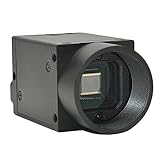
- Support VC/C++, C++builder, VB6, VB.NET, Delphi, C#, QT, JAVA, Python And Other Programming Languages.
- Support Python, OpenCV, LabView, Halcon Vision Software.
- Provide Camera SDK Development Interface.
- Supports Windows And Linux Operating Systems.
- Supports 100 Meters Transmission And Simultaneous Use Of Multiple Cameras.
The shutdown is more than a historical footnote for manufacturers. A managed AI product may reduce initial development costs and operational effort, but it can also create vendor-lifecycle and migration risk. Buyers should assess data portability, model-input and output formats, API documentation, fallback inspection procedures, support commitments, and whether a replacement can run outside one provider’s cloud.
AWS’s migration guidance explains the discontinuation and export process.
Quick wins for a faster PC:
Fix the driver behind crashes, sound loss and screen glitchesFind Drivers →Repair Windows errors before they cause bigger problemsFix Now →What can replace it?
There is no single one-for-one replacement established by the supplied AWS guidance. The appropriate path depends on inspection latency, camera hardware, internal expertise, and the cost of errors.
| Option | Best fit | Main trade-off |
|---|---|---|
| Amazon Bedrock | Custom image-analysis applications and workflows where very low latency is not essential. | It is not automatically a turnkey, deterministic factory-inspection system; substantial validation and application engineering may be required. |
| Amazon SageMaker | Organizations that want control over model training, deployment, and monitoring and have ML engineering capability. | More MLOps and engineering work than the former specialized managed service. |
| AWS Partner Solutions | Factories needing camera selection, PLC or MES integration, installation, and industrial support. | Pricing, implementation quality, hardware compatibility, and support vary by partner. |
| Industrial-vision vendors | Applications requiring dedicated cameras, local processing, deterministic triggering, and factory controls integration. | May involve higher upfront hardware and integration costs, with configuration-specific pricing. |
Potential industrial-vision vendors include Cognex, Keyence, Basler, Teledyne FLIR, LandingAI, and specialist automation integrators. They should not be treated as interchangeable: compare the exact defect, throughput, lighting, camera requirements, PLC or MES integration, deployment location, labeling workflow, and service model.
A buyer’s checklist for manufacturing AI
- Is the problem genuinely visible from a camera?
- Are camera position, lighting, background, focus, and product orientation controllable?
- What are the costs of a missed defect, a false alarm, rework, scrap, and a line stop?
- Do you have enough representative normal and anomalous images?
- Can the system meet the production line’s cycle time and triggering requirements?
- Is cloud inference acceptable for latency, bandwidth, availability, and data-governance reasons?
- If edge processing is required, who supplies and manages the compatible hardware?
- How will results connect to PLCs, MES, SCADA systems, robots, or human review?
- How will performance be validated after changes to products, suppliers, cameras, lighting, or processes?
- Can images, labels, manifests, and useful outputs be exported if the vendor retires the service?
The business lesson
Amazon Lookout for Vision showed why managed AI services appealed to manufacturers: they promised a faster route from labeled images to production inspection without building every component of a computer-vision platform. But the service’s retirement also demonstrates why deployment decisions should include lifecycle planning from the beginning.
For a current project, the central question is not whether Lookout for Vision can still be launched—it cannot. The question is whether a factory needs a custom cloud model, a partner-led industrial system, or a dedicated edge-vision solution, and whether that choice can be validated, maintained, and migrated over the life of the production line.
Quick Recap
Product prices and availability are accurate as of the date/time indicated and are subject to change. Any price and availability information displayed on Amazon at the time of purchase will apply.



