Some links on this page are affiliate links: if you buy through them we may earn a commission, at no extra cost to you.
ASML’s $270 million Brion deal is a completed historical acquisition, not a pending transaction. ASML announced on December 19, 2006, that it would buy privately held Brion Technologies for $270 million in cash—about €203 million at the time—and completed the acquisition on March 8, 2007. Brion became a wholly owned ASML subsidiary.
What ASML agreed to buy
ASML Holding N.V., the Dutch maker of semiconductor-lithography equipment, agreed to acquire 100% of Brion Technologies, Inc.’s outstanding shares. Brion was a privately held U.S. company founded in 2002. The acquisition announcement said the deal was subject to regulatory approval and was expected to close in the first quarter of 2007; ASML later confirmed completion on March 8.
| # | Preview | Product | Price | |
|---|---|---|---|---|
| 1 |
|
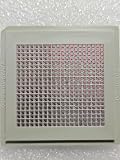
Silicon IC Die Wafer, Bare CPU Semiconductor Chip Sample with Lithography Patterns for Teaching,... | $30.59 | Buy on Amazon |
The original future-tense headline, “ASML to buy Brion,” was accurate when the agreement was announced. It is outdated if presented as a current transaction. ASML’s December 2006 announcement and its March 2007 completion notice establish the chronology.
What Brion’s technology did
Brion did not build lithography scanners. It developed computational-lithography software: tools that model how a circuit pattern is likely to print on a silicon wafer, then help adjust the mask and process to compensate for distortions.
#1 Best Overall
- IC Type: Semiconductor
- Each wafer fragment contains visible integrated circuit patterns for demonstration and display purposes only.
- Made from single-crystal silicon wafer material for authentic semiconductor teaching and research.
- Ideal for electronics courses, microfabrication demonstrations, and STEM student projects.
- Also suitable for art installations, photography props, and chip design exhibitions.
In simplified terms, a chip design is translated into a pattern on a photomask, or reticle. A lithography scanner projects light through that pattern to transfer it onto a wafer. At very small dimensions, optical effects and manufacturing variation can make the printed pattern differ from the ideal design. Computational lithography predicts those differences and helps engineers correct for them before production.
OPC, RET and Tachyon
Brion’s capabilities included optical proximity correction (OPC), OPC verification, reticle enhancement technology (RET), design verification and simulation of the patterns expected to print. OPC modifies mask patterns to compensate for optical effects; RET is a broader set of techniques for improving the printability of small features. ASML identified Brion’s Tachyon platform as an advanced OPC and OPC-verification system.
These tools connected chip design, mask preparation, exposure and wafer printing. The acquisition was therefore not simply a purchase of one software product: ASML was buying a company and a set of computational-lithography capabilities closely related to the performance of its core equipment. ASML’s announcement describes Brion’s technology and its intended role.
Quick wins for a faster PC:
Scan for outdated or missing drivers - takes under a minuteDriver Scan →Clear out junk files and repair common Windows errorsFree Scan →Fix the driver behind crashes, sound loss and screen glitchesFind Drivers →Why ASML wanted Brion
ASML’s strategic logic was to pair lithography hardware with software that could help customers set up and optimize the imaging process. Better prediction and correction of patterning errors could support improved image quality, more efficient process control and higher yields, while helping chipmakers bring advanced designs into manufacturing sooner. These were the benefits ASML said it was pursuing, not published measurements of the deal’s financial return.
The broader idea was that a scanner alone is only part of the patterning challenge. Software, measurement, inspection and process control can help customers understand how a design behaves in production and adjust the process accordingly. ASML later described Brion as an early foundation of its “Holistic Lithography” strategy, which brings those elements together. That is ASML’s retrospective account of its strategy, not a claim that Brion itself supplied every part of the later portfolio. See ASML’s corporate history.
What the $270 million figure means
ASML announced a cash purchase price of $270 million, approximately €203 million at the time. Later filings report different euro-denominated figures because they use accounting presentations that include items beyond the headline price.
| Disclosure | Reported amount | What it represents |
|---|---|---|
| December 2006 acquisition announcement | $270 million; approximately €203 million | ASML’s announced cash purchase price. |
| ASML first-quarter 2007 results | €203 million cash | Cash paid as reported by ASML; the company said €66 million was allocated to assets, including ongoing research and development, with the remainder recorded as goodwill. |
| Later SEC filing | €193.3 million total consideration | Accounting breakdown: €181.1 million cash, €5.3 million in stock options and €6.9 million in acquisition-related costs. |
The figures should not be read as three competing dollar prices. The first is the announced headline amount; the later disclosures use euro accounting figures and include different components. The relevant records are ASML’s first-quarter 2007 results and a later SEC filing on the Brion acquisition accounting.
Free tools Windows power users keep installed
One-click scans. No signup required.
How the acquisition was integrated
At closing, ASML said Brion CEO Eric Chen would remain in place and that Brion would continue supporting its existing product offering as a wholly owned subsidiary. In 2012, ASML referred to ASML Brion as one of its divisions and announced Tachyon Flexible Mask Optimization, a product combining multiple OPC techniques within a single mask tapeout. That later product announcement shows continued activity in Brion’s specialty after the acquisition; it does not establish the acquisition’s financial return. See ASML’s 2012 ASML Brion announcement.
ASML’s 2025 annual-report material describes computational lithography as part of its broader approach to lithography systems, metrology, inspection and software-based process control. The capabilities are presented within ASML’s current portfolio rather than as evidence that Brion remains an independent company. ASML’s 2025 annual report provides that later context.
A separate later dispute involving XTAL
In 2019, ASML announced that a U.S. court had entered final judgment in its favor against computational-lithography competitor XTAL. ASML said the case concerned alleged contamination of XTAL software with ASML intellectual property and that an injunction restricted XTAL’s activities in the same field as Brion for a period. ASML also said it expected to obtain most or all of XTAL’s intellectual property through bankruptcy proceedings. This was a separate, later dispute—not a condition of the Brion acquisition or part of its $270 million price. The claims here describe ASML’s account of the litigation; see its 2019 statement.
Quick Recap
Product prices and availability are accurate as of the date/time indicated and are subject to change. Any price and availability information displayed on Amazon at the time of purchase will apply.



