The Tool Desk
Outbyte Driver Updater FREEScan for outdated or missing drivers - takes under a minuteDriver Scan →Outbyte PC Repair FREERepair Windows errors before they cause bigger problemsFix Now →Some links on this page are affiliate links: if you buy through them we may earn a commission, at no extra cost to you.
The company behind this satellite-ground-station bet is Northwood Space, an El Segundo, California, startup founded by CEO Bridgit Mendler and CTO Griffin Cleverly. Northwood is building a shared network of electronically steered ground stations designed to help spacecraft send data to Earth, maintain telemetry links, and receive commands more quickly.
On January 27, 2026, the company announced a $100 million Series B funding round and a $49.8 million U.S. Space Force contract. Those deals provide meaningful early validation—but they do not yet prove that Northwood can turn promising hardware into a profitable, global commercial network.
The ground may be the next satellite bottleneck
Satellite manufacturing and launch have become faster and more scalable. But putting a spacecraft into orbit is only part of the job. Operators also need reliable infrastructure on Earth to receive payload data, track spacecraft, send commands, and support missions during launch and early orbit.
That infrastructure can become a constraint when constellations contain many satellites or when spacecraft produce more data than existing ground networks can promptly handle. Operators may need frequent contact opportunities, high data rates, low latency, broad geographic coverage, and the ability to communicate with several spacecraft during overlapping passes.
#1 Best Overall
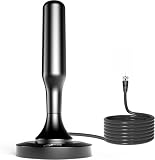
- 𝗡𝗲𝘃𝗲𝗿 𝗣𝗮𝘆 𝗠𝗼𝗻𝘁𝗵𝗹𝘆 𝗕𝗶𝗹𝗹: Watching local channels with this HD digital tv antenna for smart tv indoor 4K, you can watch crystal HDTV channels without cable service and enjoy local tv channels.
- 𝗜𝗻𝗱𝘂𝘀𝘁𝗿𝘆 𝗟𝗲𝗮𝗱𝗶𝗻𝗴 𝗧𝗲𝗰𝗵𝗻𝗼𝗹𝗼𝗴𝘆: This digital indoor tv antenna for local channels is made of eco-friendly flame-retardant dual PC soft material (not ordinary PVC), providing moisture resistance and lightning protection for indoor use.
- 𝗢𝗺𝗶𝗻𝗶-𝗱𝗶𝗿𝗲𝗰𝘁𝗶𝗼𝗻𝗮𝗹 𝗥𝗲𝗰𝗲𝗽𝘁𝗶𝗼𝗻 & 𝗠𝗮𝗴𝗻𝗲𝘁𝗶𝗰 𝗕𝗮𝘀𝗲: The indoor HDTV antenna brings omini-directional Reception; Whether hd digital tv antenna indoor is installed on the TV stand or on the table, you can receive the crystal clear picture
- 𝗖𝗼𝗺𝗽𝗮𝗰𝘁 𝗮𝗻𝗱 𝘀𝗺𝗮𝗹𝗹 𝗗𝗲𝘀𝗶𝗴𝗻: The indoor antenna for tv without cable features a compact and slim design, making it easy to hide without taking up space. The lightweight build allows you to move it conveniently and adapt to different living environments effortlessly.
- 𝗡𝗼𝘁𝗲 𝗮𝗻𝗱 𝗖𝘂𝘀𝘁𝗼𝗺𝗲𝗿 𝗦𝗲𝗿𝘃𝗶𝗰𝗲 : Read the manual first, set up your TV properly, and scan for channels. 𝐅𝐨𝐫 𝐨𝐩𝐭𝐢𝐦𝐚𝐥 𝐫𝐞𝐜𝐞𝐩𝐭𝐢𝐨𝐧, 𝐭𝐞𝐬𝐭 𝐛𝐨𝐭𝐡 𝐯𝐞𝐫𝐭𝐢𝐜𝐚𝐥 𝐚𝐧𝐝 𝐡𝐨𝐫𝐢𝐳𝐨𝐧𝐭𝐚𝐥 𝐩𝐥𝐚𝐜𝐞𝐦𝐞𝐧𝐭. Mount the antenna high, near a window facing local broadcast towers (Check "dtv gov maps" for available channels), to avoid obstacles and interference. Actual Reception depends on location, terrain, and weather, always re-scan for channels after moving the antenna. If you have any issues, please contact us. We will provide professional service and a satisfactory solution for you.
Northwood’s central argument is that ground infrastructure should work more like a communications network than a collection of isolated, manually pointed dishes. The company says its shared network will allow satellite operators to access ground capacity without building every antenna site themselves. Northwood describes the concept as a network of ground stations for spacecraft.
The opportunity is real, but the business remains a bet. Northwood must still demonstrate reliable service at scale, win repeat commercial customers, control manufacturing and operating costs, and show that its technology is economical for more than specialized government missions.
Who is Northwood Space?
Northwood emerged from stealth in February 2024. Mendler is its chief executive, while Cleverly is its chief technology officer and co-founder. Rather than simply selling antenna equipment, Northwood is pursuing a vertically integrated model: designing the systems, manufacturing them, deploying sites, operating the network, and delivering connectivity to customers.
That approach could reduce the coordination burden for satellite operators. A customer would not necessarily need to combine antenna hardware, scheduling software, site operations, networking, and mission support from several vendors.
It also concentrates risk inside Northwood. Running a ground network requires manufacturing discipline, field service, spectrum expertise, cybersecurity, reliable power and connectivity, regulatory work, and around-the-clock operations. A startup that controls more of the chain may move faster, but it also has more execution responsibilities.
How Northwood’s Portal system works
Northwood’s main product is called Portal. It is a modular, multi-beam phased-array ground system intended to communicate with satellites in low Earth orbit, medium Earth orbit, and geostationary orbit.
A conventional parabolic antenna generally points by physically rotating a dish toward a spacecraft. A phased array uses many antenna elements and electronic beamforming to steer radio-frequency beams without mechanically moving the entire antenna.
That architecture can enable faster handovers and simultaneous communication with multiple spacecraft. Multiple array modules can also be combined to increase capacity or transmit power. But “electronically steered” does not mean unlimited capacity. Actual performance still depends on frequency band, waveform, polarization, link budget, power, spectrum authorization, weather, spacecraft hardware, and interference management.
Rank #2

- Enjoy More Tv antenna for Local Channels: Get more channels by antenna for smart TV, receive local broadcasting, ABC, CBS, NBC, CPS, FOX, CW, ION, UMAS, etc.
- HD Antenna for TV: Our digital TV antenna indoor adopts an upgraded Smart IC Chip, receives TV broadcasts including 4K, UHD and 1080 HDTV for the hd picture.
- 16FT Coax Cable: Coaxial cable is composed of a solid center conductor, dielectric insulation, three aluminum shielding layers, and a durable outer layer. so that you will never lose signal or suffer distortion even in bad weather.
- Compatibility and Usage Tips: Not suitable for older analog televisions; supports smart TVs and digital TVs. For optimal signal reception, try placing the antenna near a window or in other locations, and test both vertical and horizontal orientations.
- Easy to Install: Plug the coaxial cable from your digital indoor HDTV antenna into the ANT/IN connector on the back of your TV, point the TV antenna toward your local TV tower and scan for channels. (Check "dtv gov maps" for available channels).
Northwood says Portal demonstrated 1 kilowatt of transmit power and the ability to receive sub-picowatt signals within the same antenna face in June 2025. Those are company-reported technical claims, not independently established industry benchmarks. Northwood’s technology page provides the company’s description of Portal.
It is also important to distinguish different kinds of satellite communication:
- Telemetry, tracking, and command, or TT&C: spacecraft health data, tracking, commands, and emergency operations.
- Payload downlink: high-volume mission data such as imagery, scientific measurements, or communications traffic.
- Crosslinks: satellite-to-satellite connections that can transfer data before it reaches a ground station.
A ground system optimized for spacecraft control is not automatically optimized for every high-volume payload-downlink mission.
What’s actually slowing this PC down?
Pick the symptom - the matching free tool is one click away.
What Northwood has achieved—and what remains a target
Northwood says its first product conducted telemetry, tracking, and command operations with Planet Labs in October 2024. The company also says it demonstrated a higher-power Portal iteration in June 2025 and produced eight Portal units in one month in December 2025.
By January 2026, Northwood said operational Portal units had been deployed across two continents. It also reported that one site’s arrays were installed and powered in 12 hours, with live contacts beginning the next day. The company said it achieved a three-month turnaround from execution of its Space Force contract to operational communication links. These are company-reported milestones.
Northwood’s announced expansion goals include more than 82 operational beams, deployment across 18 global ground sites, and production capacity of more than a dozen arrays per month by the end of 2026. Those figures are forward-looking targets, not completed deployments.
Why the Space Force contract matters
The $49.8 million U.S. Space Force contract is significant for more than its headline value. Northwood says the work will support and add capacity to the Space Force’s Satellite Control Network.
The network supports functions including satellite tracking, control, launch and early-orbit operations, and emergency support. That makes the contract a test of whether Northwood’s infrastructure can meet demanding requirements for reliability, security, availability, and integration.
Rank #3
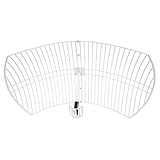
- This 21dB antenna is designed to be used in conjuntion with an RF system (SDR, filter & LNA) to provide detailed, high-resolution, near real-time images from orbiting weather satellites. Applications include GOES (HRIT & LRIT), NOAA HRPT, Meteor M2 HRPT, Metop, FengYun and other satellites that operate near 1.6GHz-1.8GHz
- Can be deployed for both linearly and circularly polarized signals (RHCP and LHCP)
- Software is required for the decoding of images. The recommended option is SatDump, which is cross-platform and available for Windows, Linux, MacOS and Android. There are also other free Linux-based decoders, or the paid version of XRIT Decoder for Windows (license not included with purchase)
- Full support and service directly through Nooelec! Additional information and assembly instructions: support.nooelec.com/hc/en-us/articles/360058812593
Government work can also provide an anchor customer while a young infrastructure company develops commercial demand. It may help Northwood finance deployments, establish operational credibility, and refine systems under real mission conditions.
However, a contract value should not be treated as recognized revenue. The available public material does not establish how the contract will be paid, how much has been recognized, or whether it represents the replacement of the entire Satellite Control Network. TechCrunch reported on the financing and Space Force award.
Why investors see a commercial opportunity
Northwood’s timing reflects several industry trends:
- More satellites and larger constellations.
- Higher-resolution Earth-observation payloads producing more data.
- Demand for lower-latency communications.
- Defense interest in proliferated low Earth orbit architectures.
- Potential future demand from in-space manufacturing, orbital computing, and other data-intensive space businesses.
- Falling launch costs and faster spacecraft development, which can shift the operational bottleneck from reaching orbit to managing spacecraft efficiently.
The phrase “data from space spikes” is best understood as an industry trend, not a single verified percentage increase in total space-generated data. The available sources establish rising demand and satellite proliferation, but not one universal growth statistic.
Northwood announced a $100 million Series B on January 27, 2026, giving it capital to expand production and sites. The funding demonstrates investor confidence, but it does not establish profitability, valuation, recurring revenue, pricing, backlog quality, or customer concentration. Northwood’s funding announcement contains the company’s claims about the round and its expansion plans.
Northwood is entering an existing market
Northwood is not inventing ground-station-as-a-service. NASA’s review of ground data systems identifies existing providers including KSAT, AWS Ground Station, Leaf Space, RBC Signals, and Viasat. The market also includes defense contractors, satellite operators with private infrastructure, and customers that build and operate their own sites.
Those alternatives serve different needs:
- AWS Ground Station: integrates ground access with AWS computing, storage, and data-processing workflows. It may suit customers already operating heavily in AWS, but availability, bands, locations, and mission requirements must be checked.
- KSAT: offers established global ground-station services, conventional antenna access, and mission support. Its operational heritage may appeal to customers prioritizing proven coverage and launch or early-orbit services.
- Leaf Space: provides networked ground-station-as-a-service for small satellites and constellations, with suitability depending on required locations, frequencies, availability, and data rates.
- RBC Signals: provides access to commercial and partner ground stations, potentially giving customers flexibility without building their own antenna estate.
- Viasat Real-Time Earth: serves larger customers needing established communications and ground-network capabilities across orbital regimes and frequency bands.
- Private infrastructure: large constellations and national-security customers may build dedicated sites for control, resilience, sovereignty, or cost reasons.
NASA’s ground-data-systems review provides broader technical and market context.
Do these 3 things before closing this tab:
1Fix the driver behind crashes, sound loss and screen glitches2Clear out junk files and repair common Windows errors3Scan for outdated or missing drivers - takes under a minuteWhy phased arrays will not automatically win
Phased arrays offer flexibility, but they also introduce costs and engineering challenges. High-power transmission creates thermal and electrical demands. Regulatory approval and spectrum coordination remain essential. Different spacecraft may use different bands, waveforms, encryption methods, polarization schemes, and link budgets.
Rank #4

- Enjoy 4K & 1080P Free HDTV Channels with Superior Signal Reception: Experience crystal-clear HD quality with our amplified outdoor antenna, featuring a built-in high-gain and low-noise amplifier designed to provide exceptional signal reception for up to 150 miles.
- 360° Motorized Rotation for Maximum Signal Strength: Easily adjust the antenna’s direction with the wireless remote control for optimal signal alignment, ensuring you never miss your favorite shows.
- Weatherproof and Durable Design for Outdoor Use: Built to withstand harsh weather conditions, our antenna ensures reliable performance all year round, making it perfect for urban and rural settings.
- Dual TV Outputs – Watch on Multiple Screens Simultaneously: Connect two TVs at the same time without needing a splitter or additional equipment, providing entertainment flexibility for your household.
- NEXTGEN TV (ATSC 3.0) Ready: Future-proof your TV experience with the latest over-the-air broadcast technology. Once available in your area, enjoy enhanced picture quality, immersive audio, a stronger signal, richer colors, faster refresh rates, and optional internet integration for added features and a superior viewing experience.
Customers also buy more than antenna pointing. They need:
- Scheduling and automation.
- Network uptime and geographic redundancy.
- Power, cooling, and site security.
- Data transport from the ground site.
- Encryption and cybersecurity.
- Mission-control and customer-network integration.
- Support during launch and early orbit.
- Regulatory and spectrum coordination.
Weather can affect higher-frequency links, especially Ka-band and above. A network that advertises global coverage may still have limited availability for a particular orbit, inclination, latitude, or pass geometry. Simultaneous multi-satellite operation may also be constrained by power, interference, and scheduling requirements.
Northwood’s newer Prism product complicates the simple “dish versus array” story
Northwood’s later product announcement is an important signal. As of August 18, 2026, the company’s press page describes Prism, a 2.4-meter parabolic antenna designed for high-volume connectivity across S-, X-, and Ka-bands.
Free tools Windows power users keep installed
One-click scans. No signup required.
That means Northwood is no longer presenting itself only as a phased-array specialist. Portal and Prism appear to serve different purposes:
- Portal: electronically steered, multi-beam operations for dynamic and demanding missions.
- Prism: a more conventional parabolic system for high-throughput connectivity where a dish may be practical and economical.
Northwood has not presented Prism as a replacement for Portal. The broader strategy appears to be a portfolio of ground architectures matched to different mission requirements. Northwood’s press page describes Prism and the company’s expanding product portfolio.
What satellite operators should evaluate
Before choosing Northwood or any competing provider, an operator should compare:
- Supported frequency bands, waveforms, polarization, and encryption.
- Required uplink and downlink data rates.
- Orbit coverage, including LEO, MEO, GEO, or HEO.
- Number of simultaneous spacecraft contacts.
- Latency and pass-availability requirements.
- Geographic diversity and backup paths.
- Scheduling APIs and mission-operations integration.
- Cybersecurity, data sovereignty, and government-security controls.
- Power, weather, and site-availability constraints.
- Billing structure, such as per pass, per minute, per megabyte, reserved capacity, or a custom contract.
There is no universal winner. A small operator needing occasional access to an existing antenna may prefer a networked service. A large constellation may value dedicated capacity. A defense customer may prioritize security and resilience over the lowest nominal price.
Quick wins for a faster PC:
Repair Windows errors before they cause bigger problemsFix Now →Fix the driver behind crashes, sound loss and screen glitchesFind Drivers →What Northwood must prove next
The company’s next test is not whether it can build a technically impressive antenna. It is whether it can turn that technology into a dense, reliable, multi-customer service.
Key milestones include:
- Deploying sites and beams at the promised pace.
- Maintaining high availability across different locations and weather conditions.
- Winning repeat commercial customers beyond government work.
- Showing attractive unit economics for manufacturing, deployment, maintenance, and network operations.
- Maintaining supply-chain quality and production yields.
- Obtaining the security and regulatory approvals required by target customers.
- Building enough network density that the service is genuinely useful to constellations.
The dual-use strategy may help. U.S. SBIR materials describe Northwood’s phased-array work as relevant to both resilient military communications and commercial satellite operators. But government validation of a particular requirement does not automatically prove broad commercial demand.
Quick Recap
Product prices and availability are accurate as of the date/time indicated and are subject to change. Any price and availability information displayed on Amazon at the time of purchase will apply.



