Free tools Windows power users keep installed
One-click scans. No signup required.
Some links on this page are affiliate links: if you buy through them we may earn a commission, at no extra cost to you.
Consumer-tech companies were scrambling in September 2025 because proposed semiconductor tariffs could have affected not only imported chips, but also the laptops, smartphones, game consoles, and other products built around them. The uncertainty was real—but the policy eventually enacted on January 14, 2026, was narrower: a 25% tariff on specified advanced-computing chips and derivative products, with an express exclusion for covered products used in specified non-data-center consumer applications.
That distinction matters for household budgets. A chip tariff does not automatically produce the same percentage increase in every finished electronic product, and the January measure was not a blanket tariff on all chips or all consumer electronics.
The short version
- What Ars Live examined: a September 2, 2025 event about how technology companies were planning around uncertain, potentially broad semiconductor tariffs.
- Why firms were concerned: electronics supply chains cross several countries and production stages, making it difficult to identify tariff exposure or relocate quickly.
- What was ultimately enacted: a 25% Section 232 tariff, effective January 15, 2026, on specified advanced-computing chips and derivative products.
- What consumers should not assume: the measure did not tax every chip or automatically raise every consumer-electronics price by 25%.
- Important exclusion: covered products intended for specified non-data-center consumer applications—including listed gaming, personal-computing, professional-visualization, workstation, and automotive uses—were excluded under the proclamation and related Customs guidance.
What was the Ars Live event?
Ars Technica’s Ars Live event was scheduled for 3 p.m. Eastern on Tuesday, September 2, 2025. Ashley Belanger’s September 2 preview featured Edward Brzytwa, the Consumer Technology Association’s vice president of international trade.
The Tool Desk
Outbyte PC Repair FREERepair Windows errors before they cause bigger problemsFix Now →Outbyte Driver Updater FREEScan for outdated or missing drivers - takes under a minuteDriver Scan →The event’s purpose was to explain how technology companies were responding to tariff uncertainty and why semiconductors created unusual sourcing problems. The preview was not a final tariff analysis. It described a policy environment in which the administration had discussed possible chip tariffs, including the possibility that duties could reach downstream products containing chips, while the precise scope and timing remained unclear.
#1 Best Overall

- Minidodoca high quality 24 Values 173 Pcs IC Assortment Kit
- IC chip Assortment contains: Op Amp: LM358 LM324 JRC4558 NE5532 LM386 TDA2030 TDA2822 UA741 ;Comparators: LM393 LM339;PhotoCoupler: PC817 ;Multivibrator: CD4047;Analog Multiplexer: CD4053;Echo Audio Processor: PT2399; PWM controller: UC3842 UC3843; Darlington Array ULN2003 ULN2803;Voltage Converter 7660; Timer: NE555
- Including 3 pcs DIP8 socket, 3 pcs DIP14 socket, 3 pcs DIP16 socket, 3 pcs DIP18 socket
- Including 1pc IC Plier included for easy picking and removing IC chips
- Minidodoca ic kit Complete specifications, clear markings, easily identifiable models, sufficient quantity, durable materials, nickel plated surface, not easy to rust, ensuring a long service life.
CTA represented what Ars described as a $505 billion U.S. consumer-technology industry. Its views were useful for understanding manufacturers’ concerns, but CTA is an industry trade association and not a neutral regulator. Its forecasts and policy recommendations should therefore be read as industry analysis.
Why companies were scrambling
Businesses had to make inventory, sourcing, pricing, and contracting decisions before they knew several basic facts:
- Which semiconductor categories would be covered.
- Whether duties would apply only to chips or also to finished products containing chips.
- Which country’s rules of origin would determine liability.
- Whether rates would vary by country.
- Whether exclusions, exemptions, or trade agreements would apply.
- Whether a proposed tariff would be imposed, delayed, changed, or withdrawn.
Ars framed companies as operating in a fog as tariffs and possible retaliation changed. That was a description of the policy uncertainty and CTA’s industry perspective—not a measurable finding that every company faced the same exposure.
Recommended Free Tools
Uncertainty can be costly even before a duty is collected. A company may accelerate shipments, build inventory, ask suppliers for revised terms, redesign products, delay a launch, or hold off on a price decision. Those actions can affect availability and margins even when the final tariff is narrower than the original proposal.
Why semiconductors are unusually difficult to tariff
A modern electronic product rarely has a single, simple country of manufacture. An illustrative supply chain might look like this:
Rank #2

- 🔴 161 pcs 20 models, Each with individual compartment. Pin assignment table included.
- 🔴 IC Plier included for easy picking and removing IC
- 🔴 Op Amp: LM358 LM324 JRC4558 NE5532 LM386 TDA2030 TDA2822 UA741 Comparators: LM393 LM339
- 🔴 PhotoCoupler: PC817 Multivibrator: CD4047 Analog Multiplexer: CD4053 Echo Audio Processor: PT2399
- 🔴 PWM controller: UC3842 UC3843 Darlington Array ULN2003 ULN2803, Voltage Converter 7660 Timer: NE555
- Chip architecture is designed in the United States.
- Wafers are fabricated in Taiwan or another jurisdiction.
- Chips are packaged and tested in Southeast Asia.
- The packaged chips are installed on a board or module in Mexico or China.
- The finished laptop, phone, console, or appliance is assembled elsewhere.
- The product enters the United States for distribution and sale.
This is a model for explaining the problem, not a claim about any particular product. At different points, customs treatment may involve the semiconductor, a board or module containing it, a finished device, or several components imported at different stages.
Physical travel through several countries does not necessarily change a product’s legal origin. Nor does final assembly in the United States automatically mean that every imported component is domestically produced or tariff-free. Classification, origin, entry timing, end use, and supporting documentation can all matter.
Which products could have been exposed?
Before the final rules were known, consumers had reason to wonder about products such as:
- Smartphones and tablets
- Laptops and desktop PCs
- Game consoles
- Graphics cards
- Networking equipment
- Cameras
- Smart-home devices
- Televisions and monitors
- Appliances with embedded processors
- Automotive electronics
The Ars preview specifically identified laptops, game consoles, and smartphones as examples that could become more expensive under a broader tariff regime. That possibility should not be confused with a finding that all products in those categories were ultimately subject to the January 2026 semiconductor tariff.
Why companies could not simply move production to the United States
Moving final assembly is not the same as moving the semiconductor supply chain. A new chip fabrication plant requires specialized equipment, clean rooms, skilled workers, qualified suppliers, and process expertise. Building and qualifying a fab generally takes years, not weeks.
Rank #3

- 🍭 MOLD SIZE: This mold has 4 cavities. The cavity capacity 1.1 ounces. Please do not use with hard candy. This mold is NOT dishwasher safe and should be cleaned by hand. The molds are not suitable for children under 3.
- 🧁 GET CREATIVE: Create goodies for parties such as birthdays and baby showers or delicious wedding favors. Make candies for holidays such a Valentines Days or Christmas. Unleash your inner artist and use the molds to make custom soaps, bath bombs or wax melts.
- 🍩 BE PROFESSIONAL: Create expert looking confections with the addition of our candy cups in a variety of colors and sizes, our high-quality lollipop sticks and clear cello bags. Take your chocolate molding to a new level with our exclusive Chocolatier's Guide, which explains how to melt, mold, and paint chocolate.
- 🍰 CYBRTRAYD: We are a company dedicated to providing confectionery and soap making tools. We want to provide you with quality tools to make your creative process as easy and fun as possible. Our experts are here to help. Your satisfaction is important to us. Contact us with any quality issues or concerns.
Even an existing U.S. facility may not immediately be able to manufacture every design. Consumer products depend on a wide mix of components, including mature-node chips, memory, sensors, power-management parts, and packaging and testing capacity. Those capabilities are distributed across international supplier networks.
Companies may also have long-term contracts, validated overseas production lines, and designs qualified for particular suppliers. Switching vendors can require engineering changes, reliability testing, regulatory work, and new production approvals. An alternative supplier may exist on paper but lack the capacity or qualification to replace the original supplier quickly.
As a result, a tariff can raise costs before a realistic replacement is available. The business choice may be to absorb the cost, redesign the product, delay a change, source from another country at a premium, or pass some of the expense to buyers.
How a tariff can reach a consumer’s price
The legal payer and the economic bearer are not always the same. Customs generally collects an import duty from the importer of record. The resulting cost can then be distributed among suppliers, manufacturers, distributors, retailers, and consumers.
Possible outcomes include:
- Absorption: a company accepts a lower margin to keep the retail price unchanged.
- Full or partial pass-through: the importer, manufacturer, or retailer raises the price by some or all of the added cost.
- Supplier renegotiation: vendors reduce prices or change delivery terms to share the burden.
- Product redesign: the company changes components or manufacturing locations.
- Regional pricing: prices change in the United States but not necessarily in other markets.
- Product segmentation: a low-margin model is discontinued while premium models remain available.
- Inventory timing: existing stock is sold before a company changes prices.
A 25% duty on a particular imported chip would not automatically make a complete $1,000 device cost $1,250. The chip may represent only part of the device’s value, the product may qualify for an exclusion, and the company may absorb or share the cost. Conversely, a company could change prices for broader business reasons even when its own tariff liability is limited. That possibility is not evidence that a particular manufacturer did so.
Rank #4

- Product Features: have the advantages of small size, light weight, long life, high reliability, good performance, and the power consumption is low, so you don't have to worry even if you work for a long time.
- IC chip contains: SN74LS00N, SN74LS02N, SN74LS04N, SN74LS08N, SN74LS32N, SN74LS47N, SN74LS86N, SN74LS90N, SN74LS138N, SN74LS245N SN74HC00N, SN74HC02N, SN74HC04N, SN74HC08N, SN74HC14N, SN74HC32N, SN74HC138N, SN74HC164N, SN74HC165N, SN74HC595N.
- There are 2 models for each model, a total of 40, The packaging is sorted accordingly in plastic storage boxes Including 5 pcs DIP14 socket, 5 pcs DIP16 socket.
- Function: NAND, NOR, Inverter, OR, Decoders/Demultiplexer.
- Wide Applications: suitable for automotive electronics, medical equipment, security monitoring, household Electrical appliances, student experiments and communication equipment.
What was proposed in August and September 2025?
The original Ars preview discussed the possibility of chip tariffs arriving in August 2025 and noted that the scope was unclear near the end of that month. It also raised the prospect of tariffs reaching downstream products containing semiconductors.
Those were proposals or threats at the time, not a final tariff schedule. They did not establish that every chip-enabled product would be taxed, nor did they answer which tariff classification, country of origin, end use, or exclusion would apply. Reports of an earlier possible 100% tariff should likewise not be presented as the rate ultimately enacted in January 2026.
What the government actually enacted in January 2026
On January 14, 2026, the White House issued a Section 232 proclamation concerning imports of semiconductors, semiconductor-manufacturing equipment, and derivative products.
The measure:
- Used Section 232 of the Trade Expansion Act of 1962.
- Imposed a 25% ad valorem duty on specified advanced-computing chips and specified derivative products.
- Applied to relevant entries made on or after January 15, 2026, at 12:01 a.m. Eastern Standard Time.
- Excluded several categories and uses, including specified non-data-center consumer applications, research and development, startups, repairs or replacements, and certain public-sector and industrial applications.
- Directed continued negotiations with foreign jurisdictions and preserved the possibility of later significant tariffs depending on those negotiations.
The proclamation was therefore narrower than a blanket 100% tariff on all chips or a universal duty on all electronics. Its continuing status can also change if the government reduces, modifies, or terminates the measure or adopts additional actions.
What the consumer-use exclusion means
The consumer-related exclusion is important but easy to overstate. The proclamation and U.S. Customs and Border Protection guidance identify covered semiconductor articles intended for specified non-data-center consumer-electronics applications. CBP identified HTSUS provision 9903.79.07 for eligible semiconductor articles.
Best Value
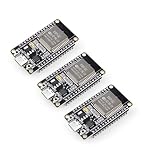
- Dual-Core Performance Up to 240 MHz: Run sensor processing, wireless communication, automation logic and connected-device tasks on a 32-bit dual-core ESP32 platform designed for responsive embedded and IoT projects
- Built-in Wi-Fi and Bluetooth 4.2: Connect to 2.4 GHz Wi-Fi networks or use Bluetooth Classic and BLE for wireless sensors, smart devices, remote controls, home automation and other connected projects
- Flexible Power-Saving Modes: ESP32 power-management features support dynamic clock scaling and low-power operating modes, helping developers reduce energy use in compatible sensing, monitoring and connected-device applications, suitable for battery-powered Internet of Things (IoT) devices.
- USB-C Programming with CP2102: Connect through USB-C for power, sketch uploads and serial monitoring, while GPIO, UART, SPI and I2C interfaces support sensors, displays, motor drivers and other modules (USB-C cable not included)
- Over-the-Air Update Support: Configure OTA functionality through a compatible ESP-32 software framework to update deployed firmware over Wi-Fi without reconnecting the board by USB for every revision
The relevant question is generally the use of the imported covered article, not simply whether a finished product is sold in a retail store. A semiconductor used in a data-center application may receive different treatment from an otherwise similar item intended for a qualifying home or personal-computing use.
Importers still need to classify goods correctly and maintain documentation supporting an exclusion. The provision does not mean that all consumer electronics are exempt from all U.S. tariffs. Other duties, fees, classifications, trade actions, and product-specific rules may still apply.
CBP also issued updates covering the semiconductor tariff changes in Harmonized System Updates 2601 and 2602. Because tariff schedules can be revised, businesses should consult the current USITC Harmonized Tariff Information and current CBP guidance rather than rely on an archived 2025 schedule.
What’s actually slowing this PC down?
Pick the symptom - the matching free tool is one click away.
Who could remain exposed?
Potential exposure could remain for:
- Advanced-computing products used in data centers.
- Covered products used outside an eligible consumer application.
- Semiconductor-manufacturing equipment within the covered scope.
- Derivative products that do not qualify for an exclusion.
- Imports for which the claimed end use cannot be documented.
- Products affected by separate tariff regimes or other trade measures.
A U.S.-assembled product could still contain imported chips or subassemblies. A product admitted to a foreign-trade zone could also receive different treatment depending on its status and when duties become due. The January proclamation generally provided for privileged foreign status for covered products admitted after the effective date when they were not eligible for domestic status.
What consumers should watch
For household budgeting, the most useful signals are not tariff headlines alone. Watch for:
- Manufacturer price announcements and changes to warranty or configuration options.
- Product discontinuations or reduced availability.
- Longer lead times for computers, graphics cards, networking equipment, or consoles.
- Changes in regional pricing between the United States and other markets.
- Retailer inventory levels, promotions, and the timing of price changes.
- Updates to CBP guidance and the Harmonized Tariff Schedule.
- New Section 232 actions or changes to existing exclusions.
Consumers generally cannot determine a product’s tariff liability from its retail label alone. “Made in the USA” final assembly does not prove that all inputs were made domestically, and a retail product’s price may reflect many costs besides customs duties.
The larger lesson
The September 2025 Ars Live topic captured a genuine business problem: companies had to plan around the possibility of broad chip tariffs before the government had published a stable scope, rate, and exclusion system. That uncertainty could disrupt sourcing and pricing even before any duty was collected.
Quick wins for a faster PC:
Repair Windows errors before they cause bigger problemsFix Now →Fix the driver behind crashes, sound loss and screen glitchesFind Drivers →Clear out junk files and repair common Windows errorsFree Scan →But the enacted January 2026 policy was more limited and use-sensitive than the broadest warnings considered in 2025. The correct takeaway is not “all chips were tariffed” or “all consumer electronics were protected.” It is that tariff exposure depends on the specific product, classification, origin, timing, end use, documentation, and any other applicable trade measure.
Quick Recap
Product prices and availability are accurate as of the date/time indicated and are subject to change. Any price and availability information displayed on Amazon at the time of purchase will apply.



