Some links on this page are affiliate links: if you buy through them we may earn a commission, at no extra cost to you.
Arm created Pelion in 2020 from part of its IoT Services Group, but Pelion did not become independent from Arm on launch day. It began as a separately branded, wholly owned Arm subsidiary, was sold to SoftBank in November 2021, and became an independent company backed by Scottish Equity Partners in 2022. The Pelion business operating today is chiefly focused on managed IoT cellular connectivity; its former device-management business went to Izuma Networks.
What Arm spun out—and what it kept
On July 7, 2020, Arm announced plans to transfer its IoT Services Group businesses—its IoT Platform and Treasure Data—to new entities owned and operated by SoftBank and its affiliates. Arm said the change would let it strengthen its focus on semiconductor intellectual-property licensing. The announcement concerned services businesses, not Arm’s processor designs, Cortex IP, Mbed OS or semiconductor-licensing operations. Arm also said it expected to continue collaborating with the new IoT entities.

That was Arm’s stated strategic rationale, not an admission that its IoT work had failed. In business terms, it separated a services operation from Arm’s core IP-licensing model. Arm’s July 2020 announcement described the intended transfer; it was not itself the date Pelion became a separately branded business or the date Arm completed a sale.
Recommended Free Tools
Pelion launched under Arm ownership
Pelion formally launched on November 19, 2020. Its launch materials used the language of an independent company, but also stated that Pelion was wholly owned by Arm. The most precise description is that Pelion launched as a separately branded, independently operated Arm subsidiary—not as a company already outside Arm’s ownership.
#1 Best Overall
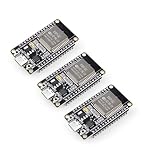
- Dual-Core Performance Up to 240 MHz: Run sensor processing, wireless communication, automation logic and connected-device tasks on a 32-bit dual-core ESP32 platform designed for responsive embedded and IoT projects
- Built-in Wi-Fi and Bluetooth 4.2: Connect to 2.4 GHz Wi-Fi networks or use Bluetooth Classic and BLE for wireless sensors, smart devices, remote controls, home automation and other connected projects
- Flexible Power-Saving Modes: ESP32 power-management features support dynamic clock scaling and low-power operating modes, helping developers reduce energy use in compatible sensing, monitoring and connected-device applications, suitable for battery-powered Internet of Things (IoT) devices.
- USB-C Programming with CP2102: Connect through USB-C for power, sketch uploads and serial monitoring, while GPIO, UART, SPI and I2C interfaces support sensors, displays, motor drivers and other modules (USB-C cable not included)
- Over-the-Air Update Support: Configure OTA functionality through a compatible ESP-32 software framework to update deployed firmware over Wi-Fi without reconnecting the board by USB for every revision
The initial Pelion proposition was broader than cellular service. It aimed to manage connected devices across their lifecycle, bringing connectivity, device management, security and related services together. Pelion’s launch announcement and its earlier platform description show how the company presented that offer at the time.
What the original Pelion platform offered
Historical Arm and Pelion materials describe a platform intended to connect devices and help organizations manage them after deployment. Capabilities varied by offering and deployment; they should not be read as a description of every feature Pelion sells today.
Rank #2

- Certified & Future-Ready: Espressif-certified ESP32-WROOM-32E ensures full hardware compatibility and lifetime firmware support. Upgraded 8MB Flash handles IoT data and OTA updates.
- Dual-Core Speed: 240MHz dual-core processor runs Wi-Fi/BLE and sensors 2x faster. 38 GPIO pins (10 RTC) support SPI/I2C/UART for LCDs, motors, and industrial sensors.
- Plug & Play Dev: USB-C driver pre-installed: upload code instantly on Windows/Mac/Linux. Works with Arduino IDE, MicroPython, and Espressif IDF.
- All-Environment Ready: Run Wi-Fi smart switches (Home Assistant) and BLE tracking on one board. Industrial-grade stability (-40°C~85°C) for outdoor/automated systems.
- Advantages: The ESP32 development board offers high performance, low power consumption, and rich wireless connectivity, making it suitable for developers of all levels, especially beginners.
- Connectivity management: Management of device connections across cellular and other network technologies, including support described for cellular, NB-IoT and Wi-SUN deployments.
- Device management: Tools for monitoring and managing devices, with cloud and on-premises options described in Arm’s product materials.
- Security and identity: Device identity, access controls, secure onboarding and related security functions.
- Software maintenance: Secure over-the-air firmware and software updates.
- Data and edge functions: Data-management and edge-gateway capabilities, including data aggregation in some deployments.
Arm described potential applications in utility metering and other connected infrastructure, as well as industrial equipment, vehicle telematics, building access and patient monitoring. Its utility overview and Pelion platform overview document that historical positioning.
PC Slower Than It Used to Be?
A free scan shows the junk files, broken settings and background clutter dragging Windows down - then fixes them in one click.Free scan · Windows 10 & 11Outdated Drivers Are Slowing You Down
One free scan finds every outdated or missing driver and matches the right update for your exact hardware.Free scan · exact hardware matchPelion’s ownership, step by step
| Date | What happened |
|---|---|
| July 7, 2020 | Arm announced its intention to transfer the IoT Services Group businesses, including the IoT Platform and Treasure Data, to new SoftBank-owned entities. |
| November 19, 2020 | Pelion launched as a separate brand and wholly owned Arm subsidiary. |
| November 2021 | Arm sold Pelion IOT Limited and its subsidiaries to SoftBank Group Capital Limited. Arm’s regulatory filing reports approximately $12 million in cash consideration for this transaction and says Arm had no significant involvement with the business after disposal. The figure relates to the Pelion IOT Limited transaction, not necessarily the value of every Pelion-related asset or earlier investment. |
| 2022 | Pelion’s company history records that it became independent from SoftBank, backed by Scottish Equity Partners (SEP). SEP announced a growth investment on October 19, 2022; Pelion described itself then as an IoT connectivity business with 500 customers. |
The dates distinguish a proposed restructuring from a launch, a sale and a later move to independence. Arm’s regulatory filing describes the sale; Pelion’s company history and SEP investment announcement describe the later company history.
Rank #3
Why Pelion narrowed its business to connectivity
Pelion says connectivity was its strongest-performing business and that focusing on it would help the company respond more quickly to customer and market needs. It says that in late 2021 it chose not to continue along a broader device- and edge-management path. This is Pelion’s account of its strategic choice, rather than an independent assessment of performance. Its connectivity strategy announcement explains the change.
The distinction matters: “IoT services” once described a wider platform spanning connectivity and device functions. The current Pelion offer is substantially more concentrated on cellular connectivity and SIM-fleet administration.
Rank #4

- 2.4GHz Dual Mode WiFi + Bluetooth Development Board
- Support LWIP protocol, Freertos
- SupportThree Modes: AP, STA, and AP+STA
- Ultra-Low power consumption, Compatible with Arduino IDE
- ESP32 is a safe, reliable, and scalable to a variety of applications
Where the former device-management business went
Izuma Networks announced on October 4, 2022, that it had acquired Pelion’s Device Management business. Izuma said the technology would become part of Izuma Cloud and that the former Pelion Device Management Client would become Izuma Client. Izuma’s positioning includes device and edge management, including remote gateway management and firmware updates. The announcement establishes a transfer of the business and technology; it does not establish that every former Pelion customer, contract or feature automatically moved to Izuma.
The Tool Desk
Outbyte Driver Updater FREEScan for outdated or missing drivers - takes under a minuteDriver Scan →Outbyte PC Repair FREERepair Windows errors before they cause bigger problemsFix Now →For buyers, this means Pelion connectivity and the former Pelion Device Management product are not interchangeable names for one current platform. The acquisition is described in Izuma’s announcement.
Best Value
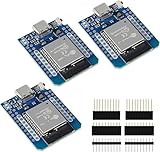
- D1 Mini NodeMCU Type-C ESP32 WLAN WiFi Bluetooth IoT Development Board 5V Compatible for Arduino
- Designed with ultra-low power technology, it offers the full range of performance and features of the ESP32 chip. The pin arrangement provides compatibility with the modules developed for the D1 Mini ESP8266 while also offering fast WLAN, enhanced GPIO, Bluetooth functionality, and with its higher performance, a wider range of applications.
- 100% compatible with Arudino IDE, Lua and Micropython, it shows robustness, versatility, and reliability in a wide variety of applications and power scenarios.
- All I/O pins have interrupt, PWM, I2C and one-wire capability, except the pin DO.
- Designed with ultra-low power technology, it offers the full range of performance and features of the ESP32 chip. The pin arrangement provides compatibility with the modules developed for the D1 Mini ESP8266 while also offering fast WLAN, enhanced GPIO, Bluetooth functionality, and with its higher performance, a wider range of applications.
What Pelion offers now
Pelion currently presents itself primarily as a managed IoT connectivity provider. Its website markets multi-network IoT eSIMs, cellular data plans, SIM-fleet management through the Pelion Portal, usage monitoring and support. It lists 4G/LTE, 5G, LTE-M/Cat-M1 and NB-IoT among supported cellular technologies.
Pelion advertises connectivity across 600+ networks in 150+ countries and a 99.995% uptime figure. Those are Pelion’s own marketing claims, not an independent guarantee of service in every location or deployment; contractual service levels may differ. The company says it migrated customers to Portal V7 in 2024 and launched Pelion Plans in 2025. Its About page reports 1,000+ enterprise customers and 60+ employees; those are company-reported figures, not independently audited counts. See Pelion’s current site and company history for its current presentation.
Pelion’s public material promotes flexible and pooled plans, support and service-level options, but does not provide a universal public price table in the material cited here. Actual cost should be confirmed for the proposed countries, networks, device count, data use, support level and contract terms rather than inferred from a generic per-SIM or per-megabyte figure.
Do these 3 things before closing this tab:
1Clear out junk files and repair common Windows errors2Fix the driver behind crashes, sound loss and screen glitches3Repair Windows errors before they cause bigger problemsWhen Pelion may fit—and when the need is different
Potential fit
- Multinational or distributed fleets that need cellular connectivity across more than one carrier or country.
- Industrial, utility, logistics or telematics deployments where SIM administration and ongoing support matter alongside data service.
- Organizations seeking a managed connectivity relationship rather than building all telecom operations themselves.
Look beyond Pelion connectivity if
- The core requirement is device configuration, remote commands, firmware lifecycle management or edge-application orchestration. Evaluate device-management products separately, including Izuma where relevant.
- The project needs a cloud IoT layer rather than cellular service. AWS IoT Core and Microsoft Azure IoT are cloud-platform offerings, not direct substitutes for Pelion’s SIM and connectivity operations.
- The priority is a standardized, self-service connectivity package or a vertically integrated hardware-and-software stack. Alternatives worth comparing include 1NCE, Soracom, Hologram and Particle. These are not interchangeable offerings, and their current pricing, coverage and features should be checked directly.
Questions to settle before choosing a connectivity provider
- Confirm hardware compatibility. Check that modems support the required radio bands and that the hardware supports the eSIM/eUICC functions the deployment expects.
- Map the required networks. Validate actual carrier availability for every target country and technology—such as LTE-M, NB-IoT, 4G or 5G—rather than relying on a global coverage headline.
- Check local rules and network behavior. Ask whether service uses roaming or local breakout, whether permanent roaming is allowed in each market, and how 2G or 3G sunsets affect any fallback requirements.
- Define SIM lifecycle controls. Establish how activation, suspension, termination, replacement and profile switching work, and what happens to eSIM profiles at contract exit.
- Model data charges and overages. Confirm whether plans are pooled or per-device and whether excess usage is billed, throttled or suspended.
- Plan for connection failure. Ask how devices recover if a primary network is lost or a remote profile update fails.
- Test automation needs. Verify that portal functions and available interfaces can support provisioning and usage monitoring in the customer’s systems.
- Separate security layers. Determine whether the requirement is for connectivity controls, device management, application security or all three; SIM management alone does not provide a complete device-software lifecycle platform.
- Confirm support and service levels. Get the scope, hours and contractual terms for support and any enhanced SLA in writing; do not assume a website uptime claim is the contract guarantee.
- Understand exit terms. Confirm whether SIMs can move to another provider, what migration entails and what happens to profiles, data and service when the contract ends.
What the “Arm Pelion spinout” means in retrospect
Pelion was not a single completed divestiture in 2020. Arm announced a planned restructuring, launched Pelion under its ownership, sold the Pelion entity to SoftBank the following year, and the business became independent in 2022. Its scope also changed: the broad connected-device proposition narrowed toward cellular connectivity, while the device-management business went to Izuma Networks.
Quick Recap
Product prices and availability are accurate as of the date/time indicated and are subject to change. Any price and availability information displayed on Amazon at the time of purchase will apply.



