What’s actually slowing this PC down?
Pick the symptom - the matching free tool is one click away.
Some links on this page are affiliate links: if you buy through them we may earn a commission, at no extra cost to you.
Arm server CPUs are already established in hyperscale cloud infrastructure, but they are not replacing x86 across the data center. AWS Graviton, Google Axion, Microsoft Cobalt and Ampere-based cloud instances give customers real Arm64 options. They can be compelling for compatible, scale-out Linux workloads; legacy applications, licensing, support and migration costs still make x86 the safer choice for many systems. For most organizations, the practical question is which workloads belong on Arm—not whether to move everything.
From prediction to practical choice
When the original 2021 forecast described Arm server CPUs as “coming” to the data center, the market was still taking shape. AWS Graviton2 was an important early cloud example, Ampere Altra offered a merchant-server alternative, and enterprise adoption remained limited. By 2026, major cloud providers offer Arm-based virtual machines, newer processor generations are arriving, and software support is substantially broader.



That is a meaningful change—but not proof that Arm has displaced Intel and AMD. Hyperscalers can design or adopt CPUs around their own fleet, virtualization, network and power needs. An enterprise running a few dozen servers faces different procurement, compatibility and support constraints. Arm is now a durable second server architecture, especially in cloud-native environments; x86 remains essential for breadth of compatibility and established enterprise software.
Recommended Free Tools
What “Arm server CPU” means
Arm is an instruction-set architecture, not one processor or a single performance profile. The products and deployment models differ:
#1 Best Overall
| Platform | How customers access it | What to know |
|---|---|---|
| AWS Graviton | Arm-based EC2 instances | AWS designs its CPUs and integrates them into its cloud platform. Instance families differ by compute, memory, storage and network focus. |
| Google Axion | Arm-based Compute Engine VMs, including C4A | Google identifies Axion as based on Arm Neoverse V2 cores and positions C4A for general-purpose computing. |
| Microsoft Cobalt | Azure VMs | Cobalt 100 is in production; Cobalt 200 was announced in early-access preview in June 2026, not as a universally available replacement. |
| Ampere | OCI cloud instances and physical server systems | Ampere sells merchant Arm server processors, giving customers and systems builders an option beyond provider-designed CPUs. |
These categories should not be conflated. An Arm CPU inside a SmartNIC or DPU, a host processor in an accelerator system, an Arm-based supercomputer, and a general-purpose cloud VM are all uses of Arm technology, but they do not demonstrate the same kind of server adoption.
Where Arm is available—and what the claims mean
AWS Graviton
AWS announced general availability of Graviton4-powered C8gn instances on June 30, 2025. AWS lists configurations with up to 192 vCPUs, 384 GiB of memory and 600 Gbps of networking, targeting network-intensive work such as appliances, proxies, firewalls, load balancing and data processing. AWS says C8gn can provide up to 30% higher compute performance than Graviton3-based C7gn instances. Those are product and vendor claims, not a guarantee that every application will run faster or cost less. Results depend on the workload, build, instance configuration, utilization and price model. See AWS’s C8gn announcement.
Google Axion
Google’s Axion overview and Compute Engine machine documentation describe C4A as an Axion-powered general-purpose VM family based on Arm Neoverse V2. The documentation lists configurations reaching up to 384 vCPUs and 3,024 GB of DDR5 memory, with exact limits dependent on machine type and availability. Google also reports performance and price-performance benefits for selected workloads; these should be read as vendor comparisons, not universal cross-cloud findings. For example, its AlloyDB announcement describes results for a particular database and comparison setup.
Microsoft Azure Cobalt
Microsoft said Cobalt 100 was available in 29 Azure regions in September 2025. In June 2026 it announced early-access preview of Cobalt 200 VMs. Microsoft claims up to 50% better CPU performance than Cobalt 100, alongside maximum improvements in storage IOPS, storage throughput and network bandwidth. These are generation-to-generation vendor claims and vary by application and configuration; “up to 50%” is not a promise of a 50% gain for a customer’s workload. See Microsoft’s pages on Cobalt 100 and Cobalt 200.
Rank #2
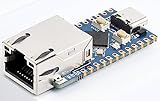
- 【RP2040-ETH Module】 Based On RP2040, Onboard Ethernet Port,Dual-core Arm Cortex M0+ processor, flexible clock running up to 133 MHz 264KB of SRAM, and 4MB of onboard Flash memory.
- Onboard CH9120 with integrated TCP/IP protocol stack. 14 × multi-function GPIO pins, compatible with some Pico HATs.
- Castellated module allows soldering direct to carrier boards. Drag-and-drop programming using mass storage over USB. 8 × Programmable I/O (PIO) state machines for custom peripheral support. Controllable via network.
- Support multiple communication modes: Supports TCP Server / TCP Client / UDP Server / UDP
- Support C/C++, MicroPython, Arduino: Comprehensive SDK, Dev Resources, Tutorials To Help You Easily Get Started
Oracle Cloud and Ampere
Oracle Cloud has offered Ampere-based A1 and A2 shapes. Ampere reported in October 2025 that these had served more than 1,000 customers across more than 65 regions. Its announcement described AmpereOne M-powered A4 shapes as an upcoming offering with general availability expected in November 2025. That historical announcement does not establish current availability in every OCI region; check Oracle’s live service information before planning a deployment. See Ampere’s A4 announcement.
AmpereOne is also a merchant-CPU option for physical systems. Ampere’s product brief lists family configurations with 96 to 192 cores, DDR5, PCIe 5.0 and server-class reliability, availability and serviceability features. Specifications vary by model; performance figures supplied by a vendor should not be treated as independent benchmarks.
Why data-center operators are interested
Power, cooling and density. A high-core-count design can be attractive when an operator can keep many parallel workloads busy and deliver the required service within a constrained power envelope. Lower energy use or more work per rack can help with electricity, cooling and capacity—but those outcomes depend on the exact CPU, system and workload. A processor with many efficient cores is not automatically better for a lightly threaded or latency-sensitive application.
PC Slower Than It Used to Be?
A free scan shows the junk files, broken settings and background clutter dragging Windows down - then fixes them in one click.Free scan · Windows 10 & 11Crashes, No Sound, or Screen Glitches?
Random freezes, missing sound and display glitches usually trace back to one bad driver. Find and replace yours safely.Free scan · under a minuteControl at scale. A hyperscaler can align a custom processor with its virtualization layer, security model, fleet management, network and storage. It also operates enough machines to justify the engineering and procurement. That advantage does not automatically transfer to a smaller organization buying servers or cloud instances.
Cloud-native software. Linux services, containers and horizontally scaled applications are often easier to move between CPU architectures than a tightly coupled legacy system. Teams that build their own software can produce native Arm64 versions, test them, then direct compatible services to Arm capacity.
More work around AI. Large-model training remains a job for accelerators such as GPUs, not a reason to assume Arm CPUs replace them. Arm’s opportunity is often in CPU-side work: inference orchestration, data preparation, retrieval, filtering, web services, recommendation systems and application back ends. Microsoft and Ampere position some of their products for these workloads, but those product positions are not proof that every AI system benefits from an Arm CPU.
Good candidates—and workloads that need caution
Arm is worth evaluating first for stateless web services, APIs, proxies, load balancers, Linux containers, Kubernetes workers, caches, network appliances, data pipelines and scale-out analytics. Go, Rust, Java, Python and Node.js applications can be candidates when their runtimes and native dependencies support Arm64. C and C++ services are often viable if the team can rebuild, test and support them for the target architecture. Selected databases may also benefit: Google has published favorable AlloyDB-on-Axion comparisons, but the result applies to the named product and test conditions.
Free tools Windows power users keep installed
One-click scans. No signup required.
Proceed carefully with Windows-only software; x86-only binaries or plugins; proprietary applications without an Arm64 build; commercial databases and middleware with narrow certification; code using x86-specific instructions or handwritten assembly; and systems relying on particular drivers, virtualization extensions or binary-only agents. Check licensing too: a per-core license can change the economics of a high-core-count CPU substantially.
Linux and containers improve the odds; they do not make compatibility automatic. The entire dependency chain matters, including monitoring, endpoint security, backup, encryption, database drivers, CI runners, base images and support contracts.
Cloud Arm is not the same as on-premises Arm
Cloud providers can deploy custom processors within systems they control—from CPU and hypervisor to fleet software and VM images. Customers can try an Arm instance without buying servers, which lowers the entry barrier. But selecting a provider-specific VM can deepen dependence on that provider’s regions, instance families, pricing and surrounding services.
On-premises deployments offer different trade-offs. Merchant processors such as AmpereOne can give a hosting company, telecom operator, appliance vendor or large enterprise more hardware choice, but the buyer must account for system availability, firmware, support, spare parts, certifications and the skills to operate another architecture. The cloud’s Arm adoption is not evidence that conventional enterprise racks have changed at the same pace.
A practical evaluation plan
- Inventory architecture dependencies. Identify binary-only components, native libraries, drivers, agents, plugins, compiler flags, instruction-set assumptions and vendor support limits.
- Build for Arm64. Produce native
linux/arm64application images and verify that every base image and dependency has a supported Arm64 build. In Kubernetes, plan for multi-architecture image manifests, separate Arm and x86 node pools where needed, architecture-aware scheduling, and CI coverage for both. - Test the real service. Run unit, integration, security and performance tests on Arm hardware or VMs. Validate observability, backup, recovery and incident-response tooling—not just whether the application starts.
- Compare equivalent outcomes. Benchmark the same software version against the same service-level objectives. Track throughput, p95 and p99 latency, memory, network and storage behavior, scaling and failure recovery. Compare cost per request or transaction, not just the price of two differently sized VMs or their vCPU counts.
- Include full costs. Add licensing, engineering and test effort, support, data transfer, storage and network charges, reserved capacity, dual-architecture operations and fallback capacity. A cheaper hourly rate is not automatically a lower total cost.
- Canary before committing. Roll out to a limited production slice, measure under representative traffic, and retain an x86 path for unsupported or anomalous workloads. Set a rollback plan before the test, not after performance or compatibility issues surface.
For physical AmpereOne systems, Ampere publishes model-specific OS compatibility and compiler recommendations. That document is useful for its stated AC04 scope; it should not be generalized to every Arm server.
Make the decision workload by workload
Start with compatibility, then test performance and economics. Ask whether the exact application, agents and support policy work on Arm64; whether its bottleneck suits the target platform; whether the measured cost per unit of useful work improves; and whether the organization can support mixed architectures. Check regional and instance availability, disaster-recovery coverage, security and compliance requirements, as well as the portability cost of choosing a provider-specific CPU.
For live costs, use the provider’s current calculator rather than a static “Arm is cheaper” estimate: AWS EC2 pricing, Google Cloud pricing calculator, Azure pricing calculator and Oracle Cloud cost estimator. Prices and availability vary by region, instance family, operating system, commitment and network or storage usage.
The likely data-center outcome is heterogeneous: x86 for broad compatibility and established enterprise software, Arm for suitable scale-out services and cloud-native workloads, and accelerators for compute-intensive AI. That is not a failed transition. It is a way to match the platform to the workload.
The Tool Desk
Outbyte Driver Updater FREEFix the driver behind crashes, sound loss and screen glitchesFind Drivers →Outbyte PC Repair FREERepair Windows errors before they cause bigger problemsFix Now →Quick Recap
Product prices and availability are accurate as of the date/time indicated and are subject to change. Any price and availability information displayed on Amazon at the time of purchase will apply.



