Quick wins for a faster PC:
Fix the driver behind crashes, sound loss and screen glitchesFind Drivers →Repair Windows errors before they cause bigger problemsFix Now →Scan for outdated or missing drivers - takes under a minuteDriver Scan →Some links on this page are affiliate links: if you buy through them we may earn a commission, at no extra cost to you.
Waymo’s driverless cars look unusually promising for insurers when the question is how often they are involved in serious crashes or generate liability claims. But “an insurance company’s dream” is an interpretation, not a study finding: fewer claims do not automatically mean more profit, cheaper coverage or less risk overall.
An independent 2026 analysis found fewer police-reportable crash involvements per mile for Waymo vehicles in four U.S. markets. Separate Waymo/Swiss Re research reported fewer liability claims than a modeled human-driver benchmark. Both results matter, but they describe a specific commercial fleet—not every automated car or every road condition.
What the independent crash study found
In a study published July 23, 2026, the Insurance Institute for Highway Safety (IIHS) compared Waymo Level 4 vehicles operating without a human driver with human drivers in the same regions and years. Across Phoenix, San Francisco, Los Angeles and Austin, the study covered about 50 million driverless miles and about 222 billion human-driven miles. Waymo vehicles had a 68% lower rate of police-reportable crash involvement per vehicle mile, according to IIHS’s study summary.
Recommended Free Tools
The overall figure conceals meaningful differences among the four cities:
#1 Best Overall

- UPSCALED 4K FRONT + 1080P REAR DUAL DASH CAM: The ROVE R2-4K DUAL records the road ahead and behind at the same time. The front camera captures at 2.5K (QHD) and intelligently upscales to 4K (2160P) for higher-detail playback, while the rear camera records at Full HD 1080P. This is upscaled 4K, not native 4K, engineered to show sharper everyday detail than standard 1080P dash cams, so you can read license plates, signs, and surroundings in front and rear footage.
- SONY STARVIS 2 IMX675 SENSOR + SUPER NIGHT VISION: The front camera uses a Sony STARVIS 2 IMX675 5MP image sensor with a wide F1.5 aperture (F1.8 rear) and HDR to pull in more light for clearer low-light footage. This advanced sensor enhances nighttime clarity, helping capture license plates, road signs, and surrounding vehicles with greater reliability when driving after dark, through tunnels, or in dusk and dawn conditions.
- ULTRA FAST 5.8GHz WIFI/ UP TO 20MB/s DOWNLOAD SPEED: With its built-in dual-band 5.8GHz and 2.4GHz WiFi, you can use the ROVE dash cam app to view and manage dash cam recordings instantly on your iPhone and Android smartphone. Using the ROVE app, download your recorded videos directly to your smartphone at up to 20 MB/sec, then easily share them on social media with friends and family. Additionally, manage camera settings and update the latest firmware over-the-air via the ROVE App.
- CAR CAMERA WITH GPS: The new front and rear dashcam comes with built-in GPS, which enables you to view real-time live speed and compass on the 3” IPS wide camera screen. It records precise driving routes, locations, and speed stamps directly on the video so you can watch dashcam videos with GPS data using ROVE's free GPS Player on your PC or Mac & get additional evidence when you need it.
- FEATURES WITH STATE-OF-THE-ART TECHNOLOGY INCLUDED: Experience peace of mind with this front and rear car dash cam. It comes with a free 128GB microSD card and offers advanced features such as an f1.5 aperture, motion detection, G-sensor, seamless loop recording, emergency video lock, screen saver, live speed and compass direction, voice guidance, ring of threads for optional CPL filter, a built-in supercapacitor for extended product life, support for up to 1TB microSD cards, and many more.
| Market | Difference in Waymo police-reportable crash involvement per mile |
|---|---|
| Phoenix | 76% lower |
| San Francisco | 35% lower |
| Los Angeles | 71% lower |
| Austin | 4% higher; the sample was relatively small |
The same IIHS comparison found an 85% lower rate of single-vehicle crashes and an 81% lower rate of injury crashes per mile. Waymo vehicles rear-ended other vehicles 91% less often and were rear-ended 40% less often. These are rates for the studied Waymo vehicles and operating markets, not a verdict on all autonomous vehicles or all possible routes. The IIHS research abstract describes the study’s measures and incident coding.
Why insurers care about claims, not just crashes
A crash count and an insurance claim answer different questions. A Waymo vehicle can be involved in a collision without causing it or owing compensation. For an insurer, the relevant issues include who was responsible, what was damaged, whether anyone was hurt and which party’s coverage applies.
- Crash involvement: The vehicle was part of a crash, regardless of fault.
- Third-party liability: The insured party is alleged or found to have caused injury or damage to someone else.
- First-party vehicle damage: The insured vehicle itself needs repair or replacement.
- Bodily injury: Someone makes a claim for injury tied to the incident.
A vehicle that is struck by another driver may produce a crash record but not a liability payment by the Waymo operator. Conversely, one collision can lead to costly injury, repair, legal and business-interruption claims. The IIHS finding measures police-reportable crash involvement; it does not by itself establish fault or an insurer’s total cost.
What the Waymo and Swiss Re claims studies add
Waymo and Swiss Re have published comparisons focused on auto-liability claims, a measure closer to an insurer’s payment risk than raw crash involvement. These studies are encouraging but use modeled human-driver benchmarks; they are not randomized nationwide experiments.
The 2023 comparison
A Swiss Re-led, peer-reviewed analysis covering more than 3.8 million Waymo miles reported a 76% reduction in property-damage claim frequency relative to its mileage- and location-calibrated human-driver benchmark. It observed no bodily-injury claims in the Waymo sample, compared with claims in the human benchmark. Waymo’s summary of the 2023 study describes the comparison.
Rank #2
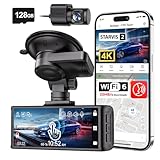
- [4K+1080P Dual Recording] REDTIGER F7N TOUCH captures your drive journey in stunning 4K UHD resolution with STARVIS 2 sensor 170° wide-angle view for the front dash cam and 1080P FHD resolution 140° wide-angle for the rear car camera. Equipped with WDR and HDR technology, the enhanced super night vision ensures better visibility even in low-light situations, providing you with reliable recordings day and night.
- [Voice Control & Touch Screen] F7NTOUCH dashcam features voice commands, allowing for hands-free control of your 4K car camera, which enhances safety by minimizing distractions. The dual camera dash cam also has smart touchscreen that can lock emergency video, turn on wifi, and capture scenery with one click. Redtiger also retains the buttons, multiple control methods are integrated.
- [Built-in GPS & 5.8GHz WiFi] Both Android and IOS users can connect to dashcam WiFi via the REDTIGER Cam app. Although the dash cam is installed wired, you can enjoy wireless control on your smartphone, faster 20MB/s download speed and share your driving experiences in real-time with friends and insurance companies. Car recorder built-in GPS provides traceable location, speed, and accurate route in the recordings.
- [Loop Recording & G-Sensor] REDTIGER F7N TOUCH dual channel dash cam automatically overwrites the oldest footage when the memory is full, ensuring endless recording with the included 128GB card. With a built-in G-sensor that detects sudden movements or impacts, it automatically locks and protects the associated footage when an event is detected on the road, ensuring it won't be overwritten during loop recording.
- [24-hour Parking Monitoring*] REDTIGER Car dashboard camera offers G-Sensor Parking Mode that automatically record when it detects any collisions or sudden motion while vehicles is parked. Time Lapse Parking Mode provides continuous surveillance by offering a condensed overview of any events that may occur during parking periods. *Please note that the parking monitoring function requires a separate hardwire kit.
The 25.3-million-mile comparison
A later Waymo/Swiss Re analysis covered 25.3 million fully autonomous miles, with no human in the driver’s seat, and compared claims with a benchmark involving human-driven vehicles from model years 2018–2021. It reported 92% fewer bodily-injury claims and 88% fewer property-damage claims. In the comparison, Waymo recorded two potentially liable bodily-injury claims versus an estimated 26 for the human benchmark, and nine property-damage claims versus an estimated 78. The counts are small, and the human figures are benchmark estimates rather than observed claims from a matched control fleet. See the Waymo/Swiss Re study for its scope.
Waymo’s safety-impact hub separately reports more than 220.6 million rider-only miles through March 2026, comparing company-reported crash rates with human-driver benchmarks in counties where it operates. That is useful exposure information, but it is Waymo’s own analysis, not an independent IIHS result. Waymo’s safety-impact page provides the company’s figures and methodology.
What’s actually slowing this PC down?
Pick the symptom - the matching free tool is one click away.
How to read the comparisons
The headline number is not a simple comparison of two raw crash-report totals. IIHS had to account for different reporting systems and different denominators. Human drivers generally report crashes when state law requires it, often based on injury or damage thresholds. Automated-vehicle reporting requirements historically captured many minor incidents that a human driver would not report.
IIHS manually reviewed and cleaned the automated-vehicle records, removing duplicates, incidents when automation was not engaged, off-road events and incidents unlikely to be police-reportable. Only about 22% of reported Level 4 crash involvements were judged police-reportable or possibly police-reportable. IIHS also reported that it removed roughly three-quarters of reported incidents from the comparison pool. The 68% result therefore reflects a filtered rate comparison, not every recorded contact.
Automated-vehicle reporting rules changed in 2025, making the treatment of minor incidents more comparable, but differences remain. Companies must report qualifying crashes but generally do not have to disclose total miles traveled. Waymo voluntarily publishes mileage data, allowing IIHS to calculate a rate; limited comparable exposure data make broad comparisons with other operators difficult.
Rank #3

- 💖💖【Important Note】Due to soaring memory chip costs, many brands have eliminated memory cards entirely, requiring a separate purchase. However, to save you the hassle of buying extra accessories, we are resisting cost pressures without raising our dashcam's price. Starting June 26, 2026, this camera will include a 32GB memory card (previously 64GB) so you can still use it out of the box. For extended storage, we highly recommend purchasing a Class 10, U3, and V30 (or higher) memory card.
- 【4K 2160P Resolution Dash Cam】Capture every drive in stunning 4K UHD resolution with the Galphi front dash cam, featuring a 160-degree wide-angle lens for clear, cinematic video footage. Ideal for family cars, new drivers, and Uber/Lyft drivers, it provides reliable video evidence for accident disputes and insurance claims.
- 【Advanced 5GHz WiFi with App】 Featuring cutting-edge 5GHz WiFi and a free app, the video download speed reaches up to 8MB/s, compared to just 2MB/s with the 2.4GHz option. This greatly reduces download times and minimizes lag during video playback.
- 【No Screen & Less Distraction】This dash camerma features a screen-free design, minimizing distractions while you drive so you can stay focused on the road. Enjoy peace of mind knowing your camera is recording without taking your attention away from the journey.
- 【Compact and Super Easy to Install】The dash cam's slim and compact design ensures it won't obstruct your view. With easy installation and clear, detailed instructions included, even first-time users can set it up without any hassle.
When assessing any safety claim, ask what the denominator is (miles, trips or vehicles), whether the measure counts all collisions or potentially liable claims, how the human comparison was selected, and which operating conditions were included. A frequency reduction is not the same thing as a reduction in average claim severity or total insurance cost.
Why Waymo is not the same as driver assistance
Waymo’s service uses Level 4 automation within a defined operating domain: under specified conditions, the system performs the driving task without a human supervisor. That is different from consumer Level 2 systems such as GM Super Cruise or Ford BlueCruise, which require a human driver to remain attentive and ready to take over.
As IIHS explains in its overview of advanced driver assistance, partial-automation systems should not automatically be assumed to reduce crashes beyond the benefits of their separate crash-avoidance features. The distinction also matters for responsibility: a Level 4 operator may take on driving-related responsibility within its service conditions, while a Level 2 driver remains responsible for supervising the vehicle.
Independent reader supportYour contribution helps us test, update, and keep practical guides available for everyone.Why lower crash frequency could help an insurer—and what could offset it
Fewer liability claims can mean fewer payments for injuries and damage to other people’s property. A commercial fleet may also be easier to monitor than millions of individual drivers if its vehicles, maintenance and operating procedures are standardized. Vehicle telemetry and event records may help reconstruct how a crash happened, although they do not guarantee that fault will be easy to resolve.
But the insurer’s overall result depends on more than how often a vehicle crashes:
Rank #4
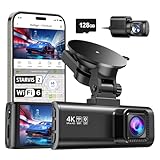
- [4K+1080P Front & Rear Recording] REDTIGER F7NP dash cam captures every detail with stunning 4K front and 1080P rear video. Featuring the advanced STARVIS 2 sensor plus the 170° front and 140° rear wide-angle lens, this dash camera delivers sharper images, balanced lighting, and reliable evidence day or night. Ideal for commuting, road trips, rideshare drivers, and new drivers.
- [STARVIS 2 Sensor & WDR Night Vision] Equipped with the advanced STARVIS 2 sensor, F1.5 large aperture, and 6-layer optical lens, F7NP 4K dual dash cam delivers clear, high-contrast footage in any lighting. WDR and HDR technology balance highlights and shadows, ensuring sharp night vision and crisp details day or night, providing reliable evidence and enhanced safety for every drive.
- [Built-in 5.8GHz WiFi & Smart App] Connect your smartphone to the dashcam’s built-in 5.8GHz WiFi to enjoy ultra-fast downloads up to 20MB/s. Using Redtiger Cam app, you can preview, download, and replay videos in real time, check GPS ata (route, speed, and location), and manage settings effortlessly, making it simple to review footage and share important moments.
- [Loop Recording & Free Memory Card] This car camera supports seamless loop recording to ensure continuous coverage without interruption. Older files are automatically overwritten when storage is full, while important events are safely locked. A free memory card is included, giving you ample space for 4K recordings and allowing you to use the camera right out of the box.
- [24/7 Parking Mode* & G-Sensor] Enjoy round-the-clock protection with two parking modes: time-lapse recording for continuous low-bitrate monitoring and G-sensor mode that records when collision is detected. The car security camera with G-sensor automatically locks important clips, ensuring crucial evidence is safely preserved even while your vehicle is parked.(*Hardwire kit needed.)
- Repair severity: A low-speed scrape can still require expensive sensor replacement, calibration or other specialized work.
- Concentrated technology risk: A software, sensor or mapping defect could affect many vehicles at once, creating correlated losses rather than isolated claims.
- New liability questions: A crash may involve the operator, vehicle maker, automated-driving developer, component supplier, maintenance contractor or another road user.
- Operational exposure: Cyber incidents, remote-assistance failures, vandalism, weather, charging or maintenance problems, passenger injuries and service downtime can create costs outside ordinary collision claims.
- Revenue shifts: If fleets replace individually owned and insured cars, traditional personal-auto premiums could shrink even if insurers’ loss ratios improve. The crash studies do not establish the effect on industry revenue.
Nor does a lower at-fault crash rate mean a robotaxi is never hit by another driver. Rare situations involving pedestrians, cyclists, scooters, emergency vehicles, animals, construction or unusual police activity can carry high consequences even when they contribute little to an average rate. Performance in selected mapped urban service areas cannot be assumed for rural roads, severe weather, highways or future operating zones.
Who pays when a driverless car crashes?
There is no single nationwide answer established by these studies. Depending on the facts and applicable law, responsibility could fall on the fleet operator, vehicle manufacturer, automated-driving-system developer, a parts or software supplier, a maintenance contractor, another road user, or—in unusual infrastructure cases—a road authority. A passenger’s conduct could also matter in some situations.
State requirements differ. For example, IIHS’s state-law summary lists California as requiring at least $5 million in liability coverage for certain autonomous-vehicle operations; other states use different requirements or lack a deployment framework. That figure is a state-specific example, not a universal minimum for every autonomous vehicle or policy. Consult the IIHS summary of highly automated vehicle laws for state-by-state context.
What the evidence means for the insurance headline
“Insurance company’s dream” is plausible if it means a fleet with fewer injury and liability claims per mile. The independent IIHS crash-rate finding and the separate Waymo/Swiss Re claims analyses support that narrower proposition for Waymo’s studied service and conditions.
Free tools Windows power users keep installed
One-click scans. No signup required.
It is not yet a sound forecast about insurers’ profits, premiums or the future size of the insurance market. Autonomous fleets can shift risk away from individual motorists and toward commercial auto, product liability, cyber, business interruption and other forms of coverage. Whether that trade is attractive depends on claim severity, repair costs, legal responsibility, fleet-wide exposure and the scale at which the service expands.
Quick Recap
Product prices and availability are accurate as of the date/time indicated and are subject to change. Any price and availability information displayed on Amazon at the time of purchase will apply.



