Some links on this page are affiliate links: if you buy through them we may earn a commission, at no extra cost to you.
The viral version is misleading. Bob Cook’s Utah company, Sun Remarketing, handled roughly 5,000 to 7,000 discontinued Apple Lisa computers under a resale or consignment arrangement. Sun refurbished and sold many of them. In September 1989, Apple reclaimed the approximately 2,700 machines still left in the company’s inventory and had them reportedly crushed and buried at a landfill near Logan, Utah.
So the historical record does not show that Cook personally bought 7,000 working computers and that Apple later destroyed every one. It shows a failed product, an ambitious refurbishment business, and a contract that allowed Apple to recover the remaining stock.
| # | Preview | Product | Price | |
|---|---|---|---|---|
| 1 |

|
Apple LISA Computer T-Shirt | $14.03 | Buy on Amazon |
| 2 |

|
Apple 2024 iMac All-in-One Desktop Computer with M4 chip with 8-core CPU and 8-core GPU: Built for... | $1,498.00 | Buy on Amazon |
| 3 |
|
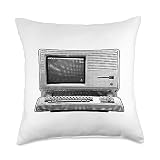
Apple LISA Computer Throw Pillow | $22.00 | Buy on Amazon |
The computer behind the story
The Apple Lisa launched in 1983 with a mouse-driven graphical user interface, icons, windows and menus. It was one of the earliest commercially important personal computers to present computing in that visual form.
Recommended Free Tools
It was also extraordinarily expensive. The Lisa launched at about $9,995, in 1983 dollars. Its price, performance limitations, hardware problems and competition from the cheaper Macintosh and IBM-compatible computers made it a commercial failure, even though its interface influenced the future of personal computing.
#1 Best Overall
- Vintage design of LISA computer
- Lightweight, Classic fit, Double-needle sleeve and bottom hem
The machines involved in the Utah disposal were part of the Lisa family, including Lisa 2 systems and related models such as the Macintosh XL. They should not be treated as interchangeable products: some Lisa hardware could run Macintosh software through programs such as MacWorks XL or MacWorks Plus.
Accounts of the Lisa’s commercial problems often emphasize its high price and technical limitations, but claims about a single design flaw or a personal decision by Steve Jobs should not be presented as settled history.
Who was Bob Cook?
Bob Cook ran a Utah surplus-computer business that began as Cook’s, Inc. and became Sun Remarketing in the early 1980s. The company specialized in older, discontinued and refurbished Apple equipment rather than simply selling new products.
Cook had already handled about 3,500 unwanted Apple III computers. That experience helped establish a business model based on finding secondary markets for hardware Apple no longer wanted to sell through its ordinary channels.
Sun Remarketing’s Lisa inventory was therefore not just a speculative hoard. The company received or acquired access to a large amount of surplus equipment, repaired what it could, upgraded selected systems and marketed them to customers who wanted affordable Apple-compatible computers.
Did Cook actually buy 7,000 Lisas?
That is the first major correction to the popular headline. Historical summaries describe Sun Remarketing as purchasing between 5,000 and 7,000 unsold Lisa computers, while other accounts describe the arrangement as a consignment or contractual resale deal.
The difference matters. “Cook bought 7,000 computers” implies that he paid for and owned every machine outright. The available accounts do not establish that. They indicate that Apple supplied or made roughly 7,000 machines available to Sun, while retaining important contractual rights over at least some of the inventory.
Free tools Windows power users keep installed
One-click scans. No signup required.
A more accurate description is that Sun Remarketing handled roughly 7,000 unsold Lisa computers under a resale arrangement. Some machines were incomplete, broken or missing components, so the figure should not be interpreted as 7,000 fully working systems.
Reporting on the arrangement describes Apple later invoking a contractual clause that permitted it to recover machines remaining in Sun’s possession.
Sun tried to give the Lisa a second life
Sun Remarketing did more than store obsolete computers. It repaired and upgraded Lisa systems, including fitting some with 800-kilobyte floppy drives and 20-megabyte hard drives. It also used Macintosh-compatibility software to make the hardware more useful to buyers who wanted access to Macintosh applications.
Rank #2
- BRILLLLLLIANT — iMac is the ultimate all-in-one desktop computer, powered by the M4 chip and built for Apple Intelligence.* With a stunning 24-inch Retina display, iMac gives you the space you need in an iconic, colorful design that livens up any room.
- FITS PERFECTLY IN YOUR SPACE — The all-in-one desktop design is strikingly thin, comes in seven vibrant colors, and elevates any space with style.
- BUILT FOR APPLE INTELLIGENCE — Apple Intelligence is the personal intelligence system that helps you write, express yourself, and get things done effortlessly. With groundbreaking privacy protections, it gives you peace of mind that no one else can access your data — not even Apple.*
- SUPERCHARGED BY M4 — Get more done faster with the Apple M4 chip. From editing photos to creating presentations to gaming, you’ll fly through work and play.
- IMMERSIVE DISPLAY — The industry-leading 24-inch 4.5K Retina display features 500 nits of brightness and supports up to 1 billion colors.*
Sun marketed upgraded systems as the Lisa Professional. Recent retellings attribute roughly $200,000 in development spending to the project, although that figure should be treated as a reported estimate rather than a figure independently confirmed by an Apple corporate record.
The Tool Desk
Outbyte PC Repair FREEClear out junk files and repair common Windows errorsFree Scan →Outbyte Driver Updater FREEFix the driver behind crashes, sound loss and screen glitchesFind Drivers →The Lisa Professional effort is important because it changes the character of the story. Cook was attempting an early form of technology refurbishment: take hardware that its manufacturer considered obsolete, improve it and sell it to a narrower secondary market.
Why did Apple take the machines back?
The best-supported answer is contractual. Apple exercised a right to reclaim the remaining Lisa inventory under the resale or consignment arrangement.
The available record does not provide a definitive public explanation for why Apple chose to do so. Several possibilities have been suggested:
- Apple may have wanted to dispose of obsolete inventory rather than continue supporting it.
- Obsolete-inventory or tax considerations may have made disposal financially attractive, although this remains a reported theory rather than a confirmed motive.
- Apple may have wanted greater control over how a failed product continued to appear in the marketplace.
- The company may have been concerned about the reputation of refurbished Lisas, though that explanation is plausible rather than proven.
These possibilities should not be turned into certainty. There is no reliable evidence that Apple reclaimed the computers to “erase” the Lisa from history, and there is no direct evidence that Steve Jobs personally ordered the disposal.
What happened in September 1989?
By September 1989, Sun had sold or refurbished a substantial portion of the machines associated with the arrangement. The number commonly reported as remaining was approximately 2,700.
Apple reclaimed those remaining computers. Accounts describe them being transported to a landfill in or near Logan, Utah, then crushed or bulldozed and buried beneath municipal waste.
The exact physical process should be described cautiously. The sources support the broad account that the remaining machines were taken to a Logan-area landfill and destroyed or buried, but they do not establish that every computer was individually dismantled or reduced to irrecoverable fragments.
The numbers, separated
| Figure | What it refers to |
|---|---|
| About 5,000–7,000 | The broad number of Lisa computers associated with Sun Remarketing’s Apple arrangement or inventory. |
| Thousands | Machines reportedly sold, repaired or refurbished during Sun’s resale effort. |
| About 2,700 | The remaining units Apple reclaimed and reportedly buried in 1989. |
These figures are not necessarily contradictory. The 2,700 machines were the balance left after years of sales and refurbishment. Saying that Apple destroyed all 7,000 collapses the original inventory figure and the final disposal figure into one number.
Fact-checking the viral version
Claim: Bob Cook bought 7,000 working Apple computers.
Rank #3
- Vintage Personal Computer design. Vintage design of the LISA computer
- 100% spun-polyester fabric
- Double-sided print
- Filled with 100% polyester and sewn closed
- Individually cut and sewn by hand
More accurate: Sun Remarketing received or acquired access to roughly 5,000–7,000 Lisa machines through an arrangement whose ownership and resale rights were governed by contract. Many machines reportedly needed repair or lacked parts.
Claim: Apple took all 7,000 back.
More accurate: Apple reclaimed the remaining inventory, commonly reported as approximately 2,700 units.
Claim: Apple destroyed every Lisa in the deal.
More accurate: The remaining approximately 2,700 machines were reportedly crushed and buried. Other units had already been sold or refurbished, and Lisa computers survived elsewhere.
Do these 3 things before closing this tab:
1Scan for outdated or missing drivers - takes under a minute2Repair Windows errors before they cause bigger problems3Fix the driver behind crashes, sound loss and screen glitchesClaim: Steve Jobs ordered the burial.
More accurate: The available sources provide no direct evidence connecting Jobs personally to the 1989 decision. He had left Lisa-related leadership before the disposal and did not return to Apple until the 1990s.
Why the story still matters
The Lisa’s landfill ending is memorable because it captures the tension between technological importance and commercial failure. The computer helped popularize ideas that became central to personal computing, yet its price and limitations made it difficult to sell at scale.
It also illustrates the difference between physical possession and legal ownership. Sun Remarketing had the machines, invested in making them useful and sought customers for them. But possession did not necessarily give the company unrestricted control over the inventory.
Finally, Cook’s business anticipated the modern refurbishment market. Extending the useful life of obsolete hardware is now discussed in terms of repairability, reuse and electronic waste. The 1989 disposal should not be judged as though the rules and environmental practices of 2026 were already in place, but it remains a striking example of how companies once handled unwanted electronics.
Crashes, No Sound, or Screen Glitches?
Random freezes, missing sound and display glitches usually trace back to one bad driver. Find and replace yours safely.Free scan · under a minutePC Slower Than It Used to Be?
A free scan shows the junk files, broken settings and background clutter dragging Windows down - then fixes them in one click.Free scan · Windows 10 & 11The most defensible summary is therefore simple: Sun Remarketing tried to resell and refurbish thousands of failed Apple Lisas; Apple later reclaimed about 2,700 remaining machines and had them buried near Logan, Utah.
Sources and historical summaries: Sun Remarketing overview, Xataka’s account, and Daily Galaxy’s discussion of the 2,700-unit figure.
Quick Recap
Product prices and availability are accurate as of the date/time indicated and are subject to change. Any price and availability information displayed on Amazon at the time of purchase will apply.



