Recommended Free Tools
Some links on this page are affiliate links: if you buy through them we may earn a commission, at no extra cost to you.
AMD and OpenAI agreed to a multiyear partnership covering up to 6 gigawatts of AMD Instinct AI infrastructure, beginning with a planned 1-gigawatt deployment of MI450-series systems in the second half of 2026. The equity headline needs more precision: OpenAI did not immediately receive or buy 10% of AMD. Instead, AMD issued OpenAI a warrant to purchase up to 160 million AMD shares at $0.01 each, subject to purchase, stock-price, technical and commercial milestones.
The AMD–OpenAI deal in plain English
Announced on October 6, 2025, the agreement has two connected parts:
| Part of the agreement | What it says |
|---|---|
| AI infrastructure | OpenAI plans to deploy up to 6 gigawatts of AMD GPUs across multiple generations. The initial phase is 1 gigawatt of AMD Instinct MI450-series products, scheduled to begin in the second half of 2026. |
| Equity-linked incentive | AMD issued OpenAI a warrant to purchase up to 160 million AMD common shares at an exercise price of $0.01 per share. |
| Conditions | The warrant vests in tranches tied to GPU purchases, AMD share-price or performance targets, and technical and commercial milestones. |
| Exercise period | Subject to the agreement’s conditions, the warrant could be exercised through October 5, 2030. |
The primary documents are AMD’s SEC exhibit, AMD’s announcement and OpenAI’s partnership announcement.
Free tools Windows power users keep installed
One-click scans. No signup required.
What the “10% stake” really means
The most important distinction is between a warrant and issued common stock.
#1 Best Overall

- System Compatibility Note: This 2-slot card measures 271 x 112 x 39 mm and requires a single 12V-2x6-pin power connector. Please verify chassis and PSU compatibility before purchase.
- Dedicated Support: Please contact us directly through Amazon for any product questions or assistance you may require.
- Professional Intel Arc Pro B70 GPU: Built on the Intel Xe2-HPG architecture, it features 32 Xe cores and 256 XMX engines, designed to accelerate AI, rendering, and complex visualization workloads.
- Massive 32GB GDDR6 VRAM: Equipped with 32GB of high-speed GDDR6 memory on a 256-bit bus, running at 19 Gbps, which allows for handling large AI models and complex datasets locally.
- High-Performance Engine Clock: Delivers an engine clock of 2540 MHz, providing the compute power needed for demanding professional applications and AI inference.
- OpenAI did not receive 160 million shares immediately.
- The shares are not automatically outstanding or owned by OpenAI.
- Only portions of the warrant can vest if the specified milestones are met.
- Vested portions remain subject to additional conditions before exercise.
- OpenAI may ultimately exercise some, all or none of the eligible warrant.
Media coverage has described the maximum award as potentially equivalent to roughly 10% of AMD. That shorthand depends on AMD’s relevant share count and on the warrant fully vesting and being exercised. AMD can also issue shares, repurchase stock or otherwise change its capital structure, affecting the eventual percentage.
The accurate description is therefore: AMD gave OpenAI a conditional warrant to buy as many as 160 million AMD shares, potentially representing a significant stake in the chipmaker. It is not accurate to say that OpenAI already owns 10% of AMD.
What AMD is supplying
The agreement covers AMD Instinct accelerators, rack-scale AI systems and future generations of AMD hardware. The first 1-gigawatt phase is tied to the MI450 series, but the full 6-gigawatt arrangement is multiyear and multigenerational. The announcement does not mean that all six gigawatts will consist of MI450 products.
AMD Instinct is the company’s data-center accelerator family for artificial intelligence and high-performance computing. The commercial challenge extends beyond the accelerator itself. A large-scale deployment also requires high-bandwidth memory, networking, server and rack integration, power delivery, cooling, software and ongoing support.
A gigawatt describes infrastructure power capacity, not a fixed number of GPUs. The eventual chip count depends on the accelerator model, system configuration, networking design, facility efficiency and power envelope. Converting 6 gigawatts directly into a precise number of GPUs would therefore be misleading.
Rank #2

- NVIDIA Volta GV100 Architecture — 4,608 CUDA Cores, 640 1st-Gen Tensor Cores delivering 14 TFLOPS FP32 and 112 TFLOPS deep learning performance for AI training, inference, HPC, and scientific computing workloads
- 32GB HBM2 ECC Memory — 900 GB/s Bandwidth — High-bandwidth memory on a 4096-bit bus with ECC error correction provides the memory capacity and throughput required for the largest AI models, simulations, and datasets
- PCIe 3.0 x16 Interface — 250W TDP — Standard PCIe Gen3 connectivity with passive cooling designed for enterprise rack server deployment in HPE ProLiant, Dell PowerEdge, and Supermicro platforms with adequate chassis airflow
- NVLink — Scale to 96GB Unified Memory — Connect two V100 GPUs via NVLink at 300 GB/s bi-directional bandwidth to scale GPU memory from 32GB to 96GB for larger AI training and HPC workloads
- Multi-Precision Computing — Supports FP64 (7 TFLOPS), FP32 (14 TFLOPS), FP16 (112 TFLOPS) and INT8 precision modes for flexible deployment across training, inference, and scientific simulation workloads
AMD and OpenAI said they would collaborate on technical optimization and product roadmaps. The partnership builds on OpenAI’s work with AMD’s MI300X and MI350X products, while the initial announced deployment uses the MI450 family. AMD’s official Instinct page provides broader product-family context.
Why OpenAI would want AMD
For OpenAI, the agreement can provide several strategic benefits:
Windows Errors? Fix Them Before They Spread
Repair common Windows errors and clear accumulated junk for a smoother, more stable PC - no reinstall needed.Free scan · no reinstallOutdated Drivers Are Slowing You Down
One free scan finds every outdated or missing driver and matches the right update for your exact hardware.Free scan · exact hardware match- Supply diversity: adding a major accelerator supplier can reduce dependence on a single hardware platform.
- Negotiating leverage: a credible second platform may improve OpenAI’s position when managing capacity, pricing and delivery schedules.
- More compute options: AMD hardware could support training and inference workloads where its performance, availability or economics are competitive.
- Roadmap influence: close technical collaboration gives OpenAI a voice in AMD’s future accelerator, system and software development.
- Potential financial upside: if AMD’s value rises and the warrant milestones are met, the warrant could become economically valuable to OpenAI.
None of this means AMD immediately replaces Nvidia across OpenAI’s infrastructure. The agreement identifies AMD as a core strategic compute partner, not necessarily an exclusive supplier. OpenAI’s actual hardware mix will depend on workload performance, software compatibility, supply, cost, power and deployment timing.
Why the deal matters to AMD
Revenue potential
AMD said the partnership is expected to generate tens of billions of dollars in revenue. That is a company expectation and forward-looking statement, not a guarantee that the full amount will become booked sales. Revenue recognition would depend on actual purchases, deliveries, deployment schedules and accounting requirements.
The difference matters to investors. A multiyear capacity agreement can create substantial future demand without producing the entire projected revenue amount immediately.
Rank #3

- Professional AI & Creator Workstation: AMD Radeon AI PRO R9700 GPU with 32GB GDDR6 is engineered for AI development, professional content creation, and compute-intensive workloads.
- Massive 32GB Memory Capacity: 32GB of GDDR6 memory on a 256-bit bus provides ample bandwidth for large AI models, 8K video editing, and complex 3D rendering.
- Advanced RDNA 4 with AI Accelerators: 64 Compute Units with 3rd Gen Ray Tracing and dedicated 2nd Gen AI Accelerators for groundbreaking AI performance and visual computing.
- Professional Blower Cooling: Efficient single blower design exhausts heat directly out of the chassis, ideal for multi-GPU workstation and server configurations.
- Enterprise-Grade Thermal Solution: Vapor chamber heatsink with industrial Honeywell PTM7950 thermal interface material ensures reliable cooling under sustained professional loads.
Customer validation
OpenAI is one of the most prominent buyers and developers of large-scale AI infrastructure. If the deployment proceeds, it would give AMD a high-profile reference customer for its accelerators, rack-scale systems, software and support capabilities.
Do these 3 things before closing this tab:
1Repair Windows errors before they cause bigger problems2Fix the driver behind crashes, sound loss and screen glitches3Clear out junk files and repair common Windows errorsA stronger challenge to Nvidia
Nvidia remains AMD’s principal accelerator rival, and Nvidia’s CUDA software ecosystem has substantial developer familiarity. AMD’s opportunity is not simply to produce a competitive chip specification. It must deliver a complete platform spanning accelerators, memory, networking, systems, power efficiency, software and operational support.
A major OpenAI deployment could encourage cloud providers to offer more AMD capacity, system manufacturers to build AMD-based racks and developers to improve compatibility with AMD’s ROCm software stack. Those are plausible ecosystem effects, not guaranteed outcomes.
Developers evaluating AMD’s software stack can consult the official ROCm page. Migration from Nvidia-based workloads remains workload-specific and may require engineering effort.
What conditions apply to the warrant?
The disclosed structure links the warrant to several categories of performance:
Quick wins for a faster PC:
Repair Windows errors before they cause bigger problemsFix Now →Scan for outdated or missing drivers - takes under a minuteDriver Scan →Rank #4
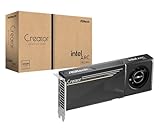
- System Compatibility Note: 2-slot card, 271x112x39mm, single 8-pin power, 200W TDP. Verify chassis clearance and PSU capacity before purchase.
- Dedicated Support: Please contact us directly through Amazon for any product questions or assistance you may require.
- 24GB GDDR6 on 192-Bit Bus: Massive 24GB memory with 456 GB/s bandwidth – ideal for LLMs, AI inference, 3D rendering, and generative design.
- Intel Xe2-HPG Architecture: Built on Intel's next-gen architecture with 20 Xe cores and 160 XMX engines for AI acceleration (197 INT8 TOPS).
- PCIe 5.0 Support: PCI Express 5.0 x16 interface for maximum bandwidth with the latest workstation platforms.
- OpenAI’s purchases of AMD Instinct GPUs.
- AMD share-price or share-performance targets.
- Technical milestones.
- Commercial milestones.
- Additional conditions that apply before each vested tranche can be exercised.
The public materials identify the categories but do not provide every threshold in a simple headline-ready schedule. That is why the maximum 160 million shares should not be treated as a guaranteed issuance.
AMD’s annual report for the fiscal year ended December 27, 2025 stated that none of the warrant shares had met the vesting or exercise conditions at that fiscal year-end. The report is available through AMD investor relations.
What the deal means for AMD shareholders
Potential benefits
- A potentially large, long-term customer for AMD’s data-center AI products.
- Greater credibility for AMD’s accelerator and software strategy.
- Possible growth in AI data-center revenue.
- Stronger positioning against Nvidia and other accelerator suppliers.
- Closer alignment with OpenAI’s expanding infrastructure needs.
Risks and trade-offs
- Dilution: if the warrant fully vests and is exercised, existing shareholders would own a smaller percentage of AMD than they otherwise would.
- Execution risk: AMD must deliver hardware, memory, networking, software and support at very large scale.
- Schedule risk: the first 1-gigawatt deployment could be delayed or expanded more slowly than expected.
- Customer risk: OpenAI must be able to finance and build the required infrastructure.
- Margin risk: AMD may need to compete aggressively on price or support to win and retain this business.
- Concentration risk: a small number of hyperscale and AI-lab customers could account for a significant share of accelerator demand.
- Software risk: technical limitations or migration costs could constrain adoption even if the hardware is competitive.
An in-the-money warrant can be valuable to OpenAI while being dilutive to AMD’s existing shareholders. The scale and timing of any dilution depend on which tranches vest, whether OpenAI exercises them and AMD’s share count at the time.
Independent reader supportYour contribution helps us test, update, and keep practical guides available for everyone.Is this a circular AI deal?
The structure has a circular-looking feature: AMD supplies infrastructure to OpenAI, while giving OpenAI a conditional economic interest in AMD’s future value. OpenAI could benefit from both access to compute and appreciation in the warrant.
That does not make the hardware free, and it does not guarantee AMD’s revenue forecast. The arrangement still depends on purchases, deployment, technical performance and milestone achievement. It also introduces dilution, valuation, execution and customer-concentration considerations.
Best Value

- PLEASE NOTE: Exporting an NVIDIA RTX Pro 6000 GPU outside the US requires strict adherence to the U.S. Export Administration Regulations (EAR) and issuance of an export license from the Bureau of Industry and Security (BIS). Compliance and Know Your Customer (KYC) screening may be required as a condition of order acceptance. [NVIDIA Blackwell Streaming Multiprocessor] The new SM features increased processing throughput, and new neural shaders that integrate neural networks inside of programmable shaders | DLSS 4: Multi Frame Generation ensures ultra-smooth frame pacing for lifelike simulations.
- [Double-Flow-Through Design] The RTX PRO 6000 Blackwell features a double-flow-through cooling design, optimizing efficiency and airflow to sustain peak performance under 600W power loads. | [5th Gen Tensor Cores] Deliver up to 3X the performance of the previous generation and support for FP4 precision for faster AI model processing times with reduced memory usage, enabling local fine-tuning of LLMs and generative AI | [4th Gen Ray Tracing Cores] Double the ray-triangle intersection rate of the previous generation to create photoreal, physically accurate scenes and immersive 3D designs with RTX Mega Geometry, which enables up to 100X more ray-traced triangles.
- [PCIe Gen 5] Support for PCIe Gen 5 provides double the bandwidth of PCIe Gen 4, improving data-transfer speeds from CPU memory and unlocking faster performance for data-intensive tasks like AI, data science, and 3D modeling. | [GDDR7 Memory] With 96 GB of GPU memory and 1.8 TB ps bandwidth, it can tackle massive 3D and AI projects, fine-tune AI models locally, explore large-scale VR environments, and drive larger multi-app workflows.
- [DisplayPort 2.1] Achieve unparalleled visual clarity and performance, driving high resolution displays at up to 8K at 240 Hz and 16K at 60 Hz. Increased bandwidth enables seamless multi-monitor setups while HDR and higher color depth support ensures superior color accuracy for precision work, such as video editing, 3D design, and live broadcasting.
- [Universal MIG] Divide a single RTX PRO 6000 Blackwell into multiple isolated instances, each with dedicated resources, allowing for concurrent execution of multiple workloads, optimized GPU utilization, and secure isolation of different applications or users. [WARRANTY] 3 YR Manufacturer's Warranty. Bulk OEM Packaging. Retail Packaging is NOT included.
More broadly, AI infrastructure is increasingly shaped by interconnected relationships among chipmakers, cloud providers, model developers and investors. Such arrangements can accelerate capacity expansion, but they can also make it harder to assess how much demand is truly independent and how much economic value is being transferred among partners.
AMD versus Nvidia and other suppliers
The AMD–OpenAI agreement is notable because a chip supplier issued its customer a conditional warrant in the supplier itself. It should not be treated as identical to other chip, cloud or investment arrangements involving Nvidia, OpenAI or hyperscalers.
The competitive question is broader than raw GPU speed. Buyers will assess:
The Tool Desk
Outbyte PC Repair FREEClear out junk files and repair common Windows errorsFree Scan →Outbyte Driver Updater FREEFix the driver behind crashes, sound loss and screen glitchesFind Drivers →- training and inference performance on their own workloads;
- software compatibility and developer productivity;
- memory capacity and bandwidth;
- networking and cluster scaling;
- power and cooling requirements;
- availability and delivery schedules;
- total cost of ownership; and
- vendor support.
Nvidia remains the established choice for many CUDA-heavy workloads. Google TPUs, AWS Trainium and Inferentia, and custom accelerators can also be relevant for organizations already committed to those cloud ecosystems or able to justify specialized development. The AMD agreement strengthens AMD’s position, but it does not establish that AMD will replace Nvidia overnight.
What investors and buyers should watch next
- Initial deployment: whether the planned 1-gigawatt MI450 phase begins in the second half of 2026.
- Expansion: whether OpenAI progresses from the first phase toward the full 6-gigawatt arrangement.
- Product execution: whether AMD can provide complete rack-scale systems rather than only accelerator chips.
- Software evidence: whether ROCm and related tools support OpenAI workloads with acceptable engineering overhead.
- Supply: whether AMD can secure advanced packaging, high-bandwidth memory and manufacturing capacity.
- Financial disclosures: AMD’s AI-data-center revenue, margins and updates on the warrant’s vesting status.
- OpenAI financing and construction: whether the company can fund and build the facilities required for the planned capacity.
- Independent performance evidence: real deployment results, workload benchmarks and total-cost comparisons rather than headline specifications alone.
As of August 18, 2026, the supplied source material confirms the agreement and planned rollout but does not establish that the first gigawatt has been fully deployed or that any warrant tranche has vested. Readers should distinguish scheduled deployment from completed delivery.
Bottom line
This is a strategically significant AMD–OpenAI infrastructure agreement, not a completed 10% sale of AMD. The core commitment is a multiyear plan for up to 6 gigawatts of AMD AI infrastructure, starting with 1 gigawatt of MI450-series systems. The equity element is a conditional warrant for up to 160 million shares, with vesting and exercise tied to milestones.
For AMD, the upside is customer validation, potential multibillion-dollar revenue and a stronger position against Nvidia. For shareholders, the risks include execution delays, software and supply-chain constraints, dependence on OpenAI’s infrastructure buildout and dilution if the warrant is fully exercised. The deal’s ultimate value will be determined by delivered systems and recognized economics—not by the 10% headline alone.
Quick Recap
Product prices and availability are accurate as of the date/time indicated and are subject to change. Any price and availability information displayed on Amazon at the time of purchase will apply.



