Some links on this page are affiliate links: if you buy through them we may earn a commission, at no extra cost to you.
Short answer: Amazon has begun integrating advertising into some Alexa+ experiences, but the evidence does not show that it is inserting spoken commercials into every private conversation. The documented formats focus mainly on shopping, entertainment, product discovery, and transactions on Echo Show devices in the United States.
The story began on July 31, 2025, when Amazon CEO Andy Jassy said advertising could eventually play a role in longer, multi-turn Alexa+ conversations. Since then, Amazon has announced sponsored product recommendations, entertainment tiles, and “agentic ads” that can help users ask questions and complete purchases within an Alexa+ interaction.
What Andy Jassy actually announced
During Amazon’s second-quarter 2025 earnings call, Jassy described advertising as a future opportunity for Alexa+. His comments were about helping people discover products during multi-turn conversations and creating revenue from increased engagement. They were not a detailed product launch.
He did not announce that Amazon would immediately place conventional audio advertisements into every Alexa+ conversation. The remarks did not specify an ad format, launch date, frequency limit, privacy policy, or user opt-out system. TechCrunch reported on the earnings-call comments and the questions they raised about privacy, trust, and AI-generated recommendations.
That distinction matters. A CEO identifying a possible monetization strategy is different from a live advertising product. Amazon has since moved beyond the proposal, but its products are narrower than the phrase “ads in your conversations” may suggest.
#1 Best Overall

- Your favorite music and content – Play music, audiobooks, and podcasts from Amazon Music, Apple Music, Spotify and others or via Bluetooth throughout your home.
- Alexa is happy to help – Ask Alexa for weather updates and to set hands-free timers, get answers to your questions and even hear jokes. Need a few extra minutes in the morning? Just tap your Echo Dot to snooze your alarm.
- Keep your home comfortable – Control compatible smart home devices with your voice and routines triggered by built-in motion or indoor temperature sensors. Create routines to automatically turn on lights when you walk into a room, or start a fan if the inside temperature goes above your comfort zone.
- Do more with device pairing – Fill your home with music using compatible Echo devices in different rooms, or create a home theatre system with Fire TV.
- Say goodbye to drop-offs and buffering - With eero Built-in, Echo Dot doubles as a mesh wifi extender, adding up to 1,000 sq. ft. of wifi coverage to your existing eero network.
What Amazon has launched
| Date | Development | What it means |
|---|---|---|
| July 24, 2025 | Alexa+ home-screen advertising | Managed-service ads were announced for Alexa home screens in the United States, United Kingdom, and Germany. |
| August 15, 2025 | Sponsored product discovery | Eligible Sponsored Products campaigns could appear alongside organic recommendations in Alexa+ shopping conversations on Echo Show devices in the United States. |
| October 25, 2025 | Conversational entertainment ads | Sponsored entertainment tiles could appear after relevant movie or television queries on eligible Echo Show devices. |
| June 17, 2026 | Self-service entertainment inventory | Amazon expanded conversational entertainment advertising to self-service advertisers using Sponsored Tiles on Fire TV and Prime Video, with Alexa available as a U.S. inventory source. |
| June 23, 2026 | Alexa+ Agentic Ads | Amazon announced ads that can lead to follow-up questions, product or service selection, and transactions within the conversation. |
Sponsored product recommendations
Amazon Ads said eligible sellers and vendors with active Sponsored Products campaigns could have those campaigns automatically integrated into Alexa+ shopping conversations. Organic and sponsored recommendations could appear together.
The announced availability was limited to:
- the United States;
- Echo Show devices; and
- eligible campaigns managed through the Amazon Ads console or Amazon Ads API.
Amazon said eligible advertisers did not need additional setup. However, eligibility does not guarantee meaningful placement, traffic, or sales volume.
What’s actually slowing this PC down?
Pick the symptom - the matching free tool is one click away.
Amazon’s announcement describes the sponsored-product test.
Conversational entertainment ads
For entertainment questions—such as requests for movie or television recommendations—Alexa+ can present sponsored entertainment tiles. Users can interact with these recommendations by voice or touch, then subscribe to channels or buy or rent content where supported.
Amazon initially described this experience for the United States and eligible Echo Show devices. Later, on June 17, 2026, it announced self-service access through Sponsored Tiles on Fire TV and Prime Video, with Alexa as an available U.S. inventory source.
See Amazon’s entertainment-ad announcement and its self-service expansion notice for the stated availability.
Windows Errors? Fix Them Before They Spread
Repair common Windows errors and clear accumulated junk for a smoother, more stable PC - no reinstall needed.Free scan · no reinstallOutdated Drivers Are Slowing You Down
One free scan finds every outdated or missing driver and matches the right update for your exact hardware.Free scan · exact hardware matchAgentic ads
Alexa+ Agentic Ads are more than a static recommendation. Amazon describes a format in which an ad can start a conversation, answer follow-up questions, help select an option, and lead to a completed transaction.
The initial examples included:
- ordering food from Papa Johns; and
- checking concert availability and prices, then purchasing tickets through Ticketmaster.
Amazon’s launch examples centered on Echo Show devices. The company has also described conversational ads as supporting audio and static formats, but that does not establish a universal spoken-ad experience on every Alexa device.
Amazon’s Agentic Ads announcement provides the examples and launch framing.
Rank #2

- Your favorite music and content – Play music, audiobooks, and podcasts from Amazon Music, Apple Music, Spotify and others or via Bluetooth throughout your home.
- Alexa is happy to help – Ask Alexa for weather updates and to set hands-free timers, get answers to your questions and even hear jokes. Need a few extra minutes in the morning? Just tap your Echo Dot to snooze your alarm.
- Keep your home comfortable – Control compatible smart home devices with your voice and routines triggered by built-in motion or indoor temperature sensors. Create routines to automatically turn on lights when you walk into a room, or start a fan if the inside temperature goes above your comfort zone.
- Do more with device pairing – Fill your home with music using compatible Echo devices in different rooms, or create a home theatre system with Fire TV.
- Say goodbye to drop-offs and buffering - With eero Built-in, Echo Dot doubles as a mesh wifi extender, adding up to 1,000 sq. ft. of wifi coverage to your existing eero network.
What users are likely to experience
The phrase “ads in Alexa+ conversations” covers several different experiences:
Recommended Free Tools
- Home-screen ads: visual advertising displayed on an Alexa+ or Echo Show home screen.
- Sponsored recommendations: paid product suggestions included in a relevant shopping interaction.
- Sponsored entertainment tiles: paid movie, television, channel, or entertainment recommendations.
- Conversational ads: advertisements that allow follow-up questions by voice or touch.
- Agentic ads: commercial prompts that can lead to a purchase or booking without leaving the Alexa+ interaction.
The available evidence supports advertising integrated into relevant commercial interactions. It does not establish that Alexa+ routinely interrupts arbitrary discussions—such as a conversation about family, travel, or personal finances—with an unrelated spoken sales pitch.
There is also an important difference between an ad being available through audio and an ad being read aloud in every context. Amazon’s advertising materials mention audio and static formats, while the documented agentic examples emphasize screen-equipped Echo Show devices.
Why Amazon wants advertising in Alexa+
Alexa+ is designed to support longer, multi-turn interactions. Those interactions can reveal that a user is comparing products, looking for entertainment, planning an activity, or ready to buy. Amazon already operates a major retail marketplace and advertising business, so it can connect discovery, recommendation, and checkout more directly than a general-purpose assistant might.
Agentic advertising also shortens the path from awareness to conversion. Instead of showing a fixed advertisement and sending someone elsewhere, Alexa+ can potentially answer questions, compare options, check availability, and complete an order.
The Tool Desk
Outbyte PC Repair FREEClear out junk files and repair common Windows errorsFree Scan →Outbyte Driver Updater FREEFix the driver behind crashes, sound loss and screen glitchesFind Drivers →Rank #3
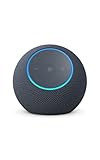
- Meet Echo Dot Max: Experience rich room-filling sound that automatically adapts to your space and fine-tunes playback. Features a built-in smart home hub and Omnisense technology for highly personalized experiences.
- Music to your ears: With nearly 3x the bass versus Echo Dot (2022 release), it fits beautifully in any space, delivering your personal sound stage with deep bass and enhanced clarity. Listen to streaming services, such as Amazon Music, Apple Music, Spotify, and SiriusXM. Encore!
- Do more with device pairing: Connect compatible Echo smart speakers and smart displays in different rooms, or pair with a second Echo Dot Max to enjoy even richer sound. Pair your Echo Dot Max with compatible Fire TV devices to create a home theater system that brings scenes to life.
- Simple smart home control: Set routines, pair and control lights, locks, and thousands of smart home devices that work with Alexa without needing a separate smart home hub. With Omnisense technology, you can activate routines via temperature or presence detection.
- Say goodbye to drop-offs and buffering - With eero Built-in, Echo Dot Max doubles as a mesh wifi extender, adding up to 1,000 sq. ft. of wifi coverage to your existing eero network.
The financial incentives are substantial. In reporting on Amazon’s July 2025 remarks, TechCrunch cited a 22% year-over-year increase in Amazon advertising revenue for the second quarter of 2025 and capital expenditures of $31.4 billion, up 90% from the same quarter a year earlier. Those are historical 2025 figures, not current 2026 results, but they illustrate why Amazon is looking for durable ways to monetize AI infrastructure and increased assistant usage.
Amazon’s own framing emphasizes relevance and utility: advertising is intended to help customers discover products, services, entertainment, or experiences when they are already expressing related intent. That commercial usefulness does not remove the need for clear disclosure.
Why conversational advertising is different
A traditional display or audio ad delivers a mostly fixed message. A conversational ad can respond to a user’s questions and preferences. It may be able to:
- explain product features;
- compare alternatives;
- answer follow-up questions;
- respond to expressed preferences;
- add an item to a cart; or
- complete a purchase or booking.
That can be convenient, but it also blurs the line between neutral assistance and paid persuasion. A user may hear a recommendation in the assistant’s voice and assume it is the best option for the request, even when it is sponsored.
Disclosure should therefore be clear in both interfaces. On a screen, “sponsored” labeling should be prominent rather than hidden in small text. In a voice interaction, Alexa+ should identify the commercial nature of the recommendation in language users can understand without seeing the screen.
Privacy questions Amazon has not answered here
The available sources show that Amazon wants advertising to respond to conversational context and shopping intent. They do not establish the precise data flow, retention period, consent model, targeting controls, or information shared with advertisers.
That means readers should not automatically conclude that Amazon is selling Alexa recordings or giving advertisers unrestricted access to private conversations. Those claims require specific evidence from a current Amazon privacy policy or technical documentation.
Rank #4

- Your favorite music and content – Play music, audiobooks, and podcasts from Amazon Music, Apple Music, Spotify and others or via Bluetooth throughout your home.
- Alexa is happy to help – Ask Alexa for weather updates and to set hands-free timers, get answers to your questions and even hear jokes. Need a few extra minutes in the morning? Just tap your Echo Dot to snooze your alarm.
- Keep your home comfortable – Control compatible smart home devices with your voice and routines triggered by built-in motion or indoor temperature sensors. Create routines to automatically turn on lights when you walk into a room, or start a fan if the inside temperature goes above your comfort zone.
- Do more with device pairing – Fill your home with music using compatible Echo devices in different rooms, or create a home theatre system with Fire TV.
- Say goodbye to drop-offs and buffering - With eero Built-in, Echo Dot doubles as a mesh wifi extender, adding up to 1,000 sq. ft. of wifi coverage to your existing eero network.
But the questions are legitimate. Users should want clear answers to the following:
- Are ads triggered only by explicit shopping or entertainment requests?
- Are earlier Alexa+ conversations used to personalize recommendations?
- Can users turn off personalized advertising while keeping Alexa+?
- Are ads labeled audibly, visually, or both?
- Does an advertiser receive any conversation transcript?
- Are health, financial, relationship, or other sensitive topics excluded from ad targeting?
- How are children’s profiles and shared household devices handled?
- Can Echo Show advertising be disabled without disabling Alexa+?
As of the information covered here, the answers to those operational questions are not verified. Readers should check Amazon’s current Alexa, advertising, and privacy settings before relying on any older instructions or assuming that an ad-free option exists.
Trust, accuracy, and household risks
Sponsored advice may sound neutral
Alexa is presented as an assistant, not merely an advertising surface. That makes disclosure especially important when sponsored and organic results appear together. Users need to know whether a recommendation is organic, sponsored, selected by Amazon’s ranking systems, or based on information supplied by a brand.
AI can make inaccurate claims
AI assistants can produce incorrect answers. If Alexa+ misstates a product’s price, availability, features, shipping terms, or suitability while discussing an advertised item, the commercial harm can be greater than with an ordinary banner ad. Users should verify important details before paying, particularly for expensive, time-sensitive, or regulated products.
Shared devices create privacy problems
An Echo Show may be used by an entire household. A recommendation based on one person’s shopping activity could be visible or audible to other people nearby. That can expose purchases, travel plans, health interests, or gift ideas even if no advertiser receives the underlying conversation.
Do these 3 things before closing this tab:
1Scan for outdated or missing drivers - takes under a minute2Repair Windows errors before they cause bigger problems3Fix the driver behind crashes, sound loss and screen glitchesVulnerable users need protection
Conversational systems may detect urgency, uncertainty, or preferences. That raises additional concerns for children, older adults, and people seeking health or financial information. A commercial prompt should not be allowed to masquerade as impartial professional guidance.
Amazon’s commercial conflicts matter
Amazon controls the assistant, marketplace, advertising platform, and—in some categories—competing products and services. Readers should ask whether Alexa+ will favor Amazon-owned offerings, sponsored products, products with stronger bids, or products that best match the user’s request. The available sources do not verify the ranking mechanism, so it would be inaccurate to claim that the highest bidder automatically wins.
Independent reader supportYour contribution helps us test, update, and keep practical guides available for everyone.What is known about Alexa+ pricing?
TechCrunch reported in July 2025 that Alexa+ was free for Prime customers and priced at $20 per month as a standalone subscription at that time. The reporting also left open the possibility of additional tiers, potentially including an ad-free option.
Best Value

- MEET ECHO SPOT - A sleek smart alarm clock with Alexa and big vibrant sound. Ready to help you wake up, wind down, and so much more.
- CUSTOMIZABLE SMART CLOCK - See time, weather, and song titles at a glance, control smart home devices, and more. Personalize your display with your favorite clock face and fun colors.
- BIG VIBRANT SOUND - Enjoy rich sound with clear vocals and deep bass. Just ask Alexa to play music, podcasts, and audiobooks. See song titles and touch to control your music.
- EASE INTO THE DAY - Set up an Alexa routine that gently wakes you with music and gradual light. Glance at the time, check reminders, or ask Alexa for weather updates.
- KEEP YOUR HOME COMFORTABLE - Control compatible smart home devices. Just ask Alexa to turn on lights or touch the screen to dim. Create routines that use motion detection to turn down the thermostat as you head out or open the blinds when you walk into a room.
That does not confirm a current August 2026 price or prove that an ad-free Alexa+ plan exists. Subscription prices and tiers change, so readers should verify current terms directly with Amazon before making a budgeting decision. There is no verified basis in the available material for recommending a special “ad blocker,” privacy product, or ad-free subscription.
Free tools Windows power users keep installed
One-click scans. No signup required.
What this means for consumers
If you own an audio-only Echo speaker, do not assume that the Echo Show advertising announcements apply to your device. The documented launches are concentrated on Echo Show and other specified Amazon surfaces, with explicit country and query limitations.
If you use Alexa+ for shopping or entertainment, expect the greatest commercial relevance in those interactions. Treat sponsored recommendations as advertising, not automatically as impartial advice. Before completing a purchase, confirm the price, seller, shipping terms, cancellation policy, and final total.
On a shared Echo Show, consider whether visible or audible recommendations could reveal another household member’s activity. Review the current Alexa privacy and advertising controls in your Amazon account, but do not rely on an old menu path unless it matches the labels currently shown on your device.
What this means for advertisers
The strongest commercial fit is for businesses already operating inside Amazon’s advertising and transaction ecosystem.
- Sponsored Products: best suited to sellers and vendors with active Amazon marketplace campaigns. Alexa+ placement was announced for eligible campaigns in U.S. Echo Show shopping experiences.
- Sponsored Tiles and conversational entertainment ads: suited to Prime Video Channels and transactional video-on-demand advertisers using eligible Amazon inventory.
- Alexa+ Agentic Ads: suited to businesses with reliable inventory, fulfillment, pricing, disclosures, and transaction integrations. Papa Johns and Ticketmaster were the launch examples.
- Amazon DSP: relevant to brands and agencies seeking broader Amazon-owned inventory and managed-service or self-service advertising options.
Advertisers should not assume that campaign eligibility creates guaranteed volume. Availability varies by device, country, query type, campaign product, and Amazon’s rollout. Products with inaccurate catalog attributes, inconsistent inventory, complex regulatory claims, or unreliable checkout flows are poor candidates for conversational commerce.
Before investing, an advertiser should establish how sponsored status is disclosed, what the assistant is allowed to say, how conversions are measured, what happens when a transaction fails, and whether the campaign can be paused or limited by context.
For comparison, traditional Amazon Sponsored Products are a more established option for marketplace visibility without depending on a new conversational surface. Google’s AI shopping and search experiences and the ChatGPT ecosystem may also matter to advertisers, but the sources reviewed do not establish feature parity or comparable public buying products.
What remains unknown
- Whether Alexa+ will offer a confirmed ad-free consumer tier.
- Whether advertising will expand broadly to audio-only Echo devices.
- Which current privacy and personalization controls apply to conversational ads.
- Whether advertisers receive any conversation data or transcript information.
- How often ads may appear and whether frequency limits apply.
- Whether advertisers can influence Alexa’s spoken wording beyond approved campaign and catalog information.
- Which sensitive categories, profiles, or queries are excluded.
- How clearly Alexa+ identifies a recommendation as sponsored without the user asking.
Bottom line
Andy Jassy’s July 2025 comments were a proposal, not an announcement that Alexa+ would immediately broadcast ads into every conversation. By June 2026, Amazon had introduced real conversational advertising products, including sponsored shopping and entertainment recommendations and agentic formats that can lead to purchases or bookings.
Quick wins for a faster PC:
Scan for outdated or missing drivers - takes under a minuteDriver Scan →Repair Windows errors before they cause bigger problemsFix Now →Fix the driver behind crashes, sound loss and screen glitchesFind Drivers →The most accurate description is contextual conversational commerce: advertising integrated into relevant Alexa+ interactions, especially on Echo Show devices and in the United States. That is commercially significant, but it is not evidence of random, personalized audio commercials interrupting every private voice conversation.
Quick Recap
Product prices and availability are accurate as of the date/time indicated and are subject to change. Any price and availability information displayed on Amazon at the time of purchase will apply.



