Recommended Free Tools
Some links on this page are affiliate links: if you buy through them we may earn a commission, at no extra cost to you.
Choose cloud GPUs when demand is uncertain, bursty, or urgent; choose private GPUs when workloads are steady, highly utilized, and worth operating for years. For many organizations, a hybrid setup is the practical middle ground: private capacity for the predictable baseline and cloud capacity for experiments, peaks, and recovery. The right comparison is not an hourly GPU price against a hardware quote. It is the all-in cost per useful unit of work, including facility, staff, data movement, idle time, and performance.
What you are actually choosing
A public-cloud GPU may be a virtual machine, bare-metal instance, managed cluster, or specialized AI service rented from a provider such as AWS, Google Cloud, or Microsoft Azure. The bill can include the GPU-equipped VM, CPU and memory, disks, object storage, networking, data transfer, orchestration, support, and software licenses. Google notes that its standalone GPU price listings do not include several associated costs, such as the VM, disks, networking, or some dedicated-host charges (Google Cloud GPU pricing).

A private GPU setup means hardware your organization owns or dedicates to itself, operated in its own facility, a colocation site, or a hosted private environment. Buying servers for an existing data center is a different financial decision from building a new high-density facility. The latter may require major investment in power delivery, cooling, networking, space, security, and staff before the GPUs arrive.
Free tools Windows power users keep installed
One-click scans. No signup required.
There are also middle options: reserved cloud capacity, colocation, managed dedicated GPU services, or a hosted NVIDIA DGX Cloud arrangement. The best answer need not be either a hyperscaler VM or an entirely self-operated cluster.
#1 Best Overall

- NVIDIA Volta GV100 Architecture — 4,608 CUDA Cores, 640 1st-Gen Tensor Cores delivering 14 TFLOPS FP32 and 112 TFLOPS deep learning performance for AI training, inference, HPC, and scientific computing workloads
- 32GB HBM2 ECC Memory — 900 GB/s Bandwidth — High-bandwidth memory on a 4096-bit bus with ECC error correction provides the memory capacity and throughput required for the largest AI models, simulations, and datasets
- PCIe 3.0 x16 Interface — 250W TDP — Standard PCIe Gen3 connectivity with passive cooling designed for enterprise rack server deployment in HPE ProLiant, Dell PowerEdge, and Supermicro platforms with adequate chassis airflow
- NVLink — Scale to 96GB Unified Memory — Connect two V100 GPUs via NVLink at 300 GB/s bi-directional bandwidth to scale GPU memory from 32GB to 96GB for larger AI training and HPC workloads
- Multi-Precision Computing — Supports FP64 (7 TFLOPS), FP32 (14 TFLOPS), FP16 (112 TFLOPS) and INT8 precision modes for flexible deployment across training, inference, and scientific simulation workloads
Quick workload guide
| Workload or condition | Usually favors | Why |
|---|---|---|
| Proofs of concept, model selection, irregular fine-tuning | Cloud | Rent capacity only when needed; avoid buying for an uncertain future workload. |
| Short-lived training or a sudden large experiment | Cloud | Scale up quickly without sizing a permanent cluster for peak demand. |
| Interruptible batch jobs with checkpointing | Cloud Spot or preemptible capacity | Discounted capacity may work if the job can resume after interruption. |
| Stable, around-the-clock inference or recurring training | Private or committed cloud | Predictable demand makes long-term capacity economics easier to assess. |
| Data that must stay in a controlled environment or is already local | Private, subject to policy | Local access and direct control can reduce data movement and address specific requirements. |
| Demand with a steady floor and occasional spikes | Hybrid | Keep the baseline on dedicated capacity and burst to cloud when needed. |
| No GPU operations staff or suitable facility | Cloud or managed service | The provider or service operator handles physical infrastructure. |
These are starting points, not rules. A stable workload can still favor cloud if private operating costs are high; a bursty workload can still merit dedicated capacity if the bursts are large, frequent, and contractually predictable.
Cloud GPUs: flexibility with a bill to manage
Cloud is particularly useful when a team needs immediate access to different GPU types, does not know which model or capacity it will need, or would otherwise buy for a peak it rarely reaches. It can also support temporary capacity while private hardware is being procured, multiple regions, and disaster recovery. AWS describes a range of accelerated EC2 instances, including systems and UltraClusters aimed at larger-scale training and inference (AWS accelerated computing).
Cloud pricing is not one rate. Common choices include on-demand billing, reservations or committed-use discounts, negotiated enterprise rates, and Spot or preemptible capacity. Each changes the economics and the risk:
- On-demand: maximum flexibility, but often the highest published rate.
- Commitments and reservations: can lower the rate for expected use, but unused commitments still cost money and may tie you to a configuration or term.
- Spot or preemptible: may be substantially cheaper, but capacity can be interrupted. The job must checkpoint and recover efficiently.
- Negotiated pricing: can differ from public list prices and should not be treated as a general benchmark.
As a dated example, Google’s published page has shown an eight-H100 A3 highgpu-8g VM at about $88.49 per VM-hour on demand, and a T4 at $0.35 per GPU-hour. These are provider-published examples, not interchangeable GPU rates: region, configuration, date, billing terms, and excluded services matter. Google advertises Spot discounts of up to 91% for many GPU and machine types, but Spot rates and availability vary and interruption tolerance is essential (Google GPU pricing and terms; accelerator-optimized VM pricing).
Azure’s pricing pages likewise show that VM costs vary by SKU, region, billing model, and agreement. Published examples have included NC40ads H100 v5 at $5,095.40 per month pay-as-you-go and NC80adis H100 v5 at $10,190.80 per month in the displayed pricing context; those figures are not universal prices or necessarily comparable with other configurations (Azure VM pricing). Check the calculator for the intended region and contract, and confirm capacity and quota before planning a launch.
Cloud risks are practical as well as financial: a GPU SKU may be unavailable in the required region, quota approval may take time, storage and egress can exceed compute costs, and instances left running keep billing. A three-year cloud commitment is still a multi-year obligation; buying one before demand is understood can replace hardware risk with a utilization and contract risk.
Private GPUs: potential savings only if the whole system is used
Private infrastructure can make sense when demand is steady and high, a GPU configuration will remain useful, data is local or costly to move, or direct control and consistent topology are important. Existing power, cooling, networking, and operations staff can materially improve the case. It can also avoid recurring cloud data-transfer charges and give an organization direct control over its physical environment.
But hardware purchase price is only one line item. Include:
- Equipment: GPUs, complete servers, CPUs, memory, local NVMe, NICs, fabric switches, optics, cables, racks, spare parts, warranties, and support.
- Facility: rack space, electricity, power distribution, UPS and generator capacity, cooling, fire suppression, connectivity, security, installation, and monitoring.
- Operations: infrastructure and network engineers, cluster administration, security, procurement, maintenance, incident response, capacity planning, and coverage outside business hours.
- Software and support: operating system, drivers and CUDA stack, scheduler, containers, observability, backup, security tools, and any commercial AI software.
- Financial and lifecycle costs: financing, depreciation, expected residual value, delivery delays, refresh timing, and the risk that a newer GPU generation makes existing hardware less useful.
Software is easy to miss in either model. NVIDIA’s licensing guide, for example, lists production consumption pricing of $1 per GPU-hour plus the cloud-service-provider instance cost for the covered cloud model, while private offers are custom quoted (NVIDIA AI Enterprise licensing). Confirm whether software is included, separately licensed, or billed by consumption.
Private capacity also creates a ceiling: if demand exceeds the cluster, jobs wait or you need another source of GPUs. A cluster bought for peak demand may spend much of the year idle. Conversely, an already-operating facility with available power and a capable team can have a different cost profile from a company starting from scratch.
Utilization: count useful work, not just powered-on hours
The key economic variable is productive utilization. A GPU reserved by a job may be allocated but doing little useful work. Device utilization can look high even if the work is inefficient or does not contribute to a successful result. Cluster utilization should account for maintenance, failures, scheduling fragmentation, data bottlenecks, and the fact that some capacity may not match the job that needs it.
Low utilization can come from poor scheduling, insufficient CPU or RAM, storage limits, network contention, model-memory mismatches, checkpoint overhead, or jobs that cannot fit the remaining capacity. Cloud can suffer from idle instances too: billing generally continues until the relevant resources are stopped or deleted, subject to the provider’s billing rules. Measure useful output, such as completed training runs, tokens served at a target latency, or inference requests—not only GPU activity.
Compare performance per result, not GPU-hour labels
An hour on one GPU is not equivalent to an hour on another. Compare the time and cost to finish the actual workload, using representative models and settings. Relevant factors include memory capacity and bandwidth, training throughput, inference tokens per second, latency, software support, power use, and the number of hours required to complete a job.
For multi-GPU training, the system around the accelerators matters: intra-node links such as NVLink, inter-node InfiniBand or high-performance Ethernet, GPUDirect RDMA, NCCL compatibility, storage throughput, and topology-aware scheduling. Azure’s ND H100 v5 documentation describes eight-H100 configurations with NVLink and 400-Gb/s InfiniBand connections per GPU, among other scale-out features (Azure ND H100 v5 specifications). A private cluster with eight GPUs is not automatically equivalent to an integrated high-end system if its network, storage, or software stack differs.
Benchmark the full pipeline: data loading, preprocessing, training or inference, checkpointing, and output. If a cheaper GPU takes longer, consumes more power, or leaves expensive staff and cloud resources waiting, its lower hourly price may not mean a lower cost per result.
The Tool Desk
Outbyte Driver Updater FREEFix the driver behind crashes, sound loss and screen glitchesFind Drivers →Outbyte PC Repair FREERepair Windows errors before they cause bigger problemsFix Now →Power, cooling, and facility readiness
High-density GPU servers can exceed what an ordinary server rack is designed to support. NVIDIA’s DGX H100 documentation lists eight H100 GPUs, six 3.3-kW power supplies, and approximately 10.2 kW maximum system power (DGX H100/H200 user guide). That is system power, not the total facility load. The facility also has to account for networking and storage equipment, cooling overhead, UPS losses, power-distribution efficiency, redundancy, and spare capacity.
Rank #3
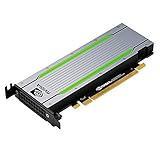
- Original premium quality
- Item weight: 0.55 kg
- Size: Full-Height/Full-Length (FH/FL)
Before ordering, have the facility operator confirm available voltage and amperage, rack power density, cooling approach, network installation, expansion headroom, and failure procedures. Liquid cooling may be required or preferable depending on the system and facility. A GPU purchase without a verified power and cooling design is not a complete infrastructure plan.
Data location, security, and compliance
Cloud is often simpler when the data already resides in the same cloud and region. Moving large datasets from a private facility, another provider, or another region can add transfer charges, time, synchronization work, encryption requirements, and operational complexity. For data-heavy jobs, model both elapsed time and dollars: a low-priced GPU does not help if training waits on a slow or expensive data path.
Private infrastructure can support requirements such as physical jurisdiction, air-gapped processing, or customer-controlled procedures, but private ownership does not automatically mean secure or compliant. The operator must manage physical access, firmware, patching, identity and access controls, monitoring, response, and hardware disposal.
Cloud does not automatically mean insecure either. Providers may offer dedicated hosts, private networking, customer-managed keys, regional controls, audit tools, or confidential GPU options. Azure documents confidential GPU options that combine confidential VMs with NVIDIA H100 GPUs and hardware-based isolation technologies (Azure confidential GPU options). Whether a deployment meets a requirement depends on the exact service, region, contract, data, and configuration—not the word “cloud” or “private.”
Independent reader supportYour contribution helps us test, update, and keep practical guides available for everyone.A practical break-even model
Start with annual all-in costs. For private infrastructure, a simplified annualized estimate is:
Private annual cost = (complete hardware cost − expected residual value) ÷ useful life in years
+ facility + power + cooling + software + staff + maintenance
For cloud, estimate:
Cloud annual cost = on-demand hours × on-demand rate
+ committed hours × committed rate
+ Spot hours × Spot rate
+ storage + networking + support + software
Outdated Drivers Are Slowing You Down
One free scan finds every outdated or missing driver and matches the right update for your exact hardware.Free scan · exact hardware matchWindows Errors? Fix Them Before They Spread
Repair common Windows errors and clear accumulated junk for a smoother, more stable PC - no reinstall needed.Free scan · no reinstallThen estimate the first-pass break-even utilization:
Rank #4

- DP/N JDJ9W (Brand New)
- Xe-HPG (Arctic Sound, ACM-G11, DG2-128)
- 12GB GDDR6 Memory
Break-even utilization = private annual cost ÷ (available GPU-hours per year × comparable cloud price per GPU-hour)
This is a screening calculation, not a universal threshold. Use comparable performance rather than a nominal GPU-hour, and include cloud discounts, private downtime, cloud idle time, utilization loss, data transfer, financing, staff that must be hired, and the risk of hardware becoming less suitable. Compare scenarios—such as 20%, 50%, 75%, and 90% productive utilization—rather than trusting a single forecast. A capacity curve is useful too: private hardware may be economical for baseline demand, while cloud supplies the hours above it.
Illustrative example: Suppose a hypothetical private cluster costs $1.2 million fully installed, has an expected $200,000 residual value after four years, and costs $400,000 per year to operate in facility, power, software, staffing, and maintenance. Its annualized cost is $650,000: ($1.2 million − $200,000) ÷ 4 + $400,000. If the cluster provides 70,080 GPU-hours annually (eight GPUs × 365 × 24) and a genuinely comparable cloud GPU-hour is $10, the simple break-even utilization is about 92.7% ($650,000 ÷ $700,800). At $5 per comparable cloud GPU-hour, that simple ratio exceeds 100%, so this assumed private system would not beat that cloud rate on this calculation. Neither result is a market price or a recommendation: change the assumptions for the actual hardware, useful life, facility, rate, performance, commitments, and useful utilization. In particular, the cloud unit price must include a configuration that can deliver equivalent work.
Quick wins for a faster PC:
Clear out junk files and repair common Windows errorsFree Scan →Fix the driver behind crashes, sound loss and screen glitchesFind Drivers →Hybrid infrastructure: allocate workloads deliberately
A hybrid plan is not indecision. It can match each workload to the right capacity:
- Keep a private or reserved baseline for stable production inference and recurring jobs.
- Use cloud on-demand capacity for experiments, temporary peaks, new GPU generations, or procurement delays.
- Use Spot capacity for checkpointed batch work that can tolerate interruption.
- Keep sensitive or data-local workloads in the environment approved for them.
- Use cloud regions for disaster recovery where the recovery plan and data controls support it.
Make the architecture operationally coherent: define workload placement rules, data synchronization, access controls, shared observability, cost allocation, and a consistent software-image strategy. Cloud bursting works only if the application can move, the data can be accessed economically and quickly, and the cloud GPU type is available when needed.
Decision checklist
- How many GPU-hours do you need by hour, week, and season—and how much of that demand is contracted or predictable?
- What is productive utilization after maintenance, failures, queue fragmentation, and data bottlenecks?
- Which exact GPU memory, performance, and interconnect are needed? Has the workload been benchmarked on comparable systems?
- Are GPUs, quotas, and required networking available in the cloud region when needed?
- Does the cloud estimate include VM CPU and RAM, storage, networking, egress, support, idle time, and software licenses?
- Does the private estimate include complete servers, fabric, storage, spares, facility work, power, cooling, staff, financing, and refresh risk?
- Can the facility support the rack’s electrical and thermal density, with room for failure tolerance and expansion?
- Where does the data live, how often must it move, and what are transfer time and cost?
- What specific security or compliance controls are required, and which deployment can demonstrate them?
- Can jobs checkpoint and resume? What is the cost of a Spot interruption or private-node failure?
- What is the plan for overflow, geographic recovery, and hardware replacement?
A sensible implementation path
If starting cloud-first: benchmark the real workload on at least two suitable GPU classes; measure end-to-end throughput with storage and network costs included; test on-demand, committed, and interruptible pricing; add automatic shutdown and budget alerts; implement checkpointing before relying on Spot; and track cost per completed run or unit of inference. Reassess after 8–12 weeks of real usage before making a long commitment or purchase decision.
If evaluating a private cluster: map demand by workload and hour; specify memory, interconnect, storage, and network needs; design the full rack, power, and cooling system; obtain facility approval before ordering; budget for people, support, spares, and licenses; benchmark representative distributed jobs; implement scheduling and showback; set a utilization threshold for adding capacity; and retain a defined overflow or recovery option.
Do these 3 things before closing this tab:
1Scan for outdated or missing drivers - takes under a minute2Repair Windows errors before they cause bigger problems3Fix the driver behind crashes, sound loss and screen glitchesAvailable buying models
Hyperscalers such as AWS, Google Cloud, and Azure suit organizations that want rented capacity integrated with broader cloud services; prices and availability vary by SKU, region, and contract. Specialized GPU clouds and managed AI infrastructure can reduce the burden of operating a cluster, though service scope, portability, and pricing differ. NVIDIA DGX systems are integrated private hardware for organizations prepared to own the facility and operations work; purchase and support pricing should be confirmed directly. DGX Cloud offers managed NVIDIA-centered infrastructure through provider arrangements, but pricing is not a single public hourly rate (NVIDIA DGX Cloud). NVIDIA AI Enterprise is an optional supported software stack whose licensing must be accounted for separately where applicable.
Also consider whether every task needs a high-end GPU. Smaller or older GPUs can suit development, embeddings, or lower-volume inference; quantized models may reduce memory requirements. Depending on the model and software, non-GPU accelerators such as AWS Trainium or Inferentia, Google TPUs, or other specialized services may be appropriate. Validate compatibility and benchmark results before treating them as substitutes.
Quick Recap
Product prices and availability are accurate as of the date/time indicated and are subject to change. Any price and availability information displayed on Amazon at the time of purchase will apply.



