Do these 3 things before closing this tab:
1Fix the driver behind crashes, sound loss and screen glitches2Clear out junk files and repair common Windows errors3Scan for outdated or missing drivers - takes under a minuteSome links on this page are affiliate links: if you buy through them we may earn a commission, at no extra cost to you.
Accenture and NVIDIA announced an expanded partnership on October 2, 2024, including a new Accenture NVIDIA Business Group intended to help companies put generative and agentic AI into production. Accenture contributes consulting, process redesign and implementation; NVIDIA contributes AI software and accelerated-computing technologies. Accenture’s AI Refinery is the framework connecting those services to enterprise data and workflows. The announcement described an internal Accenture business group—not a new jointly owned company or an NVIDIA subsidiary.
What Accenture and NVIDIA actually created
The announcement brought together several related but distinct pieces. The Accenture NVIDIA Business Group is Accenture’s organization for pursuing and delivering work under an expanded strategic partnership. AI Refinery is Accenture’s enterprise AI framework and services platform. AI Refinery Engineering Hubs are delivery and engineering capacity intended to support that work. NVIDIA’s products provide parts of the software and computing stack used to build and deploy AI systems.
The stated goal was to help clients move beyond experiments and apply AI to business processes at scale: adapting models, building agents, connecting them to company systems, and addressing deployment, governance and workforce needs. This is a services-led enterprise offering, not a consumer product with a public download or standard checkout price.
How the roles and technology fit together
| Layer | Role in the offer |
|---|---|
| Accenture | Industry and functional consulting, process redesign, custom development, integration, cloud and data implementation, training, governance support and deployment services. |
| AI Refinery | Accenture’s framework for adapting models to company data and processes, selecting among models, indexing enterprise knowledge and supporting agentic architectures and workflow connections. |
| NVIDIA AI Foundry | Custom-model development capabilities named in the partnership. AI Refinery was first announced on July 23, 2024, with NVIDIA AI Foundry and Llama 3.1 models as part of its initial context. Accenture’s AI Refinery announcement. |
| NVIDIA AI Enterprise | Enterprise AI software and deployment layer named in the October partnership announcement. |
| NVIDIA NeMo and NIM | NVIDIA described Accenture as using NeMo and NIM microservices through AI Refinery and the business group to build domain-specific agents. NVIDIA’s partner-side description. |
| NIM Agent Blueprints | Deployable patterns for AI workflows. The October announcement included a planned blueprint for virtual-facility and robot-fleet simulation. |
| Omniverse, Isaac and Metropolis | NVIDIA technologies named for industrial simulation and the virtual-facility robot-fleet use case. |
Accenture said AI Refinery could support deployment across public and private cloud environments. That does not by itself establish that every component runs identically on every cloud or hardware platform; buyers need to verify the architecture, licensing and portability of a proposed implementation.
#1 Best Overall
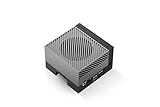
- The NVIDIA Jetson AGX Orin 64GB Developer Kit makes it easy to get started with Jetson Orin. Compact size, lots of connectors, and up to 275 TOPS of AI performance make this developer kit perfect for prototyping advanced AI-powered robots and other autonomous machines.
- The developer kit includes a Jetson AGX Orin 64GB module, and can emulate all the Jetson Orin modules. It supports multiple concurrent AI application pipelines with the NVIDIA Ampere GPU architecture, next-generation deep learning and vision accelerators, high-speed IO and fast memory bandwidth. Now you can develop solutions using your largest and most complex AI models to solve problems such as natural language understanding, 3D perception, and multi-sensor fusion.
- Jetson runs the NVIDIA AI software stack, and use-case specific application frameworks are available, including Isaac for robotics, DeepStream for vision AI, and Riva for conversational AI. You can save significant time with NVIDIA Omniverse Replicator for synthetic data generation (SDG), and by using NVIDIA TAO toolkit to fine-tune pretrained AI models from the NGC catalog.
- Jetson ecosystem partners offer additional AI and system software, developer tools, and custom software development. They can also help with cameras and other sensors, as well as carrier boards and design services for your product.
- With the computing capability of more than 8 Jetson AGX Xavier systems in a developer kit that integrates the latest NVIDIA GPU technology with the world’s most advanced deep learning software stack, you’ll have the flexibility to create tomorrow’s AI solution as well as today’s.
What “agentic AI” means in this context
A conventional generative-AI assistant mainly responds to a prompt. An agentic system is designed to do more: interpret intent, plan steps, use tools or data sources, change or create workflows, and take actions within a defined business process. That may make an agent more useful than a chatbot, but it also gives it more ways to cause operational harm.
“Autonomous” should not be read as unrestricted authority. An enterprise agent’s practical boundaries depend on its data access, credentials, permitted tools, workflow design, monitoring and escalation rules. Human approval may still be required for consequential actions. Accenture’s earlier description of AI Refinery identified an agentic architecture alongside model customization, a model-selection “switchboard” and an enterprise knowledge index; those elements are intended to connect model capability to company-specific information and work. Accenture’s July 2024 description of AI Refinery.
What the workforce figures do—and do not—say
Accenture said more than 30,000 professionals would receive NVIDIA-related training. Separately, the Engineering Hub network was described as serving a broader base of 57,000 Accenture AI practitioners. The figures refer to different populations: training commitment versus the practitioner network served by the hubs. Neither means that 30,000 people were assigned full-time to one customer, or that all 57,000 were dedicated NVIDIA engineers. The announced new hubs were in Singapore, Tokyo, Málaga and London, alongside existing hubs in Mountain View and Bangalore. Accenture’s October 2024 announcement.
The Tool Desk
Outbyte PC Repair FREEClear out junk files and repair common Windows errorsFree Scan →Outbyte Driver Updater FREEScan for outdated or missing drivers - takes under a minuteDriver Scan →Examples cited in the announcement
Indosat Group: local deployment and data governance
Accenture said Indonesia’s Indosat Group had announced what the companies characterized as Indonesia’s first sovereign AI capability, using an Indosat data center with NVIDIA AI software and accelerated computing. Its initial focus was financial-services solutions for Indonesian banks, with local data governance and regulatory requirements in view. This is a customer example as described by the companies, not independently audited evidence of business impact. Accenture’s account of the Indosat work.
Rank #2

- AGX Orin 64GB Development Kit makes it easy to get started with AGX Orin. Its compact size, rich interfaces, and AI performance of up to 275 TOPS make it ideal for building advanced AI robots and other autonomous machine prototypes.
- The development kit includes AGX Orin 64GB module and can emulate all Orin modules. It utilizes the Ampere GPU architecture, next-generation deep learning and vision accelerators, high-speed I/O, and fast memory bandwidth. You can leverage the largest and most complex AI models to develop solutions for problems such as natural language understanding, 3D perception, and multi-sensor fusion.
- Jetson runs AI software and provides application frameworks for specific use cases, such as Isaac for robotics, DeepStream for visual AI, and Riva for conversational AI. Using Omniverse Replicator for Synthetic Data Generation (SDG) can save you significant time; while fine-tuning pre-trained AI models from the NGC catalog using the TAO toolkit can further enhance your results.
- Yahboom offers four kits for users to choose from. The AIlarge model voice module utilizes examples of AI large models and multimodal models; it provides 1TB/2TB SSDs with pre-flashed driver image files; and an 8MP USB industrial camera for image processing.
- It offers various online and offline mainstream AI large model development materials. The system is pre-configured with AI vision examples, ROS case studies, and AI large models. It supports offline/online deployment of large models for voice interaction, real-time video analysis, and visual positioning, helping you quickly get started with localized AI agent development.
Eclipse Automation: virtual facilities and robot fleets
Accenture said it planned to use virtual-facility and robot-fleet simulation capabilities at Eclipse Automation, an Accenture-owned manufacturing-automation company. The announcement cited potential improvements of up to 50% faster designs and a 30% reduction in cycle time. These are company-stated potential outcomes, not independently verified results with a published measurement method or baseline. Accenture’s announcement and Eclipse Automation example.
Accenture marketing: reported and projected changes
Accenture said its marketing function was integrating AI Refinery with autonomous agents. It reported 25–35% fewer manual steps and 6% cost savings, and projected a 25–55% increase in speed to market. The range and distinction between reported and projected figures matter: these numbers are not a guaranteed productivity result for other organizations, and the announcement does not establish independent validation or a generalizable measurement method. Accenture’s reported marketing figures.
What changed after the October 2024 launch
The partnership’s later public announcements show the program expanding into agent-building and industry solutions. In March 2025, Accenture announced an AI Refinery agent builder and industry-specific agent solutions using NVIDIA reasoning models, Llama Nemotron models and NIM. It said it was working toward more than 50 industry-specific solutions in the following months and more than 100 by the end of 2025; those were company targets, not proof that the targets were achieved. Accenture’s March 2025 expansion announcement.
In April 2025, Accenture announced AI Refinery for Industry with 12 industry-agent solutions and described deployments involving marketing professionals and multiple enterprise data sources. These later developments should not be mistaken for features all available when the business group was announced in October 2024. Accenture’s April 2025 industry offering.
Rank #3

- 【Core Parameters】★AI Perf:34-67 TOPS ★GPU:512-core NVIDIA Ampere architecture GPU with 16 Tensor Cores ★CPU:6-core Arm Corte-A78AE v8.2 64-bit CPU 1.5MB L2 + 4MB L3 ★Memory:4GB 64-bit LPDDR5 51 GB/s ★Storage: external NVMe via M.2 Key M (NOTE:SUB Board No SD Card Slot)
- 【Empowered by Large Al Model, Enhanced Human-Computer Interaction】Jetson Orin Super leverages three AI models and incorporates an AI voice interaction module. This multimodal visual system matches the scene being described, enabling environmental awareness and AI visual gameplay. Combined with a large-scale voice module and camera, it enables speech-to-text, semantic analysis, natural conversation, and real-time video analysis, enabling advanced embodied AI applications.
- 【AI Upgrade】Jetson Orin Nano series modules are compact in size but can deliver up to 34-67 TOPS of AI performance, with power consumption ranging from 7 watts to 25 watts. Compared to the Jetson Nano B01, it offers up to 80 times the performance and sets a new standard for entry-level edge AI.
- 【Highly compatible carrier board】Yahboom's carrier board is fully compatible with orin nano module. Compared to carrier boards that use Jetson Nano on the market, the newly upgraded circuit supports 25W power mode, which enables larger and more complex neural networks and fully leverages the performance of the core module. The resources, size, and interfaces of the Yahboom carrier board are consistent with the official board, with the only difference addition of power switch button.
- 【Tutorial materials provided】The JETSON system based on Ubuntu 22.04 provides a complete desktop Linux environment with accelerated graphics, supporting NVIDI-ACUDA 12.6, TensorRT 10.7.0, cuDNN 9.6.0, OpenCV 4.10.0, etc. The performance on AI LLM, VLM and visual Transformer is significantly improved compared with the previous generation.
What enterprise buyers should test before committing
A partnership announcement and a successful demonstration do not establish that an agent is ready for a particular company’s production systems. A buyer evaluating an Accenture/NVIDIA program—or any comparable enterprise AI deployment—should ask for evidence and design decisions in these areas:
- Process suitability: Is the workflow repetitive, data-rich and measurable? Can the agent take useful actions, and are errors reversible?
- Data readiness: Are source systems accessible and reliable? Is enterprise knowledge current and permission-aware? Can regulated or confidential data stay in the required geography?
- Permissions and safety: Which actions require human approval? How are credentials, tool access, audit logs, escalation and rollback handled? How will the organization investigate an incident?
- Model economics: Which model handles each task, and what are inference, hosting, monitoring and integration costs? Does a more capable reasoning model justify its additional cost or latency?
- Integration and portability: Can the solution connect to ERP, CRM, ticketing, manufacturing and data systems? Are custom connectors or legacy-system changes required? What would it take to move models, cloud services or infrastructure later?
- Production evidence: Are claimed gains measured against a documented baseline in real workloads, or are they pilot results and projections? Did improvements come from the agent, process redesign, added staff or a broader transformation?
- Operating ownership: Who maintains agents, connectors, evaluations and prompts, manages model changes, and responds to incidents after the initial engagement?
- Total cost: Obtain a scope and cost model covering consulting, software, infrastructure or cloud, data engineering, monitoring and ongoing support—not just a pilot price.
Important failure modes include agents operating on incomplete or contradictory data; authorization systems too coarse to limit actions; human review queues that erase efficiency gains; behavior changing after model updates; and pilots that cannot meet production reliability. Simulation can reduce the cost and risk of testing physical workflows, but simulated equipment and environments may not capture sensor noise, machine variation, unexpected human behavior or maintenance conditions in a live facility.
Why the move matters—and what it does not prove
The strategic logic is straightforward: NVIDIA supplies a coherent AI software and accelerated-computing ecosystem, while Accenture can bring industry knowledge, systems integration and large-scale implementation capacity. That combination may help companies lacking internal AI delivery teams move from experimentation toward operational deployment.
Free tools Windows power users keep installed
One-click scans. No signup required.
The commercial substance is therefore enterprise services and implementation, not simply access to a model or a box of software. The announcement does not establish independent proof that the cited efficiency gains will recur across customers, nor that every enterprise needs this particular stack. Its significance depends on whether deployments achieve reliable performance, acceptable governance and measurable value at a sustainable total cost. Accenture also reported $3 billion in generative-AI bookings in its recently closed fiscal year in the October 2024 announcement; that is a company bookings figure, not revenue or profit attributable to this partnership. Accenture’s October 2024 announcement.
Quick Recap
Product prices and availability are accurate as of the date/time indicated and are subject to change. Any price and availability information displayed on Amazon at the time of purchase will apply.



