Quick wins for a faster PC:
Fix the driver behind crashes, sound loss and screen glitchesFind Drivers →Clear out junk files and repair common Windows errorsFree Scan →Scan for outdated or missing drivers - takes under a minuteDriver Scan →Some links on this page are affiliate links: if you buy through them we may earn a commission, at no extra cost to you.
The turquoise lake near Marmora, Ontario, is a flooded open-pit iron mine—not a natural lake and not yet a working battery. Developers Northland Power and Ontario Power Generation propose turning the former Marmoraton iron mine into the Marmora Clean Energy Hub, a closed-loop pumped-storage hydroelectric facility.
The concept is technically plausible: electricity would pump water uphill into a new reservoir, then turbines would send that water downhill through generators when the grid needs power. But the project is not approved or under construction. The federal impact-assessment registry lists it in a suspended planning phase, while its economics, environmental approvals, financing and grid arrangements remain unresolved.
| # | Preview | Product | Price | |
|---|---|---|---|---|
| 1 |

|
Anker SOLIX C1000 Gen 2 Portable Power Station | $499.99 | Buy on Amazon |
| 2 |
|
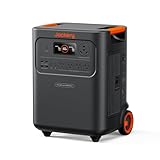
Jackery HomePower 3600 Plus Power Station, 3584Wh, 3600W AC Output | $1,709.00 | Buy on Amazon |
| 3 |

|
CyberPower CP1500PFCLCD PFC Sinewave UPS Battery Backup and Surge Protector | $239.95 | Buy on Amazon |
What is the turquoise lake near Marmora?
The site is the former Marmoraton iron-ore mine in Hastings County, near Marmora, Ontario. After mining ended, the open pit filled with water, creating the striking turquoise lake seen in photographs.
Descriptions commonly put the pit’s depth at roughly 220 metres; another project account gives approximately 213 metres. The exact figure matters less to the proposal than the pit’s overall size, elevation, geology and existing industrial footprint. The lake’s colour is visually distinctive, but it is not what makes the site potentially useful for energy storage.
#1 Best Overall
- 49 Min UltraFast Recharging: With upgraded HyperFlash tech, fully recharge at 1,600W—for outage prepping, camping trips, or tailgating events. Enable it in the Anker app.
- 2,000W Output via 10 Ports: Delivers 2,000W (3,000W peak) and 1,024Wh capacity. Power up to 10 devices—ideal for emergency backup, remote work setups, tiny homes, and off‑grid living.
- Compact and Portable: Easily carry, store, and move from room to room, your RV, or even on beach and park outings. C1000 Gen 2 is 14% smaller and 11% lighter than similar models.
- 10 Years of InfiniPower: Built to last through years of daily backup and RV and van life. After 4,000 cycles, the battery still has at least 80% capacity.
- 1.8 Hr Solar Recharging: Go fully off‑grid with sustainable power for tiny homes, camping RV off‑grid setups, and remote locations. Plug in 600W (60V max) of solar and recharge in just 1.8 hours.
Project materials describe an open-pit mine lake, not an underground mine shaft. The federal project page identifies the flooded pit as the proposed lower reservoir of the Marmora Clean Energy Hub. See the federal project record.
How can a flooded mine act like a battery?
“Giant battery” is a metaphor. The facility would not store electricity in chemical cells. It would store energy as elevated water using pumped-storage hydropower.
- Charge: When electricity is inexpensive or available in surplus, pumps move water from the flooded mine pit to a higher reservoir.
- Store: The water remains in the upper reservoir, holding potential energy because of its elevation.
- Discharge: When electricity demand rises, water flows downhill through turbines.
- Recycle: Generators produce electricity, and the water returns to the lower mine reservoir for another cycle.
The proposed system would be closed-loop, meaning it would circulate water between two reservoirs rather than depend on the natural flow of a river. It would still consume more electricity pumping water uphill than it later produces. Its value comes from shifting electricity through time and providing power when it is more valuable—not from creating energy.
What would the Marmora project include?
The proposal is substantially larger than simply installing equipment beside the existing lake. It would include:
- the flooded mine pit as the lower reservoir;
- a newly constructed upper reservoir;
- water intakes and delivery infrastructure;
- tunnels;
- a powerhouse with reversible pumping and generating equipment;
- a transmission connection, potentially involving underground infrastructure; and
- a proposed 30-megawatt ground-mounted solar facility.
Federal project information describes an assumed operating life of 100 years for the hydroelectric facility and at least 25 years for the solar component. Those are planning assumptions, not guarantees that the project will be built or operate for those periods.
400 megawatts or 500 megawatts?
The capacity figures differ because they come from different project descriptions. An engineering summary describes a 400-megawatt design, while the federal registry describes a facility capable of producing up to 500 megawatts. These should not be treated as one finalized specification.
Megawatts measure the maximum rate of electricity production, not the total amount of energy stored. Secondary coverage has described roughly five hours of generation. If that duration and the stated capacities were achieved, the implied energy output would be approximately 2,000 to 2,500 megawatt-hours. That is an illustrative calculation, not a confirmed final operating specification.
A comparison sometimes used in project coverage says the facility could power about 400,000 homes. That is a developer-associated estimate, and household totals vary according to consumption, season, peak demand and whether the comparison means instantaneous capacity or energy over time.
Rank #2
- Essential Home Backup: The Jackery HomePower 3600 Plus delivers 3600W output (7200W in parallel) to run pumps, heaters, and dryers with ease. With dual voltage (120V & 240V in parallel) and 3584Wh capacity expandable to 21kWh per unit or 43kWh with multiple units, it can power a 3-person household for over 2 weeks.
- Safe Power That Lasts: Built with high-temp resistant ceramic membrane battery cells tested at 302 °F, the Jackery HomePower 3600 Plus Portable Power Station prevents thermal runaway from heat or overcharge. Offering 6,000 cycles and a 10-year lifespan, it delivers safe, reliable even in -4 °F blizzards.
- Plug-and-Play: With its easy plug-and-play design, the Jackery HomePower 3600 Plus, paired with MTS, powers your home effortlessly—no complex installation required. Whether at work, in the kitchen, or with family, simply plug in, press "Power-On" and keep life running smoothly through any outage.
- 4 Charging Options: With 4 convenient ways to charge, the Jackery HomePower 3600 Plus solar generator can be fully recharged from 0–100% in just 2 hours via hybrid AC+DC. It also supports charging via AC in 2.5 hours, solar in 4 hours, or a gas generator in 2.5 hours —delivering a full day of quiet, clean energy.
- Ultra-Portable & Lightweight: The Jackery HomePower 3600 Plus, the lightest 3.6kWh LFP power station, boasts automotive-grade CTB tech and is 34% smaller and 29.3% lighter than other models. Its luggage-style design with wheels and a telescopic handle allows effortless rolling from kitchen to garage or beyond.
The 400-megawatt figure appears in the engineering project summary; the federal registry contains the broader “up to 500 megawatts” description.
Why use a former mine?
A flooded mine can offer several potential advantages:
- Existing lower basin: The pit may reduce the need to excavate an entirely new lower reservoir.
- Brownfield redevelopment: Reusing a disturbed industrial site may avoid some greenfield land conversion.
- Elevation: The pit and surrounding terrain may provide useful hydraulic head—the vertical distance that gives stored water its energy.
- Infrastructure: Roads, electrical facilities and established industrial access may help, although their suitability must be confirmed.
- No major river diversion: A closed-loop design does not require a conventional hydroelectric dam across a large river.
- Post-mining use: The project could give the former mine a new economic role.
None of these advantages proves that the facility would be cheaper, safer or less damaging than alternatives. The upper reservoir, tunnels, powerhouse, transmission connection, access routes and construction areas would still require major civil works.
What’s actually slowing this PC down?
Pick the symptom - the matching free tool is one click away.
Why does Ontario need storage?
Electricity demand changes by hour and season. Wind and solar generation also changes with weather and daylight. Storage can move electricity from periods of lower demand or surplus generation to periods when demand is higher.
Pumped storage can also provide dispatchable capacity and grid services, helping balance supply and demand over several hours. That is different from being a primary source of electricity.
Ontario’s nuclear fleet supplies large amounts of steady generation, but plants require refurbishment outages and face long-term planning questions. Those realities, together with changing demand and variable renewable generation, have prompted provincial consideration of long-duration storage.
Marmora would not replace Ontario’s nuclear fleet, eliminate gas generation or solve the province’s entire reliability challenge. Its proposed role is narrower: provide grid flexibility and multi-hour storage. The IESO ministerial directive shows that the value and procurement model for pumped storage were still being examined.
Free tools Windows power users keep installed
One-click scans. No signup required.
The financial questions are as important as the engineering
A project of this scale would require substantial upfront capital, and secondary reporting has described a potential cost exceeding C$1 billion. That should not be treated as a final approved budget without a current project document confirming it.
Rank #3
- 1500VA/1000W PFC Sinewave Uninterruptible Power Supply (UPS): Uses sine wave output to provide battery backup power for Active PFC & conventional power supplies; Safeguards computers, workstations, network devices, and telecom equipment
- 12 NEMA 5-15R OUTLETS: 6 battery backup & surge protected outlets, 6 surge protected outlets; INPUT: NEMA 5-15P right angle, 45 degree offset plug with 5 foot power cord; 2 USB charge ports (1 Type-A, 1 Type-C) quickly charge phones and tablets
- MULTIFUNCTION, COLOR LCD PANEL: Displays immediate, detailed information on battery and power conditions; Color display alerts users to potential issues before they can affect critical equipment and cause downtime; Screen tilts up to 22 degrees
- AUTOMATIC VOLTAGE REGULATION (AVR): Corrects minor power fluctuations without switching to battery power; UL SAFETY CERTIFIED: Product has been tested in a UL certified lab and listed with UL as meeting or exceeding safety standards
- 3-YEAR WARRANTY – INCLUDING THE BATTERY; $500,000 Connected Equipment Guarantee; FREE PowerPanel Management Software (Download)
The central commercial questions include:
- Who would finance construction?
- Would revenue come from energy-market arbitrage, capacity payments, ancillary services, a long-term contract or a combination?
- How would the project compare with batteries, demand response, gas peaking capacity, transmission and nuclear refurbishment?
- Who would bear geological, construction, interest-rate, environmental and transmission risks?
- Would federal or provincial clean-energy incentives apply?
An earlier IESO assessment did not find sufficient consumer value under its financial modelling. Ontario’s energy minister then asked for updated information and further analysis, including wider social and economic considerations. That was not a final rejection, but it demonstrates why a technically workable project is not automatically an investable one.
Independent reader supportYour contribution helps us test, update, and keep practical guides available for everyone.Environmental and safety issues still require answers
Closed-loop does not mean impact-free. A final assessment would need to examine issues including:
- stability of the pit walls and surrounding rock;
- stability, seepage and failure consequences for the upper reservoir;
- effects of repeated water-level changes;
- water chemistry and possible mobilization of metals;
- groundwater and nearby surface-water effects;
- blasting, dust, noise, traffic and habitat disturbance;
- transmission-line impacts;
- flood management and emergency drawdown procedures;
- public access and physical-security risks around a deep flooded pit;
- Indigenous consultation and participation; and
- long-term monitoring and decommissioning responsibilities.
The official summary of issues records questions submitted by the public and stakeholders. It is not evidence that the project is unsafe, but it shows that important matters require formal responses. Likewise, claims that the mine water is safe or that the project will have no environmental impact would go beyond the available evidence.
The Tool Desk
Outbyte Driver Updater FREEFix the driver behind crashes, sound loss and screen glitchesFind Drivers →Outbyte PC Repair FREERepair Windows errors before they cause bigger problemsFix Now →Approval status: the project is not under construction
Status as of August 16, 2026: The federal registry lists the Marmora Clean Energy Hub in a suspended planning phase. The planning-phase time limit was suspended on July 14, 2023. The registry’s latest listed update is October 31, 2024, and it lists the impact statement and formal impact-assessment phases as not started.
No newer official status was located in the reviewed material. That does not establish that no work has occurred behind the scenes, but it does mean readers should not describe the facility as approved, operational, ready to build or under construction.
An earlier project document included a proposed 2029 operating start. Given the subsequently listed suspended status, that date should be treated as an old planning target rather than a committed commissioning date. Construction would still depend on regulatory approvals, financing, procurement, grid arrangements and a final investment decision.
What would have to happen before it gets built?
The proposal would need to clear several independent hurdles:
Crashes, No Sound, or Screen Glitches?
Random freezes, missing sound and display glitches usually trace back to one bad driver. Find and replace yours safely.Free scan · under a minutePC Slower Than It Used to Be?
A free scan shows the junk files, broken settings and background clutter dragging Windows down - then fixes them in one click.Free scan · Windows 10 & 11- an updated technical design, including reservoir, tunnel, water-management and transmission details;
- formal environmental and impact-assessment requirements;
- Indigenous consultation and public engagement;
- a viable IESO valuation and revenue or contracting structure;
- grid-connection approvals and a workable transmission plan;
- financing that allocates construction and operating risks; and
- a final investment decision by the proponents.
What the Marmora proposal really shows
The flooded Marmoraton pit demonstrates why former mines are attracting attention as possible energy infrastructure: a deep, disturbed site may provide part of the geography needed for long-duration storage. But the existing lake is only one component. The proposed “battery” would require a new upper reservoir, tunnels, turbines, transmission and a large financial commitment.
Marmora is therefore best understood as a serious pumped-storage proposal—not an operating power station. Its future will depend less on the dramatic turquoise lake than on engineering evidence, environmental review, a credible revenue model and the willingness of regulators, investors and the grid operator to accept the project’s costs and risks.
Quick Recap
Product prices and availability are accurate as of the date/time indicated and are subject to change. Any price and availability information displayed on Amazon at the time of purchase will apply.



