Crashes, No Sound, or Screen Glitches?
Random freezes, missing sound and display glitches usually trace back to one bad driver. Find and replace yours safely.Free scan · under a minutePC Slower Than It Used to Be?
A free scan shows the junk files, broken settings and background clutter dragging Windows down - then fixes them in one click.Free scan · Windows 10 & 11A coherent family financial plan begins with a clearly articulated financial vision. This vision serves as the organizing framework that aligns daily financial decisions with long-term outcomes, reducing the likelihood of fragmented or reactive planning. Without this foundation, efforts such as budgeting, saving, or investing often operate in isolation, limiting their effectiveness over time.
Clarifying Financial Goals
Financial goals describe what a household intends to accomplish with its resources. These goals typically span multiple domains, including short-term stability, such as maintaining adequate cash flow; medium-term objectives, such as funding education; and long-term priorities, such as retirement security or wealth transfer. Clearly defined goals allow families to distinguish between essential obligations and discretionary aspirations, a distinction that is critical for consistent decision-making.

Goals should be stated in specific and measurable terms. For example, “building an emergency fund equal to six months of essential expenses” provides clearer direction than a general desire to “save more.” Precision enables progress tracking and supports more realistic trade-offs among competing priorities.
Identifying Core Family Values
Values represent the principles that influence how financial resources are earned, spent, saved, and shared. These may include preferences for financial independence, education, community support, or intergenerational assistance. While values are inherently personal, their explicit identification reduces internal conflict and helps ensure that financial strategies reflect more than numerical targets.
#1 Best Overall

- 【Take Control Of Your Money】Easily plan your monthly budget, track income & expenses, and stay on top of your finances. This budget planner helps you clearly see where your money goes and avoid overspending.
- 【Designed For Real Life Use】Perfect for young professionals, families, students, and anyone working toward financial goals. Whether managing daily expenses or planning long-term savings, this budget book keeps everything organized.
- 【All-In-One Budget System:】Our monthly budget planner features a well-thought-out layout that simplifies your budgeting process. Includes monthly budget pages, expense trackers, bill organizers, savings goals, and debt trackers. Everything you need to manage money in one convenient planner.
- 【12-Month Duration】Our budget planner covers a total of 12 months, giving you an extended period of financial organization. Now you can make income and expense records at any time, ensuring every financial decision aligns with your long-term goals.
- 【Premium Quality and Convenience】Crafted with attention to detail, this budget planner boasts superior quality. The sturdy pink and gold coil binding allows for effortless flipping, while the metal corner protectors effectively prevent damage to the cover, ensuring long-lasting durability.
When values are not articulated, financial decisions may default to external pressures or short-term convenience. In contrast, value-based planning provides consistency, particularly when navigating decisions involving lifestyle choices, charitable giving, or financial support for extended family members. This alignment strengthens long-term commitment to the plan.
Understanding Time Horizons
A time horizon refers to the length of time until funds are needed for a specific goal. Common classifications include short-term (generally under three years), intermediate-term (three to ten years), and long-term (more than ten years). Time horizons influence not only saving strategies but also how financial risks are evaluated and managed.
Families often pursue multiple goals simultaneously across different time horizons. Recognizing this complexity helps prevent misalignment, such as using long-term assets for short-term needs. Clear time horizons allow households to coordinate budgeting, emergency reserves, insurance planning, education funding, retirement preparation, and estate considerations within a unified structure.
Building a Sustainable Household Budget That Balances Today’s Needs and Tomorrow’s Priorities
With goals clarified, values articulated, and time horizons defined, the household budget becomes the practical mechanism for translating intentions into consistent financial behavior. A budget is not merely a spending constraint; it is a resource allocation framework that reflects priorities across competing demands. When structured effectively, it supports current living standards while systematically advancing long-term objectives.
Quick wins for a faster PC:
Scan for outdated or missing drivers - takes under a minuteDriver Scan →Clear out junk files and repair common Windows errorsFree Scan →A sustainable budget accounts for variability over time. Income levels, family size, healthcare needs, and education costs evolve, requiring flexibility without sacrificing discipline. The objective is not rigid control, but deliberate alignment between cash flow and stated priorities.
Establishing a Clear Cash Flow Baseline
Cash flow refers to the timing and amount of money entering and leaving a household over a given period. Establishing a baseline requires documenting all reliable income sources and categorizing expenses using consistent definitions. This process distinguishes structural obligations from choices influenced by lifestyle preferences.
Expenses are typically grouped into essential expenses, such as housing, food, utilities, insurance premiums, and transportation, and discretionary expenses, including dining out, travel, and entertainment. This classification builds on earlier distinctions between foundational obligations and aspirational goals. Accuracy at this stage is critical, as distorted assumptions weaken every downstream planning decision.
Prioritizing Fixed Commitments Before Variable Spending
Fixed commitments are recurring expenses that are contractually or functionally difficult to adjust in the short term. Examples include rent or mortgage payments, debt service, childcare, and insurance coverage. Addressing these obligations first clarifies the portion of income that is truly flexible.
Variable spending, by contrast, fluctuates based on consumption choices and timing. While often labeled discretionary, some variable costs, such as groceries or utilities, still serve essential functions. Separating fixed from variable expenses improves predictability and allows households to absorb temporary income or expense shocks without undermining long-term goals.
Integrating Emergency Reserves Into the Budget Structure
An emergency fund is a pool of liquid savings reserved for unexpected expenses, such as job loss, medical costs, or urgent home repairs. Liquidity refers to how quickly an asset can be converted to cash without significant loss of value. Budgeting for emergency reserves transforms risk management from a reactive response into a planned allocation.
Rather than treating emergency savings as a one-time task, sustainable budgets incorporate ongoing contributions until a defined target is reached. This approach reduces reliance on high-cost debt during disruptions and protects long-term assets intended for education, retirement, or intergenerational transfer.
Accounting for Risk Through Insurance Planning
Insurance serves as a financial risk transfer mechanism, shifting the economic impact of low-probability, high-cost events to an insurer. Common categories include health, disability, life, property, and liability insurance. Premiums represent a predictable expense that safeguards the household balance sheet.
Recommended Free Tools
In budgeting terms, insurance costs are often misunderstood as optional when no immediate benefit is visible. However, their inclusion reflects recognition of financial vulnerabilities identified through earlier goal and time horizon analysis. A comprehensive budget accounts for both current premiums and anticipated adjustments as family circumstances change.
Allocating Resources Across Multiple Time Horizons
Effective budgets allocate resources simultaneously to short-, intermediate-, and long-term objectives. Education savings, retirement preparation, and estate-related planning often compete with present-day consumption for limited cash flow. Without intentional allocation, longer-term priorities tend to be deferred indefinitely.
This allocation process does not imply equal funding across all goals. Instead, it reflects proportionality based on time horizon, risk exposure, and family values. Embedding these allocations into the regular budget cycle reinforces consistency and reduces the likelihood of abandoning long-term commitments during periods of financial pressure.
Coordinating Education, Retirement, and Estate Considerations
Education funding, retirement savings, and estate planning are frequently addressed in isolation, yet they are interdependent within a household budget. Contributions toward education savings affect available cash flow for retirement, while retirement readiness influences future reliance on family support. Estate considerations, including beneficiary designations and asset titling, shape how accumulated resources are ultimately transferred.
What’s actually slowing this PC down?
Pick the symptom - the matching free tool is one click away.
A coordinated budget acknowledges these relationships without requiring immediate optimization. By assigning intentional line items to each category, families maintain visibility across generations. This structure supports informed trade-offs and reinforces the broader objective of long-term financial continuity rather than short-term maximization.
Creating a Resilient Emergency Fund to Protect Against Life’s Uncertainties
Within a coordinated household budget, the emergency fund functions as a stabilizing reserve that supports all other financial priorities. While education, retirement, and estate considerations address future objectives, an emergency fund addresses the present risk of income disruption or unexpected expenses. Its role is protective rather than growth-oriented, preserving financial continuity during periods of stress. Without this buffer, families are often forced to redirect long-term savings or assume high-cost debt.
Defining the Purpose and Scope of an Emergency Fund
An emergency fund is a pool of readily accessible cash set aside to cover unplanned, necessary expenses. These expenses typically include job loss, medical costs not covered by insurance, urgent home repairs, or temporary caregiving needs. The defining characteristics are liquidity and reliability, meaning funds can be accessed quickly without market risk or penalties. This distinguishes an emergency fund from long-term investments, which are designed for growth rather than immediate use.
Rank #2
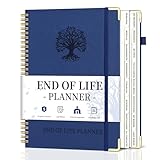
- What You Left Behind When You Left: This end of life planner with tabs meticulously covers 16 different sections, ensuring all key details are recorded. From personal information to final wishes, all necessary information that loved ones may need is carefully organized.
- Thoughtful Design: Featuring a B5 size (7.9" x 10.4"), our peace of mind planner is equipped with twin-wire spiral binding for 360° flexible page turning. It comes with an inner pocket, pen holder, and elastic band for organization flexibility.
- Comprehensive Structure: The death book planner includes 16 detailed sections such as catalog pages, personal and family info, medical info, property and financial assets, beneficiaries, pet info, insurance coverage, active accounts, memberships, funeral arrangements, and final wishes.
- Exclusive Features: The final wishes organizer planner is printed in large font on 100GSM non-bleed paper, easy to read. Special gold corner protection design effectively safeguards the cover from damage. Includes 8 blank note pages to meet diverse note-taking and planning needs.
- Ideal for Seniors and Adults: Our estate planning organizer helps to document and clearly communicate lifelong aspirations. Ensure family can accurately execute wishes without overlooking any details, providing peace of mind.
Determining an Appropriate Funding Level
Emergency fund targets are commonly expressed as a multiple of essential monthly expenses, rather than total income. Essential expenses include housing, utilities, food, insurance premiums, transportation, and minimum debt obligations. The appropriate range varies based on income stability, household size, and reliance on variable compensation. Families with dual incomes or predictable employment may require a smaller reserve than those with self-employment or single-income structures.
Free tools Windows power users keep installed
One-click scans. No signup required.
Integrating the Emergency Fund Into the Budget Framework
From a budgeting perspective, emergency fund contributions are treated as a recurring allocation rather than a one-time objective. This approach aligns with earlier discussions of allocating resources across time horizons, positioning the emergency fund as a short-term priority with long-term benefits. Regular contributions, even at modest levels, reduce the need for reactive financial decisions during disruptions. Once the target level is reached, contributions can be redirected while maintaining the reserve for its intended purpose.
Liquidity, Preservation, and Inflation Considerations
Because emergency funds prioritize accessibility and capital preservation, they are typically held in low-risk, liquid accounts such as savings or money market accounts. Liquidity refers to the ability to convert assets to cash quickly without loss of value. While these vehicles may not keep pace with inflation over long periods, the trade-off is stability and certainty. The cost of lower returns is offset by the protection provided against forced asset sales or borrowing.
Rules for Use and Replenishment
A resilient emergency fund is governed by clear criteria for when funds are accessed and how they are restored. Defining qualifying events in advance reduces ambiguity and emotional decision-making during stressful periods. After a withdrawal, replenishment becomes a temporary budget priority to restore the household’s protective buffer. This cycle reinforces the emergency fund’s role as a financial shock absorber rather than a supplemental spending account.
Relationship to Insurance and Long-Term Planning
Emergency funds and insurance serve complementary functions within a comprehensive financial plan. Insurance transfers specific risks to an insurer, while an emergency fund absorbs costs that fall below coverage thresholds or outside policy terms. Together, they reduce the likelihood that short-term disruptions derail education savings, retirement contributions, or estate-related arrangements. This integration strengthens overall household resilience and supports long-term generational well-being.
Do these 3 things before closing this tab:
1Clear out junk files and repair common Windows errors2Scan for outdated or missing drivers - takes under a minute3Repair Windows errors before they cause bigger problemsManaging Risk Strategically: Health, Life, Disability, and Property Insurance for Families
Building on the role of emergency funds, insurance addresses risks that exceed what household reserves are designed to absorb. While an emergency fund manages short-term liquidity needs, insurance transfers low-probability but high-cost events to a third party in exchange for a known premium. Premiums are the recurring payments required to maintain coverage. This distinction clarifies why insurance is a core component of long-term family financial planning rather than a substitute for savings.
Health Insurance as a Foundation of Risk Management
Health insurance protects households from medical expenses that could otherwise overwhelm cash flow and long-term savings. Policies typically include deductibles, the amount paid out-of-pocket before coverage begins, and cost-sharing mechanisms such as copayments or coinsurance. Understanding these terms is critical, as families are responsible for costs below coverage thresholds even when insured. Aligning health insurance with the emergency fund ensures routine medical expenses do not disrupt broader financial goals.
Life Insurance and Income Replacement
Life insurance addresses the financial consequences of premature death, particularly the loss of income or unpaid obligations. Term life insurance provides coverage for a defined period, while permanent life insurance includes an investment component and lifelong coverage. The primary economic function is income replacement, ensuring dependents can maintain housing, education plans, and daily living expenses. Coverage decisions are tied to the household’s earning structure, outstanding liabilities, and long-term commitments.
Disability Insurance and Earnings Protection
Disability insurance is often overlooked despite the higher probability of income disruption due to illness or injury rather than death. This coverage replaces a portion of earnings if a wage earner becomes unable to work. Definitions of disability vary by policy and determine when benefits apply. Integrating disability insurance into the financial plan stabilizes cash flow and reduces pressure on emergency savings and retirement accounts during prolonged income interruptions.
The Tool Desk
Outbyte PC Repair FREERepair Windows errors before they cause bigger problemsFix Now →Outbyte Driver Updater FREEScan for outdated or missing drivers - takes under a minuteDriver Scan →Property Insurance and Asset Preservation
Property insurance protects physical assets such as homes and vehicles from damage or loss due to specified events. Coverage typically includes deductibles and exclusions that define which risks remain the household’s responsibility. Because property assets often represent a significant share of family net worth, uninsured or underinsured losses can delay education funding or retirement timelines. Coordinating coverage limits with asset values supports capital preservation across life stages.
Balancing Coverage, Costs, and Trade-Offs
Insurance planning involves trade-offs between premiums, deductibles, and coverage limits. Higher deductibles reduce premiums but increase reliance on emergency funds for smaller claims. Lower deductibles raise recurring costs while reducing short-term financial volatility. Evaluating these trade-offs within the context of household cash flow and savings capacity reinforces disciplined budgeting and risk awareness.
Insurance Within a Long-Term Family Financial Framework
When integrated with budgeting, emergency reserves, education savings, and retirement planning, insurance reinforces financial continuity across generations. Policies are not static and require periodic review as income, family structure, and asset levels change. This structured approach ensures that unexpected events do not force reactive decisions that undermine long-term objectives. Insurance, when aligned with broader planning, functions as a stabilizing mechanism rather than an isolated expense.
Investing in Education: Navigating 529 Plans, Custodial Accounts, and Financial Aid Considerations
With risk management and income stability established, education funding represents a forward-looking use of household capital. Unlike emergency savings or insurance, education investments are designed for a known future expense with an uncertain cost and timeline. Integrating education planning into the broader financial framework helps families avoid reallocating retirement assets or increasing debt when tuition obligations arise. The choice of savings vehicle influences taxes, control, and eligibility for financial aid.
529 College Savings Plans: Structure and Tax Treatment
A 529 plan is a tax-advantaged savings account specifically designated for qualified education expenses, including tuition, fees, books, and certain housing costs. Contributions are made with after-tax dollars, but investment growth and withdrawals are generally tax-free when used for qualified purposes. Many states offer income tax deductions or credits for in-state plan contributions, although benefits vary by jurisdiction.
Ownership of a 529 plan typically remains with the contributing adult, allowing control over investment decisions and beneficiary changes. This structure provides flexibility if a child does not pursue higher education or receives scholarships. Because the assets are earmarked for education, 529 plans often align well with long-term funding goals without interfering with retirement accounts or emergency reserves.
Custodial Accounts: Flexibility and Trade-Offs
Custodial accounts, commonly established under the Uniform Gifts to Minors Act (UGMA) or Uniform Transfers to Minors Act (UTMA), allow adults to invest assets on behalf of a child. The funds can be used for any purpose that benefits the minor, not exclusively education. Investment earnings may be subject to annual taxation, depending on the child’s income level and applicable tax rules.
Unlike 529 plans, custodial accounts transfer full legal control to the child upon reaching the age of majority, which varies by state. This loss of parental control introduces behavioral and planning risk, particularly if funds were intended for education. Custodial assets are also considered the student’s property for financial aid calculations, which can significantly reduce eligibility for need-based assistance.
Comparing Account Types Within a Household Plan
The decision between 529 plans and custodial accounts involves balancing tax efficiency, flexibility, and control. 529 plans prioritize education-specific outcomes and long-term tax advantages. Custodial accounts offer broader use but introduce greater tax exposure and reduced oversight once ownership transfers.
Within a structured financial plan, education accounts should complement rather than replace retirement savings. Education expenses can be financed through multiple sources, including income, scholarships, and loans, whereas retirement typically cannot. Maintaining this hierarchy helps preserve long-term household solvency while still addressing educational objectives.
Rank #3

- ORGANIZE EVERYTHING YOUR LOVED ONES WILL NEED – This all-in-one When I Die organizer binder helps you document vital information, wishes, and instructions — so your family won’t have to search for answers during a difficult time.
- INCLUDES STORAGE POCKETS FOR IMPORTANT DOCUMENTS – This important document organizer has 10 sturdy inner pockets provide space to store key papers, such as wills, insurance policies, birth certificates, and more — all in one safe place.
- COVERS EVERYTHING THAT MATTERS – The my final wishes planner includes sections for personal info, contacts, accounts & passwords, medical history, assets & debts, dependents, funeral wishes, insurance, and more, to organize everything easily.
- SIMPLE, THOUGHTFUL & EASY TO USE – Designed with guided prompts to make organizing your affairs straightforward and stress-free — no legal jargon or complicated forms. Measures 8.5” x 9.4”, with 120gsm paper, eco-leather hardcover and spiral binding.
- 60-DAY SATISFACTION GUARANTEE - We will exchange or refund your beneficiary planner book if you aren’t satisfied with your end of life document organizer for any reason. Message us to refund your end of life planner organizer notebook.
Financial Aid Considerations and Asset Positioning
Financial aid eligibility is assessed using formulas that evaluate both income and assets. Parental assets, including most 529 plans owned by parents, are generally assessed at a lower rate than student-owned assets. Custodial accounts held in the student’s name are assessed more heavily, reducing potential need-based aid.
Timing and account ownership can influence reported assets, but these considerations must be evaluated within the context of ethical disclosure requirements and long-term planning goals. Education funding strategies that align with financial aid rules help families anticipate net costs rather than relying on uncertain assistance outcomes. This forward planning reduces the likelihood of last-minute funding gaps that disrupt cash flow or increase reliance on high-interest borrowing.
Education Funding as Part of Intergenerational Planning
Investing in education intersects with estate planning, cash flow management, and long-term wealth transfer. Contributions to education accounts may reduce taxable estates while supporting skill development and earning potential for the next generation. However, overfunding education at the expense of retirement security can shift financial dependency rather than reduce it.
Positioning education savings within a disciplined, multi-goal framework reinforces balance across life stages. When education planning is coordinated with insurance, retirement contributions, and estate considerations, families create a resilient structure that supports both present stability and future opportunity.
Laying the Foundation for Retirement While Supporting a Growing Family
As education planning is integrated into broader household objectives, retirement preparation must be addressed with equal structural discipline. Retirement represents a non-negotiable financial obligation that extends across decades and is largely self-funded. Establishing this foundation early allows families to absorb competing priorities without compromising long-term financial independence.
Establishing Retirement as a Core Financial Pillar
Retirement planning refers to the systematic accumulation of assets intended to replace employment income later in life. Common vehicles include employer-sponsored plans such as 401(k)s, which are tax-advantaged accounts allowing pre-tax or after-tax (Roth) contributions, and Individual Retirement Accounts (IRAs), which are held independently of employers. These accounts benefit from compound growth, meaning investment earnings generate additional earnings over time.
Consistent contributions during early and middle working years reduce the need for aggressive savings later. This principle is especially relevant for families facing rising expenses related to housing, childcare, and education. Treating retirement contributions as a fixed component of the household budget reinforces long-term solvency.
Balancing Cash Flow Demands Across Life Stages
Growing families often experience constrained cash flow as expenses expand faster than income. Budgeting, defined as the intentional allocation of income toward expenses, savings, and obligations, provides visibility into trade-offs. A structured budget helps prioritize retirement contributions while accommodating variable costs such as childcare or healthcare.
Retirement savings rates may fluctuate temporarily, but prolonged interruptions increase future pressure on household finances. Maintaining continuity, even at modest levels, preserves momentum and reduces reliance on catch-up strategies later in life.
The Role of Emergency Funds in Retirement Stability
An emergency fund is a pool of liquid savings reserved for unexpected expenses such as job loss, medical costs, or urgent home repairs. Adequate emergency reserves prevent the need to withdraw from retirement accounts prematurely. Early withdrawals often trigger income taxes and penalties, eroding long-term growth.
For families, emergency funds serve as a financial shock absorber during periods of transition. This buffer allows retirement assets to remain invested according to long-term objectives rather than short-term disruptions.
Integrating Insurance to Protect Retirement Trajectories
Insurance planning safeguards the household’s ability to continue saving for retirement despite adverse events. Health, disability, and life insurance each address distinct risks that can derail long-term plans. Disability insurance, in particular, protects earning capacity during working years, which is the primary engine of retirement funding.
Adequate coverage limits the need to redirect retirement savings toward crisis management. Insurance functions as a risk transfer mechanism, shifting low-probability but high-impact events away from household balance sheets.
Sequencing Financial Priorities Without Sacrificing Flexibility
Effective family financial planning relies on sequencing goals rather than pursuing them in isolation. Retirement contributions, emergency savings, insurance premiums, and education funding must be coordinated within available income. This sequencing recognizes that some goals, such as retirement, have fewer external financing options.
What’s actually slowing this PC down?
Pick the symptom - the matching free tool is one click away.
Flexibility is preserved by periodically reassessing contributions as income changes. A structured framework allows families to adapt without undermining long-term commitments or creating future dependency.
Retirement Planning Within an Intergenerational Framework
Retirement readiness directly influences intergenerational outcomes. Parents who achieve financial independence reduce the likelihood of relying on adult children for support later in life. This independence strengthens the family’s overall financial resilience and preserves resources for intentional wealth transfer.
When retirement planning is aligned with estate considerations, families can better manage beneficiary designations, asset distribution, and tax exposure. This coordination reinforces continuity across generations while maintaining stability during active earning years.
Smart Investing for Long-Term Growth: Asset Allocation, Tax Efficiency, and Behavioral Discipline
With foundational elements such as budgeting, insurance, and retirement sequencing in place, long-term investing becomes the mechanism through which future goals are funded. Investment decisions translate surplus cash flow into assets intended to outpace inflation, preserve purchasing power, and support multidecade objectives. This process depends less on selecting individual investments and more on structuring portfolios to manage risk, taxes, and behavior consistently over time.
Quick wins for a faster PC:
Repair Windows errors before they cause bigger problemsFix Now →Scan for outdated or missing drivers - takes under a minuteDriver Scan →Clear out junk files and repair common Windows errorsFree Scan →Asset Allocation as the Primary Driver of Long-Term Outcomes
Asset allocation refers to the distribution of investments across broad asset classes such as equities (stocks), fixed income (bonds), and cash equivalents. Each asset class exhibits different risk and return characteristics, which influence how a portfolio behaves across economic cycles. Over long periods, asset allocation explains a significant portion of investment outcomes relative to market timing or individual security selection.
For families, asset allocation should reflect time horizon, income stability, and capacity to absorb short-term losses without disrupting essential goals. Longer time horizons generally allow for greater exposure to growth-oriented assets, while near-term obligations require more stability. A disciplined allocation framework aligns investment risk with household financial resilience rather than market forecasts.
Rank #4

- Peace of Mind for You & Your Loved Ones: ZICOTO’s end of life planner organizes final wishes, key documents and vital info in one place - bringing comfort, clarity & relief to your family. A considerate tool that turns chaos into calm when it matters most!
- Comprehensive & Thoughtfully Guided: The estate planning organizer includes 87 guided sheets to capture it all - personal details, medical info, financial overviews, property & assets, funeral plans & more. Ensure nothing is forgotten and every wish is respected
- A Beautiful Way to Preserve Your Legacy: A graceful design for a meaningful purpose. This tastefully crafted estate planning binder features a soft sage linen cover with gold foil accents and protective gold corners. A sturdy 38mm metal ring ensures smooth turning
- Smart Details for Easy Organization: Keep documents, photos & keepsakes neatly organized within 13 tabbed pockets. A thick elastic band ensures everything stays secure, while the spacious back pocket offers extra room for notes & more
- Designed for Your Unique Needs: The adaptable 3-ring binder allows you to personalize your end of life organizer binder by adding or removing pages, so it always reflects your evolving wishes and plans perfectly
Diversification to Manage Concentration Risk
Diversification is the practice of spreading investments across multiple assets, sectors, and geographic regions to reduce exposure to any single source of risk. Concentration risk arises when too much of a portfolio depends on one company, industry, or economic outcome. Diversification does not eliminate losses but helps smooth returns across varying conditions.
Within family financial plans, diversification supports continuity by reducing the likelihood that market volatility undermines education funding, retirement timelines, or estate objectives. Broad-based investment vehicles often serve this purpose efficiently by providing exposure to many underlying holdings. The goal is portfolio resilience, not short-term performance optimization.
Recommended Free Tools
Tax Efficiency as a Structural Advantage
Tax efficiency focuses on minimizing the erosion of returns due to taxes over time. Different investment accounts are taxed differently, with tax-deferred accounts delaying taxation and tax-exempt accounts potentially eliminating it under specific conditions. The placement of assets across account types influences after-tax outcomes without changing underlying investments.
Families benefit from aligning asset types with account characteristics, such as holding tax-inefficient assets in tax-advantaged accounts when available. Capital gains, dividends, and interest income are subject to varying tax treatments, which compound over long horizons. Managing taxes at the portfolio level enhances net growth while preserving flexibility for future withdrawals.
Turnover, Rebalancing, and Long-Term Efficiency
Portfolio turnover refers to how frequently investments are bought and sold. Higher turnover can increase transaction costs and trigger taxable events in non-qualified accounts. Long-term strategies typically emphasize lower turnover to preserve compounding and reduce frictional costs.
Rebalancing is the periodic adjustment of a portfolio back to its target asset allocation as market movements cause drift. This process enforces risk discipline by systematically reducing overexposure to assets that have grown disproportionately. When executed thoughtfully, rebalancing supports both risk management and tax awareness.
Do these 3 things before closing this tab:
1Scan for outdated or missing drivers - takes under a minute2Clear out junk files and repair common Windows errors3Fix the driver behind crashes, sound loss and screen glitchesBehavioral Discipline as a Hidden Determinant of Success
Behavioral discipline addresses the tendency of investors to make decisions driven by emotion rather than analysis. Market volatility often triggers fear or overconfidence, leading to poorly timed decisions that undermine long-term plans. These behavioral responses can have a greater negative impact than market downturns themselves.
Structured investment policies help families maintain consistency during periods of uncertainty. By anchoring decisions to predefined objectives and allocation guidelines, households reduce the influence of short-term noise. Discipline transforms investing from a reactive activity into a deliberate extension of the broader financial plan.
Aligning Investment Strategy With Family Objectives
Investment portfolios should reflect the full spectrum of family goals, including retirement security, education funding, and eventual wealth transfer. Each objective carries distinct time horizons and risk tolerances that influence portfolio structure. Segmentation of assets by purpose can improve clarity and decision-making.
When investments are explicitly linked to goals, families are better positioned to remain committed during market fluctuations. This alignment reinforces the integration of investing with budgeting, insurance, and estate planning. Long-term growth is achieved not through prediction, but through structure, efficiency, and consistency over time.
The Tool Desk
Outbyte PC Repair FREEClear out junk files and repair common Windows errorsFree Scan →Outbyte Driver Updater FREEScan for outdated or missing drivers - takes under a minuteDriver Scan →Planning for the Unexpected: Estate Planning, Guardianship, and Legacy Considerations
As investment strategies are aligned with long-term objectives, risk management must extend beyond markets to life events that disrupt continuity. Estate planning provides the legal and organizational framework that ensures financial resources, responsibilities, and intentions are carried forward despite uncertainty. Without structure, even well-funded plans can unravel under legal delays or unintended outcomes.
Estate planning is the process of arranging for the management and transfer of assets during incapacity or after death. Its primary function is not wealth accumulation, but continuity, control, and clarity. For families, it serves as the bridge between current financial discipline and long-term generational stability.
Foundational Estate Planning Documents
A will is a legal document that specifies how assets are distributed and who is responsible for administering the estate. It also names guardians for minor children, making it central to family protection rather than merely asset transfer. In the absence of a will, state laws determine outcomes, often with limited flexibility.
A durable power of attorney authorizes a designated individual to manage financial matters if incapacity occurs. A healthcare proxy, sometimes called a medical power of attorney, grants authority over medical decisions when an individual cannot communicate preferences. These documents preserve decision-making continuity and reduce uncertainty during crises.
Free tools Windows power users keep installed
One-click scans. No signup required.
Guardianship Planning for Minor Children
Guardianship designations determine who will assume legal responsibility for children if parents are unable to do so. This decision encompasses financial stewardship, caregiving philosophy, and long-term stability. Courts prioritize the child’s best interests, but written designations carry significant weight.
Financial resources alone do not ensure effective guardianship. Families must consider whether designated guardians have the capacity, willingness, and support to manage both caregiving and financial oversight. Aligning guardianship choices with financial structures reduces the risk of misalignment between resources and responsibility.
Beneficiary Designations and Asset Titling
Many financial assets transfer by beneficiary designation rather than through a will. Retirement accounts, life insurance policies, and certain bank accounts pass directly to named beneficiaries upon death. These designations override instructions in a will, making regular review essential for consistency.
Asset titling refers to the legal ownership structure of property, such as individual ownership, joint ownership, or ownership through a trust. Titling affects how assets are accessed, taxed, and transferred. Misaligned titling can create delays or unintended distributions despite otherwise sound planning.
Trusts as a Tool for Control and Continuity
A trust is a legal arrangement in which a trustee manages assets for the benefit of designated beneficiaries under specified terms. Trusts can provide control over timing, conditions, and use of assets, particularly for minors or beneficiaries with special needs. They also offer privacy and administrative efficiency compared to probate, the court-supervised process of settling an estate.
Not all families require trusts, but understanding their function clarifies available options. Trusts can coordinate with investment strategies by preserving asset allocation discipline across generations. Their value lies in structure, not complexity.
Estate Taxes and Transfer Considerations
Estate taxes are levied on the transfer of assets at death, subject to exemption thresholds that vary by jurisdiction and change over time. Most middle-income families fall below federal estate tax limits, but state-level taxes may still apply. Awareness of these rules prevents overestimation or underestimation of future obligations.
More broadly, transfer efficiency matters even when taxes are minimal. Administrative costs, delays, and legal disputes erode value in ways unrelated to market performance. Planning emphasizes reducing friction so that assets serve intended purposes without unnecessary loss.
Defining Legacy Beyond Financial Assets
Legacy planning extends beyond monetary transfer to values, intentions, and family governance. Written letters of intent or ethical wills articulate priorities that legal documents cannot capture. These narratives provide context for financial decisions and reinforce continuity across generations.
When legacy considerations are integrated with budgeting, insurance, and investing, families move from accumulation to stewardship. Financial systems become tools for stability rather than sources of conflict. Structure, once again, is the defining factor that transforms resources into lasting support.
Bringing It All Together: Reviewing, Adjusting, and Teaching Financial Literacy Across Generations
Long-term financial security is not achieved through a single plan but through an ongoing process of review, adaptation, and education. As family circumstances, economic conditions, and legal frameworks evolve, financial systems must remain responsive. Integration is the point at which budgeting, risk management, saving, investing, and legacy planning operate as a coherent whole rather than as isolated decisions.
This final stage connects structure with continuity. It emphasizes disciplined maintenance of the plan and intentional transfer of financial understanding across generations.
The Importance of Periodic Financial Review
A financial plan reflects assumptions about income, expenses, life expectancy, market behavior, and policy environments. Over time, those assumptions change. Regular reviews allow families to test whether current strategies remain aligned with actual conditions.
Reviewing does not imply constant revision. It involves assessing cash flow stability, emergency fund adequacy, insurance coverage relevance, investment allocation consistency, and progress toward education and retirement objectives. The purpose is to identify misalignment early, when adjustments are less disruptive.
Adjusting for Life Transitions and Economic Change
Major life events introduce new financial variables. Marriage, additional dependents, career changes, health challenges, and caregiving responsibilities alter both risk exposure and resource capacity. Adjustments ensure that protections and priorities remain proportional to current realities.
External factors also matter. Inflation, defined as the general increase in prices over time, affects purchasing power and savings adequacy. Changes in tax law, education costs, or healthcare systems may require recalibration. Flexibility preserves the plan’s relevance without abandoning its underlying structure.
PC Slower Than It Used to Be?
A free scan shows the junk files, broken settings and background clutter dragging Windows down - then fixes them in one click.Free scan · Windows 10 & 11Outdated Drivers Are Slowing You Down
One free scan finds every outdated or missing driver and matches the right update for your exact hardware.Free scan · exact hardware matchMaintaining Alignment Across Financial Components
Effective planning depends on coordination. Budgeting supports savings capacity, emergency funds protect investment continuity, insurance manages downside risk, and long-term investments support future obligations. Estate structures then formalize how accumulated resources are transferred and governed.
Misalignment occurs when one component advances without regard for others, such as aggressive investing without sufficient liquidity or legacy plans disconnected from current cash flow realities. Periodic alignment checks reinforce coherence. The objective is internal consistency, not maximization of any single element.
Teaching Financial Literacy as a Strategic Asset
Financial literacy refers to the ability to understand and apply core financial concepts, including saving, risk, compounding, and trade-offs. It is not innate and does not automatically transfer through inheritance. Without education, even well-structured plans degrade over time.
Teaching financial literacy is most effective when aligned with age and responsibility. Early exposure focuses on budgeting and delayed gratification. Later stages introduce investing principles, credit management, and long-term planning. Education transforms beneficiaries into capable stewards rather than passive recipients.
Modeling Decision-Making and Financial Governance
Beyond technical knowledge, families transmit financial behavior through example. Transparent decision-making, documented reasoning, and clear rules around shared resources establish informal governance. Governance refers to the processes by which financial decisions are made, monitored, and adjusted within a group.
Family meetings, written guidelines, or structured roles provide continuity without rigidity. These practices reduce ambiguity and conflict, particularly as assets or responsibilities are shared across generations. Governance complements legal structures by addressing human dynamics directly.
Creating Continuity Through Documentation and Communication
Written plans, summaries, and explanatory documents reduce reliance on memory or assumption. They provide context for why decisions were made and how components interrelate. This documentation supports smoother transitions during incapacity, retirement, or estate settlement.
Communication ensures that documentation is understood rather than merely stored. Clear explanation of objectives, constraints, and expectations aligns participants around shared outcomes. Continuity depends as much on understanding as on formal design.
From Planning to Stewardship
When review, adjustment, and education operate together, financial planning moves beyond accumulation. Resources are managed with intent, resilience, and continuity. The focus shifts from reacting to events toward sustaining stability over time.
For middle-income families, this approach reinforces that long-term security is built through structure, discipline, and knowledge rather than complexity or scale. Financial systems become tools for supporting lives and values across generations. Stewardship, not just planning, is the defining outcome.
Quick Recap
Product prices and availability are accurate as of the date/time indicated and are subject to change. Any price and availability information displayed on Amazon at the time of purchase will apply.




