What’s actually slowing this PC down?
Pick the symptom - the matching free tool is one click away.
Tax deductions are specific expenses that the tax law allows taxpayers to subtract from gross income when calculating taxable income. Taxable income is the portion of income subject to tax after allowable reductions are applied. By reducing the income base on which tax rates are applied, deductions indirectly lower the amount of tax owed rather than providing a direct dollar-for-dollar reduction.
The economic significance of deductions lies in how they interact with marginal tax rates. A marginal tax rate is the percentage applied to the last dollar of taxable income. A deduction reduces tax liability only by the deduction amount multiplied by the taxpayer’s marginal rate, which means its value depends on income level and filing status.

Tax Deductions Versus Tax Credits
Tax deductions and tax credits are often confused, but they operate very differently. A tax credit reduces tax liability directly, dollar for dollar, after taxable income has already been calculated. For example, a $1,000 credit reduces taxes owed by exactly $1,000, regardless of income level.
By contrast, a $1,000 deduction reduces taxable income, not the tax itself. If the taxpayer is in a 22 percent marginal tax bracket, that deduction reduces tax liability by $220. This distinction makes credits generally more powerful than deductions, even when the dollar amounts appear similar.
Crashes, No Sound, or Screen Glitches?
Random freezes, missing sound and display glitches usually trace back to one bad driver. Find and replace yours safely.Free scan · under a minutePC Slower Than It Used to Be?
A free scan shows the junk files, broken settings and background clutter dragging Windows down - then fixes them in one click.Free scan · Windows 10 & 11#1 Best Overall

- KEEP DETAILED RECORDS OF THE CAR'S MILEAGE - This mileage log book for car, whether you are a professional driver who needs accurate mileage reimbursement records, or you just want to track your personal vehicle usage, our mileage log book is the perfect choice for you
- UNIQUE DESIGN - The vehicle mileage log book with spiral binding for truck drivers has 1732 entries to meet your needs. Each entry has space to log date, depart time, odometer readings, business & personal miles, purpose, vehicle info, start location & destination and expenses.
- MORE FUNCTIONS - Auto mileage log book help you keep track of mileage, expenses, gas consumption, lubrication, repairs & accessories, annual summary, contacts, important dates and notes.
- HIGH QUALITY - This mileage log book for business or personal, mileage logbook size of 5.8" x 8.5", just the perfectly size to fit in your backpack, purse or laptop case. Is used to high quality 100gsm pure white paper, elastic band and a back pocket for extra space.
- THE PERFECT GIFT - This driving log book can effectively organize and track your work or life, give it to your children, friends, family as a gift for Birthday| Easter|Children's Day|Halloween|Thanksgiving|Christmas|Back to school and New Year's Day.
What Happened to Personal Exemptions
Personal exemptions were once a separate category of income reduction that allowed taxpayers to subtract a fixed amount for themselves and qualifying dependents. An exemption reduced taxable income in a manner similar to a deduction but was not tied to actual expenses. Under current federal law, personal exemptions are suspended through at least 2025, meaning they no longer reduce taxable income for most filers.
Although exemptions are not currently available, they remain relevant for understanding older tax rules and potential future changes. Many state tax systems still use exemption-style reductions, which can affect state-level tax calculations even when federal exemptions are unavailable.
Standard Deduction Versus Itemized Deductions
Taxpayers generally choose between claiming the standard deduction or itemizing deductions. The standard deduction is a fixed amount set by law that reduces taxable income without requiring documentation of specific expenses. Its purpose is to simplify compliance and provide a baseline level of income reduction for most taxpayers.
Itemized deductions allow taxpayers to deduct the actual total of eligible expenses listed in the tax code. Common itemized deductions include mortgage interest on a primary residence, state and local taxes up to statutory limits, charitable contributions to qualified organizations, and certain unreimbursed medical expenses above a defined income threshold. Taxpayers may only itemize if the total of these expenses exceeds the standard deduction available to them.
Do these 3 things before closing this tab:
1Repair Windows errors before they cause bigger problems2Fix the driver behind crashes, sound loss and screen glitches3Clear out junk files and repair common Windows errorsCommon Misconceptions About Using Deductions
A frequent misconception is that deductions automatically lead to large tax savings. In reality, the benefit is limited by marginal tax rates and by statutory caps, phaseouts, or income thresholds. Another common error is assuming that personal or discretionary spending becomes deductible simply because it relates indirectly to income or investment activity.
Accurate use of deductions requires that expenses meet specific legal definitions and substantiation requirements. Proper records, such as receipts and contemporaneous documentation, are essential for demonstrating eligibility. Understanding what deductions do—and what they do not do—helps taxpayers minimize tax liability within the law while avoiding overstated claims that can trigger penalties or audits.
How Tax Deductions Reduce Taxable Income: A Simple Math Walkthrough
Understanding deductions becomes clearer when viewed as a mechanical step in the tax calculation process rather than as a vague “tax break.” Deductions operate upstream of the tax rate itself, meaning they reduce the amount of income subject to tax, not the tax directly. This distinction explains both their value and their limitations.
From Gross Income to Taxable Income
The federal income tax calculation begins with gross income, which generally includes wages, interest, dividends, business income, and other taxable receipts. Certain adjustments, formally called adjustments to income, are subtracted next to arrive at adjusted gross income (AGI). AGI serves as a key reference point because many deductions, credits, and phaseouts are calculated as a percentage of this figure.
After AGI is determined, either the standard deduction or total itemized deductions are subtracted. The result is taxable income, which is the base amount to which tax rates are applied. Deductions therefore influence how much income reaches the tax rate schedule, but they do not change the rates themselves.
A Numerical Example Using the Standard Deduction
Assume a single taxpayer earns $70,000 in gross income and has no adjustments to income, resulting in an AGI of $70,000. If the standard deduction available to that taxpayer is $14,600, taxable income is reduced to $55,400. Federal income tax rates are then applied only to that $55,400, not to the original $70,000.
The tax savings from the deduction depend on the taxpayer’s marginal tax rate, which is the rate applied to the last dollar of taxable income. If the marginal rate is 22 percent, each dollar of deduction reduces tax by 22 cents. This explains why deductions are less valuable to taxpayers in lower tax brackets and why they do not produce dollar-for-dollar tax savings.
A Numerical Example Using Itemized Deductions
Consider the same taxpayer with $70,000 of AGI, but instead of claiming the standard deduction, the taxpayer has $18,000 of allowable itemized deductions. These may include mortgage interest, capped state and local taxes, and charitable contributions that meet statutory requirements. Because $18,000 exceeds the standard deduction, itemizing produces a lower taxable income.
Subtracting $18,000 from AGI results in taxable income of $52,000. Compared to the standard deduction scenario, an additional $3,400 of income is shielded from taxation. The actual tax benefit still depends on the marginal tax rate applied to that income, reinforcing that deductions reduce taxable income, not the tax owed directly.
Why Deductions Are Often Overestimated
Deductions are frequently misunderstood as refunds or credits, which they are not. A tax credit reduces tax liability dollar for dollar, while a deduction only reduces the income on which tax is calculated. Confusing these concepts can lead taxpayers to overvalue certain expenses or assume that spending money automatically produces equivalent tax savings.
In addition, many deductions are subject to floors, caps, or income-based limitations. For example, some medical expenses are deductible only to the extent they exceed a fixed percentage of AGI, and state and local tax deductions are capped by statute. These limits mean that not all qualifying expenses translate into full deductions.
Accuracy, Documentation, and Legal Use
To reduce taxable income legally, deductions must meet explicit definitions in the tax code and be supported by adequate records. Documentation establishes both the amount and the qualifying nature of the expense, which is essential if the return is examined. Unsupported or misclassified deductions can be disallowed, increasing tax liability and potentially triggering penalties.
Quick wins for a faster PC:
Scan for outdated or missing drivers - takes under a minuteDriver Scan →Clear out junk files and repair common Windows errorsFree Scan →When used correctly, deductions function as a precise mathematical adjustment within the tax formula. Their purpose is not to eliminate tax, but to align taxable income more closely with the taxpayer’s legally recognized economic capacity. Understanding this mechanical role helps taxpayers apply deductions accurately while avoiding common conceptual and compliance errors.
Standard Deduction vs. Itemized Deductions: Choosing the Right Path
After determining which expenses qualify as deductions, taxpayers must choose between the standard deduction and itemized deductions. This choice directly affects taxable income because only one method can be used on a return. The correct selection depends on which option produces the larger reduction to adjusted gross income (AGI).
The Standard Deduction Explained
The standard deduction is a fixed dollar amount that reduces taxable income without requiring documentation of individual expenses. It is set by statute and varies based on filing status, age, and blindness, with amounts adjusted periodically for inflation. Because it requires no item-by-item substantiation, it simplifies compliance and reduces recordkeeping risk.
By design, the standard deduction shields a baseline level of income from taxation. It functions as a substitute for itemized deductions when qualifying expenses are modest or difficult to document. For many taxpayers, especially those with limited deductible expenses, the standard deduction produces a larger and more predictable reduction in taxable income.
Itemized Deductions Explained
Itemized deductions consist of specific expenses expressly permitted by the Internal Revenue Code and reported individually on Schedule A. Common categories include medical expenses above an AGI-based threshold, state and local taxes subject to a statutory cap, qualified mortgage interest, charitable contributions, and certain casualty losses. Each category is governed by its own eligibility rules and limitations.
Unlike the standard deduction, itemizing requires detailed records that substantiate both the nature and amount of each expense. Only the portion of expenses that exceeds applicable floors or falls within statutory caps is deductible. As a result, the total itemized deduction is often less than the sum of all expenses paid during the year.
How the Comparison Is Made
The decision process is purely mathematical. Taxpayers calculate total allowable itemized deductions and compare that amount to the standard deduction available for their filing status. The larger figure is subtracted from AGI to arrive at taxable income.
This comparison must be performed annually because deduction amounts, income levels, and personal circumstances change. A taxpayer who itemizes in one year may benefit more from the standard deduction in another. The tax law does not reward consistency; it rewards accuracy based on current-year facts.
Recommended Free Tools
Situations That Commonly Favor Itemizing
Itemizing is more likely to produce a benefit when a taxpayer incurs significant deductible expenses within the allowed categories. Large charitable contributions, substantial unreimbursed medical costs exceeding the AGI threshold, or mortgage interest on qualifying debt can push itemized deductions above the standard deduction. High state and local taxes may also contribute, though their deductibility is capped by law.
Even in these situations, limitations frequently reduce the usable deduction. Caps, percentage thresholds, and phase-outs mean that only a portion of economic spending may translate into deductible amounts. This reinforces the need to calculate itemized deductions precisely rather than assuming eligibility guarantees tax benefit.
Compliance, Accuracy, and Common Errors
Choosing to itemize increases the importance of documentation and correct classification. Expenses must be allocated to the proper category, reduced by any required floors, and limited by statutory caps. Overstating deductions or misapplying rules can result in disallowed deductions and adjustments upon examination.
Conversely, defaulting to the standard deduction without comparison can unnecessarily increase taxable income. The tax system permits either method, but not both, and the responsibility for selecting the correct one rests with the taxpayer. Proper application ensures deductions serve their intended role: reducing taxable income in a lawful, measured, and verifiable manner.
The Tool Desk
Outbyte PC Repair FREEClear out junk files and repair common Windows errorsFree Scan →Outbyte Driver Updater FREEScan for outdated or missing drivers - takes under a minuteDriver Scan →Common Above-the-Line Deductions Anyone Can Use (Adjustments to Income)
Before applying either the standard deduction or itemized deductions, the tax law permits certain reductions directly to gross income. These reductions are known as above-the-line deductions, formally referred to as adjustments to income. They are subtracted from gross income to arrive at adjusted gross income (AGI), which serves as a foundational figure throughout the individual tax return.
The defining characteristic of above-the-line deductions is universal availability. A taxpayer does not need to itemize deductions to claim them, and eligibility is determined independently of whether the standard or itemized deduction is ultimately used. Because AGI influences numerous other tax thresholds, credits, and limitations, these deductions can have compounding effects beyond their immediate dollar value.
Traditional IRA Contributions
Contributions to a traditional Individual Retirement Account (IRA) may be deductible as an adjustment to income. A traditional IRA is a tax-advantaged retirement account where contributions may reduce current-year taxable income, and earnings grow tax-deferred. Deductibility depends on income level, filing status, and whether the taxpayer or spouse is covered by an employer-sponsored retirement plan.
When income exceeds specified thresholds, the deduction may be partially reduced or fully disallowed, even though contributions remain permitted. Proper classification is essential, as Roth IRA contributions are not deductible, and excess contributions may trigger penalties if limits are exceeded.
Health Savings Account (HSA) Contributions
Contributions to a Health Savings Account are deductible above the line when the taxpayer is covered by a qualifying high-deductible health plan. An HSA is a tax-favored account designed to pay for eligible medical expenses, offering a triple tax benefit: deductible contributions, tax-free growth, and tax-free withdrawals for qualified costs.
The deduction is available regardless of whether contributions are made directly or through payroll, though payroll contributions are typically excluded from income and therefore not separately deducted. Annual contribution limits apply, and eligibility ceases once the taxpayer is enrolled in Medicare.
Student Loan Interest Deduction
Interest paid on qualified student loans may be deductible as an adjustment to income, subject to annual dollar caps. A qualified student loan is debt incurred solely to pay for higher education expenses at an eligible institution. The deduction applies only to interest, not principal repayments.
Eligibility is restricted by modified adjusted gross income limits, and the deduction phases out entirely at higher income levels. Taxpayers claimed as dependents are not permitted to take this deduction, even if they personally make loan payments.
Educator Expenses
Eligible educators may deduct certain unreimbursed classroom expenses above the line. An eligible educator generally includes teachers and instructional staff who work a minimum number of hours during the school year in a qualifying educational setting. Deductible expenses include supplies, books, and certain protective equipment used in the classroom.
This deduction is capped at a statutory dollar amount per educator and applies only to expenses not reimbursed by the employer. Amounts exceeding the cap may still be deductible as itemized expenses in limited circumstances, though practical benefit is often constrained.
Self-Employed Adjustments: Health Insurance and Self-Employment Tax
Self-employed individuals may deduct the employer-equivalent portion of self-employment tax as an adjustment to income. Self-employment tax represents Social Security and Medicare taxes assessed on net earnings from self-employment, and the deductible portion mirrors the employer share in traditional employment.
Additionally, self-employed taxpayers may deduct health insurance premiums paid for themselves, spouses, and dependents, provided eligibility requirements are met. This deduction is limited by net self-employment income and is not available for months when the taxpayer is eligible for employer-sponsored coverage.
Free tools Windows power users keep installed
One-click scans. No signup required.
Other Less Common but Notable Adjustments
Certain adjustments apply in narrower circumstances but remain relevant. These include penalties paid for early withdrawal of savings, which are deductible even though the withdrawn income remains taxable. Members of the U.S. Armed Forces on active duty may deduct qualified moving expenses related to permanent change of station orders.
Alimony payments are deductible only for divorce or separation agreements executed before January 1, 2019, and only if all statutory conditions are satisfied. Deductions that have expired or been repealed, such as the tuition and fees deduction, cannot be claimed unless explicitly reinstated by law, underscoring the need to rely on current-year rules.
Above-the-line deductions operate quietly but powerfully within the tax framework. By reducing AGI before the standard versus itemized decision is made, they influence not only taxable income but also eligibility for numerous downstream tax benefits. Accurate identification and application of these adjustments is a core component of lawful and effective tax compliance.
Most Common Itemized Deductions: What Qualifies and What Doesn’t
After adjustments to income are applied, taxpayers must choose between the standard deduction and itemizing deductions. The standard deduction is a fixed amount set by law, while itemized deductions reflect specific categories of personal expenditures permitted under the Internal Revenue Code. Itemizing is beneficial only when the total of allowable itemized deductions exceeds the standard deduction for the filing status.
What’s actually slowing this PC down?
Pick the symptom - the matching free tool is one click away.
Itemized deductions reduce taxable income but do not reduce tax dollar-for-dollar. Their value depends on the taxpayer’s marginal tax rate, which is the rate applied to the last dollar of taxable income. Accurate categorization and substantiation are essential, as itemized deductions are subject to strict eligibility rules and documentation requirements.
State and Local Taxes (SALT)
Taxpayers may deduct certain state and local taxes paid during the year, commonly referred to as SALT deductions. These include state and local income taxes or, alternatively, state and local sales taxes, plus real estate and personal property taxes. The deduction is capped at $10,000 per year ($5,000 for married filing separately), regardless of the amount actually paid.
Amounts paid for federal taxes, penalties, or interest do not qualify. Taxes associated with business or income-producing property may be deductible elsewhere on the return, but personal SALT deductions remain subject to the statutory cap. Prepayments intended to bypass the cap are generally disallowed.
Mortgage Interest
Interest paid on qualified residence loans may be deductible if the loan is secured by the taxpayer’s primary or secondary residence. For most taxpayers, interest is deductible on mortgage debt up to $750,000 ($375,000 for married filing separately) for loans incurred after December 15, 2017. Older loans may be subject to higher legacy limits.
Only interest qualifies; principal payments do not. Interest on home equity loans is deductible only if the borrowed funds are used to buy, build, or substantially improve the residence securing the loan. Personal uses, such as paying off credit cards, do not qualify.
Charitable Contributions
Donations to qualified charitable organizations may be deducted if properly substantiated. Qualified organizations generally include registered nonprofit entities such as religious institutions, educational organizations, and public charities. Contributions may be made in cash or property, with different valuation rules applying to non-cash donations.
Contributions to individuals, political organizations, or foreign charities typically do not qualify. Deduction limits are based on a percentage of adjusted gross income, which varies by the type of contribution and recipient organization. Documentation requirements increase as donation amounts rise.
Medical and Dental Expenses
Unreimbursed medical and dental expenses may be deductible to the extent they exceed a fixed percentage of adjusted gross income. Qualified expenses include payments for diagnosis, treatment, prevention, and insurance premiums not otherwise deducted. Only expenses paid during the tax year are considered.
Cosmetic procedures without medical necessity, general health items, and reimbursed expenses do not qualify. Because of the AGI threshold, this deduction primarily benefits taxpayers with unusually high medical costs relative to income.
Casualty and Theft Losses
Losses from casualty events, such as fires or storms, and from theft may be deductible if they result from a federally declared disaster. The deductible amount is generally limited by insurance recoveries and statutory reduction thresholds. Personal-use property losses are subject to additional limitations.
Losses from gradual damage, normal wear and tear, or undocumented events do not qualify. Strict timing and reporting rules apply, and substantiation of both the loss and its cause is required.
Investment Interest Expense
Interest paid on money borrowed to purchase taxable investments may be deductible as an itemized deduction. This includes interest on margin loans used to buy stocks or bonds held for investment. The deduction is limited to net investment income, which generally excludes tax-exempt income.
Interest related to personal expenses or tax-advantaged investments does not qualify. Disallowed amounts may be carried forward to future years, subject to the same limitation.
Itemized deductions reflect Congress’s policy choices regarding which personal expenses receive preferential tax treatment. Understanding what qualifies, what does not, and how statutory limits apply is essential to accurately determining whether itemizing provides a legitimate tax benefit over the standard deduction.
Special Deduction Rules, Limits, and Phaseouts That Trip People Up
While deductions reduce taxable income, they do not operate uniformly. Many are constrained by income thresholds, dollar caps, or interaction rules that limit their usefulness as income rises. These restrictions are often the source of miscalculations and incorrect expectations, particularly for taxpayers transitioning from the standard deduction to itemizing.
Adjusted Gross Income Thresholds and Floors
Several deductions are only available to the extent expenses exceed a percentage of adjusted gross income (AGI), which is total income reduced by specific “above-the-line” adjustments. Medical expenses are the most common example, but similar AGI-based floors apply to certain casualty losses and miscellaneous provisions. These floors mean that higher-income taxpayers often receive little or no benefit from expenses that appear substantial in absolute terms.
Rank #3

- 【Sufficient Recording Space】Auto mileage log book has 1260 entries, Each entry has space to log date, business purpose, odometer reading, and total mileage,emergency contacts, maintenance records, insurance information and so on. Accurate records of every trip, applicable to personal taxes and business claims
- 【Premium Materials and Perfect Size】The gas mileage log book with spiral binding is made of thick 100GSM paper with no ink bleed-through. Our mileage record book size 5.9"x 8.6" is easy to carry around and to fit in a glove compartment, center console or work bag. Waterproof PVC cover design, prevents pages from water and oil sprinkl
- 【Subjective Layout】The simple and clear design provides you with detailed car mileage and expenses and prevents you from missing every trip record. With the mileage notebook, efficiently maintain your vehicle and easily track expenses.
- 【Ideal Persent Suggestion】This driving log book is an excellent choice for every driver. It is very useful to record every trip.Whether it's a gift for friends and family, or as a holiday gift, our car journal will bring them convenience and practicality.
AGI thresholds function as a built-in limiter, not a partial phaseout. Expenses below the threshold are entirely disregarded, rather than gradually reduced. This structure makes the timing and clustering of deductible expenses particularly consequential.
Hard Dollar Caps That Override Actual Spending
Some deductions are subject to absolute statutory caps that apply regardless of how much was paid. The state and local tax (SALT) deduction is limited to a fixed annual maximum, combining property taxes and either income or sales taxes. Amounts paid above the cap receive no federal tax benefit, even though they remain legally owed and paid.
Mortgage interest deductions are similarly constrained by limits on the amount of acquisition debt that qualifies. Interest on debt exceeding the statutory principal limit, or on home equity debt not used to buy or improve a residence, is nondeductible. These caps operate independently of income and often surprise taxpayers in high-tax or high-cost housing areas.
Income-Based Phaseouts and Deduction Reductions
Certain deductions are gradually reduced or eliminated as income increases, a process known as a phaseout. A phaseout reduces the allowable deduction incrementally over a defined income range rather than eliminating it all at once. Education-related deductions and some adjustments to income commonly operate this way.
Recommended Free Tools
Although many broad itemized deduction phaseouts have been suspended under current law, income-based limits remain embedded throughout the tax code. The absence of a visible phaseout line item does not mean deductions are unaffected by income.
Interaction Between Standard and Itemized Deductions
A deduction only reduces taxable income if it exceeds the standard deduction for the filing status. When total itemized deductions fall below that amount, the excess deductions provide no incremental benefit. This interaction causes many otherwise legitimate expenses to have no tax impact.
Taxpayers frequently misinterpret eligibility as usefulness. Qualifying for a deduction does not guarantee a reduction in tax liability if the standard deduction already shelters more income.
Timing Rules and the Cash Basis Trap
Individual taxpayers generally deduct expenses in the year they are paid, not the year they are incurred. This cash basis rule applies even when services relate to a different period. Prepaying or deferring expenses can therefore shift deductions between tax years, sometimes unintentionally.
The Tool Desk
Outbyte PC Repair FREEClear out junk files and repair common Windows errorsFree Scan →Outbyte Driver Updater FREEScan for outdated or missing drivers - takes under a minuteDriver Scan →Timing errors are common with property taxes, medical expenses, and charitable contributions. A payment made in January for a December obligation belongs to the later tax year, regardless of when the bill was issued.
Substantiation and Documentation Requirements
Many deductions are allowed only if strict documentation standards are met. Charitable contributions, casualty losses, and certain business-related expenses require written records that meet statutory content rules. Estimates, reconstructed records, or informal acknowledgments are often insufficient.
The burden of proof rests with the taxpayer. A deduction that cannot be substantiated is treated as if it never existed, regardless of the underlying expense.
Alternative Minimum Tax Interactions
Some deductions that reduce regular taxable income are limited or disallowed when calculating the alternative minimum tax (AMT), a parallel tax system designed to broaden the tax base. State and local tax deductions and certain miscellaneous items are common adjustments. This interaction can negate the expected benefit of itemizing for affected taxpayers.
Free tools Windows power users keep installed
One-click scans. No signup required.
Although fewer individuals are subject to AMT under current thresholds, its rules remain relevant for higher-income households. Deductions must always be evaluated within the broader structure of the tax calculation, not in isolation.
Practical Examples: How Different Taxpayers Use Deductions Strategically
Building on the limitations, timing rules, and interaction effects discussed earlier, practical application is best understood through representative taxpayer profiles. These examples illustrate how deductions reduce taxable income, when they fail to do so, and why strategic awareness matters more than eligibility alone.
Wage Earners Using the Standard Deduction
Consider a salaried employee with modest mortgage interest, limited charitable contributions, and capped state and local taxes. Although several deductible expenses exist, their total does not exceed the standard deduction, which is a fixed amount set by law and adjusted annually for inflation.
In this scenario, itemizing deductions provides no tax benefit because the standard deduction shelters more income. Claiming individual expenses becomes irrelevant to the final tax calculation, even though the expenses themselves are legitimate. This outcome reinforces the distinction between having deductible expenses and realizing an actual reduction in taxable income.
Homeowners with Concentrated Itemized Deductions
A homeowner with substantial mortgage interest and property taxes may exceed the standard deduction threshold. Mortgage interest refers to interest paid on qualifying debt secured by a primary or secondary residence, subject to statutory limits.
Here, itemizing deductions lowers taxable income more effectively than the standard deduction. However, the benefit is sensitive to statutory caps, such as limits on state and local tax deductions. Exceeding those caps does not increase the deduction, regardless of actual amounts paid.
Retirees Managing Medical Expense Thresholds
Medical expenses are deductible only to the extent they exceed a percentage of adjusted gross income (AGI), which is gross income reduced by specific above-the-line adjustments. This threshold causes many medical costs to produce no deduction at all.
A retiree with high medical expenses and relatively low AGI may clear this threshold, making itemization advantageous in that year. In contrast, the same expenses would be nondeductible for a higher-income taxpayer. The deduction’s usefulness depends on income level, not just out-of-pocket cost.
Quick wins for a faster PC:
Scan for outdated or missing drivers - takes under a minuteDriver Scan →Clear out junk files and repair common Windows errorsFree Scan →Fix the driver behind crashes, sound loss and screen glitchesFind Drivers →Charitable Contributors and Timing Sensitivity
Charitable contributions are deductible only in the year payment is made and must be supported by proper acknowledgments. Cash donations, appreciated securities, and non-cash property each follow distinct valuation and documentation rules.
Taxpayers who bunch contributions into a single year may exceed the standard deduction temporarily, making itemization beneficial for that year alone. In alternating years, the standard deduction may again dominate. This pattern demonstrates how timing affects deductibility without changing total giving.
Self-Employed Individuals and Above-the-Line Deductions
Self-employed taxpayers deduct ordinary and necessary business expenses directly against business income. These deductions reduce AGI rather than being subject to itemization rules, which often increases their tax impact.
Examples include home office expenses, health insurance premiums for the self-employed, and retirement plan contributions. Because these deductions operate before AGI is calculated, they can also increase eligibility for other tax benefits that phase out at higher income levels.
Do these 3 things before closing this tab:
1Fix the driver behind crashes, sound loss and screen glitches2Repair Windows errors before they cause bigger problems3Scan for outdated or missing drivers - takes under a minuteHigh-Income Taxpayers and AMT Constraints
Higher-income households may find that itemized deductions lose effectiveness under the alternative minimum tax. Deductions for state and local taxes and certain miscellaneous expenses are disallowed when calculating AMT income.
As a result, itemizing may reduce regular taxable income but fail to reduce total tax owed. This outcome underscores the importance of evaluating deductions within the full tax framework rather than assuming linear benefits from higher expenses.
Common Errors Illustrated by Real-World Patterns
Taxpayers frequently overestimate the value of deductions by ignoring thresholds, caps, or documentation requirements. Expenses paid in the wrong year, unsupported charitable contributions, or misclassified personal costs are routinely disallowed.
These errors do not stem from aggressive behavior but from misunderstanding how deductions function mechanically. Accurate use of deductions depends on alignment with statutory definitions, timing rules, and substantiation standards rather than the perceived fairness of the expense.
Outdated Drivers Are Slowing You Down
One free scan finds every outdated or missing driver and matches the right update for your exact hardware.Free scan · exact hardware matchPC Slower Than It Used to Be?
A free scan shows the junk files, broken settings and background clutter dragging Windows down - then fixes them in one click.Free scan · Windows 10 & 11Recordkeeping, Substantiation, and Audit-Proofing Your Deductions
The errors described above most often arise not from improper intent, but from inadequate records. Tax deductions exist only to the extent they can be substantiated, meaning supported by objective evidence that satisfies statutory and regulatory standards. Recordkeeping is therefore not an administrative afterthought; it is a structural requirement embedded in the tax system.
Rank #4
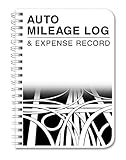
- Made in USA - Proudly produced in Ohio by a Veteran-owned business
- This record book has space for 354 car trips
- There are pages to log your annual mileage summary as well as your annual expense summary
- Durable Translucent Cover, Side Bound Wire-O Binding
- Archival safe, acid-free, 60 lb. paper, Page Dimensions: 5" x 7" Reorder SKU: LOG-126-57CW-A(MILEAGE)
The Internal Revenue Code places the burden of proof on the taxpayer. If documentation cannot demonstrate that an expense was paid, properly classified, and incurred in the correct tax year, the deduction may be reduced or entirely disallowed regardless of economic reality.
What Substantiation Means in Practice
Substantiation refers to the documentary evidence required to support a claimed deduction. At a minimum, this typically includes proof of payment, the amount, the date incurred, and the business or charitable purpose of the expense.
Acceptable records include receipts, invoices, canceled checks, bank statements, and credit card statements. For certain deductions, additional requirements apply, such as written acknowledgments from charitable organizations or contemporaneous logs for vehicle and travel expenses.
Expenses Subject to Heightened Documentation Rules
Some deductions are governed by stricter substantiation standards due to historical abuse. These include charitable contributions, travel, meals, vehicles, and home office expenses.
For example, charitable cash contributions generally require a bank record or written communication from the charity, while non-cash contributions may require detailed descriptions and, above certain thresholds, formal appraisals. Vehicle deductions require a mileage log showing dates, destinations, and business purpose, maintained contemporaneously rather than reconstructed after the fact.
Timing, Classification, and the Matching of Records
Proper documentation must align not only with the expense itself, but also with the correct tax year. Deductions are generally allowed in the year an expense is paid, not when it is billed or earned, unless specific accounting rules apply.
Misalignment between payment dates and reporting years is a common reason deductions are adjusted on examination. Records should clearly demonstrate when funds left the taxpayer’s control and how the expense relates to income-producing or deductible activity during that year.
Do these 3 things before closing this tab:
1Clear out junk files and repair common Windows errors2Fix the driver behind crashes, sound loss and screen glitches3Repair Windows errors before they cause bigger problemsStandard Deduction vs. Itemized Deduction Documentation
Taxpayers claiming the standard deduction are not required to submit documentation for itemized expenses. However, this does not eliminate the need to retain records, particularly when eligibility for credits or future itemization is possible.
For itemized deductions, documentation becomes central. Medical expenses, taxes paid, interest, and charitable contributions must each be supported independently, as excess in one category cannot compensate for deficiencies in another.
Record Retention and Storage Practices
Tax records should generally be retained for at least three years from the date a return is filed, which corresponds to the standard statute of limitations for IRS examinations. Longer retention may be warranted for assets subject to depreciation, carryforwards, or basis calculations that affect future returns.
Electronic records are acceptable if they are accurate, legible, and reproducible. Digital storage systems can improve organization, but they do not reduce the substantive documentation required for any deduction category.
What’s actually slowing this PC down?
Pick the symptom - the matching free tool is one click away.
Audit-Proofing Through Consistency and Accuracy
Audit-proofing does not mean avoiding scrutiny; it means ensuring that reported deductions are internally consistent, mathematically accurate, and supported by credible records. Large or unusual deductions are not inherently improper, but they are more likely to be examined if they deviate from typical patterns for a given income level or occupation.
Consistency across tax forms, schedules, and supporting documents reduces the likelihood of adjustment. When records clearly reflect statutory requirements, deductions function as intended: reducing taxable income within the boundaries established by law.
Common Misconceptions and Costly Mistakes to Avoid When Claiming Deductions
Building on the importance of accurate records and internal consistency, many deduction-related problems arise not from missing receipts, but from misunderstandings about how deductions actually function under tax law. These misconceptions can lead to overstated deductions, disallowed expenses, penalties, or lost tax benefits. Understanding where taxpayers most often go wrong is essential to using deductions correctly and defensibly.
Misunderstanding What a Tax Deduction Actually Does
A tax deduction reduces taxable income, not the tax owed dollar-for-dollar. This distinction is critical, as the value of a deduction depends on the taxpayer’s marginal tax rate, which is the rate applied to the last dollar of income earned. For example, a $1,000 deduction reduces taxable income by $1,000, but the actual tax savings may be $120, $220, or another amount depending on the applicable rate.
Confusing deductions with tax credits is a common error. Tax credits reduce tax liability directly, whereas deductions only reduce the income on which tax is calculated. Treating deductions as guaranteed savings often leads to unrealistic expectations and poor tax planning decisions.
Assuming All Personal Expenses Are Partially Deductible
Personal living expenses are generally nondeductible unless a specific statutory exception applies. Costs such as commuting, ordinary clothing, meals at home, or personal education are frequently assumed to be deductible when they are not. The Internal Revenue Code permits deductions only when expenses meet clearly defined criteria tied to income production, medical necessity, or public policy objectives.
Even when an expense has a business or investment connection, only the qualifying portion may be deductible. Failure to properly allocate mixed-use expenses, such as home internet, vehicles, or cell phones, is a frequent cause of deduction disallowance.
Overestimating the Benefit of Itemizing Deductions
Itemizing deductions is beneficial only when total allowable itemized deductions exceed the standard deduction for the filing status. Many taxpayers itemize out of habit, without calculating whether it produces a lower taxable income. When itemized deductions fall below the standard deduction threshold, itemizing provides no tax benefit and may increase audit exposure unnecessarily.
The Tool Desk
Outbyte PC Repair FREERepair Windows errors before they cause bigger problemsFix Now →Outbyte Driver Updater FREEFix the driver behind crashes, sound loss and screen glitchesFind Drivers →Additionally, certain itemized deductions are subject to income-based limitations or percentage floors. For example, medical expenses are deductible only to the extent they exceed a specified percentage of adjusted gross income, which is gross income reduced by certain adjustments allowed by law. Ignoring these thresholds results in overstated deductions.
Improperly Claiming Charitable Contributions
Charitable deductions are subject to strict substantiation rules that vary by contribution type and amount. Cash contributions generally require a bank record or written acknowledgment, while noncash contributions may require detailed descriptions, fair market value determinations, or formal appraisals. Fair market value represents the price an item would sell for in an open market between willing buyers and sellers.
A common mistake is assuming donated property is deductible at its original purchase price. In reality, most noncash contributions are limited to their fair market value at the time of donation, and additional limitations may apply based on income level and the type of charitable organization.
Failing to Distinguish Between Current Deductions and Capitalized Costs
Not all expenses can be deducted in the year they are paid. Certain costs must be capitalized, meaning they are added to the basis of an asset and recovered over time through depreciation, amortization, or upon sale. Basis refers to the taxpayer’s investment in an asset for tax purposes.
Free tools Windows power users keep installed
One-click scans. No signup required.
Misclassifying capital expenditures as current deductions is a frequent and costly error, particularly for investors and self-employed individuals. This mistake often results in adjustments on examination and the loss of future depreciation or basis recovery benefits.
Ignoring Phaseouts, Limits, and Eligibility Rules
Many deductions are subject to statutory limits that depend on income level, filing status, or specific qualifying conditions. Assuming eligibility without verifying these limits leads to incorrect reporting. Examples include caps on state and local tax deductions and restrictions tied to adjusted gross income.
Tax law also changes frequently. Relying on outdated rules or informal advice can cause taxpayers to claim deductions that no longer exist or miss new limitations that have been enacted. Accurate application requires alignment with current-year law, not prior-year experience.
Believing Small Errors Are Unlikely to Matter
Minor inaccuracies can compound across a return, particularly when they affect multiple schedules or carry forward into future years. Even small unsupported deductions can undermine the credibility of larger, legitimate claims during an examination. Accuracy and consistency signal compliance and reduce the likelihood of broader adjustments.
Errors also affect long-term tax outcomes. Incorrect deductions can distort basis calculations, carryforwards, or income recognition in later years, creating downstream tax consequences that are more difficult and costly to correct.
Final Perspective on Avoiding Deduction Errors
Tax deductions operate within a structured legal framework designed to balance taxpayer relief with compliance safeguards. They reduce taxable income only when statutory requirements are met, properly documented, and accurately reported. Misconceptions, not complexity alone, are the primary drivers of disallowed deductions.
A disciplined approach grounded in understanding, documentation, and consistency allows deductions to function as intended. When taxpayers clearly distinguish between personal and deductible expenses, understand the limits of each deduction category, and apply the rules precisely, deductions become a reliable tool for lawful tax minimization rather than a source of preventable risk.
Quick Recap
Product prices and availability are accurate as of the date/time indicated and are subject to change. Any price and availability information displayed on Amazon at the time of purchase will apply.




