Some links on this page are affiliate links: if you buy through them we may earn a commission, at no extra cost to you.
For most Australian retailers, Shopify is the simplest choice; BigCommerce suits stores that need more built-in catalogue and B2B tools; and Hostinger is a lower-cost entry to WooCommerce if you are prepared to manage WordPress. These are not all the same kind of product. Shopify and BigCommerce host a complete commerce platform. Hostinger, SiteGround, VentraIP, Kinsta, WP Engine and Cloudways host WordPress or WooCommerce, leaving the merchant with more responsibility for the store software.
This shortlist weighs operating effort and likely total cost alongside Australian suitability, payments, scalability and support. Pricing and features can change; confirm the currency, tax treatment, billing term and renewal amount on the provider’s current checkout before committing.
Quick comparison: which provider fits your store?
| Provider | Best for | Model | Price information available | Main trade-off |
|---|---|---|---|---|
| Shopify | Most new and growing stores | Hosted commerce platform | Australian checkout price not established here; verify current plan and tax | Subscription and app costs; less server-level control |
| BigCommerce | Established catalogues, B2B and multichannel selling | Hosted commerce platform | Australian pricing page displayed USD plan prices; taxes excluded and GMV thresholds apply | More complex pricing and payment-provider economics |
| Hostinger Managed WooCommerce | Budget-conscious small stores | Managed WordPress/WooCommerce hosting | Promotional A$5.49/month equivalent on a 48-month term; displayed renewal A$26.19/month | Long-term prepayment and ongoing WordPress maintenance |
| SiteGround | Small stores wanting managed WordPress tools | WordPress/WooCommerce hosting | Current Australian price not stated | Check renewal price and plan resources before purchase |
| VentraIP | Buyers prioritising an Australian provider | Australian web hosting | Current plan price not stated | Verify WooCommerce-specific support and included protections |
| Kinsta | Performance-sensitive, established stores and agencies | Premium managed WordPress hosting | Current plan price not stated | Premium cost and plan limits |
| WP Engine | WordPress teams needing operational tooling | Premium managed WordPress hosting | Current WooCommerce-specific price not stated | Potentially costly for a small store; check product-specific limits |
| Cloudways | Developers and agencies wanting cloud choice | Managed cloud hosting | Current total depends on cloud provider, server and add-ons | More configuration and infrastructure responsibility |
These are editorial fit recommendations, not results from independent speed or uptime testing.
Quick wins for a faster PC:
Scan for outdated or missing drivers - takes under a minuteDriver Scan →Clear out junk files and repair common Windows errorsFree Scan →Fix the driver behind crashes, sound loss and screen glitchesFind Drivers →Hosted platform or WooCommerce hosting?
Choose the kind of product before comparing providers. With Shopify or BigCommerce, the subscription includes the commerce application and hosting infrastructure. With WooCommerce, the host supplies a place to run WordPress; you still own more of the decisions about themes, plugins, updates, payment integrations, tax configuration, backups and compatibility.
#1 Best Overall

- Adjustable Depth: 23-40'' adjustable depth is used for servers and network equipment, ensuring enough space for AV equipment, components, and cabling, while allowing you to access ports and equipment from multiple sides.
- Strong Load Capacity: Ground-Mounted Load Capacity: 500 lbs, Wall-Mounted Load Capacity: 150 lbs. The av rack is made of carbon steel for better weldability performance and can help save space while meeting your need to place multiple devices.
- User-friendly Design: Ergonomic design makes the open frame av rack easier to use. The additional top panel is able to place other items with more available space. Roller design moves anywhere and anytime, is convenient, and is more energy-saving.
- Complete Accessories: We provide the accessories you need, including 2 x Pallets, 145 x M5*10 Cross Head Screws, 4 x Casters, 4 x M10*50 Expansion Screws,10 x M6*12 Cage Nuts, 1 x Grounding Wire, 1 x User Manual.
- Wide Application: The server rack wall mount maximizes the use of available space, suitable for retail venues, classrooms, offices, and other places where space is limited.
| Question | Shopify or BigCommerce | WooCommerce hosting |
|---|---|---|
| Who maintains server infrastructure? | Mostly the platform | The host manages some infrastructure; responsibility varies by plan |
| How is checkout provided? | Integrated platform checkout and supported payment options | Depends on WooCommerce configuration and gateway plugins |
| How much control is available? | Platform features, apps and APIs | Broad WordPress and code-level flexibility |
| What makes up the bill? | Subscription, payment costs, apps and other services | Hosting, plugins, theme, gateway costs, maintenance and development |
| What does changing provider mean? | A commerce-platform migration | Moving a WordPress site between hosts is possible, but still needs careful migration |
If you need a working storefront with minimal server and software upkeep, do not buy ordinary web hosting just because its headline monthly price looks lower. If you already rely on WordPress, need custom functionality, or want more control over the stack, WooCommerce hosting can be a better fit—but its hosting fee is not the entire cost of running the shop.
1. Shopify: best overall for most Australian stores
Shopify is a hosted commerce platform, not hosting-only: its plan includes commerce hosting, SSL and custom-domain support. It is a strong default for first-time owners, small and medium retailers, and omnichannel brands without a dedicated technical team. Its tools cover online and in-person selling, inventory, shipping, themes, apps and sales channels. See Shopify’s pricing page and its Australian commerce-platform overview.
Costs and compromises
The global pricing page has shown annual-billing figures of US$29, US$79 and US$299 per month for Basic, Grow and Advanced. Those are USD figures from that page, not an Australian checkout quote; confirm the Australian plan price, billing term and GST treatment directly. Budget separately for apps, themes, payment processing and any developer work. Third-party payment processing can also bring additional Shopify transaction fees, depending on the applicable plan and payment setup.
Do these 3 things before closing this tab:
1Repair Windows errors before they cause bigger problems2Fix the driver behind crashes, sound loss and screen glitches3Clear out junk files and repair common Windows errors- Choose it if: you want to get selling with less software and server administration, or need an integrated online and in-person operating model.
- Look elsewhere if: you require server-level control, unusual checkout logic, or a very lean recurring bill for a small-volume shop.
A move away later is a platform migration, not simply a change of web host; plan for exporting products, customers and orders and rebuilding or replacing platform-specific features.
2. BigCommerce: best for built-in commerce depth
BigCommerce is a hosted platform with cloud hosting and native commerce features for catalogues, filtering, inventory locations, sales channels and payment integrations. It merits a close look for established retailers, B2B or wholesale operations, larger catalogues, and merchants trying to reduce reliance on paid apps for core commerce functions. Its Australian pricing page lists Core, Growth, Scale and Performance tiers.
Pricing and payment-provider economics
The retrieved Australian page displayed Core at US$39 monthly or US$29 per month billed annually; Growth at US$105 monthly or US$79 annually; Scale at US$399 monthly or US$299 annually; and Performance from US$1,499 per month billed annually. The page states prices exclude taxes and plans are subject to trailing-twelve-month gross merchandise value (GMV) thresholds. These are USD amounts displayed on that page, not AUD quotes.
That page also showed zero BigCommerce payment-provider fees for embedded providers, while open providers were subject to additional fees of 2.0% on Core, 1.0% on Growth and 0.6% on Scale. Check current plan terms and the provider’s definition of eligible payment methods before forecasting costs. A lower subscription can be outweighed by fees or a threshold-driven plan change as sales rise.
What’s actually slowing this PC down?
Pick the symptom - the matching free tool is one click away.
- Choose it if: catalogue rules, B2B needs, filtering or multichannel requirements make native features valuable.
- Look elsewhere if: your store is small and its extra feature depth would go unused, or you want the simplest learning curve.
3. Hostinger Managed WooCommerce: best budget entry to WooCommerce
Hostinger is a managed WordPress/WooCommerce hosting option for a small shop or budget-conscious founder who wants WooCommerce flexibility without managing an entirely unmanaged server. Its Australian product page lists SSL, daily backups, CDN, migration assistance, email allowances, 24/7 support, LiteSpeed-related caching features and a provider-stated 99.9% uptime guarantee. That guarantee is the provider’s claim, not an independently measured uptime result. Details are on the Hostinger Managed WooCommerce page.
Promotional price versus renewal
The retrieved page displayed A$5.49 per month on a 48-month term, a regular price of A$29.19 per month and renewal at A$26.19 per month. The A$5.49 amount is a promotional monthly equivalent tied to a four-year term, not a month-to-month price. Check the actual upfront payment, renewal duration, GST and current offer before treating it as your budget. The provider also displayed its Cloud Startup offer at A$11.59 per month on a 48-month term and A$37.59 per month on renewal on its eCommerce hosting page.
Hostinger says it offers free migration and that its team can move a site within 24 hours; that is a provider-stated service, not a guaranteed outcome for every custom or plugin-heavy installation. “Managed” also does not mean every theme conflict, plugin bug or custom-code issue is included. The cheapest tier may not suit a busy shop, large catalogue or resource-intensive plugin set. Hostinger’s plan comparison distinguishes resources such as CPU, RAM, PHP workers, databases, storage and inodes even where some plan features are described as unlimited; see its Australian plan page.
- Choose it if: you are launching a modest WooCommerce store and accept the trade between a low promotional entry price and more hands-on software upkeep.
- Look elsewhere if: downtime or peak demand carries high financial cost and you need clearly specified dedicated resources or premium operations support.
4. SiteGround: best for managed WordPress tools and support
SiteGround is worth comparing for small and medium WooCommerce businesses that value guided WordPress setup, staging, backups, caching and support. It is still a WordPress hosting arrangement, not a fully hosted commerce platform: plan for store software, payment plugins and compatibility work.
Outdated Drivers Are Slowing You Down
One free scan finds every outdated or missing driver and matches the right update for your exact hardware.Free scan · exact hardware matchPC Slower Than It Used to Be?
A free scan shows the junk files, broken settings and background clutter dragging Windows down - then fixes them in one click.Free scan · Windows 10 & 11A current Australian plan price, renewal amount, Sydney data-centre claim and resource limits are not established here, so do not choose it on an assumed local price or location. Check the official SiteGround plan page for the current billing term, renewal, storage, staging and backup terms, and confirm the origin location that applies to your account. Its entry tier may constrain a store with a large catalogue or heavier workload.
5. VentraIP: best Australian-provider alternative
VentraIP is an Australian provider to consider if local provider identity, Australian billing or local support matter to you, particularly for a modest WooCommerce store or a business site that also sells online. These attributes do not by themselves prove that a particular hosting plan has Australian server infrastructure or specialist WooCommerce support. Confirm both for the plan you intend to buy.
Before choosing it, compare included backups and restore process, staging, server-side caching, malware protection, resource limits and the scope of support for WooCommerce issues. A secondary comparison has shown an approximate A$9.25-per-month starting signal, but that is not a verified current quote; use VentraIP’s official hosting page for current prices and terms. A local provider is not automatically the best fit for an ambitious store if the plan lacks the resources or managed operations it needs.
6. Kinsta: best premium managed WordPress option
Kinsta is aimed more at revenue-generating WooCommerce shops and agencies than at hobby stores or low-revenue launches. It is a premium managed WordPress option for teams that place a high value on managed operations and can justify the additional hosting spend.
Compare the limits and billing currency as carefully as the service: site count, visits, bandwidth, storage, overages and applicable taxes can change the total. Current plan prices are not established here, so verify them on Kinsta’s WooCommerce page and plans page. Premium hosting cannot compensate for inefficient plugins, an oversized theme or poor application design.
Rank #2
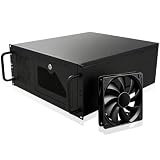
- Server Cabinet Case:The 4u server cabinet case adopts a combined internal architecture.With 7 x PCI slot, providing additional storage space for hardware, networks, servers, or audio/video accessories.
- Lockable design: The 4u rack case comes with a key lock for better security and helps prevent damage, tampering, or theft. The front door foam filter is designed to minimize the dust inflow and prolong the service life.
- High Compatibility: Our 4U computer cabinet is universally mountable in any standard front mount server rack or cabinet, Motherboard Compatibility: 12 x 9.6 ATX/M-ATX/Mini-ITX (smaller than 305mm*245mm/12*9.6inch)
7. WP Engine: best for WordPress teams needing operational tooling
WP Engine may suit agencies and established WordPress teams that want managed updates, staging, support and operational controls around a WooCommerce site. It can be excessive for a small store, and plan features or plugin restrictions need to be checked against the store’s actual setup.
Do not assume a general WordPress plan has the same limits or features as a WooCommerce product. Compare WooCommerce-specific site, traffic, storage and support terms and verify the appropriate plan on WP Engine’s WooCommerce page and plans page. Current WooCommerce-specific pricing is not stated here.
8. Cloudways: best for technical flexibility
Cloudways suits developers and agencies that want cloud-provider choice and control over a custom WooCommerce deployment. It is a weaker match for a nontechnical owner seeking a ready-made storefront: configuration and operational decisions around servers, caching, DNS and deployments require more technical comfort than Shopify or conventional managed WooCommerce hosting.
The Tool Desk
Outbyte PC Repair FREERepair Windows errors before they cause bigger problemsFix Now →Outbyte Driver Updater FREEScan for outdated or missing drivers - takes under a minuteDriver Scan →The complete cost depends on cloud provider, server size, storage, bandwidth, backups and add-ons, so a headline server figure is not necessarily the store’s monthly bill. Compare the full configuration on Cloudways’ WooCommerce page and pricing page. Choose it for a real need for flexibility, not on the assumption that cloud choice is automatically easier or cheaper.
Independent reader supportYour contribution helps us test, update, and keep practical guides available for everyone.How to compare the real cost of an online store
Compare a complete operating budget, not just a host’s introductory monthly equivalent. The relevant calculation differs by model:
- Hosted platform: platform subscription + payment-processing costs + apps + theme + domain + optional agency or developer work.
- WooCommerce: hosting + domain + premium theme + paid plugins + payment gateway + backups and security + maintenance or developer time.
A WooCommerce hosting plan with a low first-term price can still cost more in staff time, paid plugins or specialist support. A hosted subscription can be easier to forecast, but apps and payment charges may add materially to the bill. For each option, record the currency, tax treatment, first payment, renewal, term required for the offer, domain renewal and any add-on you actually need.
Model payment costs against sales
Payment processing and platform fees are separate from hosting. Before choosing, model fees using your expected sales volume, average order value, refund and chargeback exposure, payment mix and the processors available to your business. Shopify Payments availability and supported methods, and any fees for using another processor, should be confirmed for the Australian account and current plan. For BigCommerce, check the embedded-versus-open provider terms and GMV thresholds on its pricing page. WooCommerce gateway costs depend on the selected provider and plugins.
Do not assume that using a host or platform makes a business legally compliant. The merchant remains responsible for applicable business registration, GST treatment, consumer law, privacy, returns, shipping disclosures and payment-account requirements.
Australian location, performance and traffic spikes
An Australian origin server can reduce network distance for Australian visitors, but the server location alone cannot establish that a store will be fast. Check where the origin is, whether a CDN is included and where it serves assets, whether checkout requests use or bypass that CDN, where backups are held, and whether customer data is replicated internationally. A nearby regional or more distant origin may still serve Australian shoppers acceptably with a well-configured CDN and optimised site; an Australian origin will not fix oversized images, slow database queries, a heavy theme or badly configured plugins.
For a store that sells internationally, weigh the locations of customers as well as the origin. Separately check support hours: an Australian company, Australian support hours and Australian server location are different attributes, not interchangeable claims.
“Unlimited bandwidth” does not mean unlimited store capacity. For WooCommerce, ask about CPU, RAM, PHP workers, database limits, concurrent processes and fair-use rules. For any provider, check whether scaling is automatic or manual, what happens during a flash sale, whether the host supports load testing, and how quickly you can restore after a failed deployment. A cached storefront does not guarantee a cached or available checkout; test the dynamic purchase path rather than relying on a page-load claim.
Payments, checkout and tax configuration
Choose a platform or host only after checking that the payment methods your customers expect work with the proposed store configuration. Confirm local availability and account eligibility for options such as cards, PayPal and buy-now-pay-later services, including Afterpay where relevant. On WooCommerce, verify the exact gateway plugin’s compatibility with your theme, checkout and other extensions; on a hosted platform, confirm supported providers and any external-provider fee.
Set up Australian GST, shipping zones and postcode rules for the business’s circumstances, and check how refunds, surcharges, chargebacks and fraud controls are handled. SSL and hosted checkout do not remove all merchant security or payment compliance responsibilities. PCI obligations depend on the merchant’s payment setup; confirm the applicable requirements with the payment provider rather than treating a hosting claim as a compliance guarantee.
Migration: plan the move before changing platforms or hosts
Moving a WooCommerce installation between hosts is not the same as moving a Shopify store to WooCommerce. Before either kind of change, inventory what must be preserved: product data and variants, customer records, order history, images and other media, blog content, URLs and redirects, email, theme customisations, analytics and payment configuration. Exports may not carry over every design feature or app/plugin behaviour.
- Prepare: confirm what the destination supports, what data can be exported, whether email is included and which payment integrations need re-verification.
- Build and test away from the live store: use a staging site or migration copy where possible. Check product variations, stock synchronisation, tax, shipping, checkout, webhooks and customer accounts.
- Preserve discoverability: map old URLs to their replacements and prepare redirects. Plan the domain change separately from a registrar transfer; pointing DNS and transferring domain registration are different tasks.
- Cut over carefully: schedule the DNS change, account for propagation, avoid losing new orders during the transition and keep the original store or a rollback route available until the new checkout has been verified.
- Verify after launch: test purchases, payment confirmation, emails, inventory updates, redirects and backups on the live setup.
A provider’s free migration offer may have scope limits and does not guarantee a downtime-free move. Ask whether it includes email, complex or customised stores, testing and a rollback plan.
Free tools Windows power users keep installed
One-click scans. No signup required.
Common mistakes that make hosting look cheaper or safer than it is
- Buying on the introductory rate alone: a promotion may require years paid upfront, with a higher renewal and separate charges for domains, backups, staging, migration or support.
- Assuming local means fast: server location does not control third-party payment latency, app response, image delivery or inefficient site code.
- Treating “unlimited” as a resource guarantee: CPU, RAM, PHP workers, database capacity, inodes, concurrent processes and fair-use rules can be the binding limits.
- Blindly caching customer actions: do not indiscriminately cache cart, checkout, account, logged-in or personalised-pricing pages. Misconfigured caching can display stale or incorrect customer-specific information.
- Ignoring plugin and theme interactions: payment extensions, PHP version changes, cron jobs, object caching, webhooks and stock synchronisation can fail after an update or configuration change. Test updates and restores rather than assuming a backup is usable.
- Underestimating lock-in: hosted platforms reduce infrastructure work, but moving away requires a structured data and feature migration. Keep periodic exports of products, customers, orders, media, content and redirects.
Which provider should you choose?
- Choose Shopify for the least operational overhead and a straightforward route to online or omnichannel selling.
- Choose BigCommerce when built-in catalogue, B2B, filtering or marketplace features justify its added complexity and you have modelled payment and GMV costs.
- Choose Hostinger for a lower-cost WooCommerce starting point if you understand the promotional term and are willing to maintain WordPress and its extensions.
- Compare VentraIP when Australian provider identity, billing or support is a priority, after verifying the particular plan’s location, resources and managed-store scope.
- Consider Kinsta or WP Engine when revenue, agency workflow or operational requirements justify premium managed WordPress hosting.
- Consider Cloudways when a technically capable team specifically needs cloud flexibility and can operate the resulting setup.
Before subscribing, compare the actual checkout total and renewal, confirm payment support and tax configuration, and test the store’s peak-demand and recovery requirements against the chosen plan.
Quick Recap
Product prices and availability are accurate as of the date/time indicated and are subject to change. Any price and availability information displayed on Amazon at the time of purchase will apply.



