The Tool Desk
Outbyte Driver Updater FREEScan for outdated or missing drivers - takes under a minuteDriver Scan →Outbyte PC Repair FREERepair Windows errors before they cause bigger problemsFix Now →Some links on this page are affiliate links: if you buy through them we may earn a commission, at no extra cost to you.
DeepSeek’s widely quoted $5.576 million figure is real—but it is not the total cost of building DeepSeek AI. It is a rental-equivalent estimate for one specific job: the final pre-training run for DeepSeek-V3, calculated from 2.788 million Nvidia H800 GPU-hours at an assumed rate of $2 per hour. The often-repeated estimate of access to roughly 50,000 Nvidia GPUs describes a much broader, unverified hardware pool, not 50,000 chips shown to have trained V3 at once.
Those figures can both be true because they measure different things. One is the estimated compute cost of a particular model run; the other concerns a company-scale infrastructure footprint. The best public evidence points to a real efficiency achievement, but it does not establish DeepSeek’s complete historical spending. This article focuses on the V3/R1 cost debate; later models, including V4, require separate accounting.
What the $5.6 million figure actually covers
DeepSeek’s DeepSeek-V3 technical report says the model’s training used 2.788 million H800 GPU-hours. The report applies an assumed H800 rental rate of $2 per GPU-hour:
2,788,000 GPU-hours × $2 per GPU-hour = $5,576,000
#1 Best Overall

- System Compatibility Note: This 2-slot card measures 271 x 112 x 39 mm and requires a single 12V-2x6-pin power connector. Please verify chassis and PSU compatibility before purchase.
- Dedicated Support: Please contact us directly through Amazon for any product questions or assistance you may require.
- Professional Intel Arc Pro B70 GPU: Built on the Intel Xe2-HPG architecture, it features 32 Xe cores and 256 XMX engines, designed to accelerate AI, rendering, and complex visualization workloads.
- Massive 32GB GDDR6 VRAM: Equipped with 32GB of high-speed GDDR6 memory on a 256-bit bus, running at 19 Gbps, which allows for handling large AI models and complex datasets locally.
- High-Performance Engine Clock: Delivers an engine clock of 2540 MHz, providing the compute power needed for demanding professional applications and AI inference.
That is a useful, reproducible calculation based on DeepSeek’s stated inputs. It is best described as a rental-equivalent compute cost for V3’s reported pre-training run, not as an invoice, audited expenditure, or complete development budget. DeepSeek did not publish a full ledger establishing what it actually paid for every GPU-hour, nor does the calculation price every resource or activity required to build and operate the model.
Cost claims become confusing when they use the same word—“cost”—for different economic questions:
- Run cost: the resources used by the final V3 pre-training run, priced using DeepSeek’s $2-per-hour assumption.
- Development cost: research and experiments, data work, staffing, evaluation, post-training, and other work needed to produce a model and make it usable.
- Infrastructure cost: acquiring or accessing servers and paying to power, cool, connect, house, and maintain them.
- Economic cost: the value of capital, labor, energy, and scarce hardware—including what those resources could have done elsewhere.
- Serving cost: the continuing expense of answering user requests after release. It depends on usage, latency, batching, model size, and system utilization, not just on training.
The $5.576 million number addresses the first question narrowly. It cannot answer all the others.
2,048 GPUs is not the same claim as 50,000 GPUs
DeepSeek’s report identifies a cluster of 2,048 H800 GPUs for the V3 training run. It also reports a dataset of roughly 14.8 trillion tokens. Dividing 2.788 million GPU-hours by 2,048 GPUs gives about 1,361 hours, or 56.7 days of continuous cluster time. DeepSeek’s related rate of roughly 3.7 days per trillion tokens implies about 54.8 days across 14.8 trillion tokens; the difference is small and consistent with rounded figures and reporting conventions.
The “up to roughly 50,000 GPUs” claim comes from external industry analysis, particularly SemiAnalysis, and is discussed in analysis such as CSIS’s DeepSeek overview. It is an estimate of possible access to a broader pool of Hopper-generation hardware. It is not a public, independently verified count of GPUs used simultaneously for V3, and it does not establish that DeepSeek owned every accelerator in the estimate.
Rank #2

- NVIDIA Volta GV100 Architecture — 4,608 CUDA Cores, 640 1st-Gen Tensor Cores delivering 14 TFLOPS FP32 and 112 TFLOPS deep learning performance for AI training, inference, HPC, and scientific computing workloads
- 32GB HBM2 ECC Memory — 900 GB/s Bandwidth — High-bandwidth memory on a 4096-bit bus with ECC error correction provides the memory capacity and throughput required for the largest AI models, simulations, and datasets
- PCIe 3.0 x16 Interface — 250W TDP — Standard PCIe Gen3 connectivity with passive cooling designed for enterprise rack server deployment in HPE ProLiant, Dell PowerEdge, and Supermicro platforms with adequate chassis airflow
- NVLink — Scale to 96GB Unified Memory — Connect two V100 GPUs via NVLink at 300 GB/s bi-directional bandwidth to scale GPU memory from 32GB to 96GB for larger AI training and HPC workloads
- Multi-Precision Computing — Supports FP64 (7 TFLOPS), FP32 (14 TFLOPS), FP16 (112 TFLOPS) and INT8 precision modes for flexible deployment across training, inference, and scientific simulation workloads
“Hopper” is a GPU architecture family, not a synonym for H100. The estimates and discussion may encompass H100s, China-market H800s, and H20s, whose capabilities and constraints differ. The mix matters: memory, interconnect bandwidth, performance, price, and availability are not identical. The CSIS analysis of export controls and hardware provides context for these distinctions.
A large company-wide fleet could support many activities across different places and time periods: model training, experiments, inference, evaluation, and other projects. It does not follow that every device was available to one V3 run, or that the run needed 50,000 devices. Conversely, identifying a 2,048-GPU training cluster does not tell us the size or cost of the company’s total infrastructure.
Crashes, No Sound, or Screen Glitches?
Random freezes, missing sound and display glitches usually trace back to one bad driver. Find and replace yours safely.Free scan · under a minutePC Slower Than It Used to Be?
A free scan shows the junk files, broken settings and background clutter dragging Windows down - then fixes them in one click.Free scan · Windows 10 & 11The infrastructure estimates are a different layer of the bill
SemiAnalysis has estimated approximately $1.6 billion in server capital expenditure and roughly $944 million in operating costs for DeepSeek’s relevant infrastructure. These are external estimates, not audited disclosures from DeepSeek. They should be treated as estimates of a much broader infrastructure footprint—not as the bill for training V3.
The difference is not inherently contradictory. A company may invest heavily in a fleet and then use only part of its capacity for one training job. A particular run can have a relatively low marginal cost even when the supporting infrastructure is expensive. But a rental-equivalent rate can also understate the resources required to build and maintain that infrastructure in the first place.
Ownership and access arrangements affect the accounting. GPUs may be owned, rented, colocated, or available through another entity. If hardware has already been purchased, an additional job does not incur the whole acquisition price again. Its incremental economic cost is closer to the equipment’s depreciation, power, cooling, maintenance, staffing, networking, and the opportunity cost of using it for that job rather than another. If the question is what it takes to create and sustain the capacity, however, the capital investment and ongoing operation matter too.
Rank #3

- Powered by Radeon AI PRO R9700 - Supercharge you workflow with the cutting-edge RDNA 4 Architecture and 2nd-gen AI Accelerators.
- 32GB GDDR6 with 256-bit memory bus - Tackle larger, more complex projects without limits.
- PCIe Gen 5 - Unlock lightning-fast data transfers with PCIe Gen 5 support.
- GIGABYTE TURBO Fan Cooling System - Indented metal cover and blower fan increase airflow intake, while the vapor chamber, all copper heat sink, and metal frame offer efficient heat dissipation. Optimized airflow design allows for easy multi-GPU scalability.
- Double Ball Bearing Fan - Delivers superior heat resistance and rotational efficiency for better performance and a longer lifespan compared to conventional sleeve fans.
Public evidence does not establish a single audited figure for DeepSeek’s total historical infrastructure spending or total economic cost. Multiplying a speculative GPU count by a guessed sticker price would not solve that problem: it would mistake an estimate of access for a verified purchase inventory and ignore configuration, timing, financing, and use.
Quick wins for a faster PC:
Scan for outdated or missing drivers - takes under a minuteDriver Scan →Repair Windows errors before they cause bigger problemsFix Now →A broader reported model-building figure
A Stanford Foundation Model Transparency Index report summarizes a reported DeepSeek model-building breakdown of approximately $200 million: $50 million for data acquisition, $10 million for data processing, $20 million for personnel, $80 million for R&D compute at market rates, and $40 million for the final training run at market rates.
This is a separate data point from the $5.576 million arithmetic. Stanford is summarizing a reported company breakdown; the figure is not an independently audited financial statement. The different final-run values also reflect different costing bases: DeepSeek’s $5.576 million calculation uses its stated $2-per-H800-hour assumption, while the summarized breakdown prices compute at market rates. The $200 million figure should not be treated as a definitive total for every DeepSeek project, all infrastructure, or the company’s full AI program.
Why the run could be efficient
The low reported run cost is more plausible when viewed as a systems-engineering result rather than a magic discount. DeepSeek-V3 has about 671 billion total parameters, but its mixture-of-experts (MoE) design activates about 37 billion parameters per token. Total model size is therefore not the same as the amount of computation used for every token. Sparse activation can reduce per-token work compared with activating the whole model each time, although it adds engineering and communication challenges.
DeepSeek’s V3 report describes several choices intended to improve efficiency:
What’s actually slowing this PC down?
Pick the symptom - the matching free tool is one click away.
Rank #4
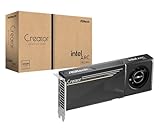
- System Compatibility Note: 2-slot card, 271x112x39mm, single 8-pin power, 200W TDP. Verify chassis clearance and PSU capacity before purchase.
- Dedicated Support: Please contact us directly through Amazon for any product questions or assistance you may require.
- 24GB GDDR6 on 192-Bit Bus: Massive 24GB memory with 456 GB/s bandwidth – ideal for LLMs, AI inference, 3D rendering, and generative design.
- Intel Xe2-HPG Architecture: Built on Intel's next-gen architecture with 20 Xe cores and 160 XMX engines for AI acceleration (197 INT8 TOPS).
- PCIe 5.0 Support: PCI Express 5.0 x16 interface for maximum bandwidth with the latest workstation platforms.
- Mixture of experts: routes each token through selected expert components rather than activating all model parameters for every token.
- Multi-head Latent Attention: reduces key-value-cache memory requirements, a consideration in both training systems and serving.
- FP8 mixed-precision training: uses lower-precision arithmetic where the method permits, reducing memory and computation demands while managing numerical stability.
- Communication/computation overlap: helps keep accelerators productive when distributed training requires moving data between them.
- Hardware-aware design: the architecture and training stack were built with the available H800 cluster and its constraints in mind.
These techniques do not eliminate the need for infrastructure. They can increase the useful work done with a given amount of compute and may reduce the compute required for a target capability. That is the meaningful efficiency claim: not “frontier AI costs nothing,” but that architecture and implementation can change the amount of hardware time needed.
What the V3 figure leaves out—and why R1 is separate
DeepSeek’s V3 materials distinguish the reported training run from prior research and ablation work. The final-run calculation does not encompass the complete development process. Depending on the accounting boundary, a fuller cost stack can include:
- Earlier architecture research, trial runs, ablations, and failed experiments.
- Data acquisition or licensing, cleaning, filtering, and processing.
- Research, engineering, infrastructure, and operations staff, including salaries and benefits.
- Storage, networking, electricity, cooling, facilities, hardware depreciation, and maintenance.
- Evaluation, safety work, product integration, security, and deployment operations.
- Post-training and reinforcement-learning compute, as well as ongoing model serving.
DeepSeek-R1 also should not be assigned V3’s $5.576 million figure without qualification. The figure comes from the V3 pre-training report. R1 builds on V3 and adds reasoning-focused post-training and reinforcement-learning work. Epoch AI’s analysis of what went into R1 discusses that broader compute context. A V3 pre-training number is not a complete cost estimate for R1, let alone for the full effort to build and serve it.
Independent reader supportYour contribution helps us test, update, and keep practical guides available for everyone.What the controversy means for AI investment
DeepSeek’s story challenges assumptions about the compute needed per unit of capability. It does not show that data centers are unnecessary, that every lab can reproduce the result with 2,048 rented GPUs, or that training and inference costs are interchangeable. Cluster networking, distributed-training software, data pipelines, fault recovery, utilization, and access to suitable hardware all affect whether a nominal GPU-hour calculation can be reproduced in practice.
Do these 3 things before closing this tab:
1Fix the driver behind crashes, sound loss and screen glitches2Repair Windows errors before they cause bigger problems3Scan for outdated or missing drivers - takes under a minuteNor does greater efficiency have a simple, guaranteed effect on demand for Nvidia GPUs or cloud capacity. If a model becomes cheaper to train or serve, a company may need fewer resources for a fixed workload. But lower costs can also make more applications viable and increase usage. Total infrastructure demand reflects training, experimentation, inference, and adoption—not just the final training run of one model. The public evidence here does not justify a simple “DeepSeek ends GPU demand” conclusion.
Best Value

- Professional AI & Creator Workstation: AMD Radeon AI PRO R9700 GPU with 32GB GDDR6 is engineered for AI development, professional content creation, and compute-intensive workloads.
- Massive 32GB Memory Capacity: 32GB of GDDR6 memory on a 256-bit bus provides ample bandwidth for large AI models, 8K video editing, and complex 3D rendering.
- Advanced RDNA 4 with AI Accelerators: 64 Compute Units with 3rd Gen Ray Tracing and dedicated 2nd Gen AI Accelerators for groundbreaking AI performance and visual computing.
- Professional Blower Cooling: Efficient single blower design exhausts heat directly out of the chassis, ideal for multi-GPU workstation and server configurations.
- Enterprise-Grade Thermal Solution: Vapor chamber heatsink with industrial Honeywell PTM7950 thermal interface material ensures reliable cooling under sustained professional loads.
For personal-finance and business readers, the useful lesson is about total cost of ownership. A low marginal price for one phase of a project does not make the whole venture cheap. The same principle applies when evaluating an AI service: token prices are only part of the cost if a business also needs engineering, governance, integration, monitoring, and secure data handling.
Practical choices for using DeepSeek
The training-cost debate does not mean an individual or ordinary business should try to recreate DeepSeek’s training cluster. For most readers, the practical choice is how to consume a model, not how to train one.
- Use a hosted API if you need inference without operating GPU infrastructure. Check current pricing, terms, data handling, availability, latency, and any regional or compliance requirements directly with the provider. DeepSeek’s official pricing page is the source for its current published rates; prices and model availability can change.
- Use the web or app product for individual experimentation and non-sensitive tasks. Access conditions and limits can change; do not assume that an advertised free service is unlimited or appropriate for confidential business data. See DeepSeek’s official site.
- Self-host open weights when data control, predictable sustained usage, or deployment constraints justify the additional work. Start with DeepSeek’s Hugging Face models and GitHub organization, and evaluate an inference stack such as vLLM. Account for GPU rental or ownership, quantization, serving, monitoring, security, scaling, and engineering support.
- Rent or buy GPUs only when workload volume, utilization, privacy needs, or specialized requirements warrant the operational burden. A technically literate team still needs suitable hardware, networking, software, and systems expertise; the published V3 arithmetic is not a turnkey recipe.
For sensitive or regulated information, assess provider jurisdiction, data governance, retention, security, contractual terms, and any required approvals before sending data to a hosted service. A low token price does not settle those questions.
Free tools Windows power users keep installed
One-click scans. No signup required.
2026 update: V4 is a separate cost question
DeepSeek’s official transparency center lists DeepSeek-V4 with an April 24, 2026 release date, and its V4 release materials describe Pro and Flash variants and a one-million-token context. Those later models belong to a different generation and accounting question. V3’s 2024 GPU-hour disclosure does not establish the development or infrastructure cost of V4, and the 50,000-GPU estimate should not be retroactively treated as a V4 training count.
Quick Recap
The clearest way to read the numbers
| Figure | What it refers to | Evidence status |
|---|---|---|
| $5.576M | V3 pre-training compute equivalent: 2.788 million H800 GPU-hours at an assumed $2 per hour | Calculated from figures in DeepSeek’s technical report; not an audited invoice or total budget |
| 2,048 H800s | Cluster identified for the V3 training run | Reported by DeepSeek |
| About 50,000 Hopper GPUs | Estimated broader hardware access, potentially across models, projects, sites, and time | External estimate; not a verified V3 cluster count or confirmed inventory of H100s |
| About $200M | Reported broader model-building breakdown summarized by Stanford | Not independently audited; a different accounting scope and compute-price basis |
| $1.6B CapEx; $944M operating costs | SemiAnalysis estimates for a broader infrastructure footprint | External estimates, not DeepSeek’s audited financial disclosures |
| Full historical economic cost | All company investment, infrastructure, research, operations, and opportunity costs | Not established by public disclosures cited here |
Product prices and availability are accurate as of the date/time indicated and are subject to change. Any price and availability information displayed on Amazon at the time of purchase will apply.



