Some links on this page are affiliate links: if you buy through them we may earn a commission, at no extra cost to you.
The climate-tech companies worth watching in 2024 were not necessarily the ones raising the most money. The more useful shortlist is made up of businesses addressing the practical obstacles that determine whether decarbonization can scale: grid congestion, building retrofits, industrial emissions, scarce fuel feedstocks, battery materials, and credible environmental measurement.
This is a historical 2024 watchlist, not a current investment recommendation. Company awards, funding rounds, and pilot projects do not guarantee commercial success. The companies below were selected because they appeared in BloombergNEF’s 2024 Pioneers program and addressed important climate bottlenecks. Their inclusion does not mean that every company remained operational, investable, or successful after 2024.
How this 2024 climate-tech watchlist was chosen
There was no universally accepted ranking of the best climate-tech companies in 2024. BloombergNEF, SOSV, PwC, and Jefferies used different methods and measured different parts of the market.
Free tools Windows power users keep installed
One-click scans. No signup required.
BloombergNEF’s 2024 Pioneers program received 240 applications from companies in 40 countries, selected 23 finalists, and named 11 winners across clean-power deployment, building decarbonization, net-zero fuels, and wildcard technologies. Its list is a strong foundation because it connects each company to a defined climate challenge, but it is an innovation competition—not a ranking of verified emissions reductions.
#1 Best Overall
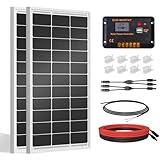
- [Wide Application]: Daily Output 800wh/day under 4 hours full sunshine condition. Perfect for RV, Caravan, Marine, Camper, Electric scooter, Golf Carts, Power wheels, Trolling motor, Tool trailer, Backup power supply for cabin shed home etc.
- [Excellent Performance]: ECO-WORTHY solar panels use high-performance monocrystalline solar cells, which can provide up to 21.5% higher efficiency sufficient light conditions.size:35.2*23.1.37in
- [Durable]: Corrosion-resistant aluminum alloy frame, so that the panel can be used for decades, and can withstand strong wind (2400Pa) and snow load (5400Pa), with a long service life. Ip65 rated junction box provides complete protection.:
- [Complete and Easy]: The back of the pre-drilled and plug-and-play cables allow quick installation, the kit can be connected in series (24V) or parallel (12V) if you need. What you will get: 2 pcs 100W mono solar panel + 2 set of Z mounting brackets + 30A solar controller + 1 pair of 16.4ft 10 awg solar cables + 1 pair of 2-in-1 connectors + 1 pair of 4.92ft tray cable.
- [Support]: 1 year with 24/7 tech support, if any problems or questions about the product,please do not hesitate to let us know through Amazon or call ECO-WORHTY hotline for solution.
SOSV’s 2024 Climate Tech 100 offered a broader portfolio view across food, agriculture, energy, transport, manufacturing, and measurement. However, it reflected SOSV’s own investment portfolio and selection criteria rather than the entire global market.
For this article, “to watch” means that a company had a climate-relevant product, meaningful technical differentiation, a plausible path to deployment, and a clearly identifiable commercial bottleneck. The main risks considered are capital intensity, customer adoption, policy dependence, manufacturing, permitting, feedstock availability, and evidence quality.
Climate tech is used here broadly to include technologies that reduce emissions, enable renewable energy or electrification, improve efficiency, remove or capture carbon, decarbonize difficult sectors, or improve climate and environmental measurement.
What’s actually slowing this PC down?
Pick the symptom - the matching free tool is one click away.
What the 2024 market revealed
Capital continued to concentrate in energy even as investors became more cautious about the path from pilot project to profitable business. According to PwC’s State of Climate Tech 2024, energy-related startups received nearly 35% of climate-tech funding during the first three quarters of 2024, up from 30% in 2023. Green hydrogen, alternative fuels, carbon capture, and AI-enabled climate tools attracted significant attention.
The distribution of funding did not necessarily match the distribution of emissions. Industrials accounted for approximately 34% of global greenhouse-gas emissions but received about 7% of climate-tech investment in the first three quarters of 2024, according to PwC.
Meanwhile, Jefferies reported that private climate-tech investment fell 20% year over year in the first half of 2024, with growth-stage funding down 33%. It also reported nine climate-tech bankruptcies in that period, including Ambri, Arrival, Running Tide, Universal Hydrogen, and Fisker.
The lesson was straightforward: a promising technology still needs affordable capital, reliable suppliers, permits, customers, infrastructure, and a business model that can survive changing market conditions.
Grid and clean-power deployment
1. Envelio: speeding up grid-connection studies
The bottleneck: Renewable projects can wait months or years for grid-connection studies because utilities must analyze complex network data and determine whether new generation can be safely connected.
The approach: Envelio provides a digital-twin platform for distribution-grid planning and connection studies. Its software is sold to distribution-system operators through setup and subscription fees.
Why it mattered in 2024: More solar, storage, and electrified demand cannot be deployed if utilities cannot process connection requests efficiently. Software that improves planning may increase clean-energy deployment without requiring a new generation technology.
BloombergNEF reported that Envelio said its automation could process requests up to 20 times faster. That is a reported company or source claim, not an independent universal benchmark.
Quick wins for a faster PC:
Scan for outdated or missing drivers - takes under a minuteDriver Scan →Clear out junk files and repair common Windows errorsFree Scan →What could go wrong: Utilities may face procurement barriers, cybersecurity requirements, legacy-system integration problems, and limited staff capacity to implement new software. Faster analysis also does not create physical grid capacity where none exists.
Rank #2

- 【Efficient Performance】This Starter Kit can generate an average of 500Wh of electricity per day (varies with sunlight). The solar panel boasts a 22.5% cell efficiency, 1.3% higher than other counterparts. Each panel dispatched from our facility undergoes 100% EL testing, ensuring that your panel is completely free from any hidden cracks.
- 【Market-Leading Service Plan】Enjoy worry-free usage with our market-leading service plan, providing 10 years of coverage for solar panel material and workmanship, along with a 2-year plan for the charge controller. Additionally, benefit from a 25-year service plan for the power output of the panel.
- 【Exceptional Safety】Certified by UL 61730, CSA C22.2#61730, IEC 61730/IEC 61215, our solar panel withstands 2400Pa wind and 5400Pa snow loads. Featuring IP65-rated J-box and IP67-rated solar connectors, rest assured, it can tackle any weather challenge.
- 【Remote Monitoring】The Wanderer PWM Charge Controller features an RS232 Bluetooth port. By adding a Renogy BT-1 Bluetooth Module, you can remotely monitor your solar system on the Renogy DC Home app. Keep track of voltage and current at any time, and receive timely warnings for over-voltage, under-voltage, and over-discharge.
- 【Excellent Compatibility】The solar kit with the Wanderer 30A PWM Charge Controller, supports expansion up to 400W with additional solar panels and is compatible with AGM, Gel, Flooded, and Lithium batteries.
2. PVcase: improving solar-project design
The bottleneck: Solar developers must evaluate sites, design layouts, estimate energy yields, and prepare permitting materials before a project can be built. Errors or delays at this stage can make projects uneconomic.
The approach: PVcase offers tools for site selection, solar design, yield simulation, and project development.
Why it mattered in 2024: Software can improve the throughput of renewable deployment even when it does not produce electricity itself. Better project screening may help developers avoid unsuitable sites and spend engineering resources more efficiently.
The important qualification: The climate benefit depends on whether the software accelerates projects that would otherwise have been delayed or abandoned. A faster design process does not by itself solve permitting, transmission, financing, or equipment constraints.
3. TS Conductor: increasing transmission capacity
The bottleneck: Existing transmission lines can limit the amount of renewable power that reaches customers. Building new lines is often slow because of land, permitting, and community-approval challenges.
The approach: TS Conductor makes aluminum conductors built around a carbon core rather than a conventional steel core.
Reported performance: BloombergNEF described the cable as having three times the current-carrying capacity and 50% lower line losses than traditional cables. It also reported that the cable cost two to three times as much as a typical cable of the same diameter.
The Tool Desk
Outbyte Driver Updater FREEScan for outdated or missing drivers - takes under a minuteDriver Scan →Outbyte PC Repair FREEClear out junk files and repair common Windows errorsFree Scan →Why it mattered in 2024: Reconductoring may increase capacity while using existing rights-of-way and towers, potentially avoiding some of the obstacles associated with entirely new transmission corridors.
What to monitor: Utilities must be comfortable with the product’s engineering, certification, reliability, installation requirements, and upfront premium. The economic case depends on whether those costs are lower than building new infrastructure or losing renewable generation to congestion.
Buildings and heating
4. Aeroseal: reducing wasted heating and cooling energy
The bottleneck: Leaky ducts and building envelopes waste energy. They can also increase the size and cost of heating equipment and make electrification less effective.
The approach: Aeroseal uses a pressurized sealing process for HVAC ducts and some building-envelope applications.
Do these 3 things before closing this tab:
1Clear out junk files and repair common Windows errors2Scan for outdated or missing drivers - takes under a minute3Repair Windows errors before they cause bigger problemsWhy it mattered in 2024: Efficiency measures can reduce heating loads and make heat-pump adoption easier. Sealing may also be less disruptive than a major equipment replacement.
Rank #3

- Max Battery Voltage: 32V
What determines the result: Outcomes depend on the building type, baseline leakage, installation quality, climate, and whether sealing is combined with insulation or equipment upgrades. A building with minimal leakage has less potential benefit than one with substantial losses.
5. Celsius Energy: commercial ground-source heating and cooling
The bottleneck: Commercial buildings need lower-carbon heating and cooling, but replacing fossil-fuel boilers can require expensive construction and changes to building systems.
The approach: Celsius Energy uses ground-source heat pumps with angled, U-shaped probes, thermal exchange, and digital controls.
Why it mattered in 2024: The company targeted commercial buildings and differentiated its system through angled drilling and integrated controls. Ground-source systems can improve heating and cooling efficiency, but their economics are highly site-specific.
Key risks: Drilling cost, local geology, construction disruption, permitting, available land, electricity prices, and the building’s existing heating system all affect the business case. A low-carbon system also depends on the emissions intensity of the electricity used to run it.
6. Kelvin: incremental multifamily electrification
The bottleneck: Apartment-building retrofits are difficult because owners, tenants, boilers, radiators, and contractors must be coordinated. A full heating-system replacement may be too disruptive or expensive.
The approach: Kelvin combines radiator enclosures with a hybrid system using window-mounted heat pumps and thermal storage while retaining the existing boiler and radiator system.
Recommended Free Tools
Why it mattered in 2024: Incremental retrofits may be easier to deploy than a complete boiler replacement. A strategy that works within existing buildings could address an important practical barrier to residential electrification.
The central question: Does the system deliver durable emissions reductions, or does it mainly reduce fuel use while extending the life of fossil-fuel equipment? The answer depends on operating patterns, electricity emissions, heating demand, and how much the boiler remains in use.
Fuels for difficult-to-electrify transport
7. CoverCress: adding a potential biofuel feedstock
The bottleneck: Aviation and other heavy transport are difficult to electrify because batteries have lower energy density than liquid fuels. Sustainable aviation fuel therefore remained important, but suitable feedstocks were limited.
The approach: CoverCress developed a winter oilseed crop derived from field pennycress. It can be grown between corn and soybean rotations on land that might otherwise be fallow.
Why it mattered in 2024: A cover crop could add fuel feedstock without necessarily displacing food crops. That possibility is commercially relevant because BloombergNEF estimated that waste fats, oils, and grease could supply only 3% to 6% of global jet-fuel demand, while sustainable aviation fuel could cost 2.5 to 8 times as much as conventional jet fuel.
Rank #4

- 【High Conversion Rate】This 20W solar panel with monocrystalline A+ solar cell has an excellent cell efficiency of 21%-30%. Designed to charge and maintain 12V rechargeable batteries like LiFePO₄, Lithium Ion, AGM, SLA, GEL, EFB, MF, etc. Keep batteries in charged for trailer, tractor, truck, boat, motorcycle, RV, car, lawn mower, water pump, gate opener, electric fence, etc
- 【Built to Last】 Low-iron tempered glass surface and corrosion-resistant aluminum frame, make this solar panel 100% waterproof and rustproof, and provide the prolonged lifespan up to 25 years. This 12V solar panel can withstand all weather conditions such as sandstorm, strong wind, thunderstorm, blizzard, hail, etc. It can withstand up to 2400Pa wind pressure and 5400Pa snow load
- 【Smart Charge Controller】The charging efficiency of this upgraded 8A controller is 20%-30% higher than other controllers on the market. Its intelligent three-stage charging design effectively prevents the battery from overcharging, over-voltage and short circuit. It takes no power from the battery. You will clearly know the charging status of the battery through the two indicator lights on the controller
- 【Easy to Install & Angle Adjustable】- Equipped with a 360 degree angle adjustable mounting bracket. Helps solar panels always have the best angle to face the sun. It’s very easy to install this bracket on the solar panel with pre-drilled mounting holes and needed screws. All cable connections are plug and play
- 【What You Get】 1 solar panel + 1 charger controller + 1 mounting bracket +1 alligator clips +1 O-rings + 1 set of mounting pieces. We provide one year after-sale service and lifetime technical support. 7×24 hours After-sales service ensures that your question is answered within one day
Risks: The climate case depends on yield, farming economics, agronomic performance, land-use effects, processing energy, lifecycle emissions, and regulatory approval. A crop described as a cover crop is not automatically low-carbon.
8. XFuel: converting waste into transport fuels
The bottleneck: Shipping and heavy road transport need lower-carbon fuels, but waste streams are heterogeneous and limited.
The approach: XFuel develops processes intended to convert waste oils and lignocellulosic waste into marine fuels, road fuels, aviation fuels, and biochar.
PC Slower Than It Used to Be?
A free scan shows the junk files, broken settings and background clutter dragging Windows down - then fixes them in one click.Free scan · Windows 10 & 11Crashes, No Sound, or Screen Glitches?
Random freezes, missing sound and display glitches usually trace back to one bad driver. Find and replace yours safely.Free scan · under a minuteWhy it mattered in 2024: Waste-based fuels could serve transport applications that are difficult to electrify while using materials that might otherwise be discarded.
The critical qualification: “Waste-based” does not automatically mean carbon-neutral or carbon-negative. The outcome depends on feedstock origin, competing uses, process energy, transportation, fuel combustion, and the fate and permanence of any biochar. Lifecycle analysis and independent verification matter more than the product label.
9. Twelve: carbon utilization and synthetic fuels
Twelve was a useful supplementary example of activity in carbon utilization and sustainable aviation fuel. CB Insights reported that the company raised $200 million in a September 2024 Series C to complete a Washington facility and described the company’s claimed potential emissions reduction for sustainable aviation fuel.
Those financing and emissions figures should be understood as attributed company or source claims, not proof of independently verified lifecycle performance. The important commercial test is whether the facility can produce fuel reliably, secure low-carbon electricity and inputs, obtain certification, and compete with conventional fuel after incentives and mandates are considered.
Industrial materials and batteries
10. Element Zero: lower-carbon iron production
The bottleneck: Conventional iron and steelmaking is highly emissions-intensive and requires large amounts of energy and specialized equipment.
The approach: Element Zero developed an electrolysis process using a molten alkaline electrolyte to produce iron from lower-quality iron ore fines, with cement described as a minor byproduct.
Why it mattered in 2024: The process targeted one of the largest industrial decarbonization challenges and was designed to potentially use intermittent renewable electricity.
What must be proven: Electrolyzer durability, electricity cost, ore compatibility, production scale, integration with downstream steelmaking, and competition from hydrogen-based direct reduction. A process can be technically novel yet remain commercially difficult if renewable power, equipment, or financing costs are too high.
Recommended Free Tools
11. Li-Metal: lithium-metal battery anodes
The bottleneck: Battery energy density affects vehicle range and the electrification of heavier transport. Conventional graphite anodes impose limits on how much energy can be stored in a given battery mass.
Best Value

- Portable Generator with 60W Solar Panel Included: with a big battery pack, ZeroKor 300W solar powered generator are powerful enough to charge smartphones,tablets,laptops,headphones or other outdoor small camping supplies(Tips:Using electrical appliances over 300W may damage the portable solar generator, especially some devices that are prone to heat or built-in air compressor such as coffee maker,Hair dryer, water pump etc )
- Multiple Charging outlets for camping gear with SOS Flashlight: with 2* 300W Max wall AC outlets, 1* DC port (9V-12.6V/10A max ), 3* 5V/3A Max USB ports, 1*quick charge USB port (5V/3A 9V/2A Max), Flashlight with reading mode and SOS mode for your outdoor Adventures, our portable solar power station offers a versatile charging solution,allowing you to charge your outdoor smart devices directly from a wall AC outlet
- Multiple Charging Optional, Solar Panel Charger 60W Included: ZeroKor portable power bank generator can be recharged by Home AC outlet, DC5521 13V-23V Solar Panel (Portable Power Station built-in MPPT), 12V Carport. Take the portable solar power bank generator with you on-the-go and never worry about power shortage,the portable AC outlet design makes it more suitable for Tent camping OFF-Grid
- Built in BMS(Battery Management System) : ZeroKor portable power station features short circuit protection, over-current protection, over-voltage protection, overload protection and overheating protection. The built-in cooling fan system will automatically start and stop according to the portable battery pack internal temperature during use. Acting as a portable solar power bank, it accommodates multiple devices simultaneously, making it perfect for indoor and outdoor use
- HIGH CONVERSION EFFICIENCY: ZeroKor solar panels 60W monocrystalline solar cell have a high conversion efficiency of 20.5%, and its performance is better than that of polycrystalline solar panels under the condition of insufficient light
The approach: Li-Metal develops lithium-metal production and anodes intended for future solid-state batteries.
Why it mattered in 2024: Lithium-metal anodes could increase energy density compared with graphite-based anodes, potentially expanding the applications that batteries can serve.
The commercialization risks: Dendrite formation, cycle life, safety, charging performance, manufacturing yield, cost, supply-chain requirements, and dependence on solid-state batteries reaching commercial scale. Laboratory energy-density results are not enough; investors and customers also need pack-level data, repeatable production, and acceptable lifetime performance.
Measuring nature and climate claims
NatureMetrics: environmental-DNA measurement
The bottleneck: Biodiversity impacts are difficult to measure consistently across infrastructure projects, corporate supply chains, conservation programs, and natural environments.
The approach: NatureMetrics uses environmental-DNA sampling kits and laboratory analysis for water, soil, or sediment.
Why it mattered in 2024: Better biodiversity data could support environmental disclosure, infrastructure approvals, conservation finance, and nature-related decisions. Measurement is also important for testing whether environmental claims are supported by evidence.
What to scrutinize: Sampling representativeness, geographic coverage, laboratory consistency, data interpretation, and auditability. Measuring biodiversity does not itself improve biodiversity, and a larger dataset is not automatically a better one if sampling methods are inconsistent.
Free tools Windows power users keep installed
One-click scans. No signup required.
Other climate-tech areas investors were watching
The 11 companies above do not represent the entire climate-tech market. The broader 2024 startup universe also included battery materials, long-duration storage, food and agriculture, manufacturing, carbon accounting, fertilizers, sustainable apparel, and industrial monitoring.
SOSV’s 2024 Climate Tech 100 included new entrants such as Aqualith, Carbon Bridge, Carbonade, Qnetic, BioFluff, Silana, California Organic Fertilizers, Ceres Waves, CroBio, Earnest Agriculture, and Farm Minerals. SOSV reported that its portfolio had an aggregate valuation of $11.09 billion and had raised $3.68 billion at publication. Those figures describe SOSV’s portfolio, not the global climate-tech market, and funding is not a measure of emissions avoided.
Carbon removal also requires careful categorization. Point-source capture, direct air capture, mineralization, enhanced weathering, biochar, biomass-based removal, and ocean approaches have different permanence, energy, monitoring, and reversal risks. A purchased credit, a pilot announcement, and a verified tonne of durable removal are not equivalent achievements.
How to judge a climate-tech company beyond the headline
- Define the baseline. Ask what the technology replaces and whether the comparison is against a new project, an existing asset, or doing nothing.
- Check the measurement boundary. Include electricity, feedstocks, transportation, construction, manufacturing, maintenance, and end-of-life impacts where relevant.
- Separate technical and commercial maturity. Laboratory, prototype, pilot, demonstration, first commercial project, and repeatable deployment are different stages.
- Identify the paying customer. A climate benefit does not guarantee that the person or organization receiving it is willing to pay.
- Understand capital intensity. A large funding round may reflect the need to build a factory or project rather than strong software-style economics.
- Test policy dependence. Tax credits, clean-fuel standards, building codes, grants, carbon prices, and government procurement can accelerate adoption but also create policy risk.
- Look for independent evidence. Signed customers, third-party validation, audited data, operating facilities, repeat orders, and disclosed performance are stronger evidence than projections alone.
- Ask what must scale. The answer may involve factories, transmission, permits, mineral supply, feedstocks, skilled labor, project finance, or customer behavior—not just the core technology.
What this means for personal investors
Climate-tech startups are often private, illiquid, capital-intensive, and dependent on policy or project execution. A compelling technology does not make a company suitable for every portfolio. Public-market investors may gain exposure through established manufacturers, utilities, industrial companies, or infrastructure businesses, but those companies bring different risks and may not be pure climate-tech investments.
Windows Errors? Fix Them Before They Spread
Repair common Windows errors and clear accumulated junk for a smoother, more stable PC - no reinstall needed.Free scan · no reinstallCrashes, No Sound, or Screen Glitches?
Random freezes, missing sound and display glitches usually trace back to one bad driver. Find and replace yours safely.Free scan · under a minuteDo not treat a watchlist, award, valuation, or venture round as a buy signal. Before considering any investment, examine the company’s ownership structure, financial statements, dilution, debt, customer concentration, cash needs, regulatory exposure, and path to revenue. For private investments, the possibility of losing the entire investment is material.
The bottom line
The strongest 2024 climate-tech companies were tackling deployment constraints rather than simply promising a more sustainable future. Envelio, PVcase, and TS Conductor focused on the grid; Aeroseal, Celsius Energy, and Kelvin addressed building efficiency and heating; CoverCress and XFuel targeted difficult-to-electrify transport; Element Zero and Li-Metal worked on industrial materials and batteries; and NatureMetrics focused on environmental measurement.
Their importance lay in the problems they addressed, not in the assumption that each would become a commercial winner. The decisive questions were whether customers would pay, infrastructure could be built, policy support would endure, lifecycle emissions would hold up under scrutiny, and the technology could move from a promising demonstration to repeatable deployment.
Quick Recap
Product prices and availability are accurate as of the date/time indicated and are subject to change. Any price and availability information displayed on Amazon at the time of purchase will apply.



