Quick wins for a faster PC:
Scan for outdated or missing drivers - takes under a minuteDriver Scan →Clear out junk files and repair common Windows errorsFree Scan →Volume-Weighted Average Price, commonly abbreviated as VWAP, is an intraday trading benchmark that represents the average price of a security weighted by the volume traded at each price level throughout the trading session. In plain terms, it shows the average price at which the market has traded, while giving more importance to prices where more shares or contracts changed hands. This makes VWAP fundamentally different from a simple average price, which treats all prices as equally important regardless of trading activity.
VWAP matters because price alone does not reveal where the majority of trading actually occurred. A stock may briefly trade at extreme highs or lows with very little volume, while most transactions take place near a different price level. By incorporating volume, VWAP reflects where market participants collectively agreed on value during the day, making it a widely respected reference point.



What VWAP Actually Measures
VWAP measures the average transaction price of a security over a defined intraday period, typically from the market open to the current time or market close. The weighting mechanism ensures that prices with higher traded volume exert more influence on the final value. As a result, VWAP approximates the price level at which the majority of capital was exchanged, not just where price happened to print.
This property makes VWAP especially useful in liquid markets, where large numbers of trades occur at many different prices. It acts as a real-time gauge of whether current prices are relatively high or low compared to the day’s overall trading activity.
PC Slower Than It Used to Be?
A free scan shows the junk files, broken settings and background clutter dragging Windows down - then fixes them in one click.Free scan · Windows 10 & 11Outdated Drivers Are Slowing You Down
One free scan finds every outdated or missing driver and matches the right update for your exact hardware.Free scan · exact hardware match#1 Best Overall
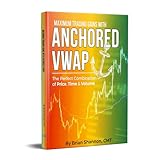
- Detailed explanations of AVWAP techniques for day traders, swing traders and investors. Plus, strategies to identify trade ideas, how to enter the trade just as momentum begins, AVWAP support and resistance levels, how to manage risk, and take profits.
- Each chapter goes into detail of not only the chart setup, but it also covers the psychology of the setup and risk management. It includes examples of failed trade setups and how to handle them.
- Specific strategies for long and short entry and exit of IPOs, short squeeze candidates, breakouts, pullbacks, 4 different types of gaps and more.
- The AVWAP analysis can be done on all markets where price and volume are recorded including individual stocks, ETFs, cryptocurrencies such as Bitcoin, forex, and futures markets.
- Packed with 140+ full color technical analysis Anchored VWAP charts.
How VWAP Is Calculated, Step by Step
The calculation of VWAP follows a cumulative process throughout the trading session. First, each trade price is multiplied by the volume traded at that price, producing a dollar-value traded figure. These values are then summed across all trades from the start of the session.
Next, the total dollar value traded is divided by the total volume traded over the same period. The resulting figure is the VWAP. As new trades occur, both the numerator and denominator update continuously, causing VWAP to change throughout the day and reset at the start of the next trading session.
Why VWAP Is Used as a Benchmark
VWAP is widely used as a benchmark for trade execution quality, particularly by institutional investors. If a large order is executed at prices better than VWAP, it suggests the trader achieved a favorable average fill relative to overall market activity. Conversely, executing consistently worse than VWAP may indicate inefficient timing or excessive market impact.
Beyond execution analysis, VWAP is also used by active traders as a reference for intraday trend assessment. Prices above VWAP are often interpreted as trading at a premium relative to the day’s average participation, while prices below VWAP indicate trading at a discount. This benchmarking role explains why VWAP is closely monitored across equities, futures, and other intraday-traded instruments.
Do these 3 things before closing this tab:
1Clear out junk files and repair common Windows errors2Fix the driver behind crashes, sound loss and screen glitches3Repair Windows errors before they cause bigger problemsWhy VWAP Matters: The Role of Volume in Measuring True Market Price
Price alone does not fully describe where meaningful trading activity occurs. A single trade can move the last traded price even if very little capital changes hands. VWAP addresses this limitation by integrating volume, which represents the intensity of market participation at each price level.
By weighting prices according to traded volume, VWAP emphasizes levels where many buyers and sellers agreed to transact. These levels reflect stronger consensus and greater capital commitment than prices formed by sporadic or low-volume trades. As a result, VWAP offers a more representative estimate of the market’s effective trading price during the session.
Why Volume Changes the Interpretation of Price
Volume measures how many shares, contracts, or units were exchanged at a given price. High volume indicates broad participation and stronger conviction, while low volume suggests limited interest or temporary price movement. Without volume, price data treats all trades as equally important, regardless of how much capital was involved.
VWAP corrects this imbalance by assigning greater influence to prices associated with higher volume. If most trading activity occurs near a specific price, VWAP will gravitate toward that level even if price briefly moves elsewhere. This makes VWAP less sensitive to isolated price spikes or thinly traded fluctuations.
VWAP as a Proxy for Fair Value
In intraday trading, the concept of fair value refers to the price at which buyers and sellers are most actively willing to transact. VWAP approximates this idea by reflecting where the bulk of volume has occurred over time. While not a theoretical valuation, it serves as a practical, transaction-based reference point.
Because VWAP incorporates both price and participation, it is often interpreted as the session’s equilibrium price. Trading far above or below VWAP implies that current prices deviate from where most capital has been exchanged. This framing helps traders contextualize whether the market is extended or reverting toward areas of heavier activity.
Distinguishing Meaningful Moves from Noise
Intraday markets generate constant price changes, many of which have limited informational value. Small trades, algorithmic quoting, or temporary imbalances can cause price to fluctuate without signaling a genuine shift in supply and demand. VWAP filters much of this noise by anchoring analysis to volume-weighted activity.
When price moves away from VWAP on expanding volume, it suggests broad participation supporting the move. In contrast, price movements that occur on declining or minimal volume are less likely to alter VWAP significantly. This distinction makes VWAP a useful tool for evaluating the strength and credibility of intraday price action.
What’s actually slowing this PC down?
Pick the symptom - the matching free tool is one click away.
Why Market Participants Pay Attention to VWAP
VWAP’s emphasis on volume explains why it is closely monitored by both institutions and active retail traders. Large participants seek to align execution with areas of high liquidity to reduce market impact, making VWAP a natural reference. At the same time, short-term traders use VWAP to assess whether current prices reflect accumulation, distribution, or temporary dislocation.
Because many participants observe and react to VWAP, it can influence intraday behavior. Prices may gravitate toward VWAP during balanced conditions or use it as a reference during trending markets. This widespread attention reinforces VWAP’s role as a central measure of true market price within a single trading session.
The VWAP Formula Explained: Breaking Down Price, Volume, and Time
Understanding why VWAP functions as an equilibrium reference requires examining how it is calculated. Unlike simple averages that treat every price observation equally, VWAP assigns greater influence to prices where more shares or contracts actually traded. This construction ensures the indicator reflects where market participation was most concentrated.
At its core, VWAP answers a specific question: at what average price did the market, weighted by volume, transact during the session? Each component of the formula—price, volume, and time—plays a distinct and deliberate role in producing that answer.
The Tool Desk
Outbyte Driver Updater FREEScan for outdated or missing drivers - takes under a minuteDriver Scan →Outbyte PC Repair FREEClear out junk files and repair common Windows errorsFree Scan →The Core VWAP Formula
The formal definition of VWAP is the cumulative dollar value traded divided by cumulative volume traded over a specified period. Mathematically, it is expressed as the sum of price multiplied by volume for each interval, divided by the sum of volume across those intervals.
VWAP = Σ (Price × Volume) ÷ Σ Volume
This calculation is continuous throughout the trading session. As each new trade or bar of data is added, both the numerator and denominator update, causing VWAP to evolve in real time.
Defining “Price” in the VWAP Calculation
In practice, the “price” used in VWAP calculations is often the typical price rather than the last traded price. Typical price is commonly defined as the average of the high, low, and close for a given interval: (High + Low + Close) ÷ 3. This approach smooths out short-lived price spikes and better represents where trading occurred during that period.
By using a representative price for each time slice, VWAP reduces the influence of isolated prints or momentary volatility. The result is a more stable measure of transactional value rather than a reflection of fleeting quotes.
The Role of Volume as the Weighting Mechanism
Volume refers to the number of shares, contracts, or units traded during each interval. In the VWAP formula, volume acts as the weighting factor, determining how much influence each price observation has on the final average.
Prices associated with heavy trading activity exert a larger impact on VWAP than prices formed on light volume. This is what differentiates VWAP from time-weighted averages and explains why it aligns more closely with where capital, not just time, has been committed.
Why Time Matters Even Though It Is Not Explicit
Time does not appear directly in the VWAP formula, but it is embedded through accumulation. VWAP is typically calculated from the start of the trading session and resets at the beginning of each new session. Earlier trades continue to influence VWAP, but their impact diminishes as more volume is added later in the day.
This cumulative structure makes VWAP path-dependent. Early high-volume trading can anchor VWAP for hours, while late-session activity must be substantial to shift it meaningfully. As a result, VWAP reflects not only where trading occurred, but also when significant participation took place.
Recommended Free Tools
Step-by-Step Example of VWAP Calculation
Consider an intraday chart divided into equal time intervals, such as one-minute bars. For each bar, the typical price is calculated and multiplied by that bar’s volume, producing a dollar-volume figure. These dollar-volume values are then summed from the session open onward.
At the same time, total volume is accumulated across all completed intervals. Dividing cumulative dollar volume by cumulative volume yields the current VWAP value. This process repeats with every new bar, continuously updating the benchmark as the trading session unfolds.
Why This Construction Makes VWAP a Trusted Benchmark
Because VWAP reflects the prices where the most volume traded, it approximates the average cost paid by the market as a whole. Institutions use this property to evaluate execution quality, comparing their fill prices to VWAP to determine whether trades were executed efficiently relative to overall participation.
For traders, this same structure explains why VWAP functions as a reference for trend assessment and intraday decision-making. Trading above VWAP implies transactions are occurring at prices higher than the session’s volume-weighted average, while trading below it suggests the opposite. The formula itself is what gives VWAP this interpretive power.
Step-by-Step VWAP Calculation: A Worked Intraday Example
Building directly on the cumulative logic described above, a concrete numerical example clarifies how VWAP evolves throughout an intraday session. The mechanics are straightforward, but the path-dependent nature becomes evident once actual prices and volumes are introduced.
Assumptions and Data for the Intraday Example
Assume a single trading session divided into five-minute bars starting at the market open. For each bar, three pieces of information are required: the high price, the low price, and the closing price. These are used to compute the typical price, defined as the average of high, low, and close.
Volume represents the number of shares traded during each bar. VWAP does not use time weighting; instead, each bar’s influence depends entirely on how much volume traded at its prices.
Calculating Typical Price and Dollar Volume
Suppose the first five-minute bar has a high of 100.20, a low of 99.80, and a close of 100.00. The typical price is therefore (100.20 + 99.80 + 100.00) ÷ 3 = 100.00. If 10,000 shares traded during this bar, the dollar volume equals 100.00 × 10,000 = 1,000,000.
In the second bar, assume a typical price of 100.50 with volume of 8,000 shares. The dollar volume for this interval is 804,000. Each subsequent bar is treated identically, producing one dollar-volume figure per interval.
Accumulating Values Across the Session
VWAP is calculated using cumulative values from the session open. After two bars, cumulative dollar volume equals 1,000,000 + 804,000 = 1,804,000, while cumulative volume equals 10,000 + 8,000 = 18,000 shares.
Rank #3
Dividing cumulative dollar volume by cumulative volume yields VWAP. In this case, VWAP after the second bar equals 1,804,000 ÷ 18,000 ≈ 100.22. This value represents the average price at which shares have traded so far, weighted by volume.
Updating VWAP as New Bars Arrive
Each new bar adds another layer to the calculation. If the third bar trades at a lower typical price but on small volume, its effect on VWAP will be limited. Conversely, a high-volume bar later in the session can materially shift VWAP, even if it occurs well after the open.
This dynamic explains why VWAP often moves slowly during low-volume periods and adjusts more rapidly during volume surges, such as around economic releases or at the market close.
Interpreting the Worked Example in Practice
At any point in the session, the current VWAP reflects all prior trading activity, not just the most recent price movement. A trade occurring above VWAP indicates execution at a price higher than the session’s volume-weighted average, while execution below VWAP indicates the opposite.
This worked example illustrates why VWAP is both simple in construction and powerful in interpretation. The calculation directly ties price relevance to participation, making VWAP a natural benchmark for assessing intraday price behavior and execution quality.
How VWAP Evolves During the Trading Day: Cumulative Mechanics and Reset Rules
VWAP is not a static indicator. It evolves continuously as each new trade or bar contributes additional price and volume information to the cumulative calculation. Understanding this rolling structure is essential for interpreting why VWAP behaves differently at various points during the trading session.
Free tools Windows power users keep installed
One-click scans. No signup required.
The Cumulative Nature of VWAP
VWAP is built from the session open forward, using cumulative dollar volume divided by cumulative share volume. Early in the day, each new bar represents a large percentage of total volume, allowing VWAP to adjust quickly. As the session progresses and cumulative volume grows, the influence of any single new bar diminishes.
This cumulative weighting explains why VWAP often appears more reactive near the open and more stable later in the day. Price fluctuations must be accompanied by significant volume to meaningfully shift VWAP once substantial trading activity has already occurred.
Path Dependence and Intraday Stability
VWAP is path dependent, meaning its value depends on the entire sequence of trades that occurred earlier in the session. A sharp price move late in the day does not overwrite earlier activity; it is averaged into the existing volume base. As a result, VWAP tends to lag sudden price changes unless those moves occur on unusually high volume.
This characteristic makes VWAP fundamentally different from simple moving averages, which discard older data as new observations arrive. VWAP retains all prior trades from the session open, preserving a complete intraday record of volume-weighted pricing.
Do these 3 things before closing this tab:
1Fix the driver behind crashes, sound loss and screen glitches2Clear out junk files and repair common Windows errors3Scan for outdated or missing drivers - takes under a minuteWhy VWAP Resets Each Trading Session
Standard VWAP resets at the start of each new trading session, typically at the market open. Both cumulative dollar volume and cumulative share volume return to zero, and the calculation begins anew. This reset reflects the idea that each trading day represents a distinct liquidity and information environment.
Because of this reset rule, VWAP is inherently an intraday metric. Values from prior sessions do not influence the current day’s VWAP, even if price levels overlap. This session-based structure aligns VWAP with how institutions evaluate intraday execution quality.
Implications of the Reset for Interpretation
The daily reset means early-session VWAP values are based on limited data and should be interpreted with that constraint in mind. As volume accumulates, VWAP becomes a more statistically representative measure of where trading activity has concentrated. By mid-session, VWAP often serves as a stable reference point for assessing whether prices are trading at a premium or discount relative to average participation.
This evolving reliability is a direct consequence of VWAP’s cumulative mechanics. The indicator does not predict future prices; it summarizes where trading has occurred so far, weighted by the intensity of participation.
Outdated Drivers Are Slowing You Down
One free scan finds every outdated or missing driver and matches the right update for your exact hardware.Free scan · exact hardware matchWindows Errors? Fix Them Before They Spread
Repair common Windows errors and clear accumulated junk for a smoother, more stable PC - no reinstall needed.Free scan · no reinstallStandard VWAP Versus Event-Reset Variants
While the traditional VWAP resets only at the session open, some platforms also offer variants that reset at specific events, such as earnings releases or major market opens. These alternatives follow the same mathematical structure but change the starting point of accumulation. The core principle remains unchanged: VWAP always reflects cumulative price multiplied by volume, divided by cumulative volume, from its chosen reset point.
Recognizing the reset rule in use is essential for correct interpretation. Without clarity on where accumulation begins, comparisons between price and VWAP lose analytical precision.
How Traders Use VWAP: Intraday Trend Bias, Support/Resistance, and Mean Reversion
Because VWAP summarizes where the majority of volume has traded during the session, it naturally becomes a reference point for interpreting intraday price behavior. Traders do not use VWAP as a predictive signal, but as a contextual benchmark for evaluating price relative to average market participation. Its utility emerges from how price interacts with VWAP over time, particularly in relation to trend direction, reaction levels, and deviations from the average.
Rank #4
VWAP as an Indicator of Intraday Trend Bias
One of the most common uses of VWAP is to assess intraday trend bias, meaning the prevailing directional tendency during the trading session. When price trades consistently above VWAP, it indicates that most transactions are occurring at higher prices than the session’s volume-weighted average. This behavior is often interpreted as evidence of sustained buying pressure.
Free tools Windows power users keep installed
One-click scans. No signup required.
Conversely, when price remains below VWAP for extended periods, it suggests that sellers are dominant and that trading activity is concentrated at lower prices. The relationship is descriptive rather than predictive: VWAP does not cause the trend, but it reflects where the balance of participation has occurred. Persistent separation from VWAP implies that new trades are reinforcing the existing bias rather than reverting toward the average.
Importantly, brief crossings of VWAP early in the session carry less informational weight due to limited cumulative volume. As the day progresses and volume accumulates, the stability of VWAP improves, making its relationship with price more meaningful for intraday context.
VWAP as Dynamic Support and Resistance
VWAP is frequently treated as a dynamic support or resistance level, meaning a price area where buying or selling interest tends to emerge. Support refers to a zone where demand absorbs selling pressure, while resistance refers to a zone where supply absorbs buying pressure. Unlike static levels such as prior highs or lows, VWAP continuously updates as new trades occur.
When price is above VWAP, pullbacks toward VWAP may attract buyers who view the average price as a favorable entry relative to current levels. In this case, VWAP functions as potential support. When price is below VWAP, rallies back toward the indicator may encounter selling interest, causing VWAP to act as resistance.
Recommended Free Tools
This behavior is closely tied to institutional execution logic. Many large participants benchmark their execution quality against VWAP, which can lead to increased activity near that level. The result is not a guaranteed reversal, but a higher probability of interaction as liquidity concentrates around the volume-weighted average.
Mean Reversion Around VWAP
Another common analytical framework involving VWAP is mean reversion, which describes the tendency of price to move back toward its average after extended deviations. In this context, VWAP represents the intraday mean, defined by where the bulk of volume has transacted. Large distances between price and VWAP signal that recent trades are occurring far from the session’s average participation level.
Mean reversion interpretations are most relevant in range-bound or balanced markets, where no strong directional catalyst is present. When price extends significantly above VWAP without expanding volume, it may indicate diminishing marginal demand. Similarly, sharp moves far below VWAP can reflect temporary selling pressure rather than sustained distribution.
However, mean reversion is conditional, not universal. In strong trending environments driven by persistent order flow, price may remain extended from VWAP for long periods without reverting. For this reason, VWAP-based mean reversion is best understood as a contextual lens rather than a standalone signal, requiring alignment with volume behavior and broader intraday structure.
What’s actually slowing this PC down?
Pick the symptom - the matching free tool is one click away.
VWAP as an Institutional Benchmark: Trade Execution, Slippage, and Performance Measurement
The same concentration of liquidity that drives support, resistance, and mean reversion around VWAP also explains its role as a benchmark for institutional execution. For large market participants, the primary challenge is not predicting direction, but executing sizable orders without materially moving price. VWAP provides a reference point that reflects where the majority of volume has traded, making it a neutral and widely accepted standard for evaluating execution quality.
Because VWAP incorporates both price and volume, it captures the true “average” transaction price of the session rather than a simple midpoint or closing value. This makes it particularly useful for institutions whose orders are large enough to influence market microstructure, the process by which orders are matched and prices are formed in real time.
VWAP in Algorithmic Trade Execution
Institutional orders are often executed using algorithms designed to minimize market impact, defined as the price movement caused by the order itself. A common approach is VWAP execution, where an order is broken into smaller child orders and distributed over time to match the market’s natural volume profile. The goal is to participate in the market proportionally, rather than aggressively demanding liquidity.
If volume increases during certain periods of the day, such as the opening or closing auction, the algorithm increases its participation rate accordingly. By aligning execution with prevailing volume, the institution reduces the risk of signaling intent to other market participants. VWAP serves as both the execution target and the pacing mechanism for these strategies.
Slippage and Transaction Cost Control
Slippage refers to the difference between the intended execution price and the actual average price achieved. For large orders, slippage is a direct function of liquidity, volatility, and execution speed. VWAP provides a benchmark to evaluate whether slippage was reasonable given prevailing market conditions.
An execution that achieves a price better than VWAP is considered favorable for a buyer, while executing above VWAP indicates higher transaction costs. For sellers, the interpretation is reversed. This comparison allows institutions to distinguish between unavoidable market effects and execution inefficiencies.
VWAP as a Performance Measurement Tool
Beyond execution, VWAP is widely used for performance attribution, which is the process of analyzing how and why a trade performed as it did. Portfolio managers and trading desks compare their average execution price to VWAP to assess whether their trading activity added or detracted value relative to the market’s consensus price.
This evaluation is especially important for fiduciary institutions, such as mutual funds and pension funds, which must demonstrate best execution. Using VWAP as a benchmark provides an objective, volume-adjusted standard that is difficult to manipulate and broadly recognized across the industry. As a result, VWAP functions not only as a trading tool, but also as an accountability metric embedded in institutional decision-making.
The Tool Desk
Outbyte PC Repair FREEClear out junk files and repair common Windows errorsFree Scan →Outbyte Driver Updater FREEScan for outdated or missing drivers - takes under a minuteDriver Scan →Best Value
Implications for Retail and Intraday Traders
While retail traders do not face the same scale constraints as institutions, understanding VWAP’s benchmark role provides critical context for intraday price behavior. Increased liquidity and order flow near VWAP are often a byproduct of institutional execution, not purely technical reactions. This explains why price frequently slows, consolidates, or changes character near the indicator.
For intraday traders, VWAP is less about beating the benchmark and more about recognizing where large participants are likely active. Observing how price behaves relative to VWAP offers insight into whether current moves align with institutional positioning or are occurring in lower-liquidity conditions.
Common VWAP Variations, Limitations, and Practical Mistakes to Avoid
As VWAP has become widely adopted, several variations have emerged to address its inherent constraints. At the same time, misuse of VWAP—particularly by less experienced traders—can lead to flawed interpretations. Understanding both its adaptations and its limitations is essential for applying VWAP correctly in real-world trading conditions.
Anchored VWAP
Anchored VWAP modifies the standard calculation by resetting the starting point to a specific event rather than the beginning of the trading session. Common anchor points include earnings releases, major news events, market gaps, or significant swing highs and lows.
This variation allows traders to measure the volume-weighted consensus price since a meaningful structural change in the market. Anchored VWAP is particularly useful for analyzing how price behaves after regime shifts, where the standard session-based VWAP may no longer reflect relevant participation.
Rolling and Session-Based VWAP Variants
Rolling VWAP calculates the indicator over a fixed lookback window, such as the last 30 or 60 minutes, instead of from session open. This approach emphasizes recent trading activity and can be more responsive during fast-moving intraday conditions.
Some traders also apply VWAP separately to pre-market, regular trading hours, or specific sessions in futures and global markets. These adaptations recognize that liquidity and participant composition can vary significantly across time segments, affecting how representative VWAP is as a benchmark.
VWAP Bands and Statistical Extensions
VWAP bands add upper and lower boundaries around VWAP, typically based on standard deviation. Standard deviation measures how dispersed prices are relative to the average, providing a probabilistic framework rather than fixed price levels.
These bands help contextualize whether price is trading unusually far from the volume-weighted mean. However, they should be interpreted as descriptive tools, not predictive boundaries, since strong trends can persist well beyond statistically “normal” ranges.
Structural Limitations of VWAP
VWAP is inherently backward-looking, as it incorporates all executed trades up to the current moment. This means it reacts to price and volume rather than forecasting future movement. Treating VWAP as a predictive signal rather than a reference point misrepresents its purpose.
Additionally, VWAP resets each session in its standard form. As a result, it does not account for longer-term positioning or overnight inventory unless explicitly modified. This limits its usefulness for swing trading or multi-day analysis without anchoring or adaptation.
Common Practical Mistakes Retail Traders Make
A frequent mistake is assuming VWAP acts as guaranteed support or resistance. While price often interacts with VWAP due to institutional activity, there is no obligation for the market to respect it. In strongly trending or news-driven environments, price can remain extended far from VWAP for prolonged periods.
Quick wins for a faster PC:
Repair Windows errors before they cause bigger problemsFix Now →Scan for outdated or missing drivers - takes under a minuteDriver Scan →Clear out junk files and repair common Windows errorsFree Scan →Another error is using VWAP in isolation. Without confirmation from volume trends, market structure, or broader context, VWAP signals can be misleading. Effective use requires understanding why price is interacting with VWAP, not simply that it is.
Misalignment with Timeframe and Market Conditions
VWAP is most relevant for intraday trading, where volume distribution within a session matters. Applying standard VWAP logic to illiquid instruments or low-volume periods reduces its reliability as a benchmark.
Traders also frequently overlook how market volatility affects VWAP interpretation. In highly volatile conditions, deviations from VWAP are less informative, as price dispersion reflects uncertainty rather than inefficiency.
Integrating VWAP with Informed Judgment
VWAP’s strength lies in its ability to summarize where meaningful trading has occurred, not in signaling precise entries or exits. When integrated with an understanding of liquidity, volatility, and institutional behavior, it becomes a powerful contextual tool.
Used correctly, VWAP helps traders align intraday decisions with the dominant flow of capital. Used mechanically, it risks oversimplifying complex market dynamics. Recognizing this distinction is what separates informed application from routine misuse.
Quick Recap
Product prices and availability are accurate as of the date/time indicated and are subject to change. Any price and availability information displayed on Amazon at the time of purchase will apply.




