Do these 3 things before closing this tab:
1Repair Windows errors before they cause bigger problems2Scan for outdated or missing drivers - takes under a minute3Clear out junk files and repair common Windows errorsBonds sit at the center of the global financial system because they formalize a simple economic promise: the exchange of capital today for a series of predetermined cash flows in the future. Governments, corporations, and other issuers rely on bonds to fund operations and investments, while investors rely on them for income, capital preservation, and portfolio diversification. Understanding how these promised cash flows are valued is essential to explaining why bond prices and interest rates move in opposite directions.
What a Bond Promises
A bond is a contractual debt instrument that obligates the issuer to make periodic interest payments, known as coupons, and to repay the bond’s face value, also called par value, at maturity. The coupon rate is the annual interest payment expressed as a percentage of par value and is fixed at issuance for most traditional bonds. These promised payments are known in advance, which distinguishes bonds from equities, whose cash flows are uncertain.

Because bond cash flows are fixed, the primary source of price fluctuation is not the bond itself but the financial environment in which it is valued. That environment is shaped by prevailing interest rates, which represent the return investors can earn on alternative investments of comparable risk and maturity. Interest rates therefore act as the benchmark against which all bond cash flows are judged.
Present Value as the Anchor of Bond Pricing
Bond prices are determined by the present value of their future cash flows. Present value is the process of discounting future payments back to today using an appropriate discount rate, which reflects current market interest rates and the bond’s risk characteristics. The higher the discount rate, the less future cash flows are worth today.
What’s actually slowing this PC down?
Pick the symptom - the matching free tool is one click away.
#1 Best Overall

- Profitability calculations; cash flow function Calculates NPV and IRR for uneven cash flows
- Time-value-of-money and Amortization keys solve problems including: pension calculations, loans, mortgages, etc.
- Ideal calculator for students, managers and statisticians
- Built-in functionality : List-based one- and two-variable statistics with four regression options: linear, logarithmic, exponential and power
- The BA II Plus calculator is approved for use on the following professional exams: Chartered Financial Analyst exam. GARP Financial Risk Manager (FRM) exam. Certified Management Accountants exam
When market interest rates rise, newly issued bonds offer higher coupons to remain competitive. Existing bonds, with lower fixed coupons, become less attractive unless their prices fall to compensate investors. Conversely, when market interest rates decline, existing bonds with higher coupons become more valuable, and their prices rise. This mathematical relationship is the foundation of the inverse movement between bond prices and interest rates.
Yield to Maturity and Market Adjustment
Yield to maturity is the single discount rate that equates a bond’s current market price with the present value of all its future cash flows, assuming the bond is held until maturity. It incorporates coupon payments, the time value of money, and any gain or loss if the bond is purchased at a price different from par. Yield to maturity is the primary metric used to compare bonds with different prices and coupon structures.
Market forces continuously adjust bond prices so that their yields align with prevailing interest rates. If market yields rise above a bond’s coupon rate, the bond must trade at a discount to raise its yield. If market yields fall below the coupon rate, the bond trades at a premium. Price movement is therefore the mechanism that reconciles fixed contractual payments with changing interest rate conditions.
Duration and Sensitivity to Interest Rates
Duration measures a bond’s sensitivity to changes in interest rates by estimating how much its price will change for a given change in yield. It is expressed in years and reflects both the timing and magnitude of a bond’s cash flows. Bonds with longer durations experience larger price changes when interest rates move, all else equal.
Duration links theory to practical risk management. It explains why long-term bonds are more volatile than short-term bonds and why portfolios with greater exposure to distant cash flows are more sensitive to interest rate shocks. This sensitivity is not a market anomaly but a direct consequence of present value mechanics applied over time.
The Core Intuition: Present Value, Discounting, and Why Higher Rates Mean Lower Prices
The inverse relationship between interest rates and bond prices is not a market convention or behavioral pattern. It is a direct mathematical outcome of how future cash flows are valued in today’s terms. Understanding this mechanism requires a clear grasp of present value and discounting.
Present Value and the Time Value of Money
Present value is the current worth of a future cash flow, calculated by discounting it using an interest rate that reflects time and risk. The time value of money principle states that a dollar received today is worth more than a dollar received in the future because today’s dollar can be reinvested to earn interest. Discounting converts future payments into their equivalent value today.
A bond is a series of fixed future cash flows, consisting of periodic coupon payments and the return of principal at maturity. The bond’s price is the sum of the present values of all these future payments. This pricing framework applies to all fixed-income securities, regardless of issuer or maturity.
Free tools Windows power users keep installed
One-click scans. No signup required.
Discount Rates as Market Interest Rates
The discount rate used in bond valuation is closely linked to prevailing market interest rates for comparable risk and maturity. When market interest rates rise, the discount rate applied to a bond’s future cash flows increases. Higher discount rates reduce the present value of each future payment, lowering the bond’s overall price.
This effect applies uniformly across all cash flows, but it is more pronounced for payments that occur further in the future. As a result, long-term bonds experience larger price declines than short-term bonds when interest rates rise. The inverse price response is therefore mechanical, not discretionary.
Fixed Coupons and Price Adjustment
Coupon payments on a bond are contractually fixed at issuance and do not adjust to changes in market interest rates. When newly issued bonds offer higher coupons due to rising rates, existing bonds with lower coupons become less competitive. The only way for these existing bonds to offer comparable returns is through a decline in price.
This price adjustment raises the bond’s yield to maturity, which is the discount rate that equates the lower market price with the unchanged future cash flows. Yield to maturity therefore acts as the bridge between fixed contractual payments and changing market interest rates.
The Tool Desk
Outbyte Driver Updater FREEFix the driver behind crashes, sound loss and screen glitchesFind Drivers →Outbyte PC Repair FREERepair Windows errors before they cause bigger problemsFix Now →Why Duration Amplifies the Effect
Duration summarizes how sensitive a bond’s price is to changes in its yield by capturing the timing of its cash flows. Bonds with longer durations have more of their value tied to distant payments, which are more heavily affected by changes in discount rates. As rates rise, the present value of these distant cash flows falls sharply.
This explains why interest rate risk is fundamentally a function of time. Portfolios concentrated in long-duration bonds are structurally more exposed to rising rates, while shorter-duration bonds exhibit greater price stability. Duration therefore translates present value theory into a practical measure of interest rate risk.
From Coupons to Yield to Maturity: How Market Interest Rates Reprice Existing Bonds
Building on the role of discounting and duration, the repricing of existing bonds occurs through a precise adjustment mechanism linking fixed coupons to prevailing market interest rates. Bonds do not change their promised cash flows when rates move; instead, market prices change so that expected returns align with current conditions. This process is summarized by yield to maturity.
Rank #2

- Solves time-value-of-money calculations such as annuities, mortgages, leases, savings, and more
- Performs cash-flow analysis for up to 32 uneven cash flows with up to 4-digit frequencies
- Calculates various financial functions: Net Future Value Net present Value Modified Internal Rate of Return Internal Rate of Return Modified Duration Payback Discounted Payback
- The Texas Instruments BAII Plus Professional features an Automatic Power Down (APD) function for extended battery life
- Prompted display guides you through financial calculations showing current variable and label. Ten-digit display
Coupon Payments Are Fixed, Market Yields Are Not
A bond’s coupon is the periodic interest payment specified at issuance, calculated as a fixed percentage of its face value. Once issued, these coupon payments are legally fixed and remain unchanged regardless of shifts in market interest rates. This contractual rigidity is central to understanding why prices, not coupons, absorb interest rate movements.
Recommended Free Tools
When market interest rates rise, newly issued bonds offer higher coupons for the same maturity and credit risk. Existing bonds with lower coupons therefore become less attractive at their current prices. To restore competitiveness, their prices must fall until the total return offered matches prevailing market yields.
Yield to Maturity as the Equalizing Mechanism
Yield to maturity (YTM) is the internal rate of return earned by an investor who buys a bond at its current market price and holds it until maturity, assuming all payments are made as promised. It incorporates all future coupon payments and the return of principal into a single annualized rate. Crucially, YTM adjusts continuously with market prices even though coupons do not.
A decline in a bond’s price mechanically raises its yield to maturity. Lower prices mean investors are paying less today to receive the same fixed cash flows in the future, increasing the implied rate of return. Through this process, YTM serves as the link between fixed contractual payments and fluctuating market interest rates.
Repricing Through Present Value Mechanics
Bond prices are determined by discounting future cash flows using a yield that reflects current market interest rates for similar risk and maturity. When market rates increase, the discount rate applied to each future payment rises. Higher discount rates reduce the present value of those payments, producing a lower bond price.
Quick wins for a faster PC:
Scan for outdated or missing drivers - takes under a minuteDriver Scan →Clear out junk files and repair common Windows errorsFree Scan →Fix the driver behind crashes, sound loss and screen glitchesFind Drivers →This adjustment occurs simultaneously across all cash flows, from near-term coupons to the final principal repayment. Because the timing of these payments differs, the magnitude of the price change depends on how far into the future they occur. This is why duration, discussed previously, governs the sensitivity of the repricing process.
Implications for Bond Investors and Portfolio Risk
The inverse relationship between bond prices and interest rates is therefore not a market anomaly or behavioral response. It is the direct outcome of fixed coupons, present value mathematics, and the requirement that yields adjust to prevailing interest rates. Every bond in the market is continuously repriced to ensure its yield reflects current conditions.
For investors, understanding this mechanism clarifies why price volatility is an unavoidable feature of bond investing when interest rates change. Interest rate risk is embedded in the structure of bonds themselves, and yield to maturity is the lens through which that risk is expressed in market prices.
A Simple Numerical Walkthrough: Bond Prices Rising and Falling as Rates Change
The present value framework becomes most intuitive when applied to a concrete numerical example. By holding a bond’s contractual cash flows constant and changing only the market interest rate used to discount them, the inverse relationship between yields and prices can be observed directly. This walkthrough isolates that mechanical effect.
Establishing the Base Case: A Bond Priced at Par
Consider a 5-year bond with a face value (principal repayment at maturity) of $1,000 and an annual coupon rate of 5 percent. The bond pays $50 per year in coupon payments and returns $1,000 at maturity. When the bond’s yield to maturity equals its coupon rate of 5 percent, the bond trades at par, meaning its market price equals $1,000.
At this yield, the present value of the five $50 coupon payments plus the $1,000 principal repayment equals exactly $1,000. The discount rate applied to each cash flow matches the return implied by the bond’s coupon structure. No premium or discount is required for the bond to be competitive with prevailing market rates.
Rising Interest Rates: Why Bond Prices Fall
Assume market interest rates for similar 5-year bonds rise to 6 percent. The bond’s coupon payments remain fixed at $50 per year, but new bonds now offer higher coupons consistent with the higher market yield. To compensate investors for the lower fixed coupons, the price of the existing bond must fall.
Discounting the same future cash flows at a 6 percent yield produces a market price below $1,000. Each coupon and the final principal repayment are discounted more heavily, reducing their present value. The lower price increases the bond’s yield to maturity until it aligns with the new 6 percent market rate.
Falling Interest Rates: Why Bond Prices Rise
If market interest rates instead fall to 4 percent, the same bond becomes more attractive. Its fixed $50 annual coupon is now higher than what new bonds offer for comparable risk and maturity. Investors are therefore willing to pay more than $1,000 to obtain those above-market cash flows.
Discounting the bond’s payments at a 4 percent yield results in a price above par. The higher price lowers the yield to maturity earned by a new buyer, bringing it down to the prevailing 4 percent market rate. The bond’s price adjusts upward until its yield matches current conditions.
Connecting Price Changes to Duration and Risk
The size of these price changes depends on duration, which measures the weighted average timing of a bond’s cash flows. Bonds with longer durations have more payments occurring further in the future, making their present values more sensitive to changes in discount rates. As a result, longer-duration bonds experience larger price swings when interest rates change.
This numerical example demonstrates that price volatility is not arbitrary. It arises directly from fixed coupons, discounting mechanics, and the requirement that yields remain aligned with market interest rates. Duration determines how strongly this repricing effect influences a bond’s market value as rates rise or fall.
Duration as the Sensitivity Measure: Quantifying the Interest Rate–Price Relationship
The inverse relationship between interest rates and bond prices becomes measurable through duration. While present value mathematics explains why prices adjust, duration quantifies how large those adjustments are for a given change in yields. It serves as the primary analytical bridge between interest rate movements and bond price volatility.
Duration transforms the abstract concept of sensitivity into a numerical estimate. This allows investors and students to compare bonds with different maturities, coupons, and cash flow structures on a consistent risk basis.
Macaulay Duration: Timing of Cash Flows
Macaulay duration measures the weighted average time, in years, until a bond’s cash flows are received. Each payment is weighted by its present value relative to the bond’s total price. Cash flows received further in the future carry greater sensitivity to changes in discount rates.
Zero-coupon bonds have durations equal to their maturity because all value is received at the end. Coupon-paying bonds have shorter durations than their maturities because some value is returned earlier through coupon payments. Higher coupons shorten duration by accelerating cash flow timing.
Modified Duration: Price Sensitivity to Yield Changes
Modified duration translates timing into price sensitivity by adjusting Macaulay duration for the bond’s yield to maturity. Yield to maturity is the internal rate of return that equates the bond’s price with the present value of its promised cash flows. Modified duration estimates the percentage price change for a one percentage point change in yield.
For example, a bond with a modified duration of 5 will experience approximately a 5 percent price decline if yields rise by one percentage point. Conversely, the same bond’s price will rise by roughly 5 percent if yields fall by one percentage point. This symmetry reflects the inverse price–yield relationship derived from discounting mechanics.
Duration as a First-Order Approximation
Duration provides a linear approximation of a bond’s price response to small yield changes. It assumes that the price–yield relationship is straight, even though it is actually curved. This approximation is most accurate for modest interest rate movements and less precise for large shifts.
The curvature of the price–yield relationship explains why bond prices rise slightly more when yields fall than they decline when yields rise by the same amount. This effect is addressed by convexity, which refines duration estimates but does not replace them. Duration remains the foundational sensitivity measure.
Crashes, No Sound, or Screen Glitches?
Random freezes, missing sound and display glitches usually trace back to one bad driver. Find and replace yours safely.Free scan · under a minutePC Slower Than It Used to Be?
A free scan shows the junk files, broken settings and background clutter dragging Windows down - then fixes them in one click.Free scan · Windows 10 & 11Practical Implications for Interest Rate Risk
Bonds with longer durations exhibit greater price volatility because more of their value depends on distant cash flows. Low-coupon and long-maturity bonds therefore carry higher interest rate risk than high-coupon or short-maturity bonds. This risk exists even when credit quality is identical.
Duration allows interest rate risk to be compared, aggregated, and managed across individual bonds and portfolios. By quantifying how prices respond to yield changes, duration links theoretical present value principles directly to observable market behavior.
Nonlinearity and Convexity: Why Bond Prices Don’t Move in a Straight Line
The duration-based explanation of interest rate risk relies on a simplifying assumption: that bond prices respond linearly to yield changes. In reality, the relationship between bond prices and yields is curved, not straight. This nonlinearity arises directly from present value mathematics and has important implications for how bond prices behave when interest rates move.
Understanding this curvature is essential for explaining why bond prices and interest rates move inversely in an asymmetric way. It also clarifies why duration alone becomes insufficient when yield changes are large or when portfolios are exposed to meaningful interest rate volatility.
The Curved Price–Yield Relationship
A bond’s price equals the present value of its future cash flows, discounted at the yield to maturity. Present value calculations involve dividing cash flows by a discount factor raised to a power, which creates a nonlinear relationship between price and yield. As yields change, the rate at which prices adjust is not constant.
Rank #4

- PROFESSIONAL FINANCIAL CALCULATOR : Built-in TVM, IRR, NPV. Engineered for business analysts, real estate investors, accountants, and finance students.
- ADVANCED CASH FLOW & AMORTIZATION : Execute time value of money, break-even analysis, depreciation schedules, and bond pricing. Trusted for professional exam prep", MBA coursework, and banking certifications.
- CATIGA CF-300 : Flip-open hard case with a snap-close design for a secure fit. Compact and portable: designed for daily professional use in office, classroom, or on-site.
- ALL-IN-ONE FOR PROFESSIONALS : From NPV/IRR for real estate analysis to statistical calculations for business analysts. Handles probability, linear regression, and complex financial formulas.
- MORTGAGE, LOAN & INVESTMENT CALCULATOR : Covers bond pricing, loan amortization, investment analysis, and exam-level computations. Your go-to accounting calculator, business calculator, and real estate calculator in one device.
When yields fall, the discount rate applied to future cash flows declines, increasing their present value at an accelerating rate. When yields rise, the opposite occurs, but the price decline happens at a decelerating rate. This produces a convex curve rather than a straight line when bond prices are plotted against yields.
Convexity Defined and Interpreted
Convexity measures the degree of curvature in the price–yield relationship. It captures how the sensitivity of a bond’s price to yield changes itself changes as yields move. In mathematical terms, convexity is the second derivative of price with respect to yield.
Positive convexity, which characterizes most traditional bonds, means that price gains from falling yields are larger than price losses from rising yields of the same magnitude. This property explains why duration-based estimates systematically understate price increases when yields fall and overstate price declines when yields rise.
Why Duration Alone Is Incomplete
Duration provides a first-order, or linear, approximation of price sensitivity. It assumes that the slope of the price–yield curve is constant over small changes in yield. As yield movements grow larger, this assumption becomes increasingly inaccurate.
Convexity refines duration by accounting for curvature, improving price estimates across a wider range of yield changes. It does not replace duration but complements it, allowing for a more accurate representation of how bond prices respond to interest rate movements.
Cash Flow Timing and Convexity Differences
Convexity depends on the timing and size of a bond’s cash flows. Bonds with longer maturities and lower coupon rates tend to exhibit higher convexity because a greater proportion of their value comes from distant cash flows. These distant cash flows are more sensitive to changes in the discount rate.
As a result, two bonds with the same duration can respond differently to large yield changes if their convexities differ. This distinction becomes particularly important in portfolio risk management, where duration matching alone may not fully capture interest rate exposure.
Free tools Windows power users keep installed
One-click scans. No signup required.
Implications for Interest Rate Risk Management
The inverse relationship between bond prices and interest rates is not merely directional but nonlinear. Convexity explains why bond portfolios often perform better than duration alone would predict in declining rate environments and worse than expected when rates rise sharply.
For investors and students of fixed income, convexity reinforces the idea that interest rate risk is multidimensional. Duration explains the primary sensitivity, while convexity explains the asymmetry embedded in the present value framework that governs all bond pricing.
Independent reader supportYour contribution helps us test, update, and keep practical guides available for everyone.Real-World Implications for Investors: Interest Rate Risk, Reinvestment Risk, and Portfolio Construction
The inverse relationship between interest rates and bond prices translates directly into several forms of risk faced by investors. These risks arise from the present value mechanics of bond pricing, where future cash flows are discounted at the prevailing yield to maturity, defined as the internal rate of return that equates a bond’s price with the present value of its promised payments. Changes in market interest rates alter this discount rate, reshaping both bond prices and realized returns over time.
Interest Rate Risk and Market Value Fluctuations
Interest rate risk refers to the sensitivity of a bond’s market price to changes in yields. When yields rise, the present value of fixed coupon payments and principal repayment declines, causing bond prices to fall; when yields fall, the opposite occurs. This price sensitivity is primarily captured by duration, which measures the weighted average timing of cash flows and approximates the percentage price change for a given change in yield.
The magnitude of interest rate risk depends on cash flow timing. Longer-maturity bonds and lower-coupon bonds have higher durations because more of their value is concentrated in distant payments, which are more heavily affected by changes in the discount rate. Convexity further modifies this relationship by accounting for the curvature of the price–yield relationship, especially during larger yield movements.
Reinvestment Risk and the Yield Environment
Reinvestment risk arises from uncertainty about the rate at which interim cash flows, such as coupon payments, can be reinvested. While bond prices increase when yields fall, lower interest rates also reduce the income earned on reinvested coupons. This effect is most pronounced for higher-coupon bonds, where a larger share of total return depends on reinvesting periodic payments.
Yield to maturity implicitly assumes that all coupon payments are reinvested at the same yield over the life of the bond. In practice, this assumption rarely holds. As a result, realized returns may diverge from yield to maturity, even if the bond is held to maturity and no default occurs.
The Trade-Off Between Price Risk and Reinvestment Risk
Interest rate risk and reinvestment risk move in opposite directions across the maturity spectrum. Short-term bonds exhibit lower price sensitivity to yield changes but higher reinvestment risk, as principal and coupons must be reinvested more frequently at uncertain future rates. Long-term bonds, by contrast, lock in yields for longer periods but expose investors to greater market value volatility.
Best Value
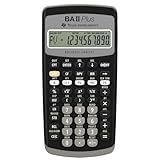
- Solves calculations of the value of money relative to time, such as annuities, mortgages, leases, savings
- Run cash flow analysis with up to 24 uneven streams and frequencies up to 4 digits, calculates NPV and IRR
- Choose between two day counting methods (current/current or 30/360) to calculate bond or credit prices "to maturity" or "on demand"
- Statistics of one or two variables with 4 regression options: linear, logarithmic, exponential, and potential
- Mathematical functions include trigonometric calculations, natural logarithms and powers, plus zero utility analysis
This trade-off is a direct consequence of present value mathematics. Concentrating cash flows in the near term reduces price sensitivity but increases dependence on future reinvestment rates, while pushing cash flows further into the future amplifies price sensitivity but stabilizes reinvestment assumptions.
Portfolio Construction and Interest Rate Exposure
In portfolio construction, duration serves as a primary tool for measuring and managing aggregate interest rate exposure. A portfolio’s duration approximates its sensitivity to parallel shifts in the yield curve, allowing comparisons across bonds with different maturities and coupon structures. However, duration alone does not capture the full range of potential price outcomes when yield changes are large or non-parallel.
Incorporating convexity improves risk assessment by recognizing that bonds with greater curvature in their price–yield relationship respond more favorably to declining rates and less severely to rising rates, all else equal. Differences in convexity explain why portfolios with similar durations can experience materially different performance during volatile interest rate environments.
Linking Theory to Observed Bond Market Behavior
Observed bond market behavior reflects the combined effects of discounting, cash flow timing, and yield dynamics. Price movements respond immediately to changes in required yields, while income outcomes unfold gradually through coupon payments and reinvestment. Understanding how present value mechanics, yield to maturity assumptions, duration, and convexity interact allows investors and students to interpret bond price fluctuations as logical outcomes of the underlying valuation framework.
The Tool Desk
Outbyte Driver Updater FREEScan for outdated or missing drivers - takes under a minuteDriver Scan →Outbyte PC Repair FREEClear out junk files and repair common Windows errorsFree Scan →These real-world implications demonstrate that the inverse relationship between interest rates and bond prices is not merely a theoretical construct. It is a structural feature of fixed income securities that shapes risk, return, and portfolio behavior across different interest rate regimes.
Putting It All Together: Key Takeaways for Bond Investing Across Rate Environments
The inverse relationship between interest rates and bond prices emerges directly from present value mathematics and governs how fixed income instruments behave across economic conditions. Each component discussed—discounting, coupon structure, yield to maturity, duration, and convexity—contributes to a coherent valuation framework rather than isolated effects. When integrated, these elements explain both short-term price volatility and long-term income outcomes in a consistent and predictable manner.
Why Bond Prices Move Opposite to Interest Rates
Bond prices represent the present value of future cash flows discounted at the prevailing market yield, also known as the required rate of return. When interest rates rise, the discount rate applied to future coupon and principal payments increases, reducing their present value and therefore the bond’s price. When rates fall, the discount rate declines, increasing present value and pushing bond prices higher.
This inverse relationship is not driven by market sentiment or trading behavior but by arithmetic. The magnitude of the price change depends on how far into the future the cash flows occur and how sensitive those cash flows are to changes in the discount rate.
Do these 3 things before closing this tab:
1Repair Windows errors before they cause bigger problems2Scan for outdated or missing drivers - takes under a minute3Clear out junk files and repair common Windows errorsThe Role of Coupon Payments and Yield to Maturity
Coupon payments influence how quickly an investor receives cash flows and therefore how exposed a bond is to changes in interest rates. Higher coupon bonds return more value earlier, reducing sensitivity to rate changes but increasing reliance on reinvestment at future market rates. Lower coupon bonds defer more value to maturity, increasing price sensitivity while reducing reinvestment exposure.
Yield to maturity represents the single discount rate that equates a bond’s price with the present value of its promised cash flows, assuming reinvestment at that same yield. While yield to maturity provides a useful summary measure, it is an assumption-based metric that does not eliminate price risk. Changes in market yields immediately alter bond prices, even though realized income unfolds over time.
Duration as the Bridge Between Theory and Risk Measurement
Duration translates present value mechanics into a practical measure of interest rate risk. It estimates the percentage change in a bond’s price for a given change in yields, assuming small and parallel shifts in the yield curve. Longer duration indicates greater sensitivity to interest rate movements, reflecting cash flows that are weighted further into the future.
From a portfolio perspective, duration allows interest rate exposure to be aggregated, compared, and adjusted across diverse holdings. However, duration is an approximation rather than a complete description of risk, particularly when rate changes are large or uneven across maturities.
What’s actually slowing this PC down?
Pick the symptom - the matching free tool is one click away.
Convexity and Performance Across Changing Rate Environments
Convexity refines duration by accounting for the curvature in the price–yield relationship. Bonds with higher convexity experience smaller price declines when yields rise and larger price gains when yields fall, relative to bonds with lower convexity and similar duration. This asymmetry explains why some bonds perform more favorably during volatile or declining rate environments.
Recognizing convexity reinforces the idea that interest rate risk is not linear. Portfolio outcomes depend not only on the direction of rate changes but also on their magnitude and shape across the yield curve.
Integrating the Framework for Informed Interpretation
Across all rate environments, bond behavior reflects a consistent set of valuation principles rather than changing rules. Rising rates compress prices through higher discounting, while falling rates expand prices by increasing the present value of fixed cash flows. Income generation, reinvestment effects, and price volatility unfold according to how cash flows are timed and discounted.
Understanding these mechanics enables investors and students to interpret bond price movements as rational outcomes of interest rate changes rather than anomalies. The inverse relationship between interest rates and bond prices, grounded in present value mathematics, remains the central organizing principle of fixed income analysis and portfolio risk management.
Crashes, No Sound, or Screen Glitches?
Random freezes, missing sound and display glitches usually trace back to one bad driver. Find and replace yours safely.Free scan · under a minuteWindows Errors? Fix Them Before They Spread
Repair common Windows errors and clear accumulated junk for a smoother, more stable PC - no reinstall needed.Free scan · no reinstallQuick Recap
Product prices and availability are accurate as of the date/time indicated and are subject to change. Any price and availability information displayed on Amazon at the time of purchase will apply.




