Recommended Free Tools
Greenland’s reappearance in U.S. strategic debate is not a diplomatic anomaly but a recurring feature of American security planning. Public provocations, including statements associated with former President Donald Trump, tend to obscure a longer institutional logic rooted in geography, military basing, and resource access. For financial markets and policy-aware investors, Greenland matters less as a political headline and more as a fixed asset in the evolving architecture of Arctic power.
The island sits astride the shortest air and missile trajectories between North America and Eurasia, a reality that has shaped U.S. defense thinking since the early Cold War. This positioning places Greenland at the center of early-warning systems, undersea surveillance, and missile defense considerations. As great-power competition intensifies, geographic constraints that once seemed theoretical are regaining operational and financial relevance.


Geography as Strategic Infrastructure
Greenland’s value begins with its location rather than its population or economy. It forms the northeastern anchor of the GIUK Gap, the maritime corridor between Greenland, Iceland, and the United Kingdom that NATO has long treated as a choke point for naval movement. Control and monitoring of this corridor influence the security of transatlantic trade routes, which underpin global supply chains and capital flows.
The island also borders the Arctic Ocean, where melting ice is extending the seasonal viability of northern shipping lanes. These routes reduce transit times between Asia, Europe, and North America, altering cost structures for global trade over the long term. Strategic geography, in this sense, functions as infrastructure that cannot be replicated through capital investment alone.
Quick wins for a faster PC:
Scan for outdated or missing drivers - takes under a minuteDriver Scan →Repair Windows errors before they cause bigger problemsFix Now →#1 Best Overall
Military Presence Beyond Symbolism
The United States has maintained a continuous military presence in Greenland since World War II, most visibly at Pituffik Space Base, formerly Thule Air Base. This installation supports missile warning, space surveillance, and satellite command functions critical to U.S. and allied defense systems. Its role has expanded as space becomes an operational military domain rather than a purely civilian or commercial one.
Statements about acquiring or defending Greenland often appear provocative, but the underlying posture reflects continuity rather than escalation. The U.S. interest is primarily about denial of access to adversaries rather than territorial expansion. From a defense economics perspective, forward positioning reduces long-term system costs by improving detection time and strategic depth.
Subsurface Resources and Strategic Materials
Beneath Greenland’s ice lie significant deposits of rare earth elements, a group of minerals essential for advanced electronics, renewable energy systems, and defense technologies. Rare earth elements are not geologically scarce, but economically viable concentrations are limited and heavily concentrated in China, which currently dominates global processing capacity. This concentration represents a supply-chain vulnerability rather than a market inefficiency.
Greenland’s resource potential therefore intersects with national security and industrial policy rather than near-term commodity pricing. Developing these assets would require large capital expenditures, long permitting timelines, and political coordination with Denmark and Greenland’s autonomous government. The strategic significance lies in optionality, the value of having alternative supply sources available in future stress scenarios.
Arctic Access and the Economics of Control
As Arctic ice retreats, access to seabed resources and maritime routes is governed by exclusive economic zones, or EEZs, which grant coastal states rights to exploit marine resources within 200 nautical miles. Greenland’s EEZ significantly expands the Arctic footprint of the Kingdom of Denmark and, by extension, NATO. This legal geography shapes future energy exploration, fisheries management, and undersea cable routing.
Control over Arctic access points influences not only military outcomes but also the long-term economics of trade and resource extraction. Greenland’s recurring presence in U.S. security calculus reflects the convergence of defense planning with structural shifts in climate, technology, and global commerce. Political rhetoric may fluctuate, but the strategic drivers remain stable and measurable.
Geography as Destiny: Greenland’s Military Value in an Arctic Power Contest
The economic and legal dimensions of Arctic access converge with a more enduring reality: geography constrains strategic choice. Greenland’s location places it at the intersection of North America, Europe, and the Arctic Ocean, making it a fixed asset in any northern security architecture. Unlike mobile platforms, geography cannot be redeployed, which is why it anchors long-term defense planning.
The Arctic Gatekeeper Between Continents
Greenland sits astride the shortest air and missile trajectories between Eurasia and North America. During the Cold War, this made the island central to early-warning systems designed to detect intercontinental ballistic missiles, or ICBMs, long-range nuclear weapons delivered via ballistic flight paths. That logic persists as missile technology evolves, with hypersonic glide vehicles compressing response times and increasing the value of forward detection.
This positioning also affects air and naval transit between the North Atlantic and the Arctic. Control over these corridors influences reinforcement timelines, logistical resilience, and the survivability of allied forces in a high-intensity conflict. From a defense economics standpoint, these advantages reduce the marginal cost of deterrence by extending reaction time rather than expanding force size.
Space, Surveillance, and Missile Warning Infrastructure
The U.S. military presence at Pituffik Space Base, formerly Thule Air Base, reflects Greenland’s role in space-domain awareness. Space-domain awareness refers to the ability to detect, track, and characterize objects in orbit, a capability increasingly tied to missile defense, satellite protection, and communications security. Ground-based radar and sensor installations in high latitudes provide coverage that lower-latitude systems cannot replicate.
These systems are capital-intensive but deliver persistent strategic value. Their relevance extends beyond traditional warfare to include monitoring anti-satellite tests and space-based disruptions that could impair global navigation, timing, and financial transaction systems. The military value therefore intersects indirectly with civilian economic infrastructure.
Undersea Cables, Subsea Terrain, and Arctic Seabed Control
Greenland’s surrounding waters host critical undersea terrain through which transatlantic data cables pass. These fiber-optic cables carry the majority of global digital traffic, including financial transactions, cloud computing data, and secure government communications. Protecting or disrupting these assets represents a low-visibility but high-impact dimension of modern conflict.
The Tool Desk
Outbyte PC Repair FREEClear out junk files and repair common Windows errorsFree Scan →Outbyte Driver Updater FREEFix the driver behind crashes, sound loss and screen glitchesFind Drivers →As Arctic waters become more navigable, the seabed itself gains strategic relevance. Mapping, monitoring, and securing undersea approaches require proximity and sustained presence. Greenland’s coastline offers staging points that reduce operational distance and increase persistence, a factor that shapes both military feasibility and long-term security costs.
Arctic Militarization Without Permanent Escalation
While Russia has expanded Arctic basing and China has declared itself a “near-Arctic state,” Greenland’s strategic value lies less in force projection than in denial and monitoring. Denial strategies focus on preventing adversaries from operating freely rather than asserting continuous dominance. This approach aligns with NATO’s broader emphasis on deterrence through detection and resilience.
Importantly, these dynamics do not imply imminent conflict. They reflect structural adjustments to geography, climate, and technology that unfold over decades. Greenland’s military significance is therefore best understood not as a trigger for confrontation, but as a stabilizing asset whose value increases as the Arctic transitions from periphery to core strategic theater.
What Lies Beneath the Ice: Rare Earths, Critical Minerals, and Energy Potential
The strategic logic outlined in the military domain extends directly into resource economics. Greenland’s subsurface endowment connects security considerations with industrial supply chains that underpin advanced manufacturing, energy systems, and defense technologies. As ice retreat improves geological access, the island’s resource profile has moved from theoretical to increasingly measurable.
What’s actually slowing this PC down?
Pick the symptom - the matching free tool is one click away.
Rare Earth Elements and Supply Chain Vulnerability
Greenland hosts significant deposits of rare earth elements, a group of 17 metals essential for high-performance magnets, precision guidance systems, electric vehicles, and renewable energy infrastructure. These materials are classified as critical because substitution is difficult and supply disruptions carry disproportionate economic and strategic costs. Current global supply chains are highly concentrated, with China controlling the majority of extraction and processing capacity.
From a market perspective, Greenland represents optionality rather than imminent production. Developing rare earth mines requires long lead times, specialized processing facilities, and stable regulatory regimes. Nonetheless, even the credible prospect of diversified supply influences long-term pricing expectations and reduces geopolitical leverage held by existing suppliers.
Critical Minerals Beyond Rare Earths
Beyond rare earths, Greenland contains deposits of zinc, nickel, copper, graphite, and potentially cobalt. These minerals are foundational inputs for batteries, electrical grids, and defense manufacturing. Demand growth is driven less by cyclical consumption and more by structural transitions toward electrification and digital infrastructure.
However, mineral abundance does not equate to economic viability. Arctic extraction faces higher capital expenditures, logistical constraints, and environmental scrutiny. These factors tend to favor state-backed or strategically motivated investment rather than purely price-driven private capital.
Energy Resources and the Limits of Commercial Extraction
Greenland’s offshore basins are believed to contain hydrocarbons, including oil and natural gas, though estimates remain uncertain. Technically recoverable resources may exist, but commercial development is constrained by high costs, volatile energy prices, and political resistance to fossil fuel expansion. As a result, energy potential functions more as a strategic reserve concept than a near-term supply source.
Rank #2
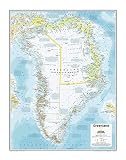
- BUILD GLOBAL AWARENESS: Perfect for the classroom! This map is the perfect tool to help students truly conceptualize the world geographically.
- CLASSIC MAP FOR OFFICE OR HOME: Perfect size for a gallery wall collection - the rich colours will add a pop to any wall!
- QUALITY PRINT: Printed on thick paper suitable for display on your home, school or office wall.
- ICONIC CARTOGRAPHY: National Geographic's maps are the standard others are measured against. You can count on this product having the highest quality content and display in the industry.
- TRUSTED CONTENT: National Geographic prides itself on the calibre and rigour of its editorial process so that you can count on having accurate information on every map
In contrast, renewable energy potential, particularly hydropower, is more tangible. Abundant meltwater and elevation gradients create conditions suitable for large-scale hydroelectric generation. Such capacity could support energy-intensive mineral processing, reducing reliance on imported fuels and improving project economics over time.
Regulatory, Environmental, and Political Constraints
Resource development in Greenland is governed by a complex balance between local autonomy, Danish oversight, and international pressure. Environmental standards are stringent, reflecting both ecological vulnerability and political preferences within Greenlandic society. These constraints slow project timelines but also reduce the risk of abrupt regulatory reversals, a factor relevant for long-duration capital allocation.
The net result is that Greenland’s resource wealth should be viewed as strategic depth rather than immediate output. Its importance lies in diversification, resilience, and future leverage within global supply chains. This distinction is critical for separating political rhetoric from realistic economic impact, particularly when assessing implications for global markets and long-term investors.
The China Factor: Supply Chains, Strategic Minerals, and Quiet Competition
Greenland’s strategic relevance increases materially when viewed through the lens of global supply chain concentration. While the island’s resource base is not immediately commercial, its potential intersects directly with China’s dominant position in critical mineral processing. This dynamic shifts Greenland from a remote territory into a latent variable in great-power competition over industrial inputs.
China’s Role in Critical Mineral Supply Chains
China currently controls a significant share of global rare earth element processing, not merely extraction. Rare earth elements are a group of metals essential for advanced electronics, defense systems, electric vehicles, and renewable energy technologies. Control over processing capacity allows China to influence pricing, availability, and downstream manufacturing leverage, regardless of where the raw material is mined.
This dominance has been reinforced through long-term state planning, subsidized capital, and integration between mining, refining, and manufacturing. As a result, non-Chinese producers often remain dependent on Chinese facilities to convert raw ore into usable materials. From a geopolitical standpoint, this creates supply chain vulnerability rather than simple commodity exposure.
Greenland as a Supply Chain Diversification Option
Against this backdrop, Greenland’s mineral deposits take on strategic significance despite their developmental challenges. Even modest production could contribute to diversification away from concentrated processing networks. For Western economies, diversification reduces geopolitical risk, defined as the potential for political actions to disrupt economic flows.
Do these 3 things before closing this tab:
1Clear out junk files and repair common Windows errors2Fix the driver behind crashes, sound loss and screen glitches3Repair Windows errors before they cause bigger problemsImportantly, diversification does not require Greenland to become a dominant supplier. The existence of alternative sources can alter bargaining power and reduce the credibility of supply disruptions as a policy tool. This logic explains why state-backed interest often precedes commercial viability in frontier resource regions.
Chinese Investment Strategy and Regulatory Friction
China has previously pursued upstream investment in Greenlandic mining projects, particularly those involving rare earth elements. These efforts typically focus on securing long-term access rather than short-term profitability. Such investments align with China’s broader strategy of embedding itself early in resource development phases globally.
However, regulatory scrutiny has intensified. Greenlandic authorities, in coordination with Danish and allied security concerns, have imposed tighter oversight on foreign ownership and project control. The result is not outright exclusion, but a narrowing of acceptable participation, particularly in assets with dual-use implications for civilian and military applications.
Quiet Competition Beneath the Political Noise
Unlike overt military posturing, competition in Greenland largely unfolds through permitting decisions, infrastructure financing, and processing location choices. These mechanisms operate below public attention yet shape long-term supply chain architecture. Decisions about where minerals are refined often matter more than where they are extracted.
Free tools Windows power users keep installed
One-click scans. No signup required.
For markets, this implies that Greenland’s relevance is structural rather than cyclical. Its value lies in optionality within strategic supply chains, not near-term volume contributions. Understanding this distinction helps separate geopolitical signaling from the slower, more consequential reconfiguration of global industrial dependencies.
Economic Reality Check: Can Greenland’s Resources Actually Be Profitable?
The strategic logic outlined previously does not automatically translate into commercial viability. Resource extraction is governed by cost structures, price cycles, and logistical constraints that are largely indifferent to geopolitical signaling. Assessing Greenland’s economic potential requires separating theoretical resource endowment from the practical realities of extraction, processing, and market integration.
Geology Versus Economics
Greenland is widely understood to possess deposits of rare earth elements, uranium, zinc, nickel, and iron ore. A mineral deposit, however, is not the same as an economically recoverable reserve. A reserve exists only when extraction can be performed profitably under current or reasonably expected market conditions.
Many Greenlandic deposits are geologically complex, meaning minerals are dispersed in lower concentrations or mixed with radioactive byproducts. This raises extraction and processing costs, often to levels that challenge global competitiveness. In commodity markets, marginal cost positioning determines long-term survival, not strategic interest alone.
Infrastructure Deficits and Capital Intensity
Mining in Greenland faces an unusually high capital expenditure burden. Capital expenditure refers to the upfront investment required to build mines, ports, power generation, and transport infrastructure before any revenue is generated. Greenland lacks roads, rail networks, deep-water ports, and grid-scale energy systems near most known deposits.
As a result, mining projects must internalize infrastructure costs that are externalized in more developed jurisdictions. This significantly raises project breakeven prices, defined as the commodity price needed to cover operating and capital costs. Even modest overruns can render projects uneconomic.
Climate, Labor, and Operating Costs
Arctic conditions impose additional operating expenses. Short construction seasons, extreme weather, and permafrost instability complicate both mine development and ongoing operations. These factors increase maintenance costs and raise insurance and financing premiums.
Labor presents another constraint. Greenland’s small population limits the availability of skilled workers, necessitating fly-in labor models. This increases wage costs and logistical complexity, further eroding operating margins compared to lower-latitude mining regions.
Outdated Drivers Are Slowing You Down
One free scan finds every outdated or missing driver and matches the right update for your exact hardware.Free scan · exact hardware matchWindows Errors? Fix Them Before They Spread
Repair common Windows errors and clear accumulated junk for a smoother, more stable PC - no reinstall needed.Free scan · no reinstallPrice Volatility and Market Scale
Critical minerals, particularly rare earth elements, exhibit significant price volatility. Prices are often influenced by policy decisions, export controls, and episodic supply disruptions rather than stable demand growth. This volatility complicates long-term project financing, which depends on predictable cash flows.
Moreover, global markets for many of these minerals are relatively small. Even a single new project can shift supply-demand balances, pressuring prices downward. Greenland’s potential production, while strategically meaningful, could struggle to achieve scale without undermining its own economics.
Rank #3
Processing Bottlenecks and Value Capture
Extraction is only one stage of the value chain. For rare earth elements, the most capital-intensive and environmentally sensitive step is separation and refining. These processes are currently dominated by facilities in China, where decades of investment have driven down unit costs.
If Greenland exports raw concentrates for overseas processing, much of the value-added accrues elsewhere. Establishing domestic or allied processing capacity would improve strategic resilience but significantly raises costs. This trade-off highlights the tension between economic efficiency and supply chain security.
Free tools Windows power users keep installed
One-click scans. No signup required.
Regulatory and Environmental Constraints
Greenland maintains stringent environmental standards, reflecting both local priorities and broader European regulatory norms. Environmental impact assessments, community consultations, and remediation requirements lengthen project timelines and increase compliance costs. These factors are not anomalies but structural features of operating in advanced regulatory environments.
From a financial perspective, longer timelines reduce the net present value of projects. Net present value is a method of valuing future cash flows in today’s terms, accounting for risk and time. Delays disproportionately harm capital-intensive projects with long payback periods.
The Role of State Support
Given these challenges, purely market-driven profitability is difficult under current conditions. State involvement often becomes decisive, whether through direct subsidies, loan guarantees, infrastructure co-investment, or long-term offtake agreements. An offtake agreement commits a buyer to purchase future output at predefined terms, reducing revenue uncertainty.
This explains why interest in Greenland often originates from governments rather than private firms. Strategic objectives can justify lower financial returns, particularly when supply security, defense readiness, or alliance considerations are prioritized over shareholder value.
Strategic Value Versus Commercial Reality
Military rhetoric and acquisition narratives can obscure these underlying economics. Control over territory does not automatically translate into economically viable resource production. Without sustained policy support, Greenland’s resources remain expensive options rather than competitive suppliers.
For markets, the implication is nuanced. Greenland matters less as an imminent source of commodities and more as a strategic contingency. Its economic relevance depends on future price environments, technological advances, and the willingness of states to absorb costs that private capital cannot justify alone.
Denmark, NATO, and International Law: What Military Action Would Really Mean
Any discussion of military action in Greenland must begin with sovereignty. Greenland is an autonomous territory within the Kingdom of Denmark, which retains authority over defense and foreign policy. Denmark is a founding member of NATO, making any hostile action against its territory legally and strategically consequential far beyond bilateral relations.
NATO Commitments and Alliance Constraints
Under Article 5 of the North Atlantic Treaty, an armed attack against one member is considered an attack against all. While the interpretation and response are ultimately political, the legal framework is explicit. Military action against Greenland would therefore implicate the entire alliance, including the United States itself, fundamentally altering the cost-benefit calculus.
The Tool Desk
Outbyte Driver Updater FREEScan for outdated or missing drivers - takes under a minuteDriver Scan →Outbyte PC Repair FREERepair Windows errors before they cause bigger problemsFix Now →NATO’s credibility rests on the consistency of this commitment. Any perceived exception for Greenland would weaken deterrence across Europe and the Arctic, a region where alliance cohesion is already under pressure from increased Russian and Chinese activity.
Existing U.S. Military Presence and Legal Access
The United States already maintains a significant military footprint in Greenland through Pituffik Space Base, formerly Thule Air Base. This presence operates under long-standing defense agreements with Denmark, granting the U.S. extensive access without challenging Danish sovereignty. From a defense perspective, this arrangement already delivers most of Greenland’s strategic military value.
Because access is secured through treaties, military force would add little operational advantage. Instead, it would introduce legal disputes, alliance friction, and reputational costs that outweigh any incremental control over territory or infrastructure.
International Law and the Use of Force
The United Nations Charter restricts the use of force to self-defense or actions authorized by the UN Security Council. Greenland poses no military threat that would plausibly justify unilateral self-defense claims. Absent UN authorization, military action would constitute a breach of international law, exposing participants to sanctions, legal challenges, and diplomatic isolation.
What’s actually slowing this PC down?
Pick the symptom - the matching free tool is one click away.
For markets, violations of international law are not abstract principles. They increase geopolitical risk premiums, disrupt trade relationships, and raise borrowing costs for states involved, particularly when actions undermine treaty-based global order.
Self-Determination and Political Reality
Greenland’s population has a recognized right to self-determination under international law. While full independence remains a long-term debate, public opinion strongly favors autonomy and partnership-based development rather than coercive control. Any attempt to impose external authority would likely face local resistance and prolonged political instability.
Such instability matters economically. Resource development depends on predictable governance, social license to operate, and long-term regulatory continuity. Military coercion undermines all three, further delaying any realistic pathway to commercial extraction.
Strategic Signaling Versus Practical Outcomes
Military rhetoric often functions as signaling rather than policy. In Greenland’s case, signaling resolve or strategic interest may aim to deter rivals or influence negotiations. However, translating rhetoric into action would trigger alliance mechanisms and legal consequences that sharply constrain policy options.
Crashes, No Sound, or Screen Glitches?
Random freezes, missing sound and display glitches usually trace back to one bad driver. Find and replace yours safely.Free scan · under a minutePC Slower Than It Used to Be?
A free scan shows the junk files, broken settings and background clutter dragging Windows down - then fixes them in one click.Free scan · Windows 10 & 11For global markets and long-term investors, the key takeaway is structural. Greenland’s strategic value is already embedded in existing defense arrangements. Escalatory actions would not unlock resources or accelerate development; they would primarily reprice geopolitical risk across the Arctic and NATO-aligned economies.
Independent reader supportYour contribution helps us test, update, and keep practical guides available for everyone.Market Implications: Who Wins and Loses from Arctic Militarization and Resource Development
The economic consequences of Arctic militarization differ sharply from the long-term economics of Arctic resource development. Markets tend to reward near-term defense spending while penalizing uncertainty in capital-intensive extraction industries. Understanding this divergence is essential for separating political signaling from durable investment outcomes.
Defense and Security Industries: Clear Near-Term Beneficiaries
Heightened Arctic tensions would likely increase defense spending among NATO members, particularly on missile defense, surveillance, naval assets, and satellite infrastructure. These expenditures are politically resilient because they are framed as national security necessities rather than discretionary investments.
From a market perspective, defense outlays generate predictable cash flows backed by government budgets. This contrasts with resource projects, which face commodity price volatility and long development timelines. As a result, militarization tends to benefit defense contractors before any broader economic gains materialize.
Shipping, Insurance, and Arctic Logistics: Gains Offset by Risk Pricing
Melting ice has expanded seasonal Arctic shipping routes, reducing transit times between Europe and Asia. Militarization, however, raises operational risk, prompting insurers to increase premiums or restrict coverage. Insurance premiums are the cost of transferring risk from operators to insurers, and they rise sharply when geopolitical uncertainty increases.
Higher insurance costs can offset fuel and time savings from Arctic routes, limiting their commercial appeal. Shipping firms may gain strategic optionality but face thinner margins unless stability improves.
Energy and Mining: Long-Term Potential, Short-Term Headwinds
Greenland’s subsurface wealth, including rare earth elements, uranium, and hydrocarbons, remains economically constrained. Development requires substantial capital expenditure, meaning large upfront investments with returns expected years or decades later. Such projects depend on regulatory stability, local consent, and predictable export access.
Military coercion undermines these prerequisites. Rather than accelerating extraction, militarization increases the geopolitical risk premium, defined as the additional return investors demand to compensate for political and security uncertainty. Higher risk premiums raise financing costs, delaying or canceling projects.
Do these 3 things before closing this tab:
1Clear out junk files and repair common Windows errors2Scan for outdated or missing drivers - takes under a minute3Repair Windows errors before they cause bigger problemsRare Earth Supply Chains: Strategic Interest Does Not Equal Market Control
Rare earth elements are critical inputs for electronics, defense systems, and renewable energy technologies. Greenland is often framed as a potential alternative to China-dominated supply chains. However, mining alone does not create supply security; processing and refining capacity matter more and remain concentrated in Asia.
Absent large-scale downstream investment, Greenland would function primarily as a raw material exporter. Militarization does not solve this bottleneck and may discourage the international partnerships required to build integrated supply chains.
Greenland and Denmark: Fiscal Exposure Without Guaranteed Returns
For Greenland, militarization increases political risk without ensuring economic upside. Public revenues depend heavily on Danish fiscal transfers, and abrupt geopolitical shifts could strain this relationship. Economic gains from resources would materialize only after long development periods and under cooperative governance.
Denmark, as the administering state, would face higher defense obligations and potential diplomatic costs within the European Union and NATO. These pressures can affect sovereign borrowing costs, which reflect investor perceptions of fiscal and geopolitical stability.
Quick wins for a faster PC:
Scan for outdated or missing drivers - takes under a minuteDriver Scan →Clear out junk files and repair common Windows errorsFree Scan →Fix the driver behind crashes, sound loss and screen glitchesFind Drivers →Global Investors: Risk Repricing Rather Than Value Creation
For diversified investors, Arctic militarization primarily triggers repricing rather than new growth. Repricing occurs when assets are revalued due to changes in perceived risk rather than changes in underlying productivity. This typically benefits defensive sectors while weighing on long-duration, capital-intensive investments.
The structural takeaway is that security-driven actions redistribute returns rather than expand them. Markets reward stability and legal continuity; they penalize uncertainty, even when that uncertainty is framed as strategic ambition.
Separating Rhetoric from Risk: What Long-Term Investors Should Watch Next
Political statements about Greenland often blend symbolic posturing with legitimate strategic concerns. The critical task for investors and policy-aware observers is distinguishing near-term rhetoric from variables that can alter long-run economic outcomes. This requires attention to institutional signals, capital flows, and alliance behavior rather than headline-driven speculation.
Policy Follow-Through Matters More Than Political Language
The most reliable indicator of material change is not rhetoric but legislative and budgetary action. Defense appropriations, bilateral agreements with Denmark, or revisions to Arctic security doctrines would signal commitment beyond campaign positioning. Absent these steps, geopolitical statements remain low-probability drivers of sustained market impact.
Long-term investors typically discount isolated political remarks unless they translate into binding policy. Markets respond to execution, not intent, especially when execution requires multilateral coordination.
Timelines and Capital Intensity Limit Near-Term Outcomes
Resource development in Greenland operates on multi-decade timelines due to environmental constraints, infrastructure scarcity, and regulatory oversight. Capital intensity refers to projects that require large upfront investment before generating returns, a characteristic common to mining and Arctic logistics. These features inherently slow the translation of strategic interest into economic output.
As a result, even genuine shifts in Arctic strategy are unlikely to alter global commodity balances or defense supply chains in the near term. This temporal mismatch reduces the relevance of short-term geopolitical escalation for long-horizon valuations.
Alliances and Legal Frameworks Are the Binding Constraint
Greenland’s strategic value is embedded within NATO and Danish sovereignty, not unilateral control. Any attempt to alter its status would require extensive alliance consultation and adherence to international law. These frameworks act as stabilizers, limiting abrupt changes that could disrupt markets.
For investors, this reinforces the importance of institutional continuity. Legal predictability and alliance cohesion tend to cap both upside speculation and downside risk tied to geopolitical shocks.
Risk Signals to Monitor Going Forward
The variables most likely to influence long-term risk pricing include Arctic infrastructure spending, shifts in NATO force posture, and changes in environmental permitting regimes. Monitoring sovereign credit spreads, which reflect the cost at which governments borrow, can also reveal whether markets perceive rising geopolitical strain.
Absent deterioration in these indicators, Greenland-related developments are more likely to remain a background risk factor rather than a central driver of asset performance.
Final Perspective: Strategic Geography Does Not Guarantee Economic Transformation
Greenland’s geography confers strategic relevance, but relevance alone does not create durable economic value. Military interest, resource potential, and Arctic access interact within tight legal, environmental, and financial constraints. These constraints favor gradual evolution over disruptive change.
For long-term investors, the core lesson is analytical discipline. Separating rhetoric from risk requires focusing on structural signals, not strategic narratives, and recognizing that in global markets, stability remains the scarcest and most valuable asset.
Quick Recap
Product prices and availability are accurate as of the date/time indicated and are subject to change. Any price and availability information displayed on Amazon at the time of purchase will apply.




