Free tools Windows power users keep installed
One-click scans. No signup required.
The term “US–China trade war” refers to a sustained and strategic use of economic policy tools by the world’s two largest economies to alter trade flows, production decisions, and technological leadership. It is not a single event or tariff increase, but an evolving confrontation that blends trade policy, industrial strategy, and national security concerns. Because the United States and China sit at the center of global supply chains, actions taken by either country transmit quickly into prices, corporate earnings, investment decisions, and economic growth worldwide.
At its core, the trade war marks a shift away from the post-World War II model of steadily expanding global trade under shared rules. Instead, economic interdependence is increasingly treated as a source of vulnerability rather than mutual gain. This change matters for investors and businesses because it alters long-term assumptions about costs, market access, and where economic growth will originate.


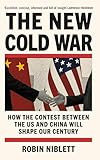


Tariffs as the Opening Instrument
Tariffs are taxes imposed on imported goods, typically expressed as a percentage of the product’s value. The US–China trade war began visibly with broad-based tariffs on hundreds of billions of dollars of bilateral trade, aimed at pressuring firms and governments by raising import costs. For companies, tariffs function like a negative supply shock, increasing input prices and squeezing profit margins unless costs can be passed on to consumers.
The inflationary effect of tariffs depends on market structure and competition. In sectors with few alternative suppliers, higher import costs tend to translate into higher consumer prices, contributing to inflation. Where substitution is easier, firms may relocate production, absorb losses, or redesign supply chains, often at the expense of efficiency and short-term growth.
Recommended Free Tools
Non-Tariff Barriers and Economic Leverage
Beyond tariffs, both countries have employed non-tariff barriers, which are policies that restrict trade without directly taxing imports. These include export controls, licensing requirements, regulatory inspections, and restrictions on government procurement. Such measures are less visible but often more disruptive, as they can halt trade entirely in critical components or services.
Non-tariff barriers introduce uncertainty rather than just higher costs. Uncertainty discourages capital investment, particularly in industries with long planning horizons such as semiconductors, energy infrastructure, and advanced manufacturing. Over time, this weighs on productivity growth and employment, even in sectors not directly targeted by policy actions.
Technology Controls and Strategic Decoupling
The most structurally significant phase of the trade war involves technology restrictions, often described as “tech decoupling.” Decoupling refers to the deliberate separation of supply chains, standards, and innovation ecosystems between the United States and China. Export controls on advanced semiconductors, artificial intelligence tools, and manufacturing equipment are designed to limit China’s access to frontier technologies with military or strategic value.
Technology decoupling reshapes corporate profitability and global innovation. Firms face higher research and development costs as they duplicate supply chains or redesign products to meet different regulatory regimes. Over the long run, this may slow global technological diffusion, reduce economies of scale, and fragment global markets into competing blocs.
From Trade Dispute to Structural Economic Shift
What distinguishes the US–China trade war from past trade disputes is its durability and scope. The conflict increasingly targets the structure of each economy rather than discrete trade imbalances. For the United States, the focus is on supply chain resilience, domestic manufacturing, and strategic industries. For China, it reinforces a push toward self-sufficiency and domestic innovation.
This structural shift has global consequences. Countries integrated into US–China supply chains must adapt by choosing sides, diversifying trade partners, or absorbing higher costs. The result is a world economy that is less integrated, potentially more inflation-prone, and characterized by slower but more regionally concentrated growth.
How Global Supply Chains Are Rewired: Costs, Reshoring, and the Rise of “China+1”
As technology decoupling accelerates, firms are restructuring physical supply chains to reduce exposure to geopolitical risk. This process goes beyond tariffs and export controls, reshaping where goods are produced, how inventories are managed, and which countries capture future investment. The result is a reconfiguration that prioritizes resilience over pure cost efficiency.
Higher Costs and the End of Hyper-Efficient Globalization
For decades, global supply chains were optimized to minimize unit costs through specialization and scale. That model relied on predictable trade rules, low tariffs, and frictionless logistics, particularly between the United States and China. The trade war introduces persistent uncertainty, forcing firms to accept higher operating costs as a trade-off for stability.
These costs emerge through several channels. Companies face tariffs, compliance expenses, duplicated suppliers, and higher transportation costs as production footprints expand. Over time, these pressures contribute to structurally higher inflation, particularly for manufactured goods, even if short-term price effects fluctuate with demand cycles.
Reshoring and Nearshoring: Strategic but Selective
Reshoring refers to bringing production back to a firm’s home country, while nearshoring shifts production to nearby or politically aligned economies. In the United States, policy incentives and security concerns have encouraged reshoring in semiconductors, defense-related manufacturing, and critical inputs. However, reshoring is capital-intensive and labor-constrained, limiting its scope.
As a result, employment effects are uneven. High-skill manufacturing and engineering jobs may expand, but labor-intensive assembly often remains offshore due to cost differentials. For corporate profitability, margins are pressured in the short run by higher fixed investment, with long-term returns depending on productivity gains and policy stability.
The Rise of “China+1” as a Risk Management Strategy
Rather than exiting China entirely, many multinational firms are adopting a “China+1” strategy. This approach maintains a core presence in China while adding production capacity in alternative locations such as Vietnam, India, Mexico, or Indonesia. The goal is diversification, not full disengagement.
PC Slower Than It Used to Be?
A free scan shows the junk files, broken settings and background clutter dragging Windows down - then fixes them in one click.Free scan · Windows 10 & 11Crashes, No Sound, or Screen Glitches?
Random freezes, missing sound and display glitches usually trace back to one bad driver. Find and replace yours safely.Free scan · under a minuteChina+1 reflects the reality that China retains advantages in infrastructure, supplier ecosystems, and skilled labor. However, incremental investment is increasingly directed elsewhere to hedge against tariffs, sanctions, or sudden regulatory shifts. This gradual reallocation reshapes global trade flows without triggering abrupt supply disruptions.
Implications for Growth and Corporate Strategy
For the global economy, supply chain diversification reduces vulnerability to shocks but lowers aggregate efficiency. Duplicated capacity and smaller production runs weaken economies of scale, contributing to slower trend growth. These effects are most pronounced in sectors reliant on complex, cross-border inputs such as electronics and automotive manufacturing.
Firms respond by redesigning products, standardizing components, and holding higher inventories, all of which affect working capital and return on invested capital. Over time, corporate strategies shift from cost minimization toward geopolitical risk management as a core business function.
Long-Term Structural Consequences and Future Scenarios
If trade tensions persist, global supply chains may evolve into semi-regional blocs aligned with major economic powers. The United States and its partners could deepen integration within North America and allied economies, while China strengthens regional networks and domestic substitution. This bifurcation would further entrench differences in standards, technology platforms, and trade rules.
Quick wins for a faster PC:
Repair Windows errors before they cause bigger problemsFix Now →Fix the driver behind crashes, sound loss and screen glitchesFind Drivers →Alternatively, a partial stabilization could preserve interdependence in non-strategic sectors while maintaining strict controls on advanced technologies. In either scenario, the era of seamless global manufacturing is unlikely to return. Supply chains are becoming less global, more redundant, and more sensitive to political risk, fundamentally altering how growth, inflation, and competitiveness are shaped across the world economy.
Inflation, Prices, and Purchasing Power: Who Ultimately Pays the Tariffs?
As supply chains become more fragmented and less efficient, the inflationary consequences of trade conflict move from theory to household balance sheets. Tariffs operate as taxes on imported goods, but their economic burden rarely stops at the border. Instead, the costs are transmitted through prices, wages, and profits, shaping purchasing power across the economy.
Tariff Incidence and Price Pass-Through
The key question is tariff incidence, which refers to how the economic burden of a tax is distributed among consumers, producers, and intermediaries. While tariffs are legally paid by importers, the actual cost depends on price pass-through, or the extent to which higher import costs are reflected in final prices. Empirical evidence from the US-China trade war shows that a substantial share of tariffs on Chinese goods was passed on to US buyers rather than absorbed by foreign exporters.
Pass-through is highest when goods have few close substitutes or are embedded in complex supply chains. Intermediate inputs, such as electronic components or industrial machinery, are particularly prone to price transmission. As these higher costs cascade through production, they affect a wide range of downstream goods beyond the targeted imports.
Rank #2
Consumer Prices, Input Costs, and Measured Inflation
For consumers, tariffs exert upward pressure on the Consumer Price Index (CPI), a standard measure of average price changes paid by households. The impact is uneven, with larger effects on durable goods, household equipment, and products with high import content. Even when final consumer prices rise modestly, underlying input cost inflation can be significantly higher.
At the producer level, tariffs raise the Producer Price Index (PPI), which tracks prices received by firms for their output. Higher PPI readings often precede consumer inflation, especially when firms regain pricing power. In an environment of supply chain redundancy and reduced competition, firms are more likely to pass costs forward rather than absorb them through lower margins.
Exchange Rates, Substitution, and Hidden Inflation
Exchange rate movements can partially offset or amplify tariff effects. A depreciation of the exporting country’s currency lowers the foreign-currency price of goods, dampening the tariff’s impact. During the trade war, movements in the renminbi offset some, but not all, of the price increases faced by US importers.
Substitution also alters how inflation is experienced rather than eliminated. Consumers may switch to non-tariffed or domestically produced alternatives, but these options are often more expensive or lower quality. The result is a decline in real purchasing power, even if headline inflation measures understate the loss in consumer welfare.
Do these 3 things before closing this tab:
1Repair Windows errors before they cause bigger problems2Fix the driver behind crashes, sound loss and screen glitches3Clear out junk files and repair common Windows errorsCorporate Margins, Wages, and Employment Trade-Offs
Firms confronted with higher input costs face a three-way trade-off: raise prices, compress profit margins, or cut costs elsewhere. In competitive sectors, margins are often squeezed, reducing profitability and investment capacity. Over time, weaker investment can slow productivity growth, reinforcing inflationary pressures through higher unit labor costs.
Wage effects are indirect but significant. While tariffs are sometimes framed as protecting domestic jobs, higher prices reduce real wages unless nominal pay rises proportionally. For many households, especially lower-income consumers who spend a larger share of income on traded goods, tariffs function as a regressive tax that erodes purchasing power.
Who Pays in the Long Run
In the short term, consumers and importing firms bear most of the cost of tariffs through higher prices and lower margins. Exporters may absorb some losses through reduced volumes or price concessions, particularly in highly competitive markets. Governments collect tariff revenue, but this income is typically outweighed by broader economic distortions.
Over the long run, the cumulative effect of tariffs, supply chain reconfiguration, and reduced efficiency raises the economy’s price level relative to its productive capacity. Inflation becomes less about cyclical demand and more about structural constraints. In this sense, the ultimate cost of the trade war is paid diffusely, through slower real income growth and diminished purchasing power across the economy.
The Tool Desk
Outbyte Driver Updater FREEFix the driver behind crashes, sound loss and screen glitchesFind Drivers →Outbyte PC Repair FREEClear out junk files and repair common Windows errorsFree Scan →Growth and Employment Effects in the US and China: Winners, Losers, and Regional Shifts
The inflationary and cost pressures described above translate directly into changes in economic growth and labor market outcomes. Rather than producing uniform gains or losses, the US-China trade war reshapes growth paths by reallocating resources across sectors, regions, and countries. The central economic effect is not broad-based job creation, but structural adjustment with uneven distributional consequences.
Aggregate Growth Effects and Productivity
At the macroeconomic level, tariffs act as a negative supply shock, meaning they raise production costs and reduce the economy’s efficient output. In both the US and China, this tends to lower potential growth, defined as the maximum sustainable level of economic output without generating inflation. Slower productivity growth, driven by disrupted supply chains and reduced competitive pressure, compounds these effects over time.
Empirical studies generally find modest but persistent reductions in GDP growth for both economies relative to a no-trade-war baseline. These losses are often small in annual terms but accumulate through weaker investment, slower capital formation, and reduced innovation. Growth does not collapse, but it becomes less dynamic and more domestically constrained.
Employment Effects in the United States: Sectoral Reallocation, Not Net Gains
In the United States, employment effects are concentrated in manufacturing and trade-exposed industries. Tariff protection can temporarily stabilize or expand employment in specific sectors such as steel, aluminum, or selected machinery industries. However, these gains are often offset by job losses in downstream industries that rely on imported inputs, including automotive production, construction, and capital goods manufacturing.
Labor markets adjust primarily through reallocation rather than expansion. Workers in protected sectors may experience improved job security, while workers in downstream or export-oriented firms face layoffs or wage pressure. Because labor mobility across regions and industries is imperfect, these adjustments can result in localized unemployment and prolonged earnings losses for displaced workers.
China’s Growth and Employment Adjustment Mechanisms
China’s economy absorbs trade shocks differently due to stronger state involvement and a larger role for public investment. Export-oriented manufacturing sectors experience reduced external demand, particularly in electronics, machinery, and intermediate goods tied to US supply chains. This dampens employment growth in coastal manufacturing hubs that are most integrated into global trade.
At the same time, policy responses redirect resources toward domestic infrastructure, advanced manufacturing, and services. These measures cushion aggregate employment but do not fully replace the productivity benefits of export-led growth. Over the long run, the trade war accelerates China’s shift toward domestic demand and technological self-sufficiency, albeit at the cost of slower overall growth.
Regional Disparities Within Both Economies
The employment impact of the trade war is highly uneven across regions. In the United States, regions with heavy exposure to export markets or complex supply chains, such as the Midwest manufacturing corridor, experience greater volatility. Areas with diversified service-based economies are relatively insulated, reinforcing pre-existing regional inequality.
In China, coastal provinces with dense export infrastructure bear the brunt of reduced trade flows, while inland regions benefit marginally from state-led investment rebalancing. This spatial redistribution of economic activity reflects policy priorities rather than market efficiency, which can reduce overall productivity growth.
Global Spillovers and the Emergence of Third-Country Winners
Some production and employment shift away from both the US and China toward third countries. Nations such as Mexico, Vietnam, and parts of Southeast Asia capture manufacturing activity as firms seek to bypass tariffs through supply chain relocation. These gains, however, reflect diversion rather than expansion of global trade and often come with higher logistical costs.
From a global perspective, employment is redistributed rather than increased. The trade war fragments production networks that previously maximized efficiency, leading to a world economy that employs labor less productively. The result is slower global growth, greater regional divergence, and labor market outcomes increasingly shaped by trade policy rather than comparative advantage.
Corporate Profits, Investment, and Market Structure: How Firms Adapt—or Fail
As employment and production patterns adjust across regions and countries, the trade war’s deeper effects emerge within firms themselves. Tariffs, export controls, and policy uncertainty directly reshape corporate profit margins, capital allocation decisions, and competitive dynamics. These firm-level responses ultimately determine how durable the macroeconomic adjustments will be.
What’s actually slowing this PC down?
Pick the symptom - the matching free tool is one click away.
Profit Margins Under Cost Pressure
Tariffs function as taxes on cross-border transactions, raising input costs for firms embedded in global supply chains. For manufacturers and retailers reliant on imported intermediate goods, higher costs compress profit margins unless they can pass these costs on to consumers through higher prices. The ability to do so depends on market power, defined as a firm’s capacity to influence prices without losing customers.
Large firms with strong brands or limited competition are more likely to preserve margins, while smaller firms operating in highly competitive markets face sharper profitability declines. Over time, this uneven pressure accelerates consolidation, as weaker firms exit or are absorbed by larger competitors.
Investment Retrenchment and Reallocation
Heightened trade uncertainty discourages long-term investment, particularly in capital-intensive industries such as advanced manufacturing and technology hardware. Firms delay or cancel projects when future market access, input costs, or regulatory conditions become unpredictable. This reduction in capital expenditure slows productivity growth, as fewer resources are devoted to upgrading equipment or adopting new technologies.
At the same time, investment is reallocated geographically rather than expanded. Multinational firms diversify production across multiple countries to reduce exposure to bilateral tariffs, often accepting higher operating costs in exchange for policy resilience. This fragmentation prioritizes risk management over efficiency, lowering the overall return on global investment.
Do these 3 things before closing this tab:
1Fix the driver behind crashes, sound loss and screen glitches2Repair Windows errors before they cause bigger problems3Scan for outdated or missing drivers - takes under a minuteSupply Chain Restructuring and Market Fragmentation
The trade war accelerates the shift from globally integrated supply chains toward regionally segmented production networks. Instead of a single optimized supply chain, firms develop parallel systems serving different markets, increasing redundancy. While this approach reduces vulnerability to trade disruptions, it raises fixed costs and diminishes economies of scale, which are cost advantages gained from producing at larger volumes.
Market fragmentation also weakens competitive pressure. When firms operate within more protected or segmented markets, price competition declines, contributing to higher markups and persistent inflationary pressures. These effects are particularly visible in sectors with high regulatory barriers or strategic importance, such as semiconductors, telecommunications equipment, and industrial machinery.
Innovation, Technology, and Strategic Decoupling
Export controls and restrictions on technology transfer alter corporate innovation strategies. In the United States, firms with global research and development networks face limits on collaboration and market access, reducing the payoff from large-scale innovation. In China, policy-driven self-sufficiency initiatives redirect corporate resources toward domestic alternatives, sometimes duplicating existing technologies rather than advancing new ones.
This form of strategic decoupling slows the global diffusion of innovation. When knowledge flows are constrained by policy rather than determined by comparative advantage, technological progress becomes more expensive and uneven. Over time, this reduces total factor productivity, a measure of how efficiently labor and capital are used together, in both economies.
Long-Term Market Structure and Competitive Outcomes
The cumulative effect of profit compression, altered investment patterns, and supply chain fragmentation reshapes market structure. Industries increasingly favor large, well-capitalized firms capable of absorbing shocks, navigating regulatory complexity, and operating across multiple jurisdictions. Smaller firms, lacking scale or political leverage, face higher failure rates or permanent exclusion from global markets.
These structural shifts have lasting implications beyond the trade war itself. Corporate strategies become more inward-looking, global competition weakens, and economic outcomes are increasingly shaped by policy alignment rather than efficiency. In this environment, long-term growth depends less on innovation-driven expansion and more on strategic positioning within an increasingly politicized global economy.
Financial Markets and Capital Flows: Currencies, Rates, and Risk Premia
The structural shifts described above transmit quickly into financial markets. As trade barriers, technology controls, and industrial policies reshape real economic activity, investors reassess growth prospects, inflation dynamics, and political risk. These reassessments influence exchange rates, interest rates, and the compensation investors demand for holding risk, known as risk premia.
Exchange Rates and Trade-Induced Currency Pressures
Trade conflict alters currency valuations by changing trade balances, capital flows, and monetary policy expectations. When tariffs reduce export competitiveness or disrupt supply chains, affected currencies may face depreciation pressure as foreign demand weakens. At the same time, policy uncertainty can trigger capital outflows, amplifying exchange rate volatility.
In the US-China context, exchange rate management becomes a strategic tool rather than a market outcome alone. China’s authorities retain administrative influence over the renminbi, allowing them to smooth shocks or offset tariff effects, while the US dollar often strengthens during periods of global stress due to its role as a reserve currency. This asymmetry can shift adjustment costs toward emerging markets integrated into both economies.
Interest Rates, Inflation, and Yield Curve Dynamics
Trade barriers influence interest rates primarily through their impact on inflation and growth. Tariffs raise input costs and consumer prices, creating inflationary pressure even as growth slows, a combination that complicates central bank policy. Interest rates reflect this tension, with short-term rates responding to inflation risks and long-term rates incorporating weaker growth expectations.
These forces shape the yield curve, the relationship between interest rates and bond maturities. A flatter or inverted yield curve often signals investor concern about future growth. In prolonged trade conflict scenarios, bond markets may price in structurally lower potential growth alongside persistent policy-driven inflation volatility.
Risk Premia and Asset Valuation
Risk premia represent the additional return investors require to hold assets exposed to uncertainty, such as equities, corporate bonds, or emerging market securities. Trade wars raise risk premia by increasing earnings volatility, regulatory uncertainty, and the probability of adverse policy shocks. This effect is particularly pronounced in sectors exposed to cross-border supply chains or export demand.
Higher risk premia translate into lower asset valuations, even when current profits remain stable. Equity markets may discount future cash flows more heavily, while credit markets demand higher spreads, meaning extra yield over government bonds, to compensate for perceived default risk. Over time, this raises financing costs for firms and reinforces the investment slowdown observed in the real economy.
Capital Flows, Fragmentation, and Financial Decoupling
As geopolitical considerations increasingly shape investment decisions, global capital flows become more fragmented. Cross-border portfolio investment, such as holdings of stocks and bonds, grows more sensitive to political alignment and regulatory risk. Direct investment, including factory construction or acquisitions, shifts toward jurisdictions viewed as politically reliable rather than purely cost-efficient.
This process resembles financial decoupling, where capital markets become less integrated across blocs. While not a complete separation, it reduces global risk-sharing and increases funding costs for countries and firms outside core financial networks. Over time, this undermines the efficiency gains traditionally associated with open capital markets.
Potential Market Scenarios and Global Spillovers
If trade tensions stabilize but remain elevated, financial markets may adapt through persistently higher risk premia and regionally segmented capital flows. In this scenario, volatility declines, but valuations remain constrained by lower long-term growth expectations. Alternatively, renewed escalation could trigger sharp market repricing, currency misalignments, and sudden stops in capital flows to vulnerable economies.
Recommended Free Tools
For the global economy, these financial dynamics reinforce the structural changes already underway. Slower capital formation, higher financing costs, and reduced cross-border investment weaken growth potential beyond the US and China. Financial markets thus act not merely as observers of the trade war, but as amplifiers of its long-term economic consequences.
Long-Term Structural Change: Deglobalization, Industrial Policy, and Economic Blocs
The financial fragmentation described earlier feeds into deeper structural shifts in the global economy. As capital, trade, and technology flows become more politicized, firms and governments adjust not only to short-term volatility but to a redefined economic landscape. These adjustments increasingly reflect strategic considerations rather than purely market-driven efficiency.
Deglobalization and the Reconfiguration of Supply Chains
One central outcome is partial deglobalization, defined as a slowdown or reversal in the integration of global trade and production networks. Instead of maximizing efficiency through globally dispersed supply chains, firms prioritize resilience, redundancy, and political reliability. This leads to supply chains that are shorter, more regional, and often more expensive to operate.
For corporate profitability, this shift raises input costs and reduces economies of scale, which are cost advantages gained from large-scale production. While some firms can pass higher costs on to consumers, others absorb them through lower margins. At the macroeconomic level, these changes contribute to structurally higher inflation compared to the pre-trade-war era of hyper-globalization.
Free tools Windows power users keep installed
One-click scans. No signup required.
Industrial Policy and State-Led Economic Reorientation
As trade tensions persist, governments increasingly rely on industrial policy, meaning targeted state intervention to support strategic sectors such as semiconductors, energy, or advanced manufacturing. Tools include subsidies, tax incentives, domestic content requirements, and restrictions on foreign competitors. The objective is to secure supply chains, protect national security, and maintain technological leadership.
While industrial policy can stimulate domestic investment and employment in favored sectors, it also distorts resource allocation. Capital and labor may flow toward politically prioritized industries rather than those with the highest productivity potential. Over time, this can reduce overall economic efficiency and slow trend growth, even as employment rises in protected sectors.
Economic Blocs and the Fragmentation of Global Growth
The interaction of deglobalization and industrial policy accelerates the formation of economic blocs, which are clusters of countries aligned by trade rules, technology standards, and geopolitical interests. The global economy increasingly organizes around a US-centered bloc, a China-centered bloc, and a set of non-aligned or swing economies navigating between them. Trade and investment flows become denser within blocs and thinner across them.
This bloc-based structure weakens global growth by limiting specialization and reducing cross-border knowledge spillovers, which are productivity gains from shared innovation. For the United States, this may mean greater supply security but higher consumer prices and fiscal costs. For China, reduced access to advanced foreign technology and export markets constrains growth, reinforcing the shift toward domestic demand and state-led investment.
Outdated Drivers Are Slowing You Down
One free scan finds every outdated or missing driver and matches the right update for your exact hardware.Free scan · exact hardware matchPC Slower Than It Used to Be?
A free scan shows the junk files, broken settings and background clutter dragging Windows down - then fixes them in one click.Free scan · Windows 10 & 11Long-Term Implications for Employment and Global Stability
Employment effects vary across regions and sectors. Manufacturing employment may stabilize or increase in countries pursuing reshoring, but job gains are often capital-intensive and limited by automation. In contrast, export-dependent economies outside core blocs face slower growth and labor market pressure as trade and investment opportunities diminish.
At the global level, the move toward segmented economic systems reduces shock absorption and increases the risk of synchronized downturns within blocs. Growth becomes less balanced, inflation more persistent, and policy trade-offs more acute. These structural changes suggest that the US-China trade war is not a temporary disruption, but a catalyst for a lasting transformation of the world economy.
Independent reader supportYour contribution helps us test, update, and keep practical guides available for everyone.Scenario Analysis I: Managed Rivalry and Partial Decoupling
Against this backdrop of fragmentation and bloc formation, one plausible path forward is a managed rivalry between the United States and China. In this scenario, economic confrontation remains contained within defined boundaries, limiting systemic disruption while still reshaping global trade and investment patterns. The result is partial decoupling rather than a full economic rupture.
Partial decoupling refers to the selective separation of economic activity in strategically sensitive sectors, while maintaining commercial ties in less critical areas. Trade, capital flows, and technology exchange continue, but under tighter scrutiny and with greater political oversight. This approach reflects a balance between national security concerns and the economic costs of complete disengagement.
Structure of Trade and Supply Chains
Under managed rivalry, global supply chains are reconfigured rather than dismantled. Firms reduce reliance on single-country sourcing for critical inputs, a strategy often described as supply chain resilience, meaning the ability to maintain production despite disruptions. This leads to diversification across countries rather than wholesale reshoring to domestic production.
A prominent feature of this adjustment is friend-shoring, the relocation of production to politically aligned or geopolitically neutral countries. Southeast Asia, Mexico, and parts of Eastern Europe benefit as alternative manufacturing hubs, particularly for electronics, machinery, and consumer goods. China remains central to many supply chains, but its role becomes more specialized and regionally concentrated.
For multinational corporations, these changes increase operational complexity and costs. Redundant suppliers, smaller production runs, and compliance with multiple regulatory regimes reduce efficiency. However, firms gain greater continuity of supply, which becomes a priority in an environment where geopolitical risk is a persistent constraint.
Inflationary Dynamics and Cost Transmission
Managed rivalry produces moderate but persistent inflationary pressure. Tariffs, export controls, and higher logistics costs are partially passed through to consumers, a process known as tariff pass-through, where import taxes raise final prices rather than being fully absorbed by firms. This effect is uneven across sectors, with the greatest impact in goods-intensive categories.
What’s actually slowing this PC down?
Pick the symptom - the matching free tool is one click away.
Over time, inflation stabilizes at a higher average rate than during the peak of globalization. Central banks retain control over inflation expectations, but face a narrower margin for policy error. Price stability becomes harder to achieve without slowing growth, reflecting the structural shift toward higher-cost production networks.
For China, inflationary pressures are more subdued due to weaker domestic demand and greater state influence over prices. However, inefficiencies from forced substitution of foreign technology raise production costs, particularly in advanced manufacturing. These cost pressures weigh on profitability and productivity growth.
Growth and Investment Patterns
Economic growth under partial decoupling is slower but more predictable than in scenarios of acute confrontation. The United States experiences modest gains from domestic investment in strategic sectors such as semiconductors, energy infrastructure, and defense-related manufacturing. These investments support headline growth but deliver lower productivity gains than market-driven capital allocation.
Capital expenditure, defined as long-term investment in physical assets like factories and equipment, increasingly reflects policy incentives rather than pure return considerations. This reduces overall capital efficiency, meaning more investment is required to generate the same level of output. Trend growth slows even as investment volumes rise.
The Tool Desk
Outbyte Driver Updater FREEScan for outdated or missing drivers - takes under a minuteDriver Scan →Outbyte PC Repair FREERepair Windows errors before they cause bigger problemsFix Now →China’s growth model continues to pivot toward domestic demand and state-led investment. Reduced access to advanced foreign inputs limits technological upgrading, constraining long-term growth potential. In the short term, fiscal and credit support smooths the adjustment, but structural headwinds intensify.
Employment and Labor Market Effects
Labor market outcomes under managed rivalry are mixed. In the United States, manufacturing employment stabilizes or rises modestly, particularly in subsidized industries. These gains are concentrated in capital-intensive facilities, limiting broad-based job creation and reducing spillovers to local services.
Wage pressures emerge in specialized manufacturing and logistics roles, reflecting tighter labor supply and skills mismatches. At the same time, higher consumer prices erode real wage gains for lower-income households. The net effect is a more polarized labor market with uneven regional benefits.
In China, employment remains supported through public investment and state-owned enterprises. However, private-sector dynamism weakens, particularly among export-oriented firms facing constrained market access. Youth employment and entrepreneurial activity face growing pressure as growth slows.
Corporate Profitability and Market Structure
Corporate profitability adjusts unevenly across sectors and regions. Firms with pricing power, scale, or access to subsidies are better positioned to absorb higher costs. Smaller firms and those operating across multiple jurisdictions face margin compression due to compliance costs and fragmented production.
Market concentration tends to increase as large firms internalize supply chains and navigate regulatory complexity more effectively. This consolidation can stabilize profits but reduces competitive pressure, potentially dampening innovation over time. Equity markets reflect these dynamics through higher dispersion of returns across sectors.
Globally, managed rivalry reinforces a bifurcated economic structure. Cross-border efficiency gives way to political alignment as a determinant of commercial success. While this scenario avoids the sharp dislocations of full decoupling, it entrenches a slower, costlier, and more regulated global economy.
Scenario Analysis II: Escalation, Fragmentation, or a Strategic Reset
The trajectory of managed rivalry is not fixed. Policy choices, geopolitical shocks, and domestic political constraints can push the US–China relationship toward deeper confrontation, partial stabilization, or a redefined equilibrium. Each path carries distinct implications for global supply chains, inflation, growth, and the long-term structure of the world economy.
Quick wins for a faster PC:
Scan for outdated or missing drivers - takes under a minuteDriver Scan →Clear out junk files and repair common Windows errorsFree Scan →Escalation: Accelerated Decoupling and Policy-Driven Fragmentation
An escalation scenario involves broader tariffs, tighter export controls, and expanded investment restrictions. Export controls are government limits on the sale of specific technologies or inputs deemed strategically sensitive. Under this outcome, supply chains shorten abruptly as firms are forced to exit counterpart markets rather than gradually diversify.
Inflationary pressures intensify as redundancy replaces efficiency. Higher production costs, duplicated capacity, and reduced competition raise prices across manufactured goods, particularly in electronics, machinery, and consumer durables. Central banks face a more persistent trade-off between controlling inflation and supporting growth.
Economic growth slows in both economies, but asymmetrically. The United States absorbs higher costs with modest growth drag, while China faces sharper constraints on productivity due to reduced access to advanced technology and export markets. Globally, escalation reinforces a negative-sum environment where lost efficiency outweighs any national gains in resilience.
Fragmentation: Competing Blocs and Regionalized Globalization
Fragmentation reflects a world divided into loosely aligned economic blocs rather than a clean US–China split. Trade and investment increasingly follow political alignment, with standards, payment systems, and technology ecosystems diverging. Globalization does not disappear but becomes regionally segmented.
Recommended Free Tools
Supply chains reorganize around trusted networks, often referred to as “friend-shoring,” meaning production is relocated to politically aligned countries. This structure stabilizes trade flows within blocs but reduces scale efficiencies. Inflation remains structurally higher than in the pre-trade-war era, though less volatile than under outright escalation.
For employment and profits, outcomes depend on bloc position. Countries integrated into major supply networks gain investment and jobs, while non-aligned or smaller economies face exclusion risks. Corporate profitability favors firms capable of operating across regulatory regimes, reinforcing market concentration and widening cross-country inequality.
Strategic Reset: Conditional Stabilization Without Full Integration
A strategic reset entails limited de-escalation without returning to pre-2018 globalization. Tariffs remain partially in place, but enforcement becomes more predictable, and targeted agreements reduce uncertainty in areas such as climate technology, public health, or financial stability. Strategic competition persists, but with clearer boundaries.
Supply chains retain redundancy but regain some efficiency as firms plan around stable rules rather than sudden policy shifts. Inflation pressures ease relative to escalation scenarios, though prices remain higher than under full free trade. Growth outcomes improve modestly as uncertainty premia decline; an uncertainty premium is the additional cost or reduced investment caused by unpredictable policy environments.
This scenario supports a more sustainable long-term structure. The global economy remains multipolar, with the United States and China as central but constrained hubs. Innovation slows relative to hyper-globalization but benefits from reduced systemic risk and fewer abrupt disruptions.
Structural Implications and Long-Term Economic Outcomes
Across all scenarios, the trade war accelerates a shift away from efficiency-maximizing globalization toward resilience-focused economic design. Capital allocation increasingly reflects political risk alongside traditional cost considerations. This reweighting reshapes productivity trends, investment horizons, and the geography of growth.
For the United States, outcomes range from higher-cost industrial renewal to modest stabilization under a reset. China faces a more binding constraint: sustaining growth while operating within a narrower technological and trade perimeter. The global economy adapts, but at the cost of slower trend growth and persistent inflationary bias.
Ultimately, the US–China trade war is less a temporary dispute than a structural reordering of the world economy. Whether that reordering hardens into fragmentation or stabilizes into managed coexistence will determine not only trade flows, but the character of global growth for decades to come.
Do these 3 things before closing this tab:
1Scan for outdated or missing drivers - takes under a minute2Repair Windows errors before they cause bigger problems3Fix the driver behind crashes, sound loss and screen glitchesQuick Recap
Product prices and availability are accurate as of the date/time indicated and are subject to change. Any price and availability information displayed on Amazon at the time of purchase will apply.




