Quick wins for a faster PC:
Fix the driver behind crashes, sound loss and screen glitchesFind Drivers →Clear out junk files and repair common Windows errorsFree Scan →Union Pacific’s agreement to acquire Norfolk Southern represents one of the most consequential consolidation moves in modern U.S. transportation history, combining the largest western rail network with a premier eastern carrier in a transaction valued at approximately $85 billion. The proposed merger would create the first true transcontinental Class I railroad, reshaping freight flows across North America and materially altering competitive dynamics in rail, trucking, and intermodal logistics. From a capital markets perspective, the deal tests the outer limits of regulatory tolerance while signaling management confidence in long-term rail demand, pricing power, and network economics.
Transaction Structure and Consideration
The transaction is structured as a mixed stock-and-cash acquisition, with Norfolk Southern shareholders receiving a fixed cash component alongside newly issued Union Pacific equity. A stock-cash deal combines immediate liquidity with ongoing participation in the merged entity, allowing sellers to retain upside while sharing integration and regulatory risk. Based on announced terms, the consideration implies a meaningful premium to Norfolk Southern’s undisturbed share price, reflecting both strategic scarcity value and expected operational synergies.
Union Pacific plans to fund the cash portion through a combination of balance sheet cash, incremental debt issuance, and potential asset-level financing. This structure preserves investment-grade credit metrics at closing, though leverage is expected to rise temporarily above Union Pacific’s historical range. Management has indicated a multi-year deleveraging path, prioritizing free cash flow generation over near-term share repurchases.
Implied Valuation and Financial Metrics
At an enterprise value of roughly $85 billion, the transaction values Norfolk Southern at a mid-teens multiple of forward EBITDA, where EBITDA refers to earnings before interest, taxes, depreciation, and amortization and serves as a proxy for operating cash flow. This valuation sits above Norfolk Southern’s long-term trading average but broadly in line with precedent large-scale rail transactions when adjusted for network quality and growth optionality. The premium reflects the strategic benefit of end-to-end network integration rather than standalone financial performance.
Recommended Free Tools
#1 Best Overall

- Complete Ready To Run Freight Train Set
- Powered by a F7 Diesel Locomotive with Operating Headlight
- Includes; Open Quad Hopper Car, Gondola Car, and Wide-Vision Caboose
- 47" x 38" Oval of Snap-Fit E-Z Track, Power Pack and Speed Controller
- HO Scale 1:87
On a pro forma basis, the combined company would generate well over $20 billion in annual revenue and rank among the largest freight transportation firms globally by enterprise value. The implied free cash flow yield of the combined entity is expected to compress initially due to integration costs and higher interest expense, before expanding as synergies are realized. Accretion to earnings per share is projected over the medium term, contingent on regulatory approval timelines and execution discipline.
Key Conditions, Governance, and Closing Assumptions
The merger is subject to approval by the Surface Transportation Board, the primary U.S. rail regulator with authority to evaluate competitive harm, service reliability, and public interest considerations. Unlike standard antitrust review, rail mergers face a public interest test that explicitly weighs network efficiency against potential shipper concentration and service disruption. This approval process introduces extended timing risk, with closing unlikely before late 2027 under standard review scenarios.
Governance provisions call for balanced board representation, with Union Pacific retaining management control while incorporating Norfolk Southern directors to reflect shareholder continuity. Synergy estimates center on network optimization, reduced interchange costs, and improved asset utilization, though management has emphasized conservative assumptions given regulatory scrutiny. Integration risks include labor relations, service reliability during network unification, and the potential imposition of operational conditions by regulators.
For shareholders, the headline terms frame a trade-off between near-term uncertainty and long-term structural advantage. For the U.S. rail industry, the transaction signals a renewed push toward scale as a competitive response to trucking, ports, and global supply chain volatility. The valuation and structure of the deal establish a benchmark that will influence strategic thinking across transportation and industrial sectors for years to come.
Strategic Logic: Why Union Pacific and Norfolk Southern, and Why Now
The strategic rationale for combining Union Pacific and Norfolk Southern rests on network complementarity, structural cost pressures, and a shifting competitive landscape across North American freight transportation. Unlike prior rail consolidation attempts that emphasized overlapping routes, this transaction links two largely end-to-end networks spanning the western and eastern United States. The result is a near-continuous single-line rail system capable of serving coast-to-coast freight flows with fewer interchanges, lower dwell times, and improved service reliability.
The timing reflects both opportunity and necessity. Rail volumes have normalized following pandemic-era volatility, capital spending has peaked for most Class I railroads, and pricing power has moderated as trucking capacity stabilizes. Against this backdrop, scale efficiencies and network density have become more critical drivers of margin resilience than incremental volume growth.
Network Complementarity and Operating Leverage
Union Pacific’s franchise is concentrated west of the Mississippi River, with dominant exposure to intermodal, agricultural products, energy, and West Coast port traffic. Norfolk Southern provides deep penetration across the eastern United States, with strengths in automotive, chemicals, and East Coast ports. The limited geographic overlap reduces the risk of route redundancy while maximizing opportunities for through-service offerings.
From an operating perspective, a unified network enables longer average haul lengths and higher asset utilization. Locomotives, railcars, and crews can be deployed more flexibly across the system, reducing idle time and lowering unit costs. These efficiencies underpin the projected synergy estimates, which are weighted toward cost savings rather than revenue growth, a distinction that is particularly relevant in a mature, regulated industry.
The Tool Desk
Outbyte PC Repair FREEClear out junk files and repair common Windows errorsFree Scan →Outbyte Driver Updater FREEFix the driver behind crashes, sound loss and screen glitchesFind Drivers →Why a Stock-Cash Structure Matters
The approximately $85 billion consideration, structured as a mix of stock and cash, reflects a deliberate balance between financial flexibility and shareholder alignment. The stock component allows Norfolk Southern shareholders to participate in long-term value creation from synergies and network effects, while preserving Union Pacific’s balance sheet capacity. The cash portion, funded through a combination of new debt and existing liquidity, introduces higher near-term leverage but avoids excessive equity dilution.
This structure also signals confidence in free cash flow durability. Free cash flow, defined as operating cash flow minus capital expenditures, is the primary valuation anchor for railroads given their high fixed-cost base. Management’s willingness to assume incremental leverage implies expectations of stable cash generation even under conservative volume assumptions.
Regulatory Strategy and Competitive Framing
Strategically, the merger has been framed to align with the Surface Transportation Board’s public interest mandate rather than a narrow antitrust lens. By emphasizing end-to-end connectivity, reduced interchange friction, and improved service consistency, the transaction positions itself as pro-competitive relative to trucking rather than anti-competitive within rail. This distinction is critical, as the STB evaluates not only shipper concentration but also broader system efficiency and resilience.
The “why now” element is closely tied to regulatory precedent. The absence of recent large-scale rail mergers has created uncertainty around acceptable transaction structures, but it also provides an opening to reset the regulatory dialogue around modern supply chain demands. Management appears to be betting that heightened political focus on infrastructure reliability and emissions reduction will favor a network-level efficiency argument.
Windows Errors? Fix Them Before They Spread
Repair common Windows errors and clear accumulated junk for a smoother, more stable PC - no reinstall needed.Free scan · no reinstallOutdated Drivers Are Slowing You Down
One free scan finds every outdated or missing driver and matches the right update for your exact hardware.Free scan · exact hardware matchStrategic Risks Embedded in the Logic
Despite the industrial logic, execution risk remains central to the strategic calculus. Network integration at this scale introduces service disruption risk, particularly during the transition to unified dispatching, operating rules, and labor agreements. Labor relations are especially salient, as workforce integration could trigger resistance from unions concerned about job security and work rule changes.
There is also a strategic risk that regulatory conditions dilute the economic rationale. Mandated access, pricing constraints, or service obligations could erode anticipated synergies and extend the payback period. These risks help explain the conservative tone around synergy timing and the expectation that financial benefits accrue over a multi-year horizon rather than immediately post-closing.
Implications for Industry Structure and Capital Allocation
At an industry level, the transaction signals a strategic pivot toward scale as a defensive response to structural competition from trucking, pipelines, and inland waterways. Larger, more integrated rail networks are better positioned to justify ongoing investment in automation, positive train control, and terminal infrastructure. This, in turn, has implications for capital allocation across the transportation sector, potentially raising the competitive bar for smaller or more regionally constrained operators.
For shareholders, the strategic logic underscores a trade-off between near-term uncertainty and long-duration asset value. The merger thesis is less about cyclical upside and more about reinforcing rail’s relevance in a freight economy increasingly defined by reliability, network breadth, and cost efficiency.
Free tools Windows power users keep installed
One-click scans. No signup required.
Financial Architecture of the $85B Stock-Cash Merger: Consideration Mix, Financing, and Balance Sheet Impact
Against this strategic and regulatory backdrop, the structure of the Union Pacific–Norfolk Southern transaction reflects a deliberate effort to balance shareholder alignment, financing flexibility, and balance sheet resilience. The $85 billion headline value incorporates both equity consideration and assumed net debt, making the financial architecture as consequential as the industrial logic. The chosen mix signals management’s intent to preserve credit quality while maintaining deal credibility with Norfolk Southern shareholders.
Consideration Mix and Shareholder Alignment
The merger consideration is structured as a combination of Union Pacific equity and cash paid to Norfolk Southern shareholders. A stock component aligns both shareholder bases with the long-term performance of the combined network, mitigating the perception of a full control premium paid upfront. This alignment is particularly relevant given that a material portion of anticipated synergies is expected to materialize over several years.
The cash portion provides immediate value realization for Norfolk Southern investors and establishes a clear transaction premium. From Union Pacific’s perspective, limiting the cash percentage reduces pressure on near-term leverage metrics. The blended consideration thus reflects a compromise between certainty of value and balance sheet preservation.
Rank #2
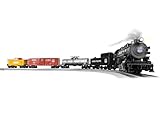
- UNION PACIFIC TRAIN SET – Complete O Gauge Train Set including a 0-8-0 steam locomotive, tender, Union Pacific boxcar, tank car, caboose, FasTrack sections, power supply, and LionChief remote.
- BLUETOOTH & APP CONTROL – Operate via LionChief Remote or Bluetooth using the Lionel CAB3 App with voice control for advanced smart device operation and enhanced functionality.
- DURABLE STEAM LOCOMOTIVE PERFORMANCE – Features a powerful maintenance-free motor, operating couplers, and directional control for long-lasting, dependable operation.
- REALISTIC SMOKE, LIGHTS & SOUNDS – RailSounds RC system delivers steam chuffing, whistle, bell, announcements, puffing smoke unit, and working headlight for immersive operation.
- O GAUGE FASTRACK SYSTEM – Snap-together FasTrack with O36 curves ensures quick setup, secure connections, and reliable performance for model train layouts.
Sources of Financing and Capital Structure Implications
The cash consideration is expected to be financed through a combination of new debt issuance and existing liquidity, including cash on hand and committed credit facilities. New debt issuance increases pro forma leverage, defined as total debt divided by earnings before interest, taxes, depreciation, and amortization (EBITDA), a standard measure of debt capacity. Management guidance suggests an initial leverage step-up that remains within investment-grade tolerances for large North American railroads.
Importantly, the reliance on debt financing is moderated by the equity component of the deal. This reduces refinancing risk at a time when interest rates remain structurally higher than the prior decade. The financing strategy implicitly assumes stable access to long-dated bond markets, consistent with the rail industry’s history of predictable cash flows and long-lived assets.
Pro Forma Balance Sheet and Credit Profile
On a pro forma basis, the combined entity will carry a larger absolute debt load but also a meaningfully expanded EBITDA base. Scale benefits improve fixed-cost absorption and support debt servicing capacity, even before synergies are realized. However, credit metrics are likely to temporarily weaken, particularly funds from operations to debt, a key ratio monitored by rating agencies.
Management has indicated that post-closing capital allocation will prioritize deleveraging over share repurchases. This represents a tactical shift from Union Pacific’s historical emphasis on shareholder returns toward balance sheet normalization. The credibility of this commitment will be central to maintaining investment-grade ratings and managing borrowing costs.
Earnings, Cash Flow, and Dilution Considerations
In the near term, the transaction is expected to be modestly dilutive to earnings per share due to higher interest expense and incremental integration costs. Earnings per share dilution occurs when net income attributable to shareholders grows more slowly than the expanded share count. This effect is not uncommon in large-scale industrial mergers where synergies are back-end loaded.
Over the medium term, free cash flow generation becomes the key variable. Free cash flow, defined as operating cash flow minus capital expenditures, underpins both deleveraging and future shareholder returns. The transaction’s financial architecture assumes that operational efficiencies and capital discipline offset the initial dilution, allowing the combined railroad to restore earnings accretion once integration stabilizes.
Interaction with Regulatory Uncertainty
The financing structure also reflects regulatory risk. By avoiding an overly aggressive leverage profile, Union Pacific retains flexibility should regulatory conditions delay closing or impose operating constraints. Higher leverage would amplify the financial cost of such delays, particularly if interest expense accrues without corresponding synergy realization.
This conservative financial posture reinforces the broader strategic narrative presented to regulators. The deal is framed not as a highly levered financial engineering exercise, but as a long-term infrastructure investment supported by a sustainable capital structure. In that sense, the merger’s financial architecture functions as both a risk management tool and a regulatory signaling mechanism.
Network Economics and Operating Synergies: From Transcontinental Reach to Cost and Revenue Upside
The conservative financing posture described previously places greater analytical weight on whether the combined network can generate durable operating synergies. In railroading, synergies are primarily a function of network economics rather than short-term cost cutting. The strategic logic of the Union Pacific–Norfolk Southern merger rests on the creation of a true coast-to-coast rail system capable of improving asset utilization, service reliability, and pricing power within regulatory bounds.
Do these 3 things before closing this tab:
1Scan for outdated or missing drivers - takes under a minute2Repair Windows errors before they cause bigger problems3Fix the driver behind crashes, sound loss and screen glitchesNetwork Economics in Railroading
Network economics refers to the principle that the value and efficiency of a transportation network increase as its geographic scope and connectivity expand. In rail, larger networks reduce the number of interchange points where freight is transferred between carriers, lowering handling costs and transit times. Each avoided interchange reduces labor expense, dwell time, and operational complexity while improving service consistency.
A transcontinental network allows freight to move under a single operating plan from origin to destination. This integration matters most for long-haul intermodal traffic, automotive shipments, and certain bulk commodities where reliability and cycle time directly influence shipper modal choice. The merger effectively internalizes traffic flows that currently require coordination between eastern and western carriers.
Cost Synergies: Efficiency, Not Wholesale Reductions
Cost synergies are expected to arise primarily from operating efficiency rather than large-scale workforce reductions. Key sources include optimized train routing, better locomotive and railcar utilization, and reduced terminal congestion. Asset turns, defined as the frequency with which locomotives and railcars complete revenue-generating cycles, are a critical driver of rail returns on invested capital.
Another cost lever is capital efficiency. Over time, a unified network can rationalize overlapping infrastructure investments, particularly in terminals and information systems. While total capital expenditures are unlikely to decline in absolute terms, capital spending per unit of revenue may improve as scale benefits emerge.
Revenue Synergies and Service-Based Upside
Revenue synergies are inherently more uncertain but strategically significant. A single-line transcontinental offering enables end-to-end contracts with large shippers, reducing administrative friction and improving service accountability. This can support modest yield improvement, defined as revenue per carload or per intermodal unit, without relying on aggressive price increases.
The combined network may also unlock new traffic lanes that are currently uneconomic due to interchange inefficiencies. Intermodal growth is particularly relevant, as rail competes directly with long-haul trucking on cost, fuel efficiency, and emissions intensity. Improved service reliability enhances rail’s competitive positioning within the broader U.S. freight ecosystem.
Operating Ratio Implications
The operating ratio, defined as operating expenses divided by operating revenue, remains the primary profitability metric in rail analysis. Management targets assume that network efficiencies gradually lower the combined operating ratio as integration matures. However, these gains are expected to be incremental and back-end loaded rather than immediate.
Early integration phases often pressure the operating ratio due to training costs, network realignment, and transitional inefficiencies. The credibility of long-term margin expansion therefore depends on execution discipline rather than headline synergy targets.
What’s actually slowing this PC down?
Pick the symptom - the matching free tool is one click away.
Limits, Risks, and Regulatory Constraints on Synergies
Not all theoretical synergies are fully realizable. Regulatory oversight may constrain network rationalization, particularly where service reductions could affect captive shippers. Antitrust scrutiny also limits the extent to which pricing power can be exercised, reinforcing that most upside must come from efficiency and service quality rather than rate increases.
Operational complexity represents another risk. Integrating two large, safety-critical networks increases exposure to service disruptions if execution falters. In this context, network economics amplify both upside and downside, making operational governance as important as strategic intent.
Rank #3
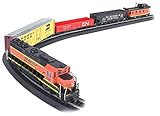
- Complete Ready To Run Electric Train Set: This 130-piece freight train set includes everything needed to start your model railroad journey right out of the box
- Powered Diesel Locomotive: Features an EMD GP40 Diesel Locomotive equipped with an operating headlight for realistic train operations
- Comprehensive Rolling Stock and Accessories: Includes Open Quad Hopper Car, Gondola Car, Steel Reefer Car, Off-Set Cupola Caboose, Signal Bridge, Miniature Figures, Railroad Signs, Street Signs, and Telephone Poles
- Easy Setup Track System: Features a 47 inch by 38 inch oval of Snap-Fit E-Z Track with included Power Pack and Speed Controller for convenient operation
- Authentic HO Scale Model: Built to 1:87 scale ratio, providing detailed and proportionate model railroad experience
Implications for Industry Structure and Transportation Economics
If executed effectively, the merger reshapes U.S. rail economics by creating a structurally different competitor with unmatched geographic reach. This may pressure remaining Class I railroads to pursue deeper commercial partnerships or targeted investments to protect network relevance. For the broader transportation system, a more efficient transcontinental rail option has implications for supply chain resilience, freight costs, and modal balance between rail and trucking.
Ultimately, the network economics underpinning the deal are inseparable from the conservative financial structure discussed earlier. The merger’s success depends on translating geographic scale into measurable operating improvement while navigating regulatory, operational, and integration risks inherent in reshaping national infrastructure.
Regulatory and Antitrust Gauntlet: STB Oversight, Competition Concerns, and Precedent from Past Rail Mergers
The strategic logic and financial structure of the Union Pacific–Norfolk Southern transaction are inseparable from the regulatory environment governing U.S. railroads. Unlike most industrial mergers, rail combinations are subject to a bespoke approval regime that places public interest considerations on equal footing with shareholder value creation. This regulatory overlay introduces execution risk that extends well beyond traditional antitrust review.
Surface Transportation Board Authority and the Public Interest Test
The Surface Transportation Board (STB) is the primary regulator overseeing rail mergers, with authority derived from the Interstate Commerce Act. The STB evaluates transactions under a public interest standard, which requires the merger to enhance, rather than merely preserve, competition. This is a higher bar than conventional antitrust analysis, which typically focuses on preventing harm rather than mandating affirmative benefits.
For major Class I railroad mergers, the STB’s 2001 Major Merger Rules apply. These rules were explicitly designed to make large rail consolidations rare by imposing extensive evidentiary requirements, long review timelines, and enforceable service assurance plans. Applicants must demonstrate not only that the merger avoids anticompetitive outcomes, but also that it improves service, efficiency, and network resilience for shippers.
Competition Concerns and Captive Shipper Risk
A central focus of STB scrutiny is the impact on “captive shippers,” defined as customers with limited or no access to competing railroads. In regions where Union Pacific and Norfolk Southern networks currently intersect indirectly through interline connections, regulators will assess whether the merger reduces routing alternatives or weakens shipper negotiating leverage. Even absent direct parallel track overlap, the loss of inter-carrier competition can be viewed as materially adverse.
Recommended Free Tools
Pricing power is therefore a sensitive issue. Railroads possess significant fixed-cost leverage, and consolidation can amplify the ability to raise rates in concentrated corridors. As a result, regulators are likely to impose conditions limiting rate actions, mandating reciprocal switching (allowing competitors access to certain tracks), or requiring divestitures of specific lines to preserve competitive balance.
Antitrust Review Beyond the STB
Although the STB has exclusive jurisdiction over rail mergers, the Department of Justice (DOJ) plays an influential advisory role. The DOJ’s Antitrust Division typically submits a competitive analysis to the STB, focusing on market concentration, barriers to entry, and potential foreclosure effects. While not binding, DOJ opposition carries substantial weight in shaping both outcomes and conditions.
From an antitrust economics perspective, the transaction raises questions about national versus regional market definition. Proponents may argue that rail competes with trucking, barges, and pipelines, broadening the relevant market. Regulators, however, often adopt narrower corridor-based analyses where rail’s cost advantage is most pronounced, increasing the perceived risk of competitive harm.
Lessons from Past Rail Mergers
Historical precedent looms large in the regulatory assessment. The late-1990s mergers involving Union Pacific–Southern Pacific and the formation of BNSF led to significant service disruptions, congestion, and customer dissatisfaction. These operational failures, rather than pricing outcomes alone, motivated the STB to tighten its merger standards in the early 2000s.
Windows Errors? Fix Them Before They Spread
Repair common Windows errors and clear accumulated junk for a smoother, more stable PC - no reinstall needed.Free scan · no reinstallCrashes, No Sound, or Screen Glitches?
Random freezes, missing sound and display glitches usually trace back to one bad driver. Find and replace yours safely.Free scan · under a minuteSubsequent consolidation efforts have been limited and heavily conditioned. The failed attempt by Canadian Pacific to acquire Norfolk Southern in 2016 illustrates the high regulatory hurdle, as the STB signaled skepticism toward any transaction that materially reduces the number of Class I railroads. This precedent suggests that a Union Pacific–Norfolk Southern merger would face heightened scrutiny simply due to its scale and structural implications.
Mitigation Measures and Conditional Approval Risk
To navigate the regulatory gauntlet, the merger proposal would need to include extensive mitigation commitments. These may encompass service performance benchmarks, capital investment guarantees, labor protections, and shipper remedies enforceable over multiple years. While such conditions can facilitate approval, they also dilute near-term financial flexibility and delay synergy realization.
For investors, the regulatory process introduces asymmetric risk. Approval could unlock long-term strategic value, but prolonged review or onerous conditions may erode expected returns and management focus. In this context, regulatory execution becomes a core component of the investment thesis, on par with operational integration and balance sheet discipline.
Risk Factors and Execution Challenges: Integration, Labor, Service Reliability, and Political Pushback
Even if regulatory approval is secured, the economic outcome of a Union Pacific–Norfolk Southern merger would ultimately hinge on execution. The scale of the combined network, spanning the Western, Central, and Eastern United States, materially increases operational, labor, and political complexity. These risks extend beyond typical merger integration challenges and carry direct implications for service quality, cost structure, and long-term returns on invested capital.
Free tools Windows power users keep installed
One-click scans. No signup required.
Operational Integration and Network Complexity
Integrating two Class I railroads involves harmonizing dispatching systems, operating rules, safety protocols, and asset utilization strategies across tens of thousands of route miles. Rail networks are highly interdependent systems, where localized disruptions can cascade across corridors and terminals. Historical experience shows that even well-capitalized operators can struggle to maintain fluidity during large-scale integrations.
From a financial perspective, delayed or uneven integration can defer expected synergies and elevate operating ratios, defined as operating expenses divided by revenue. While management may target cost efficiencies through unified procurement, equipment rationalization, and network optimization, these benefits are typically back-end loaded. In the interim, execution risk skews toward margin compression rather than immediate earnings accretion.
Labor Relations and Workforce Alignment
Labor represents one of the most sensitive execution risks in a rail merger. Union Pacific and Norfolk Southern operate under different labor agreements, seniority districts, and work rules negotiated with powerful rail unions. Aligning these frameworks often requires complex negotiations that can extend for years and involve arbitration or regulatory oversight.
Rail labor costs are not easily variable, and workforce disruptions can directly impair service reliability. Moreover, political sensitivity around job security may constrain management’s ability to rationalize headcount or reassign crews efficiently. As a result, projected labor synergies may prove structurally lower or slower to realize than merger models initially suggest.
Service Reliability and Shipper Retention Risk
Service performance is a central concern for both regulators and customers. Shippers, particularly in bulk commodities and intermodal freight, value reliability and transit time consistency as much as price. Any deterioration in service during integration risks volume diversion to trucking or alternative rail routings, especially in competitive corridors.
Rank #4

- Complete Ready To Run Freight Train Set
- Powered by a F7-A Diesel Locomotive with Operating Headlight
- Includes; Box Car, Steel Gondola Car, Off-Set Cupola Caboose
- 24" Circle of Nickel Silver E-Z Track , Power Pack and Speed Controller
- N Scale 1:160
Revenue loss from service disruptions can be difficult to recapture, as shipper supply chains tend to reconfigure permanently once alternatives are established. This dynamic creates an asymmetric risk profile: downside from operational missteps can materialize quickly, while reputational recovery may take multiple years. Consequently, service execution becomes a critical determinant of whether scale translates into sustainable pricing power.
Political and Public Interest Pushback
Beyond formal regulatory review, the transaction would face sustained political scrutiny at the federal and state levels. Large railroads are viewed as essential infrastructure, and consolidation raises concerns about supply chain resilience, rural access, and emergency preparedness. These issues resonate with lawmakers regardless of party affiliation, increasing the risk of legislative or administrative intervention.
Political pressure can manifest through informal channels, such as public hearings, oversight requests, or pressure on regulators to impose additional conditions. While these actions may not block the merger outright, they can lengthen the approval timeline and constrain post-merger strategic flexibility. For shareholders, this translates into extended uncertainty and a higher probability that value creation is mediated through public policy considerations rather than pure economic logic.
Quick wins for a faster PC:
Fix the driver behind crashes, sound loss and screen glitchesFind Drivers →Clear out junk files and repair common Windows errorsFree Scan →Scan for outdated or missing drivers - takes under a minuteDriver Scan →Capital Allocation Under Constraint
Finally, execution risk is amplified by capital allocation trade-offs. Integration demands elevated capital expenditures for terminals, signaling systems, and rolling stock, often coinciding with commitments made to regulators and labor stakeholders. These obligations can crowd out share repurchases or debt reduction, affecting near- to medium-term equity returns.
In this context, the merger’s success would depend not only on strategic fit but on disciplined financial management under heightened scrutiny. The combination of operational, labor, service, and political challenges underscores that scale alone does not guarantee superior economics in the rail industry.
Shareholder Implications: Accretion/Dilution, Dividend Capacity, and Relative Value for UNP vs. NSC Holders
Against the backdrop of heightened regulatory scrutiny and constrained capital allocation, the economic impact on shareholders becomes a central question. The proposed $85 billion stock-cash consideration structure has asymmetric implications for Union Pacific and Norfolk Southern investors, depending on timing, execution quality, and regulatory outcomes. Accretion, dividend flexibility, and relative valuation provide a structured lens to assess these trade-offs.
Earnings Accretion vs. Dilution Dynamics
Earnings accretion or dilution refers to whether a transaction increases or decreases the acquirer’s earnings per share (EPS) relative to a standalone baseline. In rail mergers, near-term dilution is common due to integration costs, incremental interest expense, and share issuance, even when long-term synergies are credible. For Union Pacific, the inclusion of a significant stock component increases share count, mechanically pressuring EPS in the early years post-close.
Management’s accretion case would likely rely on operating ratio improvements, network rationalization, and procurement efficiencies. However, regulatory conditions and service commitments may delay or limit these benefits, shifting meaningful EPS accretion further into the cycle. As a result, UNP shareholders face a temporal mismatch between upfront financial dilution and deferred synergy realization.
Considerations for Norfolk Southern Shareholders
For Norfolk Southern holders, the transaction represents a monetization event rather than an integration risk. The cash portion provides immediate value realization, while the equity component preserves participation in potential long-term upside from a transcontinental network. This structure partially insulates NSC shareholders from execution risk, transferring much of the integration uncertainty to the combined entity’s post-close performance.
However, relative value depends critically on the exchange ratio and implied control premium. If regulatory delays or concessions erode projected synergies, the effective premium embedded in UNP equity could diminish over time. NSC holders accepting stock therefore remain exposed to policy-driven outcomes beyond their historical operating footprint.
Dividend Capacity and Capital Return Trade-Offs
Dividend capacity reflects a firm’s ability to sustain or grow cash distributions after meeting operating and investment needs. Union Pacific has historically emphasized shareholder returns through dividends and buybacks, supported by stable free cash flow. Post-merger, that flexibility would likely be constrained by higher leverage, integration capital expenditures, and regulatory-mandated investments.
The Tool Desk
Outbyte PC Repair FREEClear out junk files and repair common Windows errorsFree Scan →Outbyte Driver Updater FREEFix the driver behind crashes, sound loss and screen glitchesFind Drivers →In contrast, Norfolk Southern shareholders receive value largely upfront, reducing reliance on future dividend policy. For continuing UNP shareholders, dividend growth may decelerate as cash flow is redirected toward balance sheet management and network integration. This shift alters the equity’s income profile, at least in the medium term.
Relative Valuation and Risk Allocation
From a valuation perspective, the merger reallocates risk rather than eliminating it. Union Pacific equity becomes more exposed to regulatory intervention, political oversight, and multi-year execution risk, factors that typically warrant a higher equity risk premium. This may pressure valuation multiples until operational and policy uncertainty recedes.
Norfolk Southern shareholders, by contrast, effectively crystallize value at a negotiated multiple reflective of strategic scarcity and network relevance. The relative attractiveness of holding UNP versus tendering NSC hinges on whether the combined railroad can earn returns above its cost of capital after accounting for regulatory constraints. In this sense, the transaction represents a transfer of optionality from NSC holders to UNP shareholders, with outcomes ultimately determined by execution discipline rather than deal logic alone.
Independent reader supportYour contribution helps us test, update, and keep practical guides available for everyone.Industry-Wide Consequences: Competitive Dynamics, Pricing Power, and the Future Structure of U.S. Freight Rail
The implications of a Union Pacific–Norfolk Southern combination extend beyond shareholder outcomes and into the core structure of U.S. freight rail. By effectively linking the largest western and eastern Class I rail networks, the transaction would reshape competitive dynamics, alter shipper bargaining power, and force a regulatory reassessment of acceptable industry concentration. These effects interact directly with the execution and policy risks previously discussed, reinforcing why the transaction’s impact cannot be evaluated solely at the firm level.
Shift Toward a De Facto Transcontinental Duopoly
A successful merger would accelerate the industry’s evolution toward a transcontinental duopoly, primarily between the combined UNP–NSC network and BNSF Railway. A duopoly is a market structure dominated by two large firms, often resulting in reduced competitive pressure compared with fragmented markets. While North American rail is already concentrated, this transaction would materially narrow routing alternatives for shippers requiring coast-to-coast service.
Canadian National and Canadian Pacific Kansas City would remain meaningful competitors, but their cross-border focus and smaller U.S. footprint limit their ability to discipline pricing on purely domestic long-haul corridors. As a result, competitive constraints would increasingly depend on intermodal substitution rather than intra-rail competition.
Implications for Rail Pricing Power and Contract Economics
Pricing power refers to a firm’s ability to raise prices without losing volume. A transcontinental network enhances pricing power by reducing shipper optionality, particularly for bulk commodities and time-sensitive intermodal freight. Fewer interchange points also allow the combined railroad to capture a larger share of end-to-end economics rather than sharing revenue with connecting carriers.
However, regulatory oversight may blunt this advantage. The Surface Transportation Board (STB) could impose pricing safeguards, expanded reciprocal switching, or enhanced rate reasonableness standards to counterbalance increased market power. These measures would likely compress margin upside relative to a purely market-driven outcome.
Best Value

- Upgraded USB Rechargeable Metal Train Set :This electric train set comes with a full alloy steam trains,1 coal carriage and 2 passenger carriages with lights,8 curved tracks,8 straight tracks,4 Y-shape tracks,1 cross track and 60 track locks; Different from other train sets on the market,our train toys come with a 1000mAh (3.7V) rechargeable lithium battery and USB charging cable as well as realistic lighting carriages; After fully charging,your kids can enjoy a pleasant travel for hours
- Luminous Carriages and Multifunctional Locomotive :Our Christmas train restores all details of a real train; The exquisite train locomotive can make whistle sounds and lights, and the toy train comes with an empty water bottle, and adding water to the tank can also make it produce smoke; In addition, the 2 passenger carriages also have a light function; Turn on the bottom switch, warm light will fill the entire carriage; This makes the model train toy more realistic when driving at night
- Alloy Material, Safe and Durable :Both the locomotive steam and carriage wheels are made of alloy materials and other parts are made of ABS plastic, which are non-toxic and tasteless, and every component has undergone strict quality control, it is safe enough for kids; Compared to the all-plastic trains on Amazon, our train is partially made of alloy, making them more durable and impact-resistant; The smooth design of the train feels good to the touch and will not harm the child's hands or body
- Richer Track Types For More Fun :The Christmas train set only needs to assemble the railway into various shapes (circular, oval and luxury layouts), and each electric train track is locked firmly, then turn on the switch, the Christmas tree train set will move steadily on the toy track; DIY train sets for boys 4-7 can improve children's hands-on and thinking skills; If parents accompany their kids to assemble this electric train together, it can also strengthen the parent-child relationship
- Perfect Christmas Toys Gifts For Kids :The perfect train set for Christmas tree, suit for decoration under the Christmas tree, and let children and family spend a wonderful Christmas time together; For every child, the toy train set is a fun and educational holiday, birthday and Christmas gift; The toy trains model are suitable for boys and girls over 3, 4, 5, 6, 7, 8 years old; Let your child get double the happiness from you
Intermodal Competition as the Primary Disciplining Force
As rail-to-rail competition diminishes, rail-to-truck competition becomes more central to freight economics. Intermodal freight combines rail linehaul with truck pickup and delivery, offering a lower-cost but slower alternative to over-the-road trucking. A larger, more integrated rail network could improve service reliability, strengthening rail’s competitive position against trucks on long-haul lanes.
At the same time, aggressive pricing could accelerate political pressure to protect shippers and highway freight interests. This dynamic reinforces why pricing gains may be structurally capped by policy considerations, even if operational performance improves.
Network Efficiency Versus Systemic Fragility
From an operating standpoint, a unified network reduces interchange complexity, shortens dwell time, and improves asset utilization. These efficiency gains underpin much of the merger’s strategic rationale and are central to achieving returns above the combined firm’s cost of capital. Cost of capital represents the minimum return required by investors to compensate for risk.
Yet greater scale also introduces systemic fragility. Service disruptions, labor disputes, or weather-related events would affect a larger share of the national freight system, increasing the economic consequences of operational failures. This risk profile strengthens the case for heightened regulatory scrutiny and contingency planning requirements.
What’s actually slowing this PC down?
Pick the symptom - the matching free tool is one click away.
Precedent Risk and the Future of Rail Consolidation
Approval of the UNP–NSC merger would set a powerful precedent for future consolidation, potentially reopening strategic discussions across the remaining Class I railroads. Conversely, onerous conditions or a blocked transaction would signal a regulatory ceiling on further horizontal integration. Either outcome materially influences long-term capital allocation and strategic optionality across the sector.
For investors, this precedent risk feeds back into valuation. Equity multiples across the rail industry would increasingly reflect regulatory permissibility rather than pure operating performance, reinforcing the idea that policy outcomes have become a structural driver of rail economics.
Broader Transportation and Supply Chain Implications
At the macro level, a more integrated rail system could improve supply chain resilience by offering longer, single-line routes with fewer handoffs. This is particularly relevant for agricultural exports, energy products, and industrial inputs where reliability and scale matter. Improved rail efficiency may also support modal shift away from trucking, with implications for fuel consumption, emissions, and highway congestion.
However, these benefits are not evenly distributed. Smaller shippers and captive customers, defined as those with access to only one railroad, may experience reduced negotiating leverage. This distributional effect is likely to remain central to regulatory deliberations and public policy debate surrounding the merger.
Long-Term Strategic Impact: What This Merger Signals for Transportation Economics and North American Supply Chains
Taken together, the strategic logic and regulatory stakes of the Union Pacific–Norfolk Southern transaction point beyond company-level synergies. This merger serves as a bellwether for how transportation economics may evolve under increasing scale, policy constraint, and supply chain reconfiguration across North America. Its long-term impact must therefore be evaluated at the system level rather than solely through shareholder returns.
Reframing Rail Economics Through Network Scale
A transcontinental rail network combining Union Pacific and Norfolk Southern would alter the economic structure of U.S. freight rail by internalizing traffic flows that currently require interline coordination. Interlining refers to freight moving across multiple railroads, often introducing delays, higher costs, and accountability gaps. Reducing these frictions improves asset utilization, network velocity, and pricing efficiency.
Over time, this scale advantage could widen the cost gap between rail and alternative freight modes. Railroads already benefit from lower marginal fuel costs per ton-mile compared to trucking, particularly over long distances. A single-line coast-to-coast operator would further reinforce rail’s economic competitiveness in bulk commodities and intermodal freight.
Implications for North American Supply Chain Design
The merger also reflects a structural shift in how supply chains prioritize reliability over pure cost minimization. Following years of disruption from pandemics, weather events, and geopolitical shocks, shippers increasingly value predictable transit times and simplified logistics. A unified rail corridor from ports to inland distribution hubs aligns with this preference.
Do these 3 things before closing this tab:
1Scan for outdated or missing drivers - takes under a minute2Clear out junk files and repair common Windows errors3Fix the driver behind crashes, sound loss and screen glitchesThis has particular relevance for North American reshoring and nearshoring trends. As manufacturing footprints shift toward Mexico, the U.S. Midwest, and the Southeast, rail connectivity becomes a critical enabler of scalable industrial growth. The combined network would be positioned to capture these incremental flows, reinforcing rail’s role as backbone infrastructure rather than a residual transport option.
Concentration Risk and Systemic Exposure
While network integration offers efficiency gains, it also concentrates operational and economic risk. A larger share of national freight would depend on a single corporate system, amplifying the consequences of service failures, cyber incidents, or labor disruptions. From a transportation economics perspective, this introduces negative externalities that may not be fully priced into private cost-benefit analyses.
Regulators are therefore likely to view resilience, redundancy, and service guarantees as public-interest considerations. This suggests that future rail economics will increasingly incorporate regulatory-imposed costs tied to system stability, similar to capital and reliability standards in utilities and financial institutions. The merger implicitly accelerates this shift.
Long-Term Signals for Capital Allocation and Policy Alignment
At a strategic level, the transaction signals that growth in U.S. rail is less likely to come from volume expansion alone and more from structural reconfiguration. With freight growth tracking GDP modestly, scale and network optimization become the primary levers for returns on invested capital. This places mergers, technology investment, and regulatory engagement at the center of long-term strategy.
The Tool Desk
Outbyte Driver Updater FREEScan for outdated or missing drivers - takes under a minuteDriver Scan →Outbyte PC Repair FREEClear out junk files and repair common Windows errorsFree Scan →For policymakers, the deal forces a reconciliation between competition policy and infrastructure efficiency. Railroads occupy a hybrid position as private enterprises operating quasi-public networks. How this merger is evaluated will shape not only future consolidation but also the balance between market power and national logistics performance.
Concluding Perspective
The proposed Union Pacific–Norfolk Southern merger represents more than an $85 billion corporate transaction. It reflects a strategic inflection point for transportation economics, where scale, resilience, and regulatory oversight increasingly define value creation. Its ultimate impact will be measured not only by financial synergies, but by how effectively the U.S. freight system adapts to a more integrated, policy-sensitive, and supply-chain-centric economic environment.
Quick Recap
Product prices and availability are accurate as of the date/time indicated and are subject to change. Any price and availability information displayed on Amazon at the time of purchase will apply.




