Quick wins for a faster PC:
Fix the driver behind crashes, sound loss and screen glitchesFind Drivers →Repair Windows errors before they cause bigger problemsFix Now →A Flexible Spending Account (FSA) is an employer-sponsored benefit that allows employees to set aside a portion of their pay, on a pre-tax basis, to reimburse eligible health care expenses. Pre-tax means the contributions are excluded from federal income tax, Social Security tax, and in most cases state income tax, increasing the employee’s effective spending power for qualified costs. FSAs are governed by Internal Revenue Service (IRS) rules but administered under an employer’s specific plan design, which is where year-end outcomes diverge.
Unlike savings accounts, FSAs operate within a fixed plan year, typically aligned with the calendar year. Employees must elect an annual contribution amount in advance, generally during open enrollment, and that election usually cannot be changed midyear unless a qualifying life event occurs. The full elected amount is available for reimbursement at the start of the plan year, even though contributions are made gradually through payroll deductions.
How an FSA Functions During the Plan Year
Health care FSAs reimburse qualified medical, dental, and vision expenses that are not paid by insurance, such as deductibles, copayments, prescriptions, and certain over-the-counter items. Reimbursement occurs only after an expense is incurred, meaning the service must be received during the plan year for the expense to qualify. Documentation is required to substantiate that the expense meets IRS eligibility rules.
FSAs are distinct from dependent care FSAs, which cover child care or elder care expenses and follow different contribution limits and rules. Year-end rollover and grace period provisions discussed here apply only to health care FSAs, not dependent care FSAs.
Why Year-End Rules Create Financial Risk
The defining feature of an FSA is the potential forfeiture of unused funds. Under the traditional use-it-or-lose-it rule, any balance remaining at the end of the plan year is forfeited to the employer. This structure creates a direct financial consequence for inaccurate contribution estimates.
#1 Best Overall
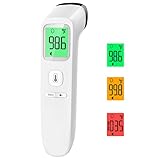
- Reliable & Accurate: Goodbaby Forehead Thermometer has been clinically tested and found to be a fast and absolutely reliable gadget to use. It is ideal for forehead readings.
- Fast & Easy Temperatures Readings: Taking your family’s temperature with Goodbaby Forehead Thermometer is as simple as pointing, and pressing a button. It uses infrared technology and can show readings in Celsius or Fahrenheit.
- Advanced Technology for Excellent Performance: It uses reliable ABS housing materials. Ergonomically designed, the firm grip makes it easy for even naughty children.
- Multi-mode Thermometer: Goodbaby Thermometer is designed for all ages, adults, infants, and elders. It not only supports the forehead function but is able to take room/object temperature.
- Trustworthy and Precies: Goodbaby Thermometer is backed by clinical validated and recommended by the pediatrician. Please contact our friendly customer support team if you have any concerns about the device.
To mitigate forfeitures, the IRS allows employers to adopt one of two optional features, but not both. An employer may offer a rollover option, allowing employees to carry a limited amount of unused funds into the next plan year. Alternatively, an employer may offer a grace period of up to two and a half months after year-end to incur additional eligible expenses using the prior year’s balance.
Rollover Option Versus Grace Period
Under the rollover option, unused funds up to an IRS-set maximum automatically carry forward into the next plan year. For the 2025 plan year, the maximum permitted rollover amount is $660, though employers may choose a lower limit or decline to offer a rollover entirely. Any balance above the allowed rollover amount is forfeited.
Under a grace period arrangement, employees have up to March 15 of the following year to incur new eligible expenses that can be reimbursed from the prior year’s FSA balance. After the grace period ends, any remaining funds are forfeited. Employers must clearly specify which option, if any, applies in the plan document.
Do these 3 things before closing this tab:
1Scan for outdated or missing drivers - takes under a minute2Repair Windows errors before they cause bigger problems3Fix the driver behind crashes, sound loss and screen glitchesIRS Contribution Limits and Tax Treatment
The IRS caps the maximum annual employee contribution to a health care FSA. For the 2025 plan year, the limit is $3,300 per employee, regardless of the number of dependents covered. Employers may impose lower limits, but they cannot allow contributions above the IRS maximum.
Because FSA contributions reduce taxable wages, the tax benefit is realized only if the funds are ultimately spent on qualified expenses. Forfeited amounts do not produce a tax refund or credit, which effectively reverses the intended benefit for the unused portion. This interaction between tax savings and forfeiture risk is what makes year-end rules financially significant.
Why Understanding These Rules Shapes Contribution Decisions
The value of an FSA depends on aligning contributions with reasonably predictable health care expenses and understanding the employer’s year-end treatment of unused funds. Employees who underestimate expenses may underutilize a valuable tax benefit, while those who overestimate may face forfeiture. Year-end rules determine whether unused dollars retain value, receive additional time for use, or disappear entirely.
The Default Rule: IRS “Use-It-or-Lose-It” and How Forfeitures Occur
At the core of FSA administration is the IRS “use-it-or-lose-it” rule. Under this default framework, any health care FSA funds not used for eligible expenses by the end of the plan year are forfeited. This rule applies automatically unless the employer has formally adopted either a rollover option or a grace period in the plan document.
The rule exists because FSAs receive preferential tax treatment. Contributions are excluded from federal income tax, Social Security tax, and Medicare tax, and the IRS requires clear boundaries on when those tax-favored dollars must be spent. Without an extension mechanism, unused balances simply revert to the plan after the coverage period ends.
What Triggers a Forfeiture
A forfeiture occurs when an employee has remaining FSA funds after all allowable reimbursement deadlines have passed. This includes the end of the plan year alone, or the end of a grace period or rollover limit if one is offered. The key factor is not when claims are submitted, but when eligible expenses are incurred under the plan’s rules.
For example, if an employer offers neither a rollover nor a grace period, expenses must be incurred by December 31 of the plan year. Any balance remaining after that date is forfeited, even if the employee intended to use the funds later or misunderstood the plan’s deadlines.
Where Forfeited Funds Go
Forfeited FSA dollars do not return to the employee and do not generate a tax refund. Instead, the funds remain with the employer-sponsored plan. IRS regulations allow employers to use forfeited amounts to offset plan administrative costs or, in some cases, to reduce future employee contributions.
Importantly, forfeitures cannot be redistributed directly to other participants as cash or taxable benefits. This reinforces the principle that the tax advantage of an FSA is conditional on timely use for qualified medical expenses.
Why the Default Rule Still Matters Even When Exceptions Exist
Although many employers now offer a rollover or grace period, the “use-it-or-lose-it” rule remains the baseline against which all exceptions are measured. Both alternatives merely soften the rule; they do not eliminate forfeiture risk entirely. Rollover amounts are capped, and grace periods are time-limited.
As a result, employees who assume unused funds will always carry forward may still lose money if their employer’s plan design is more restrictive than expected. Understanding the default rule clarifies why precise knowledge of plan-specific year-end provisions is essential to preserving the tax value of FSA contributions.
Employer Plan Variations: Rollover Option vs. Grace Period (and Why You Can’t Have Both)
Against the backdrop of the default forfeiture rule, IRS regulations permit employers to soften year-end losses through one of two limited plan design alternatives. These are the FSA rollover option or the grace period. Each modifies how unused funds are treated, but neither eliminates forfeiture entirely.
Recommended Free Tools
Critically, these features are not employee elections. They are employer-level plan design decisions that must be adopted formally in the written FSA plan document and applied consistently to all participants.
The Rollover Option: Limited Carryforward Into the Next Plan Year
Under the rollover option, an employer may allow employees to carry a portion of unused health FSA funds into the following plan year. The rollover amount is capped by the IRS and adjusted periodically for inflation. For recent plan years, this cap has been in the mid-$600 range, but employees must always confirm the exact limit applicable to their specific plan year.
Rolled-over funds retain their tax-advantaged status and can be used for qualified medical expenses incurred in the new plan year. Importantly, the rollover does not reduce the amount an employee may elect to contribute for that year. However, any balance above the IRS cap is forfeited at year-end.
The rollover option applies only to health FSAs. Dependent Care FSAs, which reimburse eligible childcare and elder care expenses, are subject to different statutory rules and generally do not permit rollovers outside of limited, temporary relief periods enacted by Congress.
Outdated Drivers Are Slowing You Down
One free scan finds every outdated or missing driver and matches the right update for your exact hardware.Free scan · exact hardware matchPC Slower Than It Used to Be?
A free scan shows the junk files, broken settings and background clutter dragging Windows down - then fixes them in one click.Free scan · Windows 10 & 11The Grace Period: Extra Time to Incur Expenses
Instead of allowing a dollar-based carryforward, an employer may adopt a grace period of up to 2½ months after the end of the plan year. During this window, employees may incur new eligible medical expenses and apply them against the prior year’s remaining FSA balance.
A grace period extends the spending deadline, not the amount available. Once the grace period ends, any unused funds are forfeited in full. The timing of the expense—not the submission of the claim—determines whether reimbursement is allowed.
Rank #2

- Advanced Technology: Superior performance delivered by the latest smart chip utilizing an optimized algorithm to ensure the 3 ultra sensitive sensors precisely measure your temperature to hygienically deliver accurate results, faster, safer, and more reliably.
- Long Term Reliability: Lifetime and reliability tests have shown our infrared thermometer to last over 1000 hours of usage.
- High Accuracy: The hyper precise infrared sensor collects more than 150 data points per second in an outdoor or indoor environment ensuring you get maximum accuracy every time you take a temperature.
- Feature Rich: Easy to use features include a 30 second auto power off function to save power, memory storage function to save up to 32 measurements for quick access, a switch between measuring object or body temperatures, a sound toggle and a fever alert system.
- What You Get: 1x infrared thermometer, 2x AAA batteries, 1x instruction manual and hassle free 12 months warranty.
Like the rollover, the grace period preserves the tax-exempt nature of reimbursements. However, it provides flexibility through time rather than through a preserved balance.
Why IRS Rules Prohibit Offering Both
IRS regulations explicitly prohibit an employer from offering both a rollover and a grace period for the same health FSA. The rationale is structural: allowing both would undermine the statutory limits on deferrals by permitting prolonged, potentially unlimited accumulation of pre-tax funds.
Free tools Windows power users keep installed
One-click scans. No signup required.
From a tax policy perspective, FSAs are intended to fund near-term medical expenses, not serve as long-term savings vehicles. Requiring employers to choose one mechanism preserves the integrity of the use-it-or-lose-it framework while allowing modest flexibility.
As a result, employees must understand not only whether an exception exists, but which exception applies. A plan with a rollover has a firm dollar cap. A plan with a grace period has a firm time limit. In both cases, forfeiture remains a real outcome once the applicable boundary is crossed.
Current IRS Limits: Annual Contribution Caps, Rollover Maximums, and Indexed Changes
The choice between forfeiture, a rollover, or a grace period operates within firm numerical boundaries set by the Internal Revenue Service (IRS). These limits define how much can be contributed on a pre-tax basis and, if a rollover is permitted, how much can be carried forward into the next plan year. Understanding these caps is essential to evaluating year-end outcomes under any FSA design.
Annual Health FSA Contribution Limits
For health Flexible Spending Accounts, the IRS sets an annual limit on employee salary reduction contributions. For the 2025 plan year, the maximum employee contribution is $3,200. This cap applies per employee, not per employer, meaning participation in multiple health FSAs during the same year does not increase the allowable total.
The Tool Desk
Outbyte Driver Updater FREEScan for outdated or missing drivers - takes under a minuteDriver Scan →Outbyte PC Repair FREERepair Windows errors before they cause bigger problemsFix Now →Employers may choose to contribute additional amounts to an employee’s health FSA, but employer contributions cannot be used to circumvent the statutory cap. The combined employee and employer contributions may exceed the employee limit only if the excess comes solely from the employer and is structured to comply with nondiscrimination rules. The employee’s own pre-tax deferral, however, may not exceed the IRS maximum.
Rollover Maximums for Unused Health FSA Funds
When an employer adopts the rollover option instead of a grace period, the amount that may carry forward is also capped by the IRS. The rollover maximum is indexed and equals a fixed percentage of the annual contribution limit. For the 2025 plan year, the maximum rollover amount is $640.
Any unused balance above the rollover cap is forfeited at the end of the plan year, even if the plan permits carryforwards. The rollover preserves only the allowed dollar amount, not the entire remaining balance. Rolled-over funds are added to the next year’s available balance and do not reduce the employee’s ability to contribute up to the new annual limit.
Dependent Care FSA Limits Are Separate and Not Indexed
Dependent Care FSAs are governed by a different statutory framework. The annual contribution limit is $5,000 per household, or $2,500 for married individuals filing separately. Unlike health FSAs, this limit is set by statute and is not indexed for inflation.
Dependent Care FSAs generally do not permit rollovers, and unused funds are forfeited at year-end unless temporary relief has been authorized by Congress for a specific period. As a result, the numerical flexibility available under health FSAs does not extend to dependent care accounts.
Indexed Adjustments and Their Practical Implications
Health FSA contribution limits and rollover caps are indexed for inflation and may change from year to year based on IRS guidance. These adjustments are typically announced in advance of the upcoming plan year and apply uniformly across all employer-sponsored plans. The indexing mechanism is intended to preserve the real value of the tax benefit over time rather than expand the role of FSAs as savings vehicles.
Because both the annual contribution limit and the rollover maximum move together, modest increases in one generally translate into proportional increases in the other. However, the structural constraints remain unchanged: contributions are capped, rollovers are limited, and forfeiture applies once the applicable dollar or time boundary is crossed.
What Actually Happens to Unused FSA Funds: Timelines, Deadlines, and Common Pitfalls
Once the plan year ends, unused FSA balances are governed by a sequence of administrative deadlines that determine whether funds remain accessible or are forfeited. These rules operate independently of payroll contributions and are controlled by the employer’s written plan document. Understanding the timing mechanics is essential because forfeiture is triggered by missed deadlines, not by the mere presence of unused funds.
At year-end, three distinct frameworks may apply: the traditional use-it-or-lose-it rule, a limited rollover, or a grace period. Employers may offer only one of the latter two for health FSAs, or neither. The default outcome in the absence of a rollover or grace period is forfeiture.
The End of the Plan Year and the Run-Out Period
The plan year is the 12-month period during which eligible expenses must be incurred. Expenses are considered incurred on the date the medical service is provided, not when billed or paid. Any expense incurred after the plan year ends is generally ineligible unless a grace period applies.
Most FSAs include a run-out period, which is an administrative window allowing employees to submit claims for expenses incurred during the prior plan year. The run-out period commonly lasts 60 to 90 days but varies by employer. Importantly, the run-out period does not extend the time to incur expenses; it only extends the time to file paperwork.
If claims are not submitted by the end of the run-out period, eligible but undocumented expenses are treated as nonexistent for FSA purposes. At that point, any remaining balance becomes subject to forfeiture under the plan’s rules.
What’s actually slowing this PC down?
Pick the symptom - the matching free tool is one click away.
Use-It-or-Lose-It: The Default Forfeiture Rule
Under the traditional use-it-or-lose-it structure, all unused funds are forfeited after the run-out period closes. The forfeited amounts revert to the employer, who may use them to offset plan administrative costs or reduce future employee contributions, as permitted by IRS regulations. Employees have no claim to these funds once forfeiture occurs.
This framework reflects the IRS requirement that FSAs function as reimbursement arrangements rather than savings accounts. The forfeiture rule is a core structural feature designed to prevent indefinite tax-deferred accumulation.
Rollover Plans: What Carries Forward and What Does Not
If the employer’s plan permits a rollover, unused funds up to the IRS-imposed cap may carry into the next plan year. For the 2025 plan year, that cap is $640. Any balance above the cap is forfeited, even if the rollover feature is available.
Rank #3

- A century of powerful relief: At Vicks, we believe everyone deserves a touch of care; you can rely on our line of digital thermometer for adults, kids and babies to provide quick, accurate results when you need them most
- Versatile: With an 8-second result, it’s ideal as an adult thermometer while also serving infants, toddlers, and kids; SpeedRead works orally, rectally, or under the arm as digital baby thermometers
- Quick, accurate results: This Vicks Thermometer provides accurate, simple readings in only 8 seconds, so you can get results quickly; this oral thermometer also has a memory feature that recalls and displays last temperature taken
- Easy to read infant thermometer: The color coded Fever InSight helps you understand temperature readings at a glance; a green display suggests a normal temperature, yellow is an elevated temperature and red is a high temperature
- Special Features: Vicks digital thermometers are water resistant for easy, thorough cleaning, and have an automatic shut-off for longer battery life; plus, it includes a battery and has a limited 1 year warranty
Rolled-over funds are added to the next year’s account balance and remain available for eligible expenses incurred in that year. The rollover does not reduce the employee’s ability to contribute up to the new annual contribution limit. However, the rollover applies only to health FSAs and is incompatible with a grace period.
Grace Period Plans: A Limited Extension, Not a Rollover
Some employers offer a grace period instead of a rollover. A grace period allows employees to incur new eligible expenses for up to 2 months and 15 days after the plan year ends, using prior-year funds. Expenses incurred during this extension are treated as if they occurred in the prior plan year.
Once the grace period ends, any remaining balance is forfeited. Unlike a rollover, unused funds do not carry forward indefinitely into the next plan year. The grace period merely shifts the expense-incurrence deadline, not the forfeiture outcome.
Tax Treatment of Forfeited and Rolled-Over Funds
FSA contributions are excluded from federal income tax, Social Security tax, and Medicare tax at the time of contribution. When funds are forfeited, there is no additional tax consequence to the employee because the tax benefit was already realized. Conversely, rolled-over funds retain their tax-advantaged status when used for eligible expenses in the subsequent year.
Because tax treatment is fixed at contribution, forfeiture represents a loss of purchasing power rather than a tax penalty. This distinction explains why accurate contribution estimation is central to FSA participation.
What’s actually slowing this PC down?
Pick the symptom - the matching free tool is one click away.
Employment Changes and Midyear Forfeiture Risk
Unused FSA balances are generally forfeited upon termination of employment unless the employee elects continuation coverage under COBRA for the health FSA. COBRA allows continued access to remaining funds but requires after-tax premium payments. If COBRA is not elected, forfeiture typically occurs immediately upon termination.
This rule applies regardless of whether the employee has already contributed more than has been reimbursed. The FSA balance is tied to active plan participation, not cumulative payroll deductions.
Common Administrative Pitfalls That Trigger Forfeiture
Forfeiture often results from procedural errors rather than ineligible spending. Common issues include misunderstanding the expense-incurrence date, missing claim submission deadlines, or assuming that a rollover applies when the plan instead offers a grace period. Confusion between health FSAs and dependent care FSAs is another frequent source of error.
Plan-specific details control these outcomes, and summary plan descriptions are the authoritative source. IRS rules set the outer limits, but employer design choices determine how unused funds are ultimately treated.
Tax Implications of Unused FSA Dollars: Pre-Tax Savings vs. Forfeited Benefits
Understanding the tax mechanics behind unused FSA dollars clarifies why forfeiture is economically significant even without additional tax consequences. The value of an FSA arises from the exclusion of contributions from taxable income, while the risk stems from employer plan rules governing unused balances at year-end. These two forces operate independently but converge when funds are left unspent.
How Pre-Tax FSA Contributions Create Economic Value
Health FSA contributions are made through salary reduction, meaning they are excluded from federal income tax, Social Security tax, and Medicare tax. This exclusion lowers taxable wages and increases take-home pay relative to paying the same medical expenses with after-tax dollars. The tax benefit is realized at the moment of contribution, not when expenses are reimbursed.
Because the tax treatment is fixed upfront, subsequent use or non-use of the funds does not retroactively alter taxation. Whether dollars are spent, rolled over, or forfeited, the original tax exclusion remains intact. This structure explains why unused funds do not trigger additional tax liability.
Forfeiture as a Loss of Purchasing Power, Not a Tax Penalty
When unused FSA funds are forfeited under use-it-or-lose-it rules, the employee does not owe tax on the forfeited amount. Instead, the loss occurs in the form of foregone purchasing power that could have paid for eligible medical expenses. Economically, the employee keeps the tax savings but loses access to the earmarked cash.
Quick wins for a faster PC:
Repair Windows errors before they cause bigger problemsFix Now →Scan for outdated or missing drivers - takes under a minuteDriver Scan →This distinction is critical for evaluating FSA participation. The downside risk is capped at the unused balance, while the upside benefit is the tax exclusion applied to the full elected amount. Accurate forecasting of annual medical expenses therefore determines whether the arrangement produces a net financial gain.
Rollover and Grace Period Rules and Their Tax Effects
Employer plans may soften forfeiture risk by offering either a rollover or a grace period, subject to IRS limits. A rollover allows unused funds, up to an IRS-set maximum, to carry into the next plan year and remain tax-advantaged when used for eligible expenses. A grace period extends the deadline to incur expenses, but any remaining balance after that period is still forfeited.
Neither option alters the original tax treatment of contributions. Rolled-over or grace-period funds continue to reimburse expenses tax-free, while forfeited amounts simply disappear from the plan. The difference lies in timing and accessibility, not taxation.
Interaction with IRS Contribution Limits
The IRS sets an annual cap on employee salary reduction contributions to health FSAs, adjusted periodically for inflation. This limit applies regardless of whether an employer offers a rollover or grace period. Unused amounts carried forward through a rollover do not count against the new year’s contribution limit.
Recommended Free Tools
As a result, forfeiture does not create additional contribution room in subsequent years. Planning errors cannot be corrected by increasing future elections beyond IRS limits, reinforcing the importance of aligning annual contributions with realistic expense expectations.
Planning Implications at Year-End
At year-end, the tax benefit of an FSA is already locked in, leaving only the utilization decision unresolved. Employees must assess remaining balances against plan rules to determine whether expenses can still be incurred or claims submitted in time. Failure to act converts tax-advantaged dollars into forfeited benefits with no offsetting tax recovery.
From a tax perspective, the goal is not to maximize contributions but to maximize the portion of contributions that ultimately reimburse eligible expenses. The effectiveness of an FSA hinges on this balance rather than on tax rates alone.
Rank #4

- Safe Thermometers for Adults and Babies: Boncare thermometer comes with a soft silicone tip and a reliable stainless - steel probe. It's designed for oral, rectal, or axillary use, making it suitable for infants, children, adults, and dogs. It offers great convenience and ensures safety for you and your family.
- Accurate and Fast Reading: This digital thermometer uses the latest and most advanced sensor probe and takes only about 10 seconds to get a reading. Its temperature - reading function has been clinically tested, enabling it to accurately detect fever. Thus, it can assist you in deciding whether you need to rest or seek medical care.
- LCD Screen Display: Our baby thermometer features a highly legible LCD screen. It comes with a beeper alarm for notification, a memory display function to recall last reading, and an auto - shut - off mechanism for energy conservation. Moreover, it allows you to easily switch between ℉(Fahrenheit) and ℃ (celsius).
- Portable and Easy-to-Clean Design: The waterproof tip of the mouth thermometer allows for effortless cleaning. You can wipe it with water or disinfect it with medical alcohol before or after each use. Lightweight and compact, it comes with a protective storage case—ideal for both home use and on-the-go convenience whenever needed.
- Note: Before using the health care thermometer, carefully read the product manual. Start measuring when “Lo℉” shows up. To ensure the accuracy of the measurement, avoid touching the probe with your hands or other hot objects prior to taking the temperature.
Real-World Scenarios: How Different Employees Are Affected Under Each Plan Design
Building on the year-end planning considerations, the practical impact of FSA rules becomes clearer when applied to common employment situations. Differences in plan design determine whether unused funds remain available, expire with limited extension, or are forfeited entirely. The following scenarios illustrate how identical contribution decisions can lead to materially different outcomes.
The Tool Desk
Outbyte PC Repair FREERepair Windows errors before they cause bigger problemsFix Now →Outbyte Driver Updater FREEFix the driver behind crashes, sound loss and screen glitchesFind Drivers →Employee Under a Strict Use-It-or-Lose-It Plan
Consider an employee who elected a health FSA based on anticipated medical expenses that did not fully materialize. Under a plan with no rollover or grace period, any unused balance at the end of the plan year is forfeited immediately. The tax benefit from the original salary reduction remains intact, but the unreimbursed portion produces no economic value.
This structure places the highest emphasis on precise contribution estimates. Overfunding does not create future flexibility, and unused dollars cannot be recovered through later spending or tax adjustments.
Employee With an Employer-Offered Rollover
Another employee participates in a plan that permits a rollover of unused funds, up to an IRS-imposed maximum, into the next plan year. Any amount rolled forward remains available for eligible expenses and retains its tax-free reimbursement status. The rolled-over balance does not reduce the employee’s ability to make a new contribution up to the annual IRS limit.
This design reduces forfeiture risk for moderate estimation errors. However, amounts exceeding the allowable rollover threshold are still forfeited, reinforcing that the rollover is a limited safety net rather than an unlimited carryforward.
Employee With a Grace Period Extension
In a grace period plan, unused funds at year-end remain available for a defined period, typically extending several months into the following plan year. Expenses must be incurred during this extension to be reimbursable, after which any remaining balance is forfeited. No funds carry beyond the grace period itself.
This approach primarily benefits employees with predictable early-year expenses, such as routine prescriptions or scheduled procedures. It does not provide long-term flexibility and does not allow balances to accumulate across plan years.
Employee Experiencing a Life Event During the Year
An employee who experiences a qualifying life event, such as marriage or the birth of a child, may face higher-than-expected medical costs late in the year. Under any plan design, the full annual FSA election is available as of the plan year start, even if contributions are still being made through payroll deductions. This feature can offset unexpected expenses regardless of rollover or grace period rules.
If expenses later fall short of projections, the plan’s end-of-year treatment becomes decisive. Rollover and grace period provisions can partially mitigate misalignment, while a strict forfeiture plan cannot.
PC Slower Than It Used to Be?
A free scan shows the junk files, broken settings and background clutter dragging Windows down - then fixes them in one click.Free scan · Windows 10 & 11Outdated Drivers Are Slowing You Down
One free scan finds every outdated or missing driver and matches the right update for your exact hardware.Free scan · exact hardware matchEmployee Changing Jobs Before Year-End
When employment terminates mid-year, access to FSA funds generally ends unless continuation coverage is elected. Any remaining balance may be forfeited, depending on plan terms and post-employment rules. Rollover and grace period provisions typically do not apply once participation ceases.
In contrast, expenses incurred before termination remain eligible for reimbursement if properly submitted. This scenario highlights that forfeiture risk is influenced not only by spending patterns but also by employment continuity.
Employee With Consistently Low Medical Expenses
Some employees historically incur minimal eligible expenses and use an FSA primarily for predictable, recurring costs. Under a rollover plan, small residual balances may accumulate year over year, within IRS limits, increasing flexibility without increasing contributions. Under a grace period or use-it-or-lose-it plan, the same pattern would likely result in repeated forfeitures.
For these employees, plan design largely determines whether cautious participation remains efficient. The tax benefit of contributions is only fully realized when reimbursement probability remains high.
Free tools Windows power users keep installed
One-click scans. No signup required.
Employee With High and Predictable Annual Expenses
An employee with ongoing medical needs often fully exhausts the FSA balance well before year-end. For this group, forfeiture rules are largely irrelevant, as utilization is virtually guaranteed. The primary constraint becomes the IRS contribution limit rather than plan design.
In such cases, rollover and grace period provisions offer little incremental value. The FSA functions primarily as a timing and tax-advantaged payment mechanism rather than a planning variable.
Independent reader supportYour contribution helps us test, update, and keep practical guides available for everyone.Strategic Planning to Avoid Losing Money: Contribution Strategies and Smart Spending
Given the varying outcomes under different plan designs, effective FSA participation depends on aligning contributions with realistic spending expectations and the employer’s year-end rules. Strategic planning does not eliminate uncertainty, but it can materially reduce forfeiture risk while preserving the tax advantage of pre-tax contributions. The objective is not to maximize contributions, but to maximize the probability that contributed dollars are reimbursed.
Anchoring Contributions to Baseline, Predictable Expenses
The most reliable contribution strategy is to anchor elections to expenses that are both eligible and historically consistent. These typically include prescription medications, routine office visit copayments, ongoing medical supplies, and regularly scheduled therapies. Because FSAs reimburse only qualified medical expenses as defined under Internal Revenue Code Section 213(d), anchoring contributions to known eligible costs reduces reliance on speculative or discretionary spending.
Electing contributions based solely on the annual IRS maximum increases exposure to forfeiture, particularly under use-it-or-lose-it plans. Even under rollover plans, unused balances above the annual rollover cap must still be forfeited. Contribution discipline therefore remains relevant regardless of plan design.
Incorporating Plan-Specific Year-End Rules Into Contribution Decisions
Employer plan rules materially affect how conservative or aggressive contribution elections should be. A use-it-or-lose-it plan imposes the highest forfeiture risk, favoring lower contribution levels tied tightly to minimum expected expenses. In contrast, a plan offering a rollover allows limited deferral of unused funds into the following plan year, subject to the IRS rollover limit, which is indexed annually.
A grace period plan extends the deadline for incurring expenses, typically up to two and a half months into the following plan year. While this extension improves utilization flexibility, it does not increase the amount that can ultimately be preserved. Contributions should still assume that expenses must occur within a relatively fixed window.
Best Value

- Easy to use: Featuring a pre-warmed tip and infrared technology, this baby thermometer for infants takes temperatures instantly and can be used comfortably; the ExactTemp system uses a light and beep to confirm proper positioning in the ear
- Most recommended thermometer by Pediatricians(1): When checking for a fever at home, use this digital thermometer for kids & adults; Braun ThermoScan 7 is clinically proven as accurate as a rectal thermometer for babies(2)
- Quick results: Get results in seconds with the ThermoScan 7 Braun digital thermometer; this ear thermometer for adults and kids uses Age Precision Technology for age-adjustable fever guidance; easily interpret results with color-coded display
- Sanitary sharing: It’s not just a baby thermometer for infants, this gentle Braun thermometer can be used for the whole family; the disposable ear thermometer covers/lens caps make sharing sanitary
- A brand you can rely on: Pediatricians rely on Braun digital, forehead and no contact thermometers, and you can, too; your family’s health is of the utmost importance, and Braun makes thermometers you can trust
Timing Expenses to Match the Plan Year and Coverage Window
Strategic spending requires attention to when expenses are incurred, not when they are reimbursed. For FSA purposes, an expense is considered incurred on the date the service is provided, regardless of when payment is made. This distinction becomes critical near year-end or during a grace period, as services must occur within the eligible timeframe to qualify.
Employees anticipating elective or deferrable care may benefit from scheduling services before the plan year ends or during an applicable grace period. However, advancing care solely to exhaust FSA funds introduces medical decision-making considerations that fall outside financial planning. The financial implication is limited to recognizing which expenses can be legitimately accelerated without altering care quality.
Managing Rollover Balances and Avoiding Accumulated Excess
Rollover plans reduce forfeiture risk but can create a different inefficiency if balances are allowed to accumulate unchecked. Because the rollover amount is capped by the IRS, excess balances above that limit are still subject to forfeiture at year-end. Over time, consistently underutilized FSAs can result in repeated partial losses despite the presence of a rollover feature.
Employees in rollover plans may need to periodically adjust contributions downward if a persistent balance remains. The goal is to stabilize the account near the rollover threshold, preserving flexibility without creating surplus funds that exceed allowable carryforward limits.
Tax Implications of Over- and Under-Contribution
FSA contributions are excluded from federal income tax, Social Security tax, and Medicare tax, creating a front-loaded tax benefit. However, forfeited funds do not reverse these tax savings; instead, they represent a permanent loss of purchasing power. The tax advantage therefore only materializes when contributions translate into reimbursed expenses.
Do these 3 things before closing this tab:
1Scan for outdated or missing drivers - takes under a minute2Repair Windows errors before they cause bigger problems3Fix the driver behind crashes, sound loss and screen glitchesUnder-contribution, while forfeiture-safe, leaves potential tax savings unrealized. Over-contribution risks converting tax savings into a net loss. Effective planning seeks to minimize both outcomes by treating the FSA as a reimbursement tool for known expenses rather than as a general-purpose savings vehicle.
Integrating FSA Planning With Employment Stability and Benefit Changes
As noted earlier, employment changes can abruptly terminate access to FSA funds. Contribution strategies should account for the probability of job changes, unpaid leave, or benefit eligibility shifts during the year. Higher contribution levels increase exposure to forfeiture in the event of early termination.
Similarly, anticipated changes in health coverage, dependent status, or eligibility events should inform contribution decisions. FSAs operate on an annual election model with limited midyear adjustment opportunities, making upfront planning essential to preserving value.
Action Checklist: How to Confirm Your Employer’s FSA Rules and Optimize Your Account
The preceding analysis highlights that FSA outcomes are driven less by the account itself and more by the specific rules embedded in the employer’s plan document. Because those rules vary widely, effective year-end management begins with verification, not assumptions. The following checklist provides a structured approach to confirming plan features and aligning contributions and spending accordingly.
Confirm Which Year-End Rule Applies to Your Plan
Start by determining whether the plan operates under strict use-it-or-lose-it rules, a rollover provision, or a grace period. Under use-it-or-lose-it, unused balances are forfeited at the end of the plan year with no extension. A rollover allows a limited amount of unused funds to carry into the following year, while a grace period extends the time to incur expenses, typically for up to two and a half months.
Plans are permitted to offer either a rollover or a grace period, but not both. This distinction directly affects spending timelines and the risk of forfeiture. The governing rule is defined in the employer’s formal FSA plan document, not marketing materials or prior-year experience.
Verify the Applicable IRS Limits for Contributions and Rollovers
Health FSAs are subject to an annual contribution limit set by the Internal Revenue Service (IRS) and adjusted periodically for inflation. If a rollover feature is offered, the maximum rollover amount is also capped by the IRS and may be lower than the annual contribution limit. Amounts above the rollover cap remain subject to forfeiture even in rollover plans.
Employees should confirm both limits for the current plan year, as outdated assumptions can lead to unintended losses. Human resources departments or third-party FSA administrators typically publish these figures during open enrollment.
Recommended Free Tools
Review Eligible Expenses and Reimbursement Timing Rules
Only expenses that meet the plan’s definition of qualified medical expenses are reimbursable. These generally align with IRS guidelines but may be further restricted by the employer’s plan. Understanding which services, prescriptions, and products qualify reduces the likelihood of unspent balances at year-end.
Equally important is reimbursement timing. Expenses must usually be incurred during the plan year or grace period, even if reimbursement is submitted later. Expenses incurred outside the permitted window are not eligible, regardless of when the claim is filed.
Assess Contribution Levels Against Predictable Expenses
Contribution elections should be evaluated against known or reasonably anticipated expenses, such as recurring prescriptions, scheduled procedures, or ongoing therapies. FSAs are most efficient when funded to match predictable spending rather than speculative or discretionary costs. This approach minimizes both forfeiture risk and missed tax savings.
If a rollover is available, the target balance at year-end should remain near, but not materially above, the rollover limit. Persistent excess balances signal over-contribution and warrant adjustment in future elections.
What’s actually slowing this PC down?
Pick the symptom - the matching free tool is one click away.
Account for Employment and Coverage Changes
Employment termination, unpaid leave, or loss of eligibility can abruptly cut off access to remaining FSA funds. While some plans offer limited continuation options, unused balances are often forfeited upon separation. Higher contribution levels amplify this risk.
Employees anticipating job changes or benefit transitions should adopt more conservative contribution strategies. FSAs function on a fixed annual election model, making flexibility limited once the plan year begins.
Document Key Deadlines and Administrative Requirements
Critical dates include the end of the plan year, the end of any grace period, and the final claim submission deadline. Missing administrative deadlines can result in forfeiture even when eligible expenses were incurred on time. These dates are plan-specific and should be recorded early in the year.
Maintaining receipts and explanation-of-benefits documents throughout the year also reduces last-minute complications. Administrative errors, not just spending shortfalls, are a common source of avoidable losses.
Use the FSA as a Targeted Tax Tool, Not a Savings Account
FSAs provide tax exclusion from federal income tax, Social Security tax, and Medicare tax, but only for amounts that are successfully reimbursed. Funds that are forfeited do not generate a retroactive tax adjustment, permanently reducing their economic value. The tax benefit is therefore conditional, not guaranteed.
Optimal use treats the FSA as a reimbursement mechanism for defined expenses rather than a vehicle for accumulating balances. When contribution levels, plan rules, and life circumstances are aligned, the FSA can deliver consistent tax efficiency without exposing the employee to unnecessary forfeiture risk.
Quick Recap
Product prices and availability are accurate as of the date/time indicated and are subject to change. Any price and availability information displayed on Amazon at the time of purchase will apply.




