A financial planner is a trained professional who helps individuals and households organize, understand, and coordinate their financial lives across multiple goals and time horizons. Rather than focusing on a single product or transaction, the role centers on creating an integrated framework for decisions involving income, spending, saving, investing, taxes, insurance, and long-term planning. The defining feature is synthesis: connecting separate financial choices into a coherent strategy.
The role exists because personal finance has become structurally complex. Households face fragmented financial systems, overlapping tax rules, shifting employment patterns, and increasing responsibility for retirement and risk management. Without coordination, decisions made in isolation can conflict, create unnecessary risk, or undermine long-term objectives.


A financial planner operates as an analytical intermediary between a household’s financial reality and the financial system. This involves translating technical rules into practical implications, identifying trade-offs, and modeling how current decisions affect future outcomes. The value lies not in predicting markets, but in structuring decisions under uncertainty.
Plain-English definition
In simple terms, a financial planner helps answer three core questions: where a household stands financially, where it is trying to go, and how different choices can realistically move it from one to the other. This process typically relies on data gathering, projections, and scenario analysis rather than intuition or product selection alone. The output is usually a financial plan, which is a documented set of assumptions, analyses, and recommendations.
Do these 3 things before closing this tab:
1Scan for outdated or missing drivers - takes under a minute2Repair Windows errors before they cause bigger problems3Fix the driver behind crashes, sound loss and screen glitches#1 Best Overall

- Used Book in Good Condition
Financial planning is distinct from informal money management. It is methodical, forward-looking, and based on explicit goals and constraints. A planner’s work is measured by clarity, internal consistency, and alignment with stated objectives, not by short-term performance.
Why financial planners are not all the same
The term “financial planner” is not uniformly regulated, which means it can describe professionals with very different qualifications and roles. Some planners hold formal credentials, such as the Certified Financial Planner designation, which requires education, examination, experience, and adherence to ethical standards. Others may use the title without standardized training or oversight.
Compensation models also differ. Some planners are paid directly by clients through flat fees, hourly charges, or asset-based fees tied to the value of investments managed. Others receive commissions from financial products they sell. These structures affect incentives and the scope of services provided, making compensation a critical factor in evaluating a planner’s role.
Core services a financial planner may provide
Financial planning services typically span multiple domains rather than a single specialty. Common areas include cash flow analysis, which examines income and spending patterns; investment planning, which addresses asset allocation and risk; tax planning, which considers how decisions affect taxes over time; insurance analysis, which evaluates protection against financial loss; and retirement planning, which models long-term income sustainability.
What’s actually slowing this PC down?
Pick the symptom - the matching free tool is one click away.
Not every planner provides all services, and depth varies by training and specialization. Some focus on accumulation of wealth, while others specialize in retirement distribution, estate coordination, or planning for specific populations. Understanding this scope is essential for determining when a financial planner is relevant and which type aligns with a household’s needs.
What Financial Planners Actually Do: Core Services Across Your Financial Life
Once scope and qualifications are understood, the next step is examining how financial planning operates in practice. Regardless of credential or compensation model, planners tend to work across a consistent set of functional areas that collectively address a household’s financial system. These services are interdependent, meaning decisions in one area often affect outcomes in others.
Clarifying goals, constraints, and priorities
Financial planning begins with structured goal definition. Goals may include near-term objectives, such as building emergency reserves, and long-term objectives, such as retirement income or funding education. A planner translates these objectives into measurable targets with time horizons and trade-offs.
Equally important are constraints. Constraints include income variability, tax brackets, risk tolerance, legal structures, and personal preferences that limit feasible strategies. The planner’s role is to frame decisions within these boundaries rather than optimize a single outcome in isolation.
Cash flow and balance sheet analysis
Cash flow analysis examines how money moves through a household over time. This includes income sources, fixed and variable expenses, savings rates, and surplus or deficit patterns. The objective is to assess sustainability and flexibility rather than impose a spending standard.
Balance sheet analysis evaluates what a household owns and owes. Assets are resources with economic value, such as cash, investments, and property. Liabilities are obligations, such as mortgages, student loans, or consumer debt. Together, these form net worth, which provides context for planning decisions.
Investment planning and portfolio structure
Investment planning focuses on how savings are allocated among asset classes, such as stocks, bonds, and cash equivalents. Asset allocation refers to the proportion assigned to each category and is a primary driver of long-term risk and return. Risk, in this context, means the variability of outcomes relative to expectations.
A planner aligns investment structure with goals, time horizons, and the household’s ability to tolerate losses without abandoning the plan. This process emphasizes diversification, which is the practice of spreading exposure across different assets to reduce reliance on any single outcome. Investment selection is typically a secondary consideration to overall structure.
Tax planning and decision sequencing
Tax planning evaluates how financial decisions affect taxes across multiple years rather than a single filing period. This includes the timing of income, the placement of assets in taxable versus tax-advantaged accounts, and the interaction between investments and marginal tax rates. Marginal tax rate refers to the tax applied to the next dollar of income.
A key function of planning is sequencing decisions to manage tax exposure over time. For example, choices about savings vehicles, withdrawals, or asset sales can alter lifetime tax costs. The focus is on coordination, not on exploiting temporary loopholes or predicting policy changes.
Risk management and insurance analysis
Risk management addresses the potential financial impact of adverse events. These may include premature death, disability, liability claims, property loss, or major health expenses. Insurance is one tool for transferring certain risks, but not all risks are insurable or economically efficient to insure.
A planner evaluates existing coverage relative to exposure and financial capacity. This analysis considers deductibles, policy limits, exclusions, and how insurance fits within the broader plan. The objective is to prevent a single event from derailing long-term goals rather than to eliminate all uncertainty.
Recommended Free Tools
Retirement accumulation and distribution planning
Retirement planning spans two distinct phases: accumulation and distribution. Accumulation focuses on building resources during working years through savings and investment growth. Distribution addresses how those resources are converted into income once employment income declines or ends.
Planners model sustainability by projecting spending needs, investment returns, inflation, and longevity assumptions. Longevity risk refers to the possibility of outliving available assets. The analysis emphasizes probability ranges and trade-offs rather than precise predictions.
Estate planning coordination
Estate planning concerns how assets are managed and transferred during incapacity and after death. While attorneys draft legal documents, planners often coordinate the financial aspects to ensure consistency with overall goals. Common tools include wills, beneficiary designations, trusts, and powers of attorney.
The planner’s role is integrative rather than legal. This includes identifying gaps, aligning asset ownership with intended outcomes, and highlighting potential conflicts between documents and financial accounts. Estate planning is as much about control and clarity as it is about taxes.
Free tools Windows power users keep installed
One-click scans. No signup required.
Implementation, monitoring, and plan maintenance
Financial planning is not a one-time event. Implementation involves executing decisions across accounts, policies, and strategies. Monitoring tracks whether assumptions remain valid and whether progress aligns with stated objectives.
Life events, market changes, tax law updates, and shifts in priorities require periodic adjustment. The planner’s ongoing function is to maintain internal consistency across the financial system as circumstances evolve.
Types of Financial Planners by Credentials: CFP®, CPA/PFS, ChFC®, CFA®, and More
As financial planning becomes more specialized, professional credentials serve as signals of training, scope, and disciplinary standards. Credentials do not guarantee quality or suitability, but they help clarify what a planner is trained to do and the framework within which they operate. Understanding these distinctions allows households to better evaluate alignment between planner expertise and financial complexity.
Certified Financial Planner (CFP®)
The Certified Financial Planner designation is the most widely recognized credential for comprehensive personal financial planning. CFP® professionals are trained across core planning domains, including cash flow, investments, taxes, insurance, retirement, and estate planning. The curriculum emphasizes integration, meaning decisions are evaluated based on how they interact across the full financial picture.
Windows Errors? Fix Them Before They Spread
Repair common Windows errors and clear accumulated junk for a smoother, more stable PC - no reinstall needed.Free scan · no reinstallCrashes, No Sound, or Screen Glitches?
Random freezes, missing sound and display glitches usually trace back to one bad driver. Find and replace yours safely.Free scan · under a minuteCFP® certificants must meet education requirements, pass a comprehensive examination, complete relevant experience, and adhere to ethical standards. Importantly, CFP® professionals are held to a fiduciary standard when providing financial planning, requiring that recommendations prioritize client interests over the planner’s own compensation.
Certified Public Accountant / Personal Financial Specialist (CPA/PFS)
The CPA/PFS credential combines accounting expertise with personal financial planning training. It is available only to Certified Public Accountants who complete additional education and experience in financial planning topics. This background is particularly relevant for individuals with complex tax situations, business ownership, or multi-entity income structures.
CPA/PFS professionals often approach planning through a tax-centric lens. While they may offer broad planning services, their comparative advantage typically lies in tax analysis, tax-efficient planning strategies, and coordination between financial decisions and tax reporting.
Chartered Financial Consultant (ChFC®)
The Chartered Financial Consultant designation covers many of the same subject areas as the CFP® curriculum, including investments, retirement, insurance, and estate planning. The ChFC® program is coursework-based and emphasizes applied financial problem-solving. Unlike the CFP®, it does not require a comprehensive board exam.
Quick wins for a faster PC:
Scan for outdated or missing drivers - takes under a minuteDriver Scan →Clear out junk files and repair common Windows errorsFree Scan →Fix the driver behind crashes, sound loss and screen glitchesFind Drivers →ChFC® professionals are often found in insurance and financial services firms. Their training supports broad planning discussions, though fiduciary obligations and scope of service depend on the professional’s role, employer, and compensation structure rather than the designation alone.
Chartered Financial Analyst (CFA®)
The Chartered Financial Analyst designation is primarily focused on investment analysis and portfolio management. The curriculum emphasizes economics, financial statement analysis, valuation, portfolio construction, and risk management. It is widely regarded as a rigorous credential within institutional investment management.
While CFA® charterholders may work with individuals, the designation itself is not designed around comprehensive household financial planning. When involved in personal finance, CFA® professionals typically specialize in investment strategy rather than integrated planning across taxes, insurance, and estate considerations.
Other Planning-Related Credentials
Several additional credentials address narrower planning functions or client circumstances. The Enrolled Agent (EA) credential focuses on federal tax representation and compliance. The Retirement Income Certified Professional (RICP®) designation concentrates on retirement distribution strategies, including Social Security and income sustainability.
The Tool Desk
Outbyte PC Repair FREERepair Windows errors before they cause bigger problemsFix Now →Outbyte Driver Updater FREEScan for outdated or missing drivers - takes under a minuteDriver Scan →These credentials can add depth in specific areas but are not substitutes for comprehensive planning training. Their relevance depends on whether the household’s primary need is focused analysis in a single domain or coordinated decision-making across multiple financial areas.
Credential Scope, Specialization, and Practical Use
Credentials indicate education and testing, not the full range of services actually provided. Two planners with the same designation may operate very differently based on experience, employer, compensation model, and regulatory environment. Some focus on holistic planning, while others concentrate on implementation or a single technical specialty.
Evaluating credentials is most effective when combined with an understanding of what services are offered, how the planner is compensated, and whether their training aligns with the financial decisions under consideration. Credentials provide context, not conclusions, and are one component of assessing professional fit.
Types of Financial Planners by How They Get Paid: Fee-Only, Fee-Based, and Commission
Compensation structure is one of the most important practical distinctions among financial planners because it shapes incentives, service models, and potential conflicts of interest. Credentials describe education and technical scope, but how a planner is paid affects what products may be recommended and how advice is delivered. Understanding these models provides necessary context for evaluating planner roles, responsibilities, and limitations.
Fee-Only Financial Planners
Fee-only financial planners are compensated solely by fees paid directly by clients, with no commissions from financial products. Fees may be charged as a flat project fee, an hourly rate, a retainer, or a percentage of assets under management (often abbreviated as AUM, meaning the value of client assets the planner oversees). The defining feature is the absence of third-party compensation.
Because revenue comes only from clients, fee-only planners typically position themselves as providing advice rather than selling products. Many operate under a fiduciary standard, a legal obligation to act in the client’s best interest, although fiduciary status depends on regulatory registration rather than compensation alone. Services often include comprehensive financial planning, investment oversight, tax-aware planning, and long-term coordination across financial decisions.
Fee-Based Financial Planners
Fee-based financial planners combine client-paid fees with commissions from certain financial products. A client may pay planning or advisory fees while the planner also earns commissions for implementing insurance policies, annuities, or investment products. This hybrid structure is common at large financial firms offering both advisory and brokerage services.
The presence of both fees and commissions introduces potential conflicts of interest, as some recommendations may generate additional compensation. Fee-based planners may act as fiduciaries when providing advisory services and as sales representatives when executing commissioned transactions. Understanding which role applies in a given interaction is critical for interpreting recommendations and disclosures.
Commission-Based Financial Planners
Commission-based planners are compensated primarily or entirely through commissions tied to product sales. These commissions are paid by insurance companies, mutual fund providers, or other financial institutions when a product is purchased. Clients typically do not receive a separate invoice for planning services.
This model is common in insurance-focused practices and brokerage environments. The planner’s role often centers on product selection and implementation rather than ongoing, comprehensive planning. Regulatory standards usually emphasize suitability, meaning products must be appropriate for the client’s situation, but this standard is different from a fiduciary obligation and allows a wider range of acceptable recommendations.
Why Compensation Structure Matters
Compensation affects not only cost transparency but also how advice is framed and delivered. Fee-only models tend to emphasize analysis and coordination, while commission models emphasize product placement, and fee-based models operate across both. None of these structures inherently guarantees quality or objectivity, but each creates different incentives that influence planner behavior.
Evaluating a financial planner requires understanding how they are paid, what services are included in that compensation, and when different standards of care apply. Compensation is not a judgment of professionalism; it is a structural feature that helps explain why planners with similar credentials may provide very different experiences and outcomes.
Rank #3
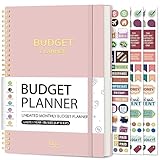
- Effective Budget Planning - Take control of your finances with the budget account book. This comprehensive planner allows you to plan and track your income, expenses, savings, and financial goals in one convenient place. With its intuitive layout and easy-to-use sections, you can stay organized and make informed decisions to achieve financial success.
- User-Friendly Layout - The budget planner features a user-friendly layout designed for easy navigation and organization. Each month, you'll find dedicated budget pages where you can set financial goals, track your income, and plan your expenses. Additional sections include debt trackers, savings goals, bill payment trackers, and more, making it simple to stay on top of your finances.
- Undated Monthly Calendar & Bonus Stickers - Featuring undated calendar each month, you'll have ample space to mark paydays, bills due, appointments, and important dates. Say goodbye to difficult writing spaces. Plus, we've included 3 cute sticker sheets that allow you to personalize your financial organizer and make budgeting more fun. Dates are not pre-printed and are completed by the user.
- Reliable and Convenient Design - Our monthly budget planner is designed for your convenience and built to last. The elastic band keeps everything securely in place, and the dual-sided pocket provides extra storage. Experience a budget planner that combines practicality and durability.
- Master Budgeting with Ease - Our financial planner includes a complete guidebook that provides valuable insights and instructions for optimal usage. From setting financial goals to tracking expenses, this guidebook offers step-by-step guidance and practical tips. Whether you're new to budgeting or an experienced user, this resource will help you make the most of your budget planner, empowering you to achieve financial success.
Types of Financial Planners by Specialization: From Retirement and Investments to Tax and Estate Planning
Beyond compensation structure, financial planners also differ by area of specialization. Specialization reflects the primary problems a planner is trained to address and the tools they use to do so. While some planners provide broad, integrated planning, many focus deeply on specific financial domains where technical knowledge is essential.
Understanding specialization helps explain why planners with similar titles may deliver very different services. It also clarifies when a generalist approach may be sufficient and when a narrowly focused expert is more appropriate.
Retirement-Focused Financial Planners
Retirement planners concentrate on helping individuals transition from earning income to drawing income from accumulated assets. Their work typically involves projecting future expenses, estimating longevity risk, and coordinating income sources such as Social Security, pensions, and investment withdrawals. Longevity risk refers to the possibility of outliving one’s financial resources.
These planners often model different retirement scenarios to assess sustainability under varying market and inflation conditions. They may also address timing decisions, such as when to claim government benefits or begin withdrawals from tax-advantaged accounts. The emphasis is on income stability rather than asset accumulation alone.
Investment-Focused Financial Planners
Investment planners specialize in portfolio construction and ongoing asset management. Asset allocation, the process of dividing investments among asset classes like stocks, bonds, and cash, is a central focus. These planners analyze risk tolerance, time horizon, and market exposure to design portfolios aligned with defined objectives.
Services often include security selection, rebalancing, and performance monitoring. Rebalancing refers to periodically adjusting a portfolio back to its target allocation as market values change. Investment-focused planners may or may not provide broader financial planning beyond portfolio management.
Tax-Focused Financial Planners
Tax-focused planners emphasize minimizing tax liability within the bounds of existing law. Their work includes tax-efficient investment strategies, income timing decisions, and coordination between taxable, tax-deferred, and tax-exempt accounts. Tax-deferred accounts allow taxes to be paid later, while tax-exempt accounts may allow qualified withdrawals without taxation.
These planners often collaborate with or hold credentials similar to tax professionals, such as Certified Public Accountants. Their value lies in understanding how financial decisions interact with marginal tax rates, deductions, and credits across multiple years. Tax planning is ongoing rather than limited to annual filing.
Recommended Free Tools
Estate Planning-Oriented Financial Planners
Estate-focused planners address the transfer of assets during life and after death. This includes beneficiary designations, trust structures, and strategies to manage estate taxes where applicable. A trust is a legal arrangement in which one party holds assets for the benefit of another under specified terms.
While estate attorneys draft legal documents, financial planners in this area coordinate financial accounts and ownership structures to align with those documents. The goal is to reduce administrative complexity, unintended tax consequences, and conflicts among heirs. Estate planning is particularly relevant for households with significant assets or complex family structures.
Insurance and Risk Management Specialists
Some planners specialize in managing financial risks that could disrupt long-term plans. This includes evaluating life, disability, health, and long-term care insurance needs. Risk management focuses on protecting against low-probability but high-impact events that cannot be efficiently self-funded.
These planners assess coverage adequacy, policy features, and cost efficiency. Their work often intersects with commission-based compensation models, especially in insurance-focused practices. Understanding how insurance recommendations are compensated is particularly important in this specialization.
Quick wins for a faster PC:
Fix the driver behind crashes, sound loss and screen glitchesFind Drivers →Clear out junk files and repair common Windows errorsFree Scan →Cash Flow, Education, and Household Planning Specialists
Other planners focus on day-to-day financial organization, including budgeting, debt management, and savings strategies. Cash flow planning analyzes how income is allocated toward spending, saving, and obligations over time. This specialization is common among planners working with younger households or those rebuilding financial stability.
Some planners also specialize in education funding, such as planning for college expenses. This involves understanding savings vehicles, financial aid formulas, and timing considerations. These areas emphasize financial coordination rather than investment complexity.
Generalist Versus Specialist Planning Models
Many financial planners operate as generalists who integrate multiple specializations into a single planning process. Others work as specialists within advisory teams or referral networks. The distinction affects both the depth of analysis and the scope of services provided.
Evaluating specialization involves identifying which financial decisions carry the greatest long-term impact in a given situation. Specialization does not replace the importance of compensation structure or fiduciary standards, but it adds a critical layer for understanding what a planner is actually trained to do.
How Financial Planners Differ from Advisors, Brokers, and Robo-Advisors
As financial services become more segmented, titles alone no longer clearly indicate what a professional actually does. The distinctions between financial planners, advisors, brokers, and robo-advisors are based on scope of responsibility, legal obligations, compensation structures, and the depth of analysis provided. Understanding these differences is essential for evaluating which type of service aligns with specific financial needs.
Financial Planners Versus Financial Advisors
The term financial advisor is a broad, non-specific label that can apply to many types of professionals. It may refer to investment advisers, brokers, insurance agents, or financial planners, regardless of credentials or regulatory status. The title itself does not indicate training standards, fiduciary obligations, or service scope.
A financial planner, by contrast, is defined by the planning process rather than by product distribution. Financial planning integrates multiple areas such as cash flow, investments, taxes, insurance, and retirement into a coordinated framework. When the planner holds recognized credentials, such as Certified Financial Planner (CFP), the title also signals standardized education, examination, and ethical requirements tied to comprehensive planning.
Financial Planners Versus Brokers
Brokers, formally known as registered representatives of broker-dealers, are primarily engaged in executing securities transactions. Their core function is facilitating the buying and selling of investments such as stocks, bonds, and mutual funds. Compensation is often transaction-based, meaning income is generated through commissions tied to trades or product sales.
What’s actually slowing this PC down?
Pick the symptom - the matching free tool is one click away.
Financial planners are not primarily transaction-focused. While some planners are also licensed brokers, planning itself centers on long-term decision-making rather than individual investment trades. The planning role evaluates whether an investment fits within a broader financial strategy, not merely whether it can be bought or sold.
Financial Planners Versus Investment Advisers
Investment advisers are professionals or firms registered to provide investment advice for a fee. They are regulated under investment adviser laws and are generally held to a fiduciary standard, meaning they must place client interests ahead of their own. Their services often focus on portfolio construction, asset allocation, and ongoing investment management.
A financial planner may also be an investment adviser, but planning extends beyond portfolio management. Financial planning incorporates non-investment decisions such as retirement timing, tax strategy, insurance coverage, and estate coordination. Investment advice is one component of planning, not the entirety of it.
Financial Planners Versus Robo-Advisors
Robo-advisors are automated platforms that provide algorithm-based investment management with minimal human involvement. They typically use questionnaires to assess risk tolerance and time horizon, then allocate assets using predefined models. Costs are generally lower due to automation and limited personalization.
Financial planners provide human judgment and contextual analysis that automated systems cannot replicate. Planning involves interpreting complex household dynamics, behavioral factors, and trade-offs across competing financial goals. While robo-advisors can efficiently manage portfolios, they do not deliver comprehensive financial planning.
Differences in Fiduciary Duty and Accountability
Fiduciary duty refers to a legal obligation to act in the best interest of the client. Not all advisors or brokers are fiduciaries at all times. Some operate under suitability standards, which require that recommendations be appropriate but not necessarily optimal.
Financial planners operating under fiduciary frameworks are accountable for the full planning relationship, not just isolated recommendations. This broader responsibility reflects the interconnected nature of financial decisions. Understanding when and how fiduciary duty applies is critical when comparing professional roles.
Scope of Services and Decision Authority
The key distinction across these roles is scope. Brokers focus on transactions, investment advisers focus on portfolios, robo-advisors focus on automation, and financial planners focus on coordination. Planning addresses how financial decisions interact over time rather than optimizing any single component in isolation.
This difference in scope affects not only services provided but also how success is measured. Financial planning evaluates progress toward long-term objectives across changing life circumstances. Other models typically assess performance within narrower functional boundaries.
Independent reader supportYour contribution helps us test, update, and keep practical guides available for everyone.When You Might Need a Financial Planner (and When You Might Not)
Given the broad scope and accountability described above, the value of a financial planner depends largely on the complexity of a household’s financial situation and the consequences of getting decisions wrong. Planning is most useful when financial choices interact across time, tax rules, and life events. In simpler situations, the incremental benefit of comprehensive planning may be limited.
Situations Where a Financial Planner Is Often Most Valuable
A financial planner is typically most useful when multiple financial goals compete for limited resources. Examples include balancing retirement savings, education funding, debt repayment, and near-term lifestyle needs. Planning helps establish priorities and trade-offs rather than optimizing a single account or product.
Complex tax exposure is another common trigger. This includes households facing progressive income taxes, capital gains taxes, estate taxes, or the interaction of tax-deferred and taxable accounts. A financial planner evaluates how decisions in one area affect after-tax outcomes elsewhere.
Do these 3 things before closing this tab:
1Fix the driver behind crashes, sound loss and screen glitches2Repair Windows errors before they cause bigger problems3Scan for outdated or missing drivers - takes under a minuteMajor life transitions frequently justify professional planning. Events such as marriage, divorce, inheritance, business ownership, career changes, or retirement introduce uncertainty and irreversible decisions. Planning provides a structured framework for evaluating long-term implications before actions are taken.
Households with substantial assets or nonstandard income often benefit from coordination. This may involve stock-based compensation, rental real estate, closely held businesses, or irregular cash flows. Financial planners integrate these elements into a cohesive strategy rather than treating them independently.
Behavioral and Decision-Making Considerations
Financial planning is not limited to technical analysis. Behavioral finance studies how cognitive biases, such as loss aversion or overconfidence, influence financial decisions. A planner can introduce discipline and guardrails that reduce the likelihood of emotionally driven errors.
Decision complexity also matters. As the number of choices increases, so does the risk of suboptimal outcomes. Financial planners help narrow options and frame decisions in terms of long-term objectives rather than short-term noise.
The Tool Desk
Outbyte PC Repair FREEClear out junk files and repair common Windows errorsFree Scan →Outbyte Driver Updater FREEScan for outdated or missing drivers - takes under a minuteDriver Scan →Situations Where a Financial Planner May Be Less Necessary
A financial planner may offer limited incremental value for households with straightforward finances. This typically includes stable income, minimal debt, ample emergency savings, and a long-term investment horizon with few competing goals. In such cases, standardized investment solutions may be sufficient.
Individuals early in their financial lives may not require comprehensive planning. Basic budgeting, employer retirement plans, and broad-based investment funds often address core needs. Education and simple tools can cover foundational decisions without ongoing professional involvement.
Some households primarily seek transaction execution rather than coordination. If the objective is limited to buying or selling a specific financial product, planning may exceed the required scope. Other financial professionals may address those narrower needs.
Evaluating Whether Planning Adds Net Value
The central question is whether coordination improves outcomes. Financial planning adds value when decisions are interdependent and errors are costly or difficult to reverse. It is less impactful when choices are isolated and easily adjusted over time.
Free tools Windows power users keep installed
One-click scans. No signup required.
Cost is also a relevant factor. Financial planners are compensated through fees, commissions, or a combination of both. Evaluating value requires comparing the cost of planning to the financial, tax, and behavioral benefits provided.
Understanding the planner’s role, credentials, compensation model, and scope of responsibility is essential. Not all financial planners provide the same depth of analysis or operate under the same fiduciary standards. The decision to engage a planner should reflect both the household’s complexity and the planner’s demonstrated capacity to address it.
How to Evaluate and Choose the Right Financial Planner for Your Situation
Once the potential value of financial planning is established, the next step is selecting a planner whose role, expertise, and incentives align with the household’s needs. This evaluation is not about finding a universally “best” planner, but about matching complexity, scope, and cost to the specific financial decisions at hand.
A disciplined selection process focuses on credentials, fiduciary obligations, compensation structure, service scope, and ongoing accountability. Each of these factors directly affects the quality, objectivity, and usefulness of the planning provided.
Crashes, No Sound, or Screen Glitches?
Random freezes, missing sound and display glitches usually trace back to one bad driver. Find and replace yours safely.Free scan · under a minuteWindows Errors? Fix Them Before They Spread
Repair common Windows errors and clear accumulated junk for a smoother, more stable PC - no reinstall needed.Free scan · no reinstallBest Value

- EFFECTIVELY MANAGE YOUR MONEY - Our budget planner helps you take control of your finances by providing sections for financial goals, savings, debts, daily expenses, monthly budget, monthly budget review. This finance planner is a good finance book and will help you manage your money effectively.
- PREMIUM QUALITY - Our budget planner is made with high-quality 100gsm paper that reduces ink leakage, fraying, and shade issues. The sturdy and flexible cover,, helps protect the pages. The metal lay-flat twin-wire binding ensures durability and longevity.
- ORGANIZED MONTHLY GOALS & BUDGETS - Our 12-month budget planner helps you set monthly goals, budgets, reviews, and develop good monetary habits, strategies, and action plans. Write down monthly financial goals, put reminders of bills and payments on the calendar, plan your monthly budget in each category, track daily expenses, and review the monthly budget at the end of the month.
- FLEXIBLE USAGE - Our undated finance planner allows you to start at any time and place, making it convenient to use. It has a perfect size of 8.6x5.9 inches and fits in every bag, so it's always at hand.
- CREATE FINANCIAL FREEDOM - Our budget planner is your chance to develop monthly habits, monetary strategies, and action plans to start your journey to long-term financial freedom. It allows you to track monetary flow and review each area for improvements. With this 1-Years budget book, you can take the first step towards financial freedom.
Clarifying the Scope of Planning Needed
The evaluation process begins with defining the problems to be solved. Some households need comprehensive coordination across cash flow, investments, taxes, insurance, and estate planning. Others may only require targeted guidance, such as retirement income modeling or tax-aware investment allocation.
The broader and more interconnected the decisions, the more important it is that the planner offers holistic financial planning rather than product-specific recommendations. A mismatch between the planner’s service model and the household’s needs often results in either unnecessary cost or insufficient analysis.
Understanding whether planning is needed on an ongoing basis or for a one-time engagement also matters. Some planners specialize in continuous advisory relationships, while others provide project-based planning for discrete financial transitions.
Evaluating Credentials and Professional Standards
Professional credentials signal training depth, ethical standards, and commitment to continuing education. The Certified Financial Planner (CFP) designation is widely recognized for requiring comprehensive coursework across investments, taxes, retirement, insurance, and estate planning, along with a fiduciary obligation to act in the client’s best interest.
Quick wins for a faster PC:
Fix the driver behind crashes, sound loss and screen glitchesFind Drivers →Repair Windows errors before they cause bigger problemsFix Now →Other credentials may reflect narrower specialization. Chartered Financial Analysts (CFA) focus primarily on investment analysis, while Certified Public Accountants (CPA) emphasize tax and accounting expertise. These designations can add value when aligned with the household’s dominant financial concerns.
Credentials alone are not sufficient, but the absence of recognized qualifications increases the importance of scrutinizing experience, methodology, and regulatory oversight.
Understanding Fiduciary Duty and Legal Obligations
A fiduciary duty requires the planner to place the client’s interests ahead of their own and to disclose conflicts of interest. Not all financial planners operate under this standard at all times, particularly those whose compensation depends on product sales.
Some professionals operate under a suitability standard, which requires recommendations to be appropriate but not necessarily optimal or lowest cost. This distinction affects how advice is framed and what alternatives are considered.
PC Slower Than It Used to Be?
A free scan shows the junk files, broken settings and background clutter dragging Windows down - then fixes them in one click.Free scan · Windows 10 & 11Outdated Drivers Are Slowing You Down
One free scan finds every outdated or missing driver and matches the right update for your exact hardware.Free scan · exact hardware matchClarifying when and how a planner acts as a fiduciary helps set realistic expectations about objectivity, transparency, and accountability.
Comparing Compensation Models
Compensation structures shape incentives and should be evaluated carefully. Fee-only planners are compensated directly by clients through flat fees, hourly fees, or a percentage of assets under management. This model reduces reliance on product sales but does not eliminate all potential conflicts.
Commission-based planners receive compensation from financial product providers. This can lower explicit costs but may influence which solutions are recommended. Fee-based models combine client fees with commissions, increasing the importance of clear disclosure.
The appropriate model depends on the household’s preferences, complexity, and sensitivity to conflicts. Transparency and clarity matter more than the specific structure itself.
Recommended Free Tools
Assessing the Planning Process and Deliverables
The quality of financial planning depends on process, not just recommendations. A robust planning process typically includes detailed data gathering, explicit assumptions, scenario analysis, and documented trade-offs between competing goals.
Deliverables should be clearly defined. These may include written financial plans, cash flow projections, retirement income models, tax analyses, or periodic progress reviews. Vague or informal guidance limits the ability to evaluate effectiveness over time.
Households benefit most when planning outputs translate into actionable decisions and a framework for revisiting those decisions as circumstances change.
Evaluating Experience and Specialization
Experience is most relevant when it aligns with the household’s situation. Planning for business owners, retirees, blended families, or individuals with concentrated equity positions involves distinct challenges and regulatory considerations.
The Tool Desk
Outbyte PC Repair FREEClear out junk files and repair common Windows errorsFree Scan →Outbyte Driver Updater FREEScan for outdated or missing drivers - takes under a minuteDriver Scan →Specialization can improve insight but may also narrow perspective. A planner heavily focused on one area should still demonstrate an understanding of how decisions interact across the broader financial system.
Asking how similar client situations have been handled provides insight into practical judgment rather than theoretical knowledge alone.
Ongoing Review, Communication, and Accountability
Financial planning is rarely static. Life events, market conditions, tax laws, and personal priorities evolve over time, requiring periodic reassessment. The frequency and structure of reviews should match the household’s complexity and volatility.
Clear communication expectations reduce misunderstandings. This includes how often meetings occur, how questions are handled, and how recommendations are updated.
Accountability is reinforced when progress is measured against defined goals rather than short-term market performance. Effective planners focus on decision quality and long-term alignment.
Integrating the Planner Into the Broader Financial Framework
A financial planner does not replace other professionals such as attorneys, accountants, or insurance specialists. Instead, planning adds value by coordinating their inputs into a coherent strategy.
The most effective planners understand the limits of their role and collaborate across disciplines. This reduces fragmentation and helps ensure that decisions in one area do not unintentionally undermine another.
Ultimately, the right financial planner is one whose expertise, incentives, and process align with the household’s financial complexity and decision-making needs. Careful evaluation transforms planning from a generic service into a tailored framework for managing long-term financial outcomes.
Quick Recap
Product prices and availability are accurate as of the date/time indicated and are subject to change. Any price and availability information displayed on Amazon at the time of purchase will apply.




