Free tools Windows power users keep installed
One-click scans. No signup required.
Travis Kelce’s net worth acceleration in 2025 reflects more than a single earnings spike; it illustrates how elite athletes convert peak career visibility into diversified financial capital. The year marked a convergence of late-career contract economics, off-field monetization, and valuation expansion across multiple income streams. Understanding why this matters requires separating cash income from asset value, and short-term earnings from long-term wealth creation.
Late-Career NFL Economics and Contract Structure
Kelce entered 2025 as a veteran tight end operating under a contract framework that prioritizes guaranteed money over longevity. Guaranteed compensation refers to salary or bonuses that are paid regardless of injury or performance, a critical stabilizer for aging athletes. While his annual NFL salary was no longer setting positional records, the predictability of these payments anchored his baseline net worth.
Performance incentives and playoff-related bonuses further enhanced cash flow in 2025. These variable components are contingent compensation, meaning they only vest if specific performance thresholds are met. For high-performing veterans on contending teams, incentive-heavy structures can materially increase annual income without altering contract length.
Endorsement Scale and Brand Monetization
The most visible driver of Kelce’s net worth expansion in 2025 was endorsement income scaling faster than on-field pay. Endorsements represent licensing agreements where brands pay for the commercial use of an athlete’s name, likeness, and credibility. In Kelce’s case, endorsement revenue increasingly resembled that of a media personality rather than a traditional NFL player.
Quick wins for a faster PC:
Fix the driver behind crashes, sound loss and screen glitchesFind Drivers →Repair Windows errors before they cause bigger problemsFix Now →#1 Best Overall
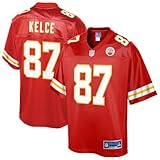
- Brand: NFL PRO LINE
- Printed player name and number
- Jersey Color Style: Team
- The NFL logo appears on this jersey
- Officially licensed
This shift matters financially because endorsement contracts often carry higher margins and longer tails than sports salaries. Unlike NFL income, endorsement deals are not capped by league rules and can persist beyond retirement. As brand demand increased in 2025, the valuation of Kelce’s personal brand rose accordingly, lifting total net worth even when cash receipts were staggered over time.
Business Ventures and Equity-Based Wealth
A defining feature of Kelce’s 2025 wealth profile was the growing role of equity ownership. Equity represents an ownership stake in a business, and unlike salary, its value fluctuates based on company performance and market perception. Kelce’s involvement in consumer brands, apparel, and sports-related ventures meant that a portion of his net worth was tied to enterprise valuation rather than annual income.
This distinction is critical because net worth is a balance-sheet concept, not an income statement measure. Even without selling shares, appreciation in privately held businesses can materially increase reported wealth. In 2025, several of Kelce’s ventures reached scaling phases where valuation growth outpaced cash distributions.
Media Contracts and Intellectual Property
Kelce’s media-related income expanded meaningfully as podcasting, broadcasting, and production deals matured. Media contracts often include upfront payments plus revenue participation, meaning earnings grow as audience size and advertising demand increase. Intellectual property, such as content libraries and show formats, becomes a reusable asset that can generate recurring revenue.
What’s actually slowing this PC down?
Pick the symptom - the matching free tool is one click away.
From a financial perspective, media income is less physically constrained than athletic performance. This creates a smoother earnings curve and extends Kelce’s economic relevance beyond his playing years. The market assigns higher durability to these cash flows, which supports a higher net worth multiple.
Investment Income and Portfolio Effects
By 2025, investment returns played a more visible role in Kelce’s financial profile. Investment income includes dividends, interest, and unrealized gains from assets such as private equity, real estate, or marketable securities. While less publicized, these returns compound over time and introduce passive growth independent of public exposure.
The key financial insight is that once investment income reaches material scale, wealth growth becomes less reliant on active labor. For athletes at Kelce’s income level, this marks a transition from earnings-driven wealth to balance-sheet-driven wealth. That structural shift explains why net worth can rise even in years without record-breaking contracts.
NFL Contract Economics: How Salary, Bonuses, and Incentives Drove Baseline Wealth Growth
While business ownership and media assets explain the acceleration in net worth, NFL contract economics still formed the foundational layer of Travis Kelce’s wealth in 2025. On-field earnings provide predictable, contractually guaranteed cash flows that anchor an athlete’s balance sheet. These earnings are structured through a mix of base salary, bonuses, and performance incentives, each with distinct financial characteristics.
Understanding how these components function clarifies why even late-career contract years can meaningfully expand net worth. NFL compensation is not simply about headline annual salary figures, but about timing, guarantees, and tax treatment. For elite veterans like Kelce, contract design often prioritizes wealth preservation and certainty over maximum nominal value.
Base Salary: Predictable Income with Limited Leverage
Base salary represents the fixed amount paid during the regular season and is typically subject to the highest tax burden due to its treatment as ordinary income. For veteran players, base salary often becomes a smaller portion of total compensation as careers progress. Teams prefer to minimize base salary to manage salary cap exposure, while players offset this with other forms of guaranteed pay.
From a wealth perspective, base salary primarily supports liquidity rather than long-term net worth growth. It covers living expenses, taxes, and investment contributions but does not materially alter balance-sheet value on its own. Its importance lies in stability, not upside.
Signing Bonuses: Guaranteed Capital and Wealth Acceleration
Signing bonuses are lump-sum payments made upon contract execution and are typically fully guaranteed. Although paid upfront, teams are allowed to spread the salary cap impact over multiple years, a mechanism known as cap proration. For players, however, the cash is received immediately, creating a rapid increase in investable capital.
This structure is particularly powerful for wealth accumulation. Large signing bonuses can be deployed into diversified investment portfolios years before equivalent base salaries would have been earned. The time value of money, meaning the benefit of receiving cash earlier rather than later, materially enhances long-term net worth.
Roster and Option Bonuses: Retention-Based Guarantees
Roster bonuses are paid if a player remains on the team at a specified date, while option bonuses give teams the right to extend a contract under pre-agreed terms. For established stars, these bonuses function as quasi-guarantees because the likelihood of release is low. Financially, they behave similarly to signing bonuses but are staggered across contract years.
These bonuses smooth cash flow and reduce income volatility. They also reinforce wealth durability by ensuring continued high-level earnings even if performance declines modestly. For aging athletes, this predictability is critical to maintaining net worth stability.
Performance Incentives: Asymmetric Upside with Limited Downside
Performance incentives are additional payments triggered by achieving specific statistical or team-based benchmarks. In NFL contracts, incentives are classified as either likely to be earned or not likely to be earned based on prior performance. This classification affects salary cap accounting but not the player’s cash receipt.
From a wealth standpoint, incentives offer asymmetric upside. They add incremental income without increasing financial risk, as base compensation is already secured. For consistently elite players, these incentives often function as deferred bonuses rather than speculative pay.
Contract Structure and Net Worth Translation
The defining feature of Kelce’s NFL earnings is not just size, but structure. Guaranteed payments received earlier in the contract cycle enhance investment capacity and reduce reliance on future athletic output. This design converts athletic performance into durable financial capital.
As a result, NFL contract income serves as the baseline upon which business, media, and investment wealth compounds. Even as non-salary income becomes more prominent, contract economics remain the engine that originally transformed performance into long-term financial scale.
Rank #2

- Our football jerseys are slim-fitting, please refer to the size chart.If you're on the borderline between two sizes, order the smaller size for a tighter fit or the larger size for a looser fit. If your measurements for chest and waist correspond to two different suggested sizes, order the size indicated by your chest measurement.
- Stitched Football Jerseys For Your Team.Jerseys Editions Same As With Picture Shows,Embroidered name,number on chest, Back,Front,Embroidered
- Premium Quality Material Breathable and Durable" Made from high-quality polyester, our football shirt is breathable, durable, and easy to care for. The moisture-wicking fabric ensures maximum breathability, making it perfect for sports activities. Hand wash or machine wash, but please do not bleach.
- Versatile and Stylish Perfect for Various Occasions" Suitable for daily wear, home, travel, and fitness activities, this jersey is a versatile choice. It can be worn for casual outings, traveling, seasonal events, or even when watching games. Show off your passion for football with this stylish and sporty rugby shirt that sets you apart from the crowd.
- Good Service: If You Have Any Questions About Personalized Football Jerseys, Please Feel Free To Contact Us. We Will Get Back To You Asap Or Provide You With A Replacement Or Refund.
Endorsements Repriced: The Taylor Swift Effect and the Monetization of Cultural Relevance
As contract income establishes the financial floor, endorsement income reflects market demand for relevance rather than performance alone. In 2025, Travis Kelce’s endorsement portfolio underwent a structural repricing driven by an expansion in cultural visibility. This shift illustrates how athlete brand equity can be revalued rapidly when audience reach changes materially.
Do these 3 things before closing this tab:
1Scan for outdated or missing drivers - takes under a minute2Repair Windows errors before they cause bigger problems3Fix the driver behind crashes, sound loss and screen glitchesCultural Reach as an Economic Input
Endorsement valuation is primarily a function of reach, audience quality, and brand alignment. Reach refers to the size of the audience exposed to the athlete, while audience quality measures demographic attractiveness, such as age, income, and engagement levels. Cultural relevance amplifies both by extending exposure beyond traditional sports media.
The public association with Taylor Swift introduced Kelce to a global, non-sports audience with unusually high engagement intensity. For sponsors, this represented a new distribution channel rather than a reputational novelty. As a result, endorsement pricing adjusted to reflect expanded impressions and cross-market appeal.
Endorsement Repricing Mechanics
Endorsement contracts are often priced using implied CPM, or cost per thousand impressions, a standard advertising metric. When an athlete’s media exposure increases, the implied CPM declines unless contract values rise. In Kelce’s case, brands were compelled to pay higher absolute fees to maintain consistent cost efficiency.
This repricing was not speculative. It was supported by measurable increases in social media mentions, broadcast visibility, and earned media value, which estimates the cost of equivalent paid advertising. These metrics provided quantitative justification for higher endorsement guarantees.
From Transactional Deals to Brand Partnerships
A notable change in 2025 was the shift from short-term endorsements to multi-year brand partnerships. Multi-year structures reduce income volatility and allow sponsors to amortize, or spread, marketing costs over time. For the athlete, this converts cultural momentum into predictable cash flows.
These agreements increasingly include performance escalators tied to media exposure rather than on-field statistics. This decouples endorsement income from athletic decline risk, extending earning power beyond peak playing years. Financially, this resembles a royalty stream rather than one-off promotional income.
Risk Concentration and Brand Correlation
While cultural relevance increases earning potential, it also introduces correlation risk. Correlation risk occurs when multiple income streams depend on the same underlying factor, in this case public perception. A reputational shift could affect several endorsement relationships simultaneously.
However, Kelce’s endorsements remain diversified across consumer goods, media, and lifestyle brands. This diversification mitigates downside risk by avoiding dependence on a single sponsor or industry. The result is a more resilient endorsement portfolio despite higher visibility.
Recommended Free Tools
Net Worth Implications of Endorsement Scaling
Endorsement income contributes disproportionately to net worth growth because it often carries higher margins than salary income. Unlike contracts, endorsements require minimal incremental capital and no physical depreciation. Cash received can be deployed immediately into investments or business ventures.
In 2025, the repricing of Kelce’s endorsements did not merely increase annual income; it raised the lifetime value of his personal brand. This demonstrates how cultural relevance, when monetized efficiently, functions as a scalable financial asset rather than a transient publicity event.
Media, Podcasts, and IP Ownership: New-Age Athlete Income Beyond the Field
As endorsement income scales, the next layer of net worth expansion increasingly comes from media ownership rather than promotional participation. In 2025, athlete-driven media platforms represent a structural shift from renting personal brand equity to owning the underlying intellectual property. This transition materially alters both income durability and long-term valuation.
Podcast Economics: From Sponsorship Fees to Owned Cash-Flow Assets
Kelce’s podcast operations generate revenue through advertising, distribution licensing, and branded integrations. Unlike endorsements, where income is contractually fixed, podcast revenue scales with audience growth and engagement metrics. This introduces operating leverage, meaning incremental listeners increase profit faster than costs rise.
Ownership of the podcast IP is critical. Intellectual property refers to legally owned creative content that can be monetized repeatedly across formats and platforms. IP ownership transforms media activity from earned income into an asset capable of producing recurring cash flows over time.
Media Rights, Distribution Deals, and Revenue Visibility
Media distribution agreements typically involve revenue-sharing or minimum guarantees tied to audience size and content performance. These structures reduce downside risk while preserving upside participation if listenership expands. Financially, this resembles a hybrid between a salary floor and equity-like participation.
Unlike endorsements tied to brand perception alone, media contracts are anchored to measurable performance indicators such as downloads, impressions, and engagement duration. This improves income transparency and forecasting reliability. As a result, media income is often viewed as more institutionally credible by investors and partners.
Valuation Impact of Owned Media Platforms
Owned media assets are valued using cash-flow-based methodologies rather than personal income multiples. Cash-flow valuation estimates future earnings and discounts them to present value to account for risk and time. This allows media platforms to contribute meaningfully to net worth independent of athletic career length.
The Tool Desk
Outbyte Driver Updater FREEFix the driver behind crashes, sound loss and screen glitchesFind Drivers →Outbyte PC Repair FREERepair Windows errors before they cause bigger problemsFix Now →In practical terms, this means Kelce’s media ventures can retain or increase value even after retirement. The asset’s worth becomes linked to audience loyalty and content relevance, not physical performance. This fundamentally extends the financial lifespan of his brand.
Risk Profile and Operational Considerations
Media ownership introduces new forms of risk, including audience fatigue, platform dependency, and content saturation. However, these risks differ materially from injury or performance decline. They are operational risks that can be managed through content strategy, distribution diversification, and brand alignment.
Rank #3
- Brand: NFL PRO LINE
- Printed player name and number
- Jersey Color Style: Team
- The NFL logo appears on this jersey
- Officially licensed
Importantly, media income is less correlated with team performance or league dynamics. This lowers overall income concentration risk within Kelce’s broader financial profile. From a net worth construction standpoint, media assets function as a stabilizing counterbalance to sports-related volatility.
Why Media IP Accelerates Long-Term Wealth Accumulation
Media platforms generate higher margins than endorsements because they eliminate intermediary brands capturing value. Once production infrastructure is established, incremental revenue largely converts to profit. This capital efficiency accelerates wealth accumulation relative to time spent.
PC Slower Than It Used to Be?
A free scan shows the junk files, broken settings and background clutter dragging Windows down - then fixes them in one click.Free scan · Windows 10 & 11Crashes, No Sound, or Screen Glitches?
Random freezes, missing sound and display glitches usually trace back to one bad driver. Find and replace yours safely.Free scan · under a minuteIn 2025, Kelce’s expansion into owned media reflects a broader athlete trend toward asset-based income. The financial significance lies not in annual earnings alone, but in the creation of transferable, monetizable IP. This positions media ownership as one of the most structurally important contributors to modern athlete net worth growth.
Equity Stakes and Business Ventures: How Kelce Is Transitioning from Earned Income to Ownership
The expansion into owned media naturally connects to a broader strategic shift: reallocating wealth from short-duration earned income toward long-term ownership interests. Equity stakes differ fundamentally from salaries or endorsement fees because they represent a claim on future enterprise value, not just current cash flow. This transition is central to understanding why Kelce’s net worth trajectory accelerated in 2025 beyond what on-field compensation alone could explain.
From a wealth analysis perspective, equity ownership introduces scalability. Once capital is invested, returns are driven by business growth rather than personal labor. This structural shift reduces dependency on physical performance and increases the durability of total net worth.
Minority Equity Stakes: Leveraging Brand Without Operational Control
Kelce’s business portfolio is primarily composed of minority equity positions, meaning ownership stakes without day-to-day managerial control. Minority equity allows athletes to participate in value creation while limiting operational risk and time commitment. In financial terms, this converts brand influence into capital appreciation rather than recurring earned income.
Do these 3 things before closing this tab:
1Clear out junk files and repair common Windows errors2Fix the driver behind crashes, sound loss and screen glitches3Repair Windows errors before they cause bigger problemsValuation for these stakes is typically based on enterprise value multiples, such as revenue or EBITDA, which stands for earnings before interest, taxes, depreciation, and amortization. Unlike endorsement income, which resets annually, equity value compounds as the underlying business scales. This introduces asymmetric upside with limited marginal effort.
Consumer Brands and Strategic Alignment
Many of Kelce’s known investments align with consumer-facing businesses where brand amplification directly affects revenue growth. Strategic alignment matters because athlete-investors can materially influence customer acquisition at a lower cost than traditional advertising. This reduces customer acquisition cost, a key profitability metric in consumer businesses.
From a portfolio construction standpoint, these investments behave differently than cash endorsements. They may generate little short-term income while increasing long-term asset value. This tradeoff favors investors with sufficient liquidity from core earnings, a condition Kelce now satisfies.
Private Company Risk and Illiquidity
Equity stakes in private businesses introduce illiquidity risk, meaning the investment cannot be easily sold or converted to cash. Unlike publicly traded stocks, exits depend on acquisitions, public offerings, or secondary sales. This requires longer holding periods and tolerance for valuation volatility.
PC Slower Than It Used to Be?
A free scan shows the junk files, broken settings and background clutter dragging Windows down - then fixes them in one click.Free scan · Windows 10 & 11Crashes, No Sound, or Screen Glitches?
Random freezes, missing sound and display glitches usually trace back to one bad driver. Find and replace yours safely.Free scan · under a minuteHowever, illiquidity is often compensated by higher expected returns. For high-income athletes, allocating a portion of wealth to illiquid assets can enhance total portfolio efficiency. The key distinction is that these investments are not designed to fund lifestyle spending, but to compound net worth over time.
Shifting the Net Worth Equation
As equity ownership grows, the composition of Kelce’s net worth changes materially. A larger share becomes tied to business valuation rather than annual income statements. This alters how wealth is measured, moving away from year-by-year earnings toward balance-sheet strength.
In 2025, this shift marks a decisive transition from athlete-as-earner to athlete-as-capital allocator. The financial impact is subtle in the short term but profound over decades. Ownership, not visibility, becomes the primary driver of sustained wealth growth.
Investment Strategy and Wealth Management: What We Can Infer About Portfolio Construction
As Kelce’s income profile evolves from salary-driven to asset-driven, portfolio construction becomes the central determinant of long-term wealth outcomes. The available evidence suggests a framework built around diversification, liquidity management, and selective concentration where strategic advantage exists. This mirrors institutional-style wealth management rather than the traditional paycheck-dependent model common earlier in athletic careers.
Core Earnings as Liquidity Anchor
NFL contracts and media-related income function as the portfolio’s liquidity anchor, meaning they provide predictable cash flow to fund taxes, consumption, and reinvestment. Liquidity refers to how easily an asset can be converted into cash without material loss of value. By maintaining substantial liquid inflows, Kelce reduces the risk of being forced to sell long-term assets at unfavorable valuations.
This structure allows higher-risk, longer-duration investments to coexist alongside dependable income streams. In wealth management terms, stable cash flow absorbs volatility elsewhere in the portfolio. The result is greater flexibility in asset selection.
Concentrated Bets Where Personal Edge Exists
Unlike passive investors, Kelce possesses a non-financial competitive advantage in brand-driven businesses. Concentration risk occurs when a portfolio is heavily exposed to a limited number of assets or sectors. In this case, selective concentration is mitigated by the investor’s ability to influence outcomes through marketing reach and consumer trust.
This explains why equity stakes appear clustered around consumer brands and media-adjacent ventures. The risk is higher than broad market exposure, but so is the potential return. Importantly, the concentration is intentional rather than accidental.
Balancing Public and Private Market Exposure
Public markets offer daily pricing and immediate liquidity, while private investments trade accessibility for potential valuation upside. Valuation refers to the estimated worth of an asset, often based on future cash flows rather than current earnings. Kelce’s growing allocation to private companies indicates a willingness to accept delayed realization of value.
Rank #4

- Classic Rugby Style: Bold crew neckline and relaxed fit inspired by traditional rugby aesthetics, perfect for sports enthusiasts and streetwear lovers.Pro Tip: Match your measurements to our size chart for authentic fit!
- Durable Reinforced Stitching: Designed to withstand intense physical activity, ensuring long-lasting wear even during rough rugby sessions.
- Premium 100% Cotton Fabric: Ultra-soft, breathable, and lightweight for all-day comfort during workouts or casual outings.
- Versatile Performance: Moisture-wicking fabric keeps you dry during training, while the timeless design transitions effortlessly from the field to everyday life.
- Easy Care & Eco-Friendly: Machine washable with minimal shrinkage; made with non-toxic dyes for a sustainable, skin-friendly choice.
This balance reduces reliance on short-term market movements. It also aligns asset duration, the expected holding period of an investment, with a long post-playing career horizon. Time becomes an asset rather than a constraint.
Human Capital as a Declining Risk Factor
Human capital represents the present value of future labor income. Early in an athlete’s career, human capital dominates net worth but carries injury and career-length risk. As business ownership and media contracts expand, financial capital increasingly replaces human capital.
This transition lowers overall portfolio risk. Wealth becomes less sensitive to physical performance and more dependent on enterprise value and contractual rights. By 2025, this shift is well underway.
Implicit Risk Management and Tax Awareness
Although specific tax strategies are not public, the structure of Kelce’s income implies coordination between earned income, equity appreciation, and licensing revenue. Different income types are taxed differently, affecting after-tax returns. Equity appreciation, for example, is typically taxed upon realization rather than annually.
Risk management here is structural rather than speculative. It focuses on asset mix, income timing, and durability of cash flows. This approach prioritizes preservation and compounding over short-term yield.
From Net Worth Accumulation to Net Worth Optimization
The defining feature of this stage is optimization rather than accumulation. Asset allocation, governance rights, and strategic partnerships now matter as much as headline income figures. Portfolio construction becomes an exercise in efficiency, not visibility.
Kelce’s financial evolution reflects a broader pattern among elite athletes who successfully convert peak earnings into enduring capital. The portfolio tells the story more clearly than any single contract.
Free tools Windows power users keep installed
One-click scans. No signup required.
Cash Flow vs. Net Worth: Understanding Liquidity, Valuation, and Long-Term Sustainability
The distinction between cash flow and net worth becomes critical at this stage of wealth formation. Net worth reflects the market value of all assets minus liabilities at a point in time, while cash flow measures the actual inflows of money available to meet expenses and reinvest. A rising net worth does not automatically translate into financial flexibility.
For high-profile athletes, this gap often widens as wealth shifts from salary-based income to equity ownership and intellectual property. These assets may be valuable on paper but uneven in their ability to generate immediate cash. Understanding this separation clarifies how Kelce’s wealth functions in practice rather than in headlines.
Sources of Cash Flow: Predictable vs. Variable Income
On-field earnings provide the most predictable cash flow due to their contractual structure and payment schedules. Endorsements and sponsorships add diversification but remain performance- and brand-dependent, introducing variability. Media contracts, including podcasting and broadcast-related deals, occupy a middle ground with recurring revenue characteristics but renegotiation risk over time.
Business ventures and equity stakes typically contribute minimal short-term cash flow. Their value is embedded in ownership rather than distributions, meaning returns are often deferred. This structure emphasizes long-term appreciation over immediate income.
Quick wins for a faster PC:
Scan for outdated or missing drivers - takes under a minuteDriver Scan →Clear out junk files and repair common Windows errorsFree Scan →Valuation Without Liquidity: The Private Asset Trade-Off
Many of the fastest-growing components of Kelce’s net worth are privately held interests. Valuation in private markets is estimate-based, often derived from funding rounds, comparable transactions, or discounted cash flow models, which project future earnings back to today’s value. These estimates can fluctuate without any actual transaction occurring.
Liquidity, the ability to convert an asset into cash without significant loss of value, is limited in these holdings. Selling stakes may require time, negotiation, or favorable market conditions. As a result, reported net worth growth may outpace usable capital.
Liquidity Management and Financial Resilience
Maintaining sufficient liquid assets becomes essential as earned income declines. Liquidity acts as a buffer against market volatility, business underperformance, or changes in media demand. It also provides optionality, allowing capital to be deployed when opportunities arise.
In Kelce’s case, continued endorsement income and media-related cash flows help offset the illiquidity of private investments. This balance supports ongoing expenses and reinvestment without forcing asset sales at unfavorable valuations.
Long-Term Sustainability Beyond Peak Earnings
Sustainable wealth depends on assets that can generate cash flow independently of athletic performance. Media rights, brand licensing, and ownership stakes with scalable revenue models extend earning power beyond a finite playing career. These assets shift the financial profile from labor-driven income to capital-driven returns.
The key metric over time is not peak annual income but the durability of cash flows relative to spending and reinvestment needs. When structured effectively, net worth becomes a platform for compounding rather than a static measure of past success.
How Kelce’s Wealth Compares to Other Elite Tight Ends and Cross-Sport Stars
Viewed against the backdrop of long-term sustainability, Kelce’s net worth trajectory stands out less for peak salary and more for diversification. The comparison becomes most instructive when separating positional peers within the NFL from athletes in sports with structurally higher earning ceilings. This distinction clarifies how different income architectures shape ultimate wealth outcomes.
Relative Position Among Elite Tight Ends
Within the tight end position, Kelce sits at the top of the wealth distribution, even after adjusting for era and contract structure. Most elite tight ends derive the majority of lifetime earnings from NFL salaries and performance bonuses, which are capped by positional market rates. Even at their peak, tight end contracts rarely approach the scale of quarterback or edge rusher deals.
The Tool Desk
Outbyte PC Repair FREEClear out junk files and repair common Windows errorsFree Scan →Outbyte Driver Updater FREEFix the driver behind crashes, sound loss and screen glitchesFind Drivers →Best Value
- Brand: NFL PRO LINE
- Printed player name and number
- Jersey Color Style: Team
- The NFL logo appears on this jersey
- Officially licensed
By contrast, Kelce’s off-field income materially alters the equation. Endorsements, media production, and equity stakes now represent a significant share of his net worth, whereas peers such as George Kittle or Mark Andrews remain more heavily dependent on playing income. This shift reduces exposure to injury risk and contract volatility, two dominant threats to athlete wealth accumulation.
Comparison With Retired Tight Ends and the Post-Career Gap
Comparisons with retired stars such as Rob Gronkowski highlight the role of timing and market evolution. Earlier generations operated in a less developed athlete-brand economy, with fewer direct-to-consumer channels and lower media monetization. As a result, post-retirement earnings growth often slowed once playing income ended.
Kelce benefits from a more mature ecosystem in which athlete-driven media, licensing, and private equity participation are normalized. This allows net worth to continue compounding even as on-field earnings plateau. The result is a narrower post-career wealth gap than historically observed at the position.
Cross-Sport Comparison: Structural Advantages and Constraints
When compared with cross-sport stars such as NBA or global soccer icons, Kelce’s absolute net worth remains lower, largely due to structural factors. Basketball and international football offer higher guaranteed contracts, longer earning windows, and broader global sponsorship markets. These conditions accelerate capital accumulation earlier in an athlete’s career.
However, the composition of Kelce’s wealth increasingly resembles that of top-tier cross-sport athletes. Media ownership, brand equity, and private investments mirror the financial architecture seen in figures like LeBron James or Tom Brady. While scale differs, the underlying drivers of long-term value creation are converging.
Wealth Quality Versus Wealth Size
A critical distinction emerges between wealth size and wealth quality. Wealth size refers to the headline net worth figure, while wealth quality reflects liquidity, durability, and independence from active labor. Kelce’s 2025 growth skews toward higher-quality assets that can generate income without direct physical output.
This composition places him closer to cross-sport business-oriented athletes than to traditional NFL earners. Although the absolute numbers may lag behind global superstars, the resilience of the asset base narrows the long-term disparity. From a financial analysis standpoint, this alignment matters more than rank-order comparisons.
What the Comparison Reveals About Athlete Wealth Building
The comparative lens underscores that elite athlete wealth is no longer defined solely by contracts or endorsements in isolation. Sustainable accumulation increasingly depends on early brand leverage, access to private markets, and participation in scalable media or intellectual property assets. Kelce’s profile reflects this transition in real time.
Recommended Free Tools
Rather than an outlier driven by extraordinary salary, his net worth growth illustrates how modern athletes can compress decades of post-career wealth building into their active years. The comparison reframes success away from positional pay ceilings and toward balance sheet composition and cash flow durability.
What Retail Investors Can Learn from Travis Kelce’s Wealth-Building Playbook
The evolution of Kelce’s net worth provides a practical framework for understanding how high earners convert volatile income into durable wealth. While the scale is exceptional, the financial mechanics are not unique to professional athletes. The underlying principles revolve around income layering, asset quality, and time arbitrage rather than headline earnings alone.
Income Concentration Is Temporary—Asset Ownership Is Not
Kelce’s on-field earnings represent a concentrated income stream tied directly to physical performance and career length. In finance, this is classified as active income, meaning it requires ongoing labor and carries expiration risk. His shift toward business equity, media contracts, and intellectual property illustrates how temporary income can be exchanged for assets that persist beyond peak earning years.
For retail investors, the key insight is not income level but income conversion. High cash flow periods create optionality only if capital is redirected into assets that can outlive the original income source. Without that transition, even large earnings remain fragile.
What’s actually slowing this PC down?
Pick the symptom - the matching free tool is one click away.
Brand Equity Functions Like a Financial Asset
Brand equity refers to the economic value of public recognition and reputation. In Kelce’s case, brand equity amplifies earnings through endorsements, licensing, and media leverage, often at margins far higher than athletic contracts. Once established, this asset scales without proportional increases in effort.
From a valuation standpoint, brand-driven income behaves differently than wages. It is less linear, more optional, and often tied to long-term contracts rather than annual output. This explains why media and sponsorship revenue now play a central role in his wealth composition.
Diversification Reduces Career Risk, Not Just Market Risk
Traditional diversification focuses on spreading capital across asset classes to reduce volatility. Kelce’s portfolio demonstrates a broader interpretation: diversification across income sources, industries, and dependency types. Media ventures, private investments, and partnerships reduce reliance on any single economic driver.
This approach addresses career risk, defined as the probability that a primary income source declines or disappears. By layering independent cash flows, overall wealth durability improves even if one segment underperforms.
PC Slower Than It Used to Be?
A free scan shows the junk files, broken settings and background clutter dragging Windows down - then fixes them in one click.Free scan · Windows 10 & 11Crashes, No Sound, or Screen Glitches?
Random freezes, missing sound and display glitches usually trace back to one bad driver. Find and replace yours safely.Free scan · under a minuteLiquidity and Control Matter as Much as Net Worth
Net worth figures often obscure two critical dimensions: liquidity and control. Liquidity measures how quickly an asset can be converted to cash without significant loss, while control determines decision-making authority over cash flows. Kelce’s increasing exposure to ownership stakes and contractual media income improves both metrics relative to salary-heavy wealth.
Assets with higher control and predictable cash flow provide strategic flexibility. They allow reinvestment, risk management, and long-term planning without reliance on external gatekeepers such as team contracts or endorsement cycles.
Time Arbitrage Accelerates Wealth Compounding
Time arbitrage occurs when earnings are maximized early and deployed into long-duration assets. Kelce’s ability to build media and investment exposure during his playing career compresses what is typically a post-retirement wealth-building phase into active years. This front-loading materially enhances compounding potential.
The financial takeaway is structural rather than situational. Earlier access to scalable assets increases the number of compounding cycles available, which often matters more than initial capital size.
Do these 3 things before closing this tab:
1Clear out junk files and repair common Windows errors2Scan for outdated or missing drivers - takes under a minute3Repair Windows errors before they cause bigger problemsWhy the Framework Matters More Than the Figure
Kelce’s 2025 net worth is notable, but the composition of that wealth is the more instructive variable. A balance sheet anchored in ownership, brand leverage, and diversified cash flows is inherently more resilient than one dominated by short-term income. This distinction explains why wealth quality increasingly outpaces wealth size in long-term outcomes.
For financially curious observers, the broader lesson is clear. Sustainable wealth is built by converting peak earning moments into enduring economic structures. Kelce’s trajectory illustrates how that conversion occurs in real time, offering a clear lens into how modern wealth is built, valued, and preserved.
Quick Recap
Product prices and availability are accurate as of the date/time indicated and are subject to change. Any price and availability information displayed on Amazon at the time of purchase will apply.




